
Concrete projects often require a clear decision between pouring concrete at the job site and using precast concrete made in a controlled facility. Both methods can create strong, durable structures, but they suit different project needs. Understanding cost, design flexibility, installation time, site conditions, and project size can help you select the right method.
What Is Concrete Pouring?
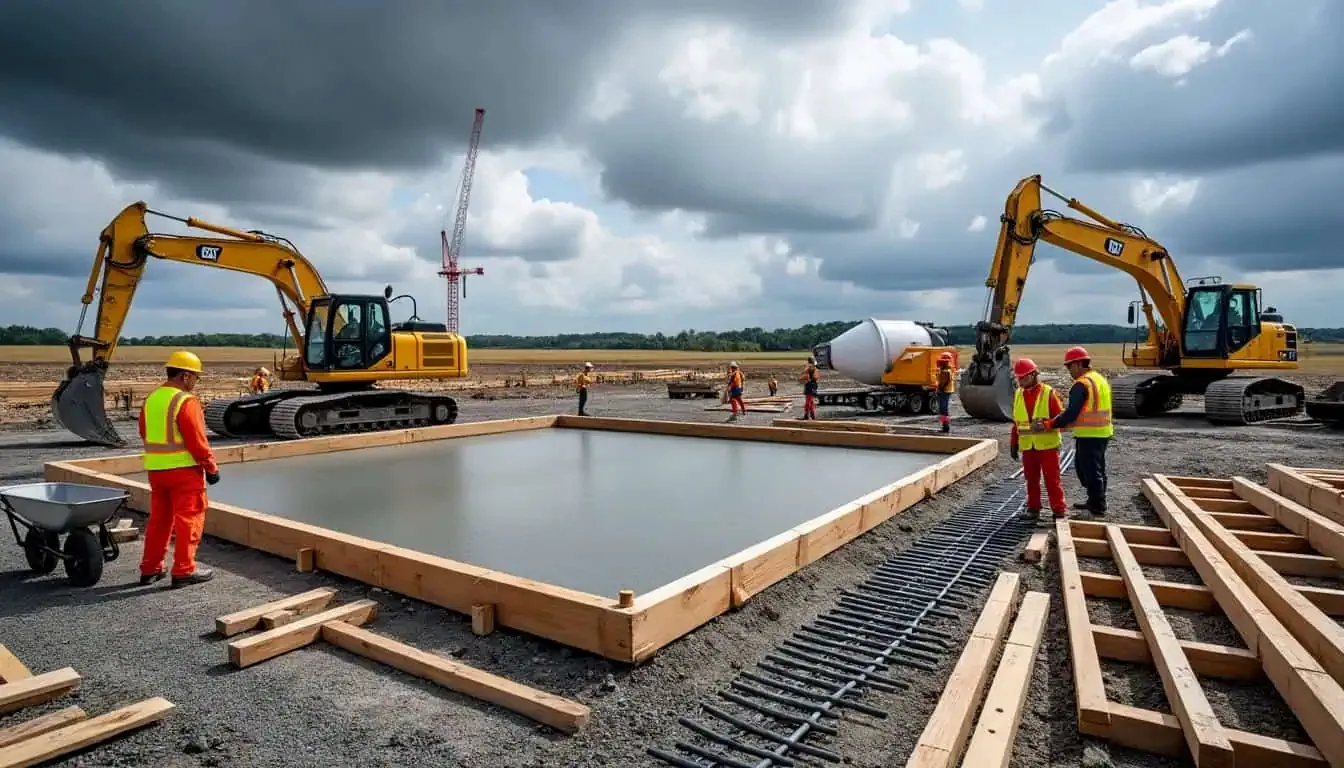
Concrete pouring involves mixing, transporting, placing, and finishing fresh concrete directly at the project site. Contractors prepare the ground, build forms, place reinforcement when needed, pour the concrete, level the surface, and allow it to cure.
This method works well when a project needs custom dimensions or a seamless surface. Concrete pouring services in Troy can support projects such as driveways, sidewalks, patios, slabs, foundations, parking areas, and other site-built concrete structures.
Key benefits of concrete pouring include:
- Flexible sizing: Contractors can create slabs and structures that match the exact site.
- Design freedom: The project can include custom shapes, slopes, textures, colors, and finishes.
- Fewer transport limits: Large sections do not need to travel from a manufacturing facility.
- Better site adaptation: Contractors can adjust the work to existing grades and property conditions.
- Seamless surfaces: Large areas can often receive a continuous pour with planned control joints.
What Is Precast Concrete?
Precast concrete gets manufactured, reinforced, and cured at a dedicated facility before workers transport it to the project site. Manufacturers use molds to produce consistent pieces such as wall panels, steps, beams, columns, drainage components, barriers, and other structural elements.
Factory production gives manufacturers greater control over mixing, molding, reinforcement, curing, and quality checks. Once the pieces reach the site, crews position them and connect them according to the project design.
Precast can work well when a project uses repeated components or requires quick installation after site preparation.
Concrete Pouring vs. Precast: Main Differences
The right method depends on what the project needs. The following factors provide a practical comparison.
1. Project Size and Shape
Concrete pouring offers more flexibility for irregular spaces. Contractors can build forms around existing structures, property lines, curves, slopes, and other site features.
Precast works especially well when the project uses standard or repeated shapes. Manufacturers can produce several matching components with consistent dimensions.
Best fit: Site-specific or irregular work often favors pouring, while repetitive components can suit precast.
2. Installation Time
Precast components receive most of their curing time before they reach the job site. Once the site has proper preparation, crews can install the pieces relatively quickly.
Concrete pouring requires several stages at the property, including placement, finishing, and curing. Weather and site conditions can affect the schedule.
Best fit: Precast may support faster on-site installation, while poured concrete provides greater flexibility during construction.
3. Design Flexibility
Poured concrete allows contractors to create many shapes and dimensions directly on the site. This makes it useful for driveways, patios, slabs, walkways, and other custom surfaces.
Precast depends more on molds and transportation requirements. Custom molds can provide unique designs, but they may increase production costs.
Best fit: Poured concrete generally provides more freedom for custom site layouts.
4. Quality Control
Precast production takes place in a controlled environment. Manufacturers can maintain consistent processes for batching, reinforcement, molding, and curing.
Poured concrete quality depends heavily on proper site preparation, concrete placement, finishing, curing, and weather management.
This does not mean one method always produces stronger concrete. Proper materials, engineering, installation, reinforcement, and curing play major roles in final performance.
5. Cost Considerations
Project cost depends on several factors rather than the construction method alone. Material quantities, labor, transportation, equipment, site preparation, reinforcement, molds, finishing, and project complexity can all affect the final price.
For a simple site-built slab, pouring may provide a practical approach. For projects that require many identical components, precast production can reduce repeated on-site work.
Before making a decision, compare the full project cost rather than looking only at the concrete price.
When Should You Consider Concrete Pouring?
Concrete pouring can make sense when the project requires:
- Custom dimensions or unusual shapes
- A continuous slab or surface
- Site-specific slopes and drainage
- Decorative finishes
- Large flatwork areas
- Driveways, patios, sidewalks, or slabs
- Construction that must adapt to existing property features
For residential and commercial projects in Troy, local site conditions can also influence preparation, drainage, access, reinforcement, and finishing requirements.
When Should You Consider Precast?
Precast may suit projects that require:
- Repeated concrete components
- Consistent dimensions
- Fast on-site installation
- Factory-controlled production
- Large structural elements
- Components that need specialized molds
- Construction schedules with limited on-site production time
Transportation and lifting requirements also matter. Large precast pieces may require specialized trucks, cranes, or equipment, especially when access to the site remains limited.
How Weather Affects the Decision
Weather can affect both construction methods, but it affects them at different stages.
Fresh concrete needs proper conditions during placement and curing. Extreme temperatures, rain, and poor site conditions can complicate scheduling and finishing.
Precast components receive their initial curing before delivery, which can reduce some weather-related work at the construction site. However, transportation, lifting, connections, and site preparation still depend on suitable conditions.
Good project planning should account for weather instead of relying on one construction method alone.
Which Method Works Better for Your Project?
There is no universal answer. The better option depends on the project's design, site, schedule, budget, access, and structural requirements.
Consider these questions before making a decision:
- Does the project require custom dimensions?
- Does it use repeated concrete components?
- How quickly must the site become usable?
- Can large precast pieces reach the property?
- Does the project require decorative finishing?
- What site preparation does each option require?
- What equipment will the installation need?
- Which method provides the best overall value after labor and transportation?
For custom residential and commercial work, concrete pouring services can provide the flexibility needed to build directly around site conditions. Precast may offer practical advantages when standardized components and faster installation matter more.
Final Thoughts
Concrete pouring and precast concrete both provide reliable construction options when professionals use the right materials, design, reinforcement, and installation practices. Poured concrete offers strong flexibility for custom site work, while precast can simplify projects that use standardized components and require faster installation.
The best decision starts with the project requirements. Compare the complete scope, including preparation, materials, labor, transportation, equipment, finishing, curing, and long-term use. A detailed project assessment can help determine which method fits the site and construction goals.
FAQs
1. What is the difference between poured concrete and precast concrete?
Poured concrete gets placed and cured at the construction site, while precast concrete gets manufactured and cured at a separate facility before workers transport and install it at the project location.
2. Is precast concrete faster than poured concrete?
Precast can reduce on-site installation time because manufacturers complete much of the production and curing before delivery. Poured concrete requires on-site placement, finishing, and curing before the area reaches its intended use.
3. Which concrete method offers more design flexibility?
Poured concrete generally offers greater flexibility for custom shapes, dimensions, slopes, layouts, and finishes because contractors create the forms directly at the project site.
4. Which factors affect the cost of concrete pouring?
Concrete pouring costs can depend on concrete quantity, site preparation, reinforcement, labor, equipment, excavation, finishing, access, project complexity, and local material and labor rates.
5. When should I use concrete pouring services in Troy?
Consider concrete pouring services when your project needs custom dimensions, site-specific construction, continuous slabs, driveways, patios, sidewalks, foundations, or other concrete work that must adapt to existing site conditions.























Sign in to leave a comment.