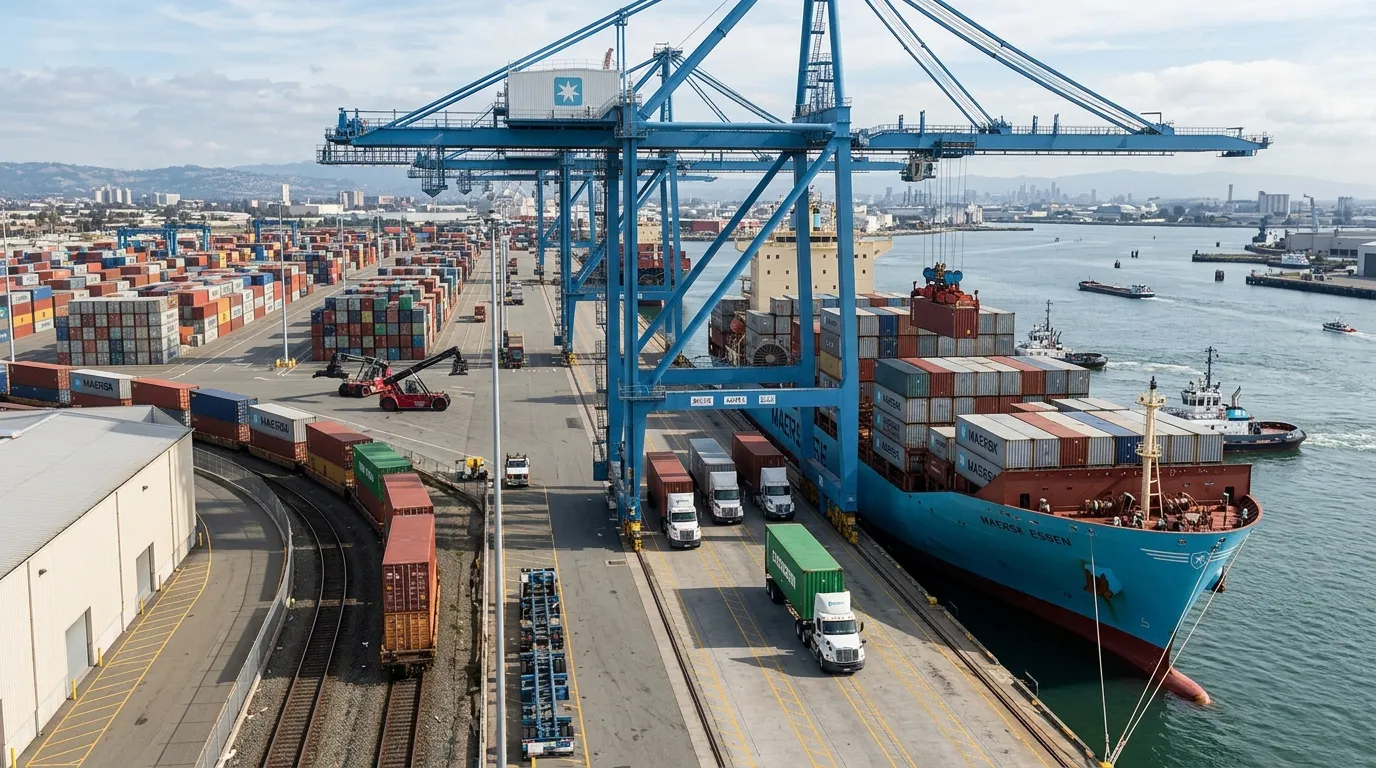

Every business that imports goods eventually faces the same learning curve. The first shipment is confusing, the paperwork is unfamiliar, and costs seem to appear out of nowhere. Most of that confusion comes down to one subject: container transport. Once you understand how containers move and what drives the cost, importing becomes far less intimidating.
This guide is written for people new to international trade. It explains the basics in plain language, walks through the process step by step, and highlights the mistakes that cost new importers the most money.
The Basic Idea Behind Container Transport
A shipping container is a standardised metal box. That standardisation is the whole point. Because every container in the world shares the same corner fittings and dimensions, it can be lifted by any crane, carried on any container ship, and placed on any container trailer without special equipment
This is what people mean when they call containers intermodal. The same box that travels across an ocean on a ship can be transferred to a train and then to a truck without the goods inside being touched. The cargo stays sealed from the factory to the warehouse, which cuts handling costs, reduces damage, and makes theft much harder.
For a new importer, the practical upshot is simple. You are not buying space on a ship in the way you buy a seat on a plane. You are renting a box, moving it through a network, and paying for each stage of that movement.
The Main Container Sizes You Will Encounter
Two sizes dominate global trade. The twenty-foot container, often called a TEU or twenty-foot equivalent unit, is the industry's standard measure. It holds roughly 33 cubic metres of cargo and is well suited to dense, heavy goods.
The forty-foot container holds about 67 cubic metres. It is the more common choice for bulky but lighter cargo. There is also a forty-foot high cube version, which adds about a foot of internal height and is useful for voluminous goods.
Then there is the question of whether you need the whole box. A full container load, or FCL, means the container is yours alone. A less than container load, or LCL, means your goods share space with other shippers' cargo. LCL is cheaper for small volumes but slower, because your goods must be consolidated and then separated again at the destination.
How a Shipment Actually Moves
The journey follows a predictable pattern once you know what to look for.
It starts with a booking. You or your freight forwarder reserves space on a vessel with a shipping line. The booking confirms the route, the sailing date, and the rate.
Next comes the empty container. The shipping line releases a container to you or your agent, usually from a depot near the port. For FCL shipments, you arrange to have it delivered to your supplier's premises, where the goods are packed and the doors are sealed.
The loaded container then travels to the port by road or rail. It must arrive before the terminal's cut-off time, or it will miss the vessel. At the port, the container is checked in, cleared for export, and lifted onto the ship.
The ocean voyage is the longest part of the process. Transit times vary widely by route, from a few days on short sea crossings to several weeks on deep sea routes. During this time, the container sits in a stack on a vessel that may call at several ports before reaching yours.
On arrival, the container is unloaded and cleared through customs. If you have arranged onward transport, a haulier collects it from the port and delivers it to your warehouse or a distribution centre. Finally, the empty container is returned to a depot, usually within a set number of days to avoid extra charges.
What Drives the Cost
New importers are often surprised by how many separate charges appear on a single shipment. Understanding them makes quotes easier to compare and budgets easier to set.
Ocean freight is the base cost of moving the container across the water. It fluctuates with fuel prices, vessel capacity, and demand. Rates on major routes can swing sharply within weeks.
Origin charges cover what happens at the departure port: terminal handling, documentation, and loading. Destination charges cover the equivalent work at the arrival port: unloading, terminal handling, and customs processing. These two sets of charges are often quoted separately, which is why a headline rate can look misleading.
Inland haulage covers the road or rail movement between the port and your premises. This is often the most expensive part of the journey per kilometre, especially for the final delivery.
Then there are the accessorial charges. Demurrage applies when a container sits at the port too long. Detention applies when you keep the container at your site beyond the free days allowed. Customs inspection fees, cleaning charges, and documentation amendments all add to the final bill.
Mistakes That Cost New Importers Money
A few recurring errors account for most of the avoidable cost in container shipping.
The first is underestimating free time. Ports and shipping lines give you a limited window to collect a container and return it empty. Miss that window and the daily charges add up quickly. Planning the delivery and unloading before the container even arrives avoids this entirely.
The second is inaccurate documentation. A wrong weight, a missing certificate, or a mismatch between the commercial invoice and the packing list can trigger an inspection or hold the container at the port. The Verified Gross Mass requirement is a common stumbling block: shippers must declare the packed weight of the container before loading, and guessing is not acceptable.
The third is packing poorly. Goods that shift during transit can damage both the cargo and the container. Uneven weight distribution can make a container unsafe to handle. A little care at the packing stage prevents claims later.
The fourth is choosing a partner on price alone. The cheapest quote often excludes charges that appear later. A forwarder who explains the full cost upfront is usually better value than one who quotes a low headline number.
When to Use a Freight Forwarder
You can book directly with a shipping line, but most new importers use a freight forwarder. A good forwarder handles the booking, arranges inland transport, prepares documentation, and deals with customs. They also know which routes are congested and which ports are running smoothly.
The cost of a forwarder is usually built into the rate or charged as a modest fee. For a business without in-house logistics experience, that fee buys a great deal of avoided trouble.
The Environmental Angle
Container shipping is the most carbon-efficient way to move goods long distances. Per tonne of cargo per kilometre, it produces far less emissions than air freight and considerably less than road transport.
That does not mean the industry has no impact. Ships burn heavy fuel oil, and the sector is under pressure to decarbonise. Carriers are ordering vessels that run on cleaner fuels, and ports are investing in shore power so ships can switch off their engines while docked. For importers, choosing a carrier with a credible sustainability plan is becoming a practical consideration as well as an ethical one.
Final Thoughts
Container transport rewards preparation. The businesses that ship smoothly are the ones that book early, pack carefully, submit accurate documents, and understand every charge before the container leaves the port.
The system itself is remarkably reliable. Millions of containers move around the world every year, and the vast majority arrive on time and intact. The variables are usually at the edges: the paperwork, the inland leg, and the timing of collection and return.
For a new importer, the goal is not to master every detail of international logistics. It is to understand enough to ask the right questions and to recognise a good quote from a misleading one. That knowledge pays for itself on the very first shipment and continues to pay on every one after that. Working with an experienced haulage partner for the inland leg, such as those operating out of the major UK ports, removes one more variable from the equation and keeps goods moving from quay to warehouse without unnecessary delay.

























Sign in to leave a comment.