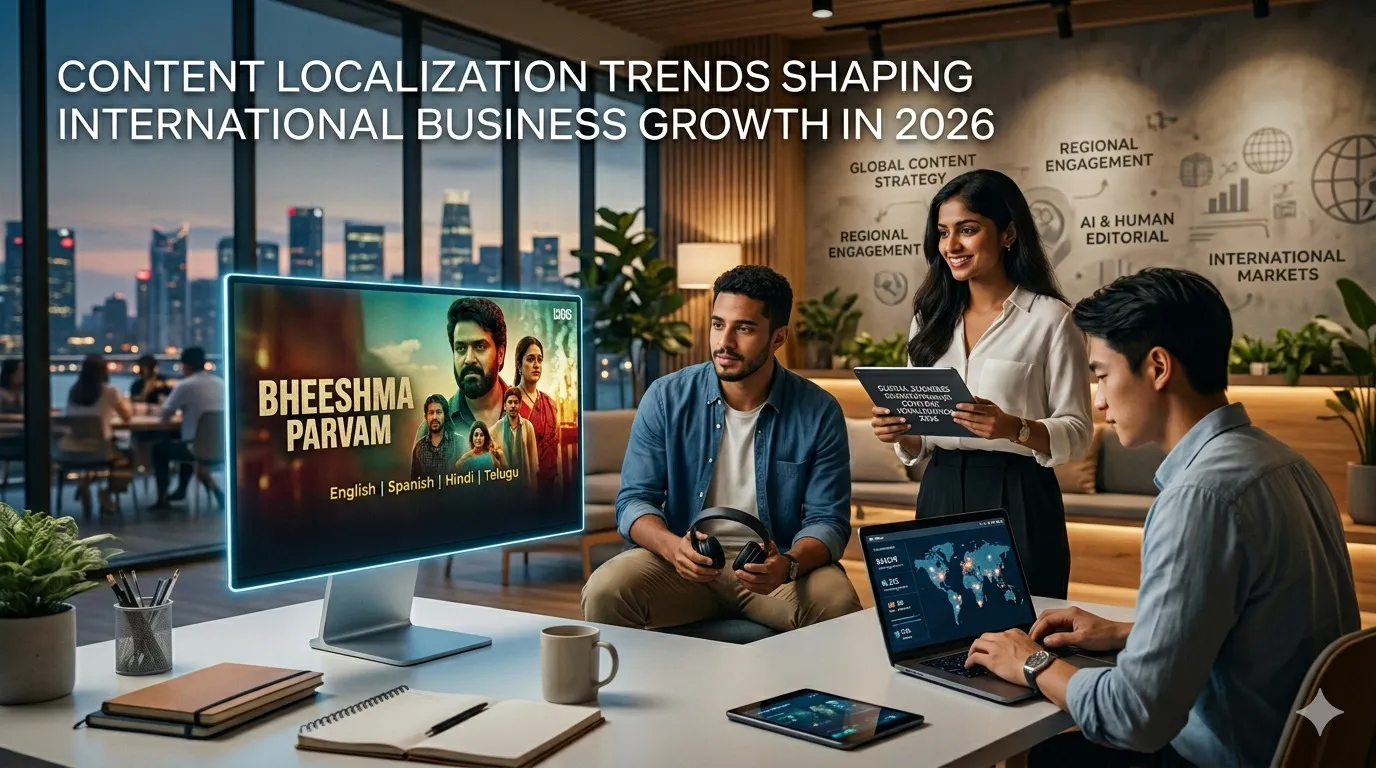

The world does not speak one language. Yet most businesses still act like it does.
In 2026, that approach is costing them. Audiences in India, Southeast Asia, and Latin America are growing fast. They want content in their own language. Companies that deliver it are winning. Those who don't are being left behind.
This is where content localization services step in. And they are reshaping how global business works.
The Numbers Tell the Story
The global language services industry is on track to hit $75.7 billion in 2026. That is not a niche market. That is a mainstream business function.
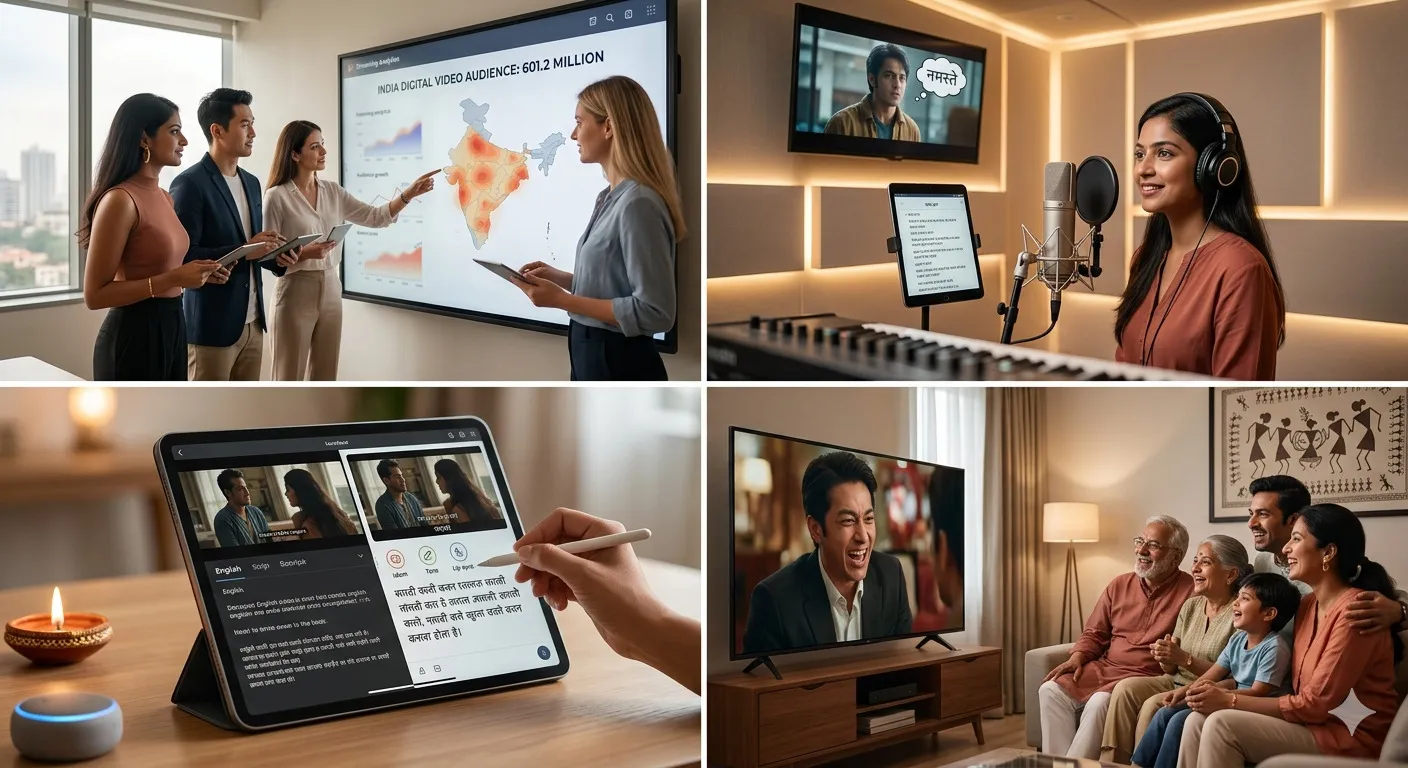
India alone shows how powerful this shift is. The Indian OTT market reached USD 5.4 billion in 2025. It is projected to grow to USD 28.1 billion by 2034. The user base is expected to cross 549 million by 2026.
But the real story is not the size. It is the language. Regional language content in India grew by 40% in 2025. Viewers in Tamil Nadu, Andhra Pradesh, Maharashtra, and Bihar are streaming more than ever. They want content that sounds and feels like home.
Platforms that understood this early are pulling ahead.
India's OTT Boom Is Driven by Regional Content
India's streaming growth is not a metro story. It is a pan-India phenomenon.
Over 55% of Connected TV viewers in India come from towns with fewer than one million people. CTV penetration grew by 85% in 2025. Weekly active connections jumped from 30 million to 40 million.
These are not English-speaking audiences. They are regional audiences. And they are hungry for content in their own language.
Major platforms have responded. Some now produce 200,000 hours of fresh content annually across five to seven languages. Video subscription revenue grew by a massive 61% in 2025. That growth is directly tied to regional language investment.
Entertainment localization is no longer optional. It is the engine of audience growth.
Dubbing Has Changed Forever
Traditional dubbing was expensive and slow. Dubbing a single video into three languages could cost between $2,400 and $8,700. For studios producing weekly content, those numbers made a multilingual release impossible.
That barrier is gone.
AI-powered dubbing tools have changed the economics completely. Transcription, translation, and voice generation now happen together. Timelines have collapsed. Costs have dropped significantly.
But smart studios are not going to be fully automated. The best content localization services in 2026 use a hybrid model. AI handles the speed and scale. Human linguists and voice professionals handle the accuracy, tone, and cultural nuance.
This matters. A flat, emotionally lifeless dub can destroy a viewer's connection to a story. A well-executed dub in Telugu or Marathi can turn an international series into a regional hit.
Language Adaptation Is Now a Market Entry Tool
Businesses are no longer treating language adaptation as an afterthought. It has become part of how companies enter new markets.
A fintech app expanding into South India cannot just translate its interface into Tamil. It must reflect how Tamil-speaking users think about money, trust, and financial decisions. A fashion brand entering West Bengal needs more than a Bengali translation. It needs culturally relevant messaging.
This is what media localization actually means. It is not a word-for-word conversion. It is cultural intelligence applied to content.
Localized web content also helps with international SEO. It aligns with local search behavior. It improves discoverability in regional markets. Businesses using professional content localization services report stronger engagement, better retention, and higher conversion rates.
Multilingual Video Is Now a Marketing Baseline
YouTube reports that 40% of views come from non-English-speaking audiences. Yet most brands only publish in English.
Social media algorithms already prioritize localized content. English-only videos get buried in international markets. Brands that have not localized are essentially invisible to billions of potential customers.
This applies beyond entertainment. E-learning platforms, corporate training programs, and product marketing campaigns all benefit from multilingual content. Companies that deliver training in multiple languages report measurable improvements in workforce alignment and productivity.
In 2026, multilingual video is not a premium add-on. It is the baseline for reaching global audiences.
What Comes Next
The direction is clear. Real-time localization is maturing. Costs will keep falling. Quality will keep improving.
Emerging markets, especially India, Southeast Asia, and Africa, will drive the next wave of digital growth. Businesses that have already built localization infrastructure will have a head start.
Audiences across these markets are not going to wait. They will find content that speaks their language. The question for every brand and studio is simple: Will that content be yours?
In 2026, investing in content localization services is not about being inclusive. It is about being competitive.
Statistics sourced from IMARC Group, FICCI-EY 2026 Report, Market Research Future, and Verbit industry research.





















Sign in to leave a comment.