Cosmetic Dental Clinic Options for Crooked or Gapped Teeth

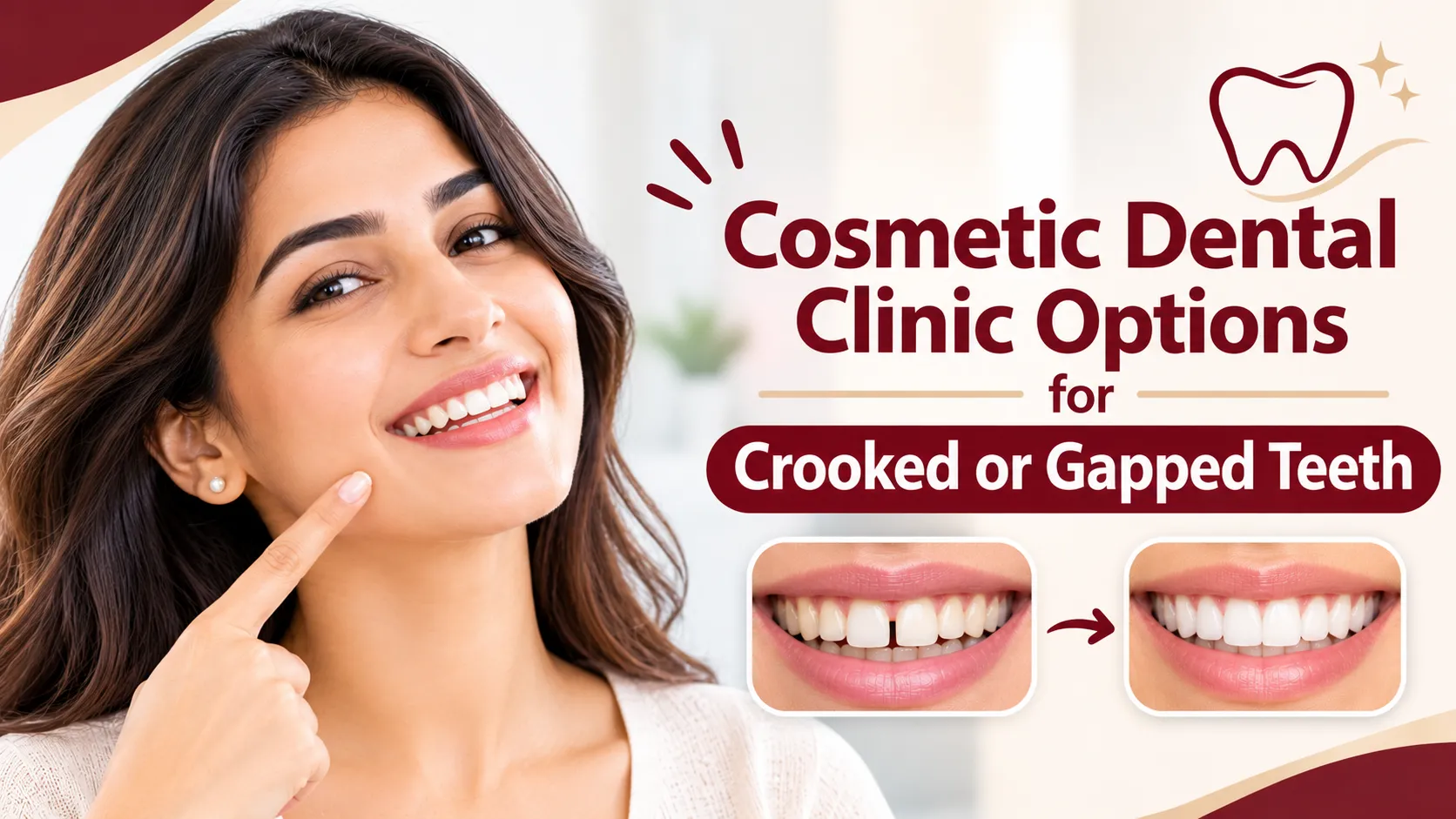
People typically delay their first inquiry about uneven teeth until multiple years have passed. They cover their mouth in photos, practice a closed-lip smile, and tell themselves it's not that bad. People eventually find their path to enter a cosmetic dental clinic where they inquire about available treatment options. The teeth show numerous problems which require different solutions depending on the reasons behind their current condition. A cosmetic enhancement that suits one individual might appear unsuitable when applied to someone else. I will present the available options to you in the same manner which I would use during a face-to-face discussion.
Why teeth end up crooked or gapped
Knowing the origin of the problem enables you to select the right treatment instead of the wrong one.
The main reason for crowding is the dimension of the jawbone. The teeth do not have enough space because the jawbone is undersized which results in overlapping and twisted teeth. People who have gaps between their teeth show a different pattern because their teeth appear small against their wide dental arch and their upper front teeth separate because of the dense tissue band that exists between them. People need to develop their habits to reach this objective. Children who suck their thumbs and use pacifiers for extended periods and perform tongue thrusting will develop dental misalignment which causes their teeth to move out of position.
Later in life, other factors can contribute. A missing tooth lets neighbors drift. Gum disease loosens teeth, so they fan out. Years of grinding or an uneven bite can shift things too. If a gap has appeared recently in an adult, that's worth getting checked, not just covered up.
Start with function, not just looks.
Here's where I'm a bit stubborn. Crooked teeth aren't only a looks issue. Overlapping teeth trap plaque, making cleaning harder and increasing the risk of gum problems. A bad bite can wear teeth unevenly.
That's why the first question isn't "how do I get a straight smile fast?" It's "are the teeth in the right position?" Sometimes the answer is that they need to move. Sometimes it's that they only need reshaping. Which one applies changes everything.
Option 1: Braces
Braces function to shift teeth into different positions which cannot be achieved by dental fillings or veneers. Metal braces serve as the standard orthodontic solution which treats all types of dental problems including complicated cases. Ceramic braces create a natural dental appearance because they match tooth color but users must maintain proper oral hygiene.
They're not quick. Treatment often runs a year or two, sometimes longer, depending on how much movement is needed. But for properly crowded or misaligned teeth, or for bite problems, moving the teeth is usually the right call. It also protects healthy tooth structure, because nothing is ground down.
Option 2: Clear aligners
A set of transparent, detachable trays called aligners gradually move teeth. They work best for patients who have mild to moderate dental crowding and gaps but many adults select them because they stay hidden and they allow for food consumption and dental hygiene maintenance.
The catch is discipline. They work only if you wear them most of the day, usually 20 to 22 hours. The process of producing results becomes slower and less effective when people forget their items or leave them inside the case for multiple days. The treatment for complicated bite problems requires braces as an additional solution. A dentist must provide truthful information about which treatment method suits your dental needs.
Option 3: Dental bonding
Bonding uses tooth-coloured resin, sculpted and hardened onto the tooth. For small gaps between front teeth, a chipped edge, or a slightly uneven tooth, it's quick, often done in one visit, and usually needs little or no drilling.
It has limits. The resin can stain or chip over time and may need repair or replacement. And it doesn't move teeth, so it only changes the look. For a minor gap, though, it's a very reasonable choice.
If you're planning a shade change anyway, whiten first. Your teeth-whitening dentist can lighten your natural teeth before matching the resin, because bonding material can't be lightened later.
Option 4: Veneers
Veneers are thin shells, usually porcelain, bonded to the front of the teeth. They can close gaps, mask mild crookedness, and fix shape, size, and color all at once. The result can look excellent.
The trade-off is that you usually need to remove some enamel, and enamel doesn't grow back. That's a permanent step. I'm cautious about using veneers to disguise teeth that really should be moved, because you may be shaving down healthy teeth to create an illusion. For the right case, such as small, worn, or oddly shaped teeth, they're a strong option.
Option 5: Reshaping and contouring
The dentist can perform enamel polishing and reshaping to fix minor overlaps and single teeth which extend beyond the standard tooth length or have pointier than normal shapes.
The process needs just a few minutes to complete while providing cost savings and delivering noticeable visual results. The method works only for small problems but most people fail to notice its existence.
When there's a missing tooth
A gap from a lost tooth is a different problem. Neighboring teeth tip into the space, and the opposing tooth can drift. Options include a bridge, an implant, or sometimes moving teeth to close the space. The earlier you address it, the easier it is, so don't leave it for years.
Don't skip the retainer.
This is the bit people forget. Teeth have a memory, and after braces or aligners, they tend to drift back unless you hold them in place. A retainer, fixed or removable, is what keeps the result. Skipping it is the most common reason people end up crooked again.
Is it ever too late?
No. Adults get braces and aligners all the time, and the main requirement is healthy gums and supporting bone. If you have gum disease, you must treat it first, because moving teeth in inflamed gums can cause damage. Age alone isn't the barrier.
How to choose a cosmetic dental clinic
Look for one that examines before it recommends, shows options side by side, and explains the trade-offs, including what each costs in time and tooth structure. Ask:
- Do my teeth need to move, or only be reshaped?
- What does each option involve, and how long does it take?
- Does it need enamel removal?
- What are the options if I change my mind later?
- What do I need after treatment to keep the result?
If every answer leads to the same expensive treatment, get a second opinion.
Practical Takeaway
The best fix for crooked or gapped teeth isn't the fastest or the most photogenic. The treatment should correspond to the identified problem. The process requires teeth to change their position. The dental treatment needs to remain temporary because they require only minor dental modifications. Show me different options which cost different amounts of enamel and time because I need to understand the expenses and I should wear a retainer after treatment. The Best Dental clinic in Jakkur needs to provide thorough examinations and full explanations about treatment options before they proceed with any recommendations. The results from cosmetic dentistry should produce healthier teeth which will appear more attractive.
Dental Conceptz lists orthodontics among its services, with an orthodontist (MDS) on its team and a smile design approach built around each patient's face, at its Sahakar Nagar and Jakkur clinics.
FAQs
1. What is the best treatment for crooked teeth?
Braces or clear aligners are usually best, because they actually move teeth into the right position and fix bite problems. Bonding or veneers can enhance the look of mildly crooked teeth, but they don't change tooth position. The right choice depends on your bite, gum health, and goals.
2. How can you fix gaps between teeth?
Braces and aligners and bonding and veneers help you close spaces between your teeth. Bonding provides a fast solution which effectively treats minor dental space issues. Braces and aligners function as treatment options to address dental gaps which result from tooth movement. A dentist needs to identify the reason for this condition because it might stem from gum disease or tooth loss.
3. Are clear aligners as effective as braces?
For mild to moderate crowding and gaps, aligners can be very effective. For complex bite problems or severe crowding, braces are often more reliable. Aligners also need to be worn about 20 to 22 hours a day to work properly.
4. How long does it take to straighten teeth?
Braces and aligners usually take from about 6 months to two years or more, depending on the case. Bonding and reshaping can be done in a single visit. Your dentist can give a realistic timeline after examining your teeth.
5. Is bonding or a veneer better for closing a gap?
Bonding is quicker, less costly, and usually needs little enamel removal, so it's good for small gaps. Veneers last longer and look more polished but require enamel removal that can't be reversed. The better option depends on gap size, tooth shape, and budget.
6. Can adults get braces or aligners?
Indeed. As long as their gums and supporting bone remain in good condition, adults can wear braces or aligners. Gum disease should be treated initially. Because they are less apparent, many adults opt for ceramic braces or transparent aligners.


Sign in to leave a comment.