

Walk through any UK food festival on a Saturday in July and you'll notice the same thing: queues. They aren't outside restaurants with leases and a dozen staff. They're outside small trailers with a hatch, a griddle and two people working flat out. If you've ever daydreamed about running your own food business, that's hard to ignore.
So is Food Trailer UK a sensible way to start? For plenty of people, yes. It isn't a magic shortcut, though, and it's worth being honest about both sides before you spend any money.
Why a trailer beats a restaurant for most beginners
The biggest reason is cost. Even a small restaurant means a lease, a deposit, a fit-out, business rates and a big pile of cash tied up before you sell a single portion. A trailer flips that. You buy one thing, you own it, and you take it to where the customers are.
The second reason is flexibility. A restaurant has one address, and if it's the wrong one, you're stuck. A trailer can do a farmers' market on Thursday, a wedding on Saturday and a brewery car park on Sunday. If a pitch isn't working, you move. That lets you test ideas cheaply, which most new owners underestimate.
What actually decides whether it works
The trailer is the easy part. Three other things matter more.
A focused menu. The trailers that do well usually do a few things properly loaded fries, pizza, smash burgers, good coffee, crepes. Twenty items on a four-meter trailer is a recipe for stress and wasted stock. Pick something you can make quickly and consistently, and that people will queue for in the rain.
The right pitches. Where you park matters as much as what you cook. Events, markets, industrial estates at lunchtime, breweries and sports clubs all behave differently. Some give you huge footfall but charge high pitch fees. Others are quieter but cheap. Write a few lines after every trading day: takings, pitch fee, weather, what sold. After two months you'll know your best spots without guessing.
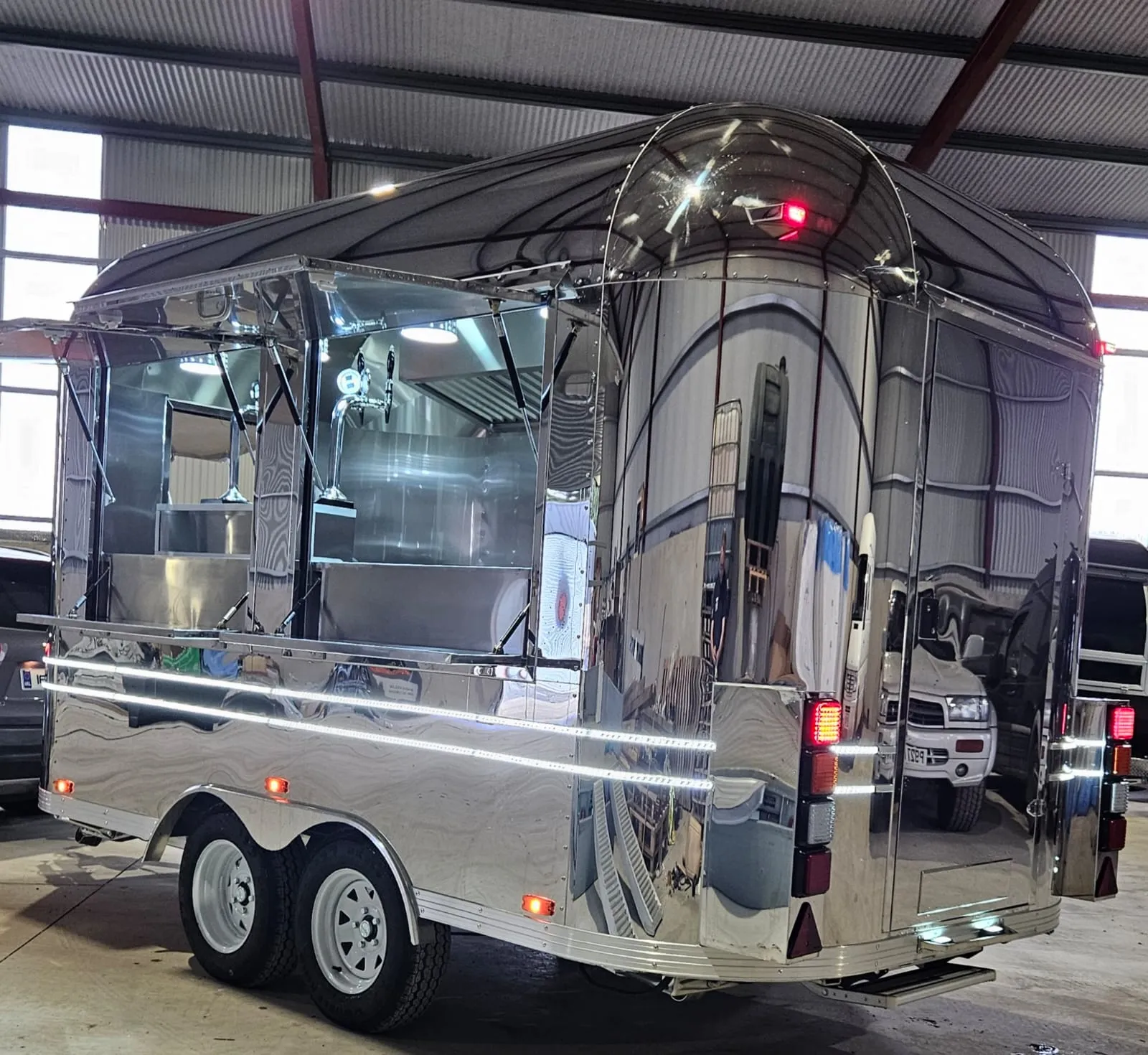
Build quality. A trailer that breaks down mid-event costs you the day's income and a bit of your reputation. Look for a stainless steel interior, a galvanized chassis, a proper extraction hood and a certified electrical system, because rust and dodgy wiring are expensive to fix later. Ask to see the paperwork, and if you can, go and look at the unit in person.
New, used or hire first?
A used trailer is cheaper, but you inherit its history. If you go that route, get someone qualified to check the gas and electrics before you hand over any cash. New units cost more, but they come with documentation, often a warranty, and you can have the layout built around your menu.
If you're still unsure, hire one first. Several suppliers rent trailers for events, and a few weekends of real trading will teach you more than any spreadsheet. Finance is another option, since some suppliers work with partners offering instalment plans. Read the rate carefully, because the monthly figure rarely tells the whole story.
So, is it the start of something good?
If you enjoy cooking, can handle long days on your feet, and don't mind weather, regulation and the occasional dead generator, a food trailer is one of the more accessible ways to start a food business in the UK. You get lower upfront costs than a restaurant, the freedom to move, and a quick way to find out whether people actually like your food.
If you hate early starts, or you need a steady income from week one, it will be a tough ride.
Frequently asked questions
How many people do I need to run it?
Starting out, one person can run a quiet market stall, but it gets hard fast once a queue forms. Two people is the sweet spot for most menus: one cooking and one taking orders and money. For big weekend events you may want a third to prep, wash up and keep stock moving.
Is it better to buy new or second-hand?
Second-hand costs less up front, but you're taking on someone else's wear and tear. Have the gas, electrics, water system and chassis checked by a professional before paying. New trailers cost more, but you get paperwork, a build that matches your menu and fewer nasty surprises. If your budget is tight, a good used unit that has been properly inspected can be a sensible start.
Can I hire a trailer before I buy one?
Yes, and it's a clever way to test your idea. Some suppliers rent out catering and bar trailers by the day, week or month. A few weekends of real trading will show you whether you enjoy the work, what sells, and which pitches are worth the fee, all before you've committed to a purchase.
Can I get finance for a food trailer?
Often, yes. Some suppliers partner with finance companies that offer installment plans, and high-street lenders and equipment finance firms will sometimes back a trailer purchase. Rates depend on your credit history and the size of your deposit, so get a proper quote rather than relying on a headline figure, and check the total you'll repay over the whole term.
How long does a custom build take?
It varies by supplier, but a custom order can take around three months from deposit to delivery, sometimes longer in busy seasons. Stock trailers are often available much sooner. If you want to be trading by spring, order in the autumn or winter, not in March.
What sells best from a food trailer?
There's no single winner, but food that is quick, easy to eat standing up, and cheap to make tends to do well: pizza, burgers, loaded fries, wraps, coffee, waffles and desserts. The best menu is one you can cook well under pressure and prepare mostly in advance. Test two or three dishes at small events before you commit to a full menu.
Conclusion
A food trailer UK won't make you rich overnight, and anyone who says otherwise is selling something. What it does offer is a way in. You can start with a fraction of the money a restaurant demands, trade in places that suit you, and find out quickly whether your food has a real audience.
#FoodTrailerUK #FoodTrailer #FoodTrailersUK #CateringTrailer #MobileCatering #FoodBusiness





















Sign in to leave a comment.