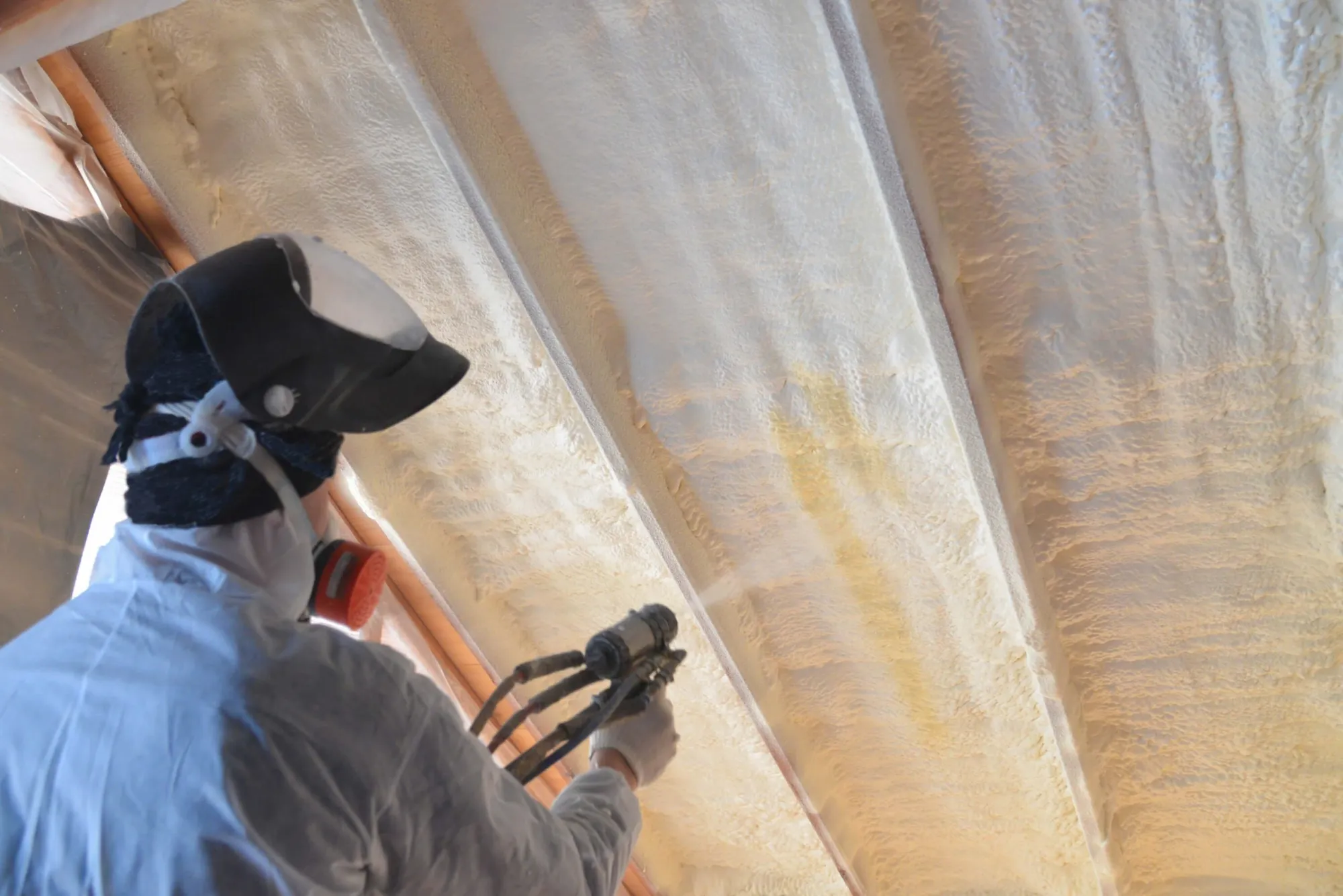

Open-cell spray foam insulation sound control can help manage some airborne bedroom noise and hallway sound when it is installed inside a properly designed interior partition. It can fill wall cavities and reduce open air paths, but it should not be treated as a standalone acoustic solution. The DOE Building Science Education guidance shows how open-cell spray foam can serve specific building-envelope functions, while acoustic performance depends on the complete wall assembly.

For Raleigh homes, interior walls between bedrooms, hallways, bathrooms, offices, and living areas can carry voices, televisions, footsteps, and other everyday sounds. Raleigh Excel Spray Foam considers the wall construction, cavity depth, drywall layers, penetrations, and existing insulation before recommending open-cell foam for an interior partition.
How Open-Cell Spray Foam Can Help With Interior Sound
Open-cell foam expands into a wall cavity and can occupy spaces around framing members. Filling these cavities can reduce the amount of open air space through which airborne sound travels.
The effect is different from simply adding a heavy sound barrier. Sound transmission depends on the entire partition, so foam alone does not determine the final acoustic result.
Airborne Sound
Airborne sound includes voices, music, television noise, and other sounds that travel through the air before reaching a wall.
A filled cavity can reduce the open space inside a partition. Open-cell foam may therefore contribute to the overall sound-control strategy when combined with suitable wall materials.
Sound Absorption
Open-cell foam has a cellular structure that can absorb some sound energy inside a cavity. The actual benefit depends on the thickness, density, wall construction, and other components in the assembly.
The Gypsum Association reports that fibrous insulation such as fiberglass, mineral wool, and cellulose generally has stronger documented evidence for increasing STC in cavity wall systems than spray foam.
What Matters More Than Foam Alone
A quieter bedroom or hallway depends on more than the insulation inside the wall. The complete partition controls how much sound reaches the other side.
Important factors include:
- Wall Mass: Heavier wall surfaces generally provide greater resistance to airborne sound transmission than lightweight surfaces alone.
- Cavity Insulation: Insulation can reduce sound energy within the wall cavity, but different materials perform differently.
- Drywall Layers: Additional gypsum board can change the mass and acoustic behavior of the partition.
- Air Gaps: Small openings around outlets, pipes, doors, and other penetrations can create direct sound paths.
- Wall Connections: Sound can travel through adjoining floors, ceilings, and framing, bypassing the insulated cavity.
- Decoupling: Certain acoustic wall systems separate parts of the assembly to reduce vibration transfer.
This means a wall with open-cell foam can still transmit noticeable sound if the rest of the partition has weak points.
Open-Cell Foam Compared With Other Interior Insulation
Different materials can serve different purposes inside bedroom and hallway partitions.
| Material | Sound-Control Role | Other Common Functions | Main Consideration |
|---|---|---|---|
| Open-Cell Spray Foam | Can absorb some sound within a cavity | Insulation and selected air sealing | Acoustic performance depends heavily on the wall assembly. |
| Fiberglass Batt | Commonly used for cavity sound control | Thermal insulation | Installation quality affects cavity coverage. |
| Mineral Wool | Frequently selected for acoustic partitions | Thermal and fire-related applications in suitable assemblies | Must match the wall design and product requirements |
| Cellulose | Can provide cavity sound absorption | Thermal insulation | Density and installation method affect performance |
| Rigid Foam | Limited role as cavity acoustic insulation | Thermal insulation | Usually selected for thermal rather than sound-control purposes |
The Gypsum Association's testing review found more established STC evidence for fibrous insulation than spray foam in common wall assemblies.
Can Open-Cell Foam Reduce Bedroom Noise?
It can help reduce some airborne noise when the foam is part of a properly built interior partition. It should not be described as a guaranteed way to make a bedroom quiet.
For example, a bedroom wall beside a hallway may transmit conversations because sound passes through the cavity and small openings around electrical boxes or trim. Filling an appropriate cavity can address one part of that path.
If the same wall has a hollow-core door, unsealed penetrations, or a large gap around the frame, those areas can continue to transmit sound even after cavity insulation is installed.
Can It Help With Hallway Sound?
Hallways can carry voices, footsteps, doors closing, and household activity directly toward bedrooms.
Open-cell foam may help with sound passing through an interior partition, particularly when the cavity previously had little or no insulation. The improvement depends on the wall's existing construction and the type of noise involved.
Door assemblies deserve special attention. A well-insulated wall can still have limited acoustic performance if sound travels around or through the bedroom door.
Pros And Cons Of Open-Cell Foam For Sound Control
Open-cell spray foam has useful properties, but its acoustic role needs to be kept realistic. The following points can help property owners compare the material with other interior-wall options.
Pros
- Fills Irregular Cavities: Open-cell foam can expand into spaces around framing and help reduce unfilled portions of a wall cavity.
- Can Support Sound Absorption: The foam can absorb some sound energy within the cavity as part of the overall partition.
- Combines Functions: In suitable applications, the same material can provide insulation and selected air-sealing functions.
- Useful During Remodeling: Foam can be considered when interior walls are opened during renovation and cavity conditions need improvement.
Cons
- Not A Dedicated Acoustic Barrier: Foam does not replace mass, resilient connections, acoustic drywall, or other sound-control methods.
- Limited Assembly Data: The Gypsum Association notes that there is less acoustic testing available for spray-foam assemblies than for fibrous insulation.
- Other Sound Paths Remain: Doors, outlets, ceilings, floors, and adjacent framing can allow sound to bypass the insulated cavity.
- Wrong Product For Some Goals: A project focused mainly on sound reduction may benefit more from a tested acoustic wall assembly.
Real Bedroom and Hallway Noise Problems
Homeowners usually notice noise problems in specific situations rather than as an abstract insulation issue.
Conversations Outside a Bedroom
A bedroom beside a busy hallway may pick up voices through the partition. Cavity insulation can address one transmission path, but door gaps and wall penetrations can remain important.
Television Noise
A bedroom next to a living room may receive television sound through the wall. The wall's mass, cavity insulation, drywall configuration, and openings all affect the result.
Home Office Noise
A home office beside a hallway can receive conversations and foot traffic. Improving the partition may help, especially if the existing cavity is largely empty.
Children's Bedrooms
Bedrooms near common living areas may experience more daytime activity. A complete sound-control plan can consider the wall, door, floor, ceiling, and other connected assemblies.
Why Air Sealing Also Matters
Sound and air movement can share some pathways. An opening around an electrical box, pipe, or wall penetration can allow air to pass and can also provide a path for airborne sound.
That does not mean air sealing alone creates a high-performing acoustic wall. It means open penetrations should not be ignored when sound control is part of the project.
Building-code provisions for sound transmission also recognize the importance of treating penetrations in assemblies where sound ratings apply. The 2021 International Building Code, for example, requires penetrations and openings in certain sound-rated assemblies to be sealed, lined, insulated, or otherwise treated to maintain the required rating.
Raleigh Considerations For Interior Partitions
Raleigh homes can contain a mix of newer construction, remodeled rooms, additions, and older interior partitions. A wall's existing design may therefore vary considerably from one room to another.
North Carolina's code materials also address sound transmission in residential construction. The state's residential code references sound transmission provisions, while the North Carolina Office of the State Fire Marshal has explained that sound-attenuation insulation between dwelling units is a sound-control matter rather than an energy-code insulation requirement when those walls do not form part of the building thermal envelope.
For a Raleigh interior wall, the applicable requirements depend on the building type, project scope, and code provisions governing the work.
Does R-Value Measure Sound Control?
R-value measures resistance to heat flow. It does not measure how well a wall blocks sound.
A material can have a useful thermal R-value without providing the desired acoustic performance. Sound control is normally assessed using properties and ratings related to the entire wall assembly, such as Sound Transmission Class, rather than relying on insulation R-value alone.
This distinction matters when a homeowner wants both thermal insulation and quieter rooms. The insulation selection should address the actual goal instead of assuming that a higher R-value automatically means better sound control.
What A Complete Sound-Control Wall May Include
For stronger bedroom and hallway sound control, several components can work together.
- Cavity Insulation: Fiberglass, mineral wool, cellulose, or another suitable material can reduce sound energy within the cavity.
- Gypsum Board: Wall mass can contribute to resistance against airborne sound transmission.
- Sealed Penetrations: Gaps around outlets, pipes, wiring, and other openings should be addressed where the wall design requires it.
- Door Improvements: Door construction and perimeter seals can matter greatly when the noise path includes a doorway.
- Decoupled Framing: Some higher-performance wall systems use resilient channels or separated framing to reduce vibration transfer.
The correct combination depends on the desired acoustic target and the existing construction.
How Raleigh Weather Affects Interior Sound Projects
Weather has less direct impact on interior sound transmission than it does on exterior insulation work. Still, Raleigh's humid summers and cooler winter periods can affect construction conditions and the use of insulation products.
Warm and Humid Conditions
Foam installation requires suitable substrate and environmental conditions specified by the product manufacturer. The wall should also be free of active moisture problems before insulation work begins.
Cooler Weather
Cold surfaces can affect spray foam installation and curing. Installers need to follow the product's required temperature and application conditions.
Moisture Problems
A damp wall should not simply be filled with foam. The source of moisture needs to be identified and corrected before the cavity is closed.
When Open-Cell Foam May Make Sense
Open-cell foam can be considered when an interior wall is already being opened and the project needs cavity insulation along with other building-envelope improvements.
It can be a practical option when:
- The wall has an accessible empty cavity.
- The project needs additional insulation.
- Air leakage through suitable gaps is part of the concern.
- The homeowner understands that foam is only one part of sound control.
- The wall design does not require a different tested acoustic system.
A dedicated acoustic insulation product may be more appropriate when the main goal is maximizing sound reduction.
Why Choose Raleigh Excel Spray Foam
Raleigh Excel Spray Foam is led by Daniel Harper, who has more than 10 years of experience in the insulation industry and specializes in spray foam applications for residential and commercial projects.
The company reviews the existing wall construction before recommending open-cell foam for interior partitions. That review can include cavity depth, existing insulation, framing, penetrations, moisture conditions, and the intended purpose of the wall.
This helps separate a general insulation project from a dedicated acoustic-control project where a different wall system may be more appropriate.
Conclusion
Open-cell spray foam insulation sound control can contribute to better management of airborne noise between bedrooms and hallways when it is used as part of a properly designed interior partition.
It can fill cavity spaces and provide some sound absorption, but it should not be treated as a standalone soundproofing material. The wall's drywall, framing, penetrations, doors, adjoining assemblies, and cavity insulation all affect the final result.

For Raleigh homeowners, the best approach is to identify the actual noise path first. That makes it easier to decide if open-cell foam is suitable or if a more complete acoustic wall treatment is needed.
Get Help With Interior Sound And Insulation
Raleigh Excel Spray Foam can review interior partitions where homeowners are dealing with bedroom noise, hallway sound, or uninsulated wall cavities.
Property owners can contact Raleigh Excel Spray Foam at (919) 301-9435 or [email protected] to discuss an interior insulation project.
FAQs
Can Open-Cell Spray Foam Reduce Sound Between Bedrooms?
Open-cell spray foam can help absorb some sound within a wall cavity, but the final result depends on the complete partition. Wall mass, drywall, penetrations, doors, and framing all affect sound transmission.
Is Open-Cell Spray Foam Good For Soundproofing?
It can contribute to sound control, but it should not be considered a complete soundproofing system. Dedicated acoustic assemblies often use several components to control airborne and structure-borne sound.
Is Fiberglass Better Than Spray Foam for Sound Control?
Fiberglass has more established acoustic testing in common cavity wall assemblies. The Gypsum Association reports that fibrous insulation generally increases STC performance, while less acoustic testing is available for spray-foam assemblies.
Does Higher R-Value Mean Better Soundproofing?
No. R-value measures thermal resistance, not sound transmission. A wall can have a high insulation R-value without providing the acoustic performance a homeowner expects.
Can Spray Foam Reduce Hallway Noise?
It can reduce some airborne sound passing through an interior wall cavity when installed as part of a suitable assembly. Noise can still travel through doors, ceilings, floors, outlets, and other connected building components.
Can Open-Cell Foam Be Used in Bedroom Walls?
Open-cell foam can be used in suitable interior wall cavities when the product, installation conditions, and wall assembly are appropriate. The project should also account for fire safety and building code requirements.
What Is The Best Insulation For Interior Sound Control?
There is no single material that provides the same result in every wall. Fiberglass and mineral wool have established uses in acoustic partitions, while spray foam can serve other insulation and air-sealing needs. The complete wall design matters more than the insulation material alone.
Can Air Sealing Help With Sound?
Sealing suitable gaps can reduce direct air and sound paths through openings. It does not replace the mass, cavity treatment, and construction details needed for a higher-performing acoustic wall.
Author & Reviewer
Author: Daniel Harper
I'm Daniel Harper, owner of Raleigh Excel Spray Foam Insulation, with over 10 years of experience in the insulation industry. I specialize in spray foam insulation and am dedicated to providing reliable, high-quality solutions that improve comfort, energy efficiency, and long-term performance for both residential and commercial projects. That same dedication to reliability and quality shapes every project I take on, because delivering lasting comfort and genuine energy efficiency is what this work is about. My focus stays on providing high-quality, dependable spray foam insulation results for every client I serve.
Reviewer: William Harris
With nearly a decade in the spray foam insulation field, William Harris reviewed this post and provided guidance that reflects both technical understanding and real-world marketing experience.






















Sign in to leave a comment.