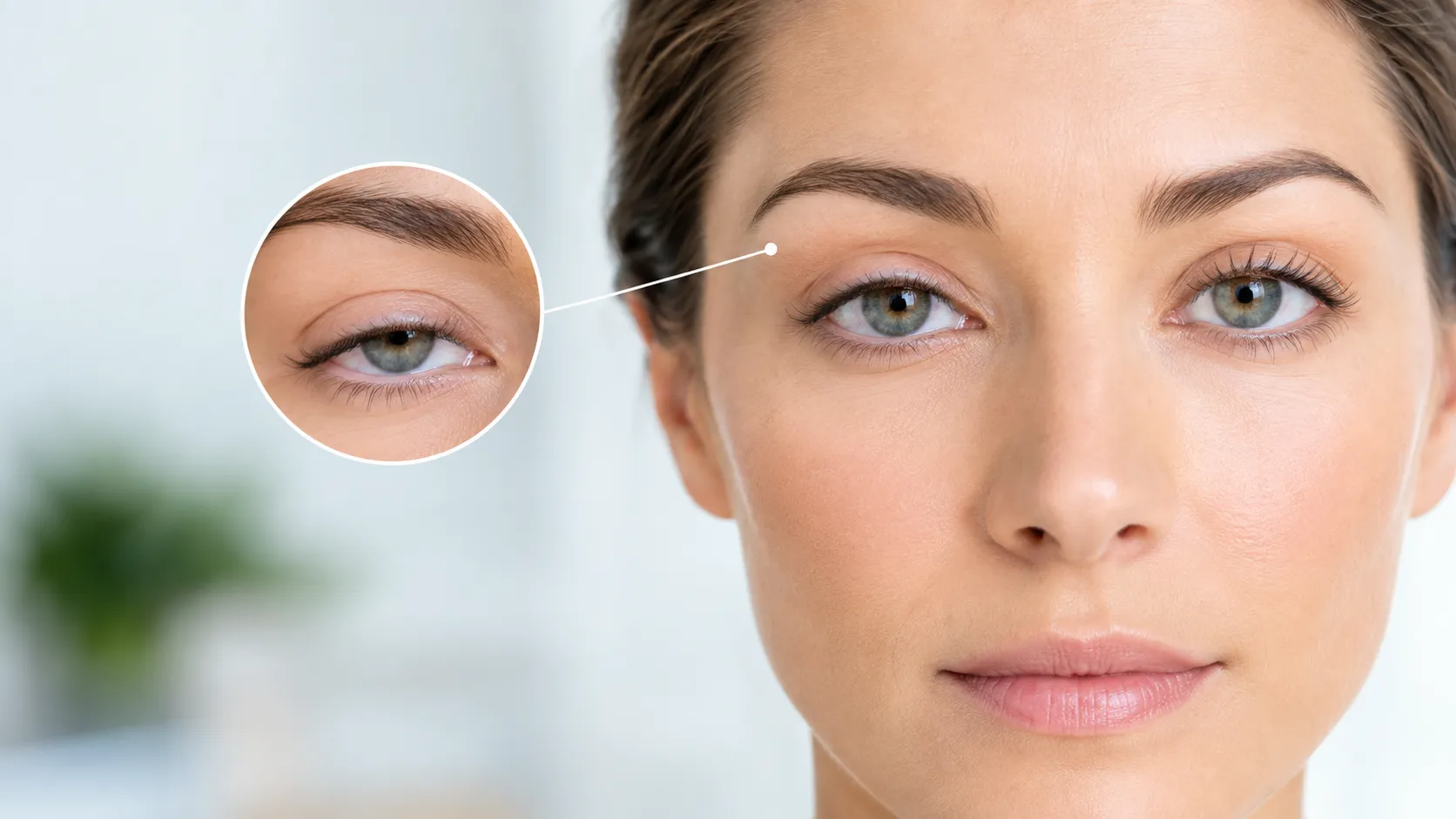

A sagging eyelid can slowly alter the appearance of your eyes and, in some cases, affect your vision. While ageing and changes to the skin around your eyes can lead to drooping eyelids, another potential cause of the condition is ptosis.
Ptosis refers to a condition where an eyelid droops lower than normal due to an issue with the muscles or other supporting structures that normally lift the eyelid. Figuring out what is causing the drooping can be important for deciding on a course of treatment.
What Is Ptosis?
Ptosis refers to a droopy or lazy eyelid, which sits lower than normal. It affects the eyelids of one or both eyes and can come on instantly or progress over a period of time. Ptosis is present at birth or can occur over time. The age of the patient can play a role in where the tendons, tissue, and muscles responsible for lifting the eyelid can change. Prior eye surgeries, injuries or diseases that affect the eye can be factors.
The extent of drooping can range from very slight to severe. In minor cases, the change may be only cosmetic. Severe ptosis can obscure part of the eye's field of view by covering some of the pupil.
How Can You Tell If Droopy Eyelids May Be Ptosis?
Droopy eyelids do not always have the same cause. Excess upper-eyelid skin, changes in the brow position, and ptosis can sometimes create a similar appearance.
Possible signs of ptosis include:
- One upper eyelid appearing lower than the other
- Difficulty keeping the eyes fully open
- Reduced upper-field vision
- Raising the eyebrows to see more clearly
- Tilting the head backwards to improve vision
- Forehead tension or tiredness from constantly trying to lift the eyelids
- An uneven appearance between the two eyes
These symptoms do not necessarily mean that you have ptosis. A proper examination is needed to determine whether the eyelid muscle, tendon, skin, brow or another structure is responsible for the drooping.
Ptosis vs Excess Eyelid Skin
One of the most important parts of assessment is distinguishing ptosis from excess upper-eyelid skin. With excess skin, the eyelid may appear heavy because loose skin extends over the natural eyelid crease. With ptosis, the actual edge of the upper eyelid sits lower.
In some patients, both problems occur together. A person may therefore require treatment that addresses more than one factor. This is why an individual assessment is more useful than choosing a procedure based solely on photographs or the appearance of the eyelids.
What causes ptosis?
Age-related – the eyelid-lifting muscle can stretch and weaken with age, which causes the eyelids to droop. This is the most common cause of acquired ptosis in adults.
Congenital – Droopy eyelids can be a birth defect if the eyelid-lifting muscle develops abnormally.
Trauma or surgery—Trauma to the eye or eyelid, or a previous eye or eyelid surgery, can sometimes include the tissues that support the eyelids.
Neurological or muscular causes: Less frequently, ptosis may be caused by an underlying neurological or muscle disorder.
What Treatment Is Available?
Treatment depends on the cause, severity, and effect of the drooping.
Observation may be an option for some if the eye drooping is mild and does not cause any problems. Managing the drooping of the eyelids may involve addressing an underlying medical condition if it is suspected to be contributing to the drooping.
If the position of the eyelid requires correction, a ptosis procedure may be performed. The nature of the operation depends upon the strength of the eyelid elevator muscle and on the patient's anatomy. Some patients may also undergo ptosis repair together with upper blepharoplasty if there is also a significant amount of excess skin giving the heavy lid appearance. These two procedures are not interchangeable and need careful consideration prior to treatment.
What Happens During a Consultation?
A consultation provides an opportunity to establish why the eyelid is drooping and whether treatment is appropriate. An assessment may consider eyelid height, symmetry, eyelid movement, muscle function, brow position, excess skin and the effect of the drooping on your vision. Your medical and surgical history may also be discussed.
Rather than treating every droopy eyelid in the same way, the goal is to identify the factors affecting your eyelids and develop a treatment plan suited to your individual needs.
Choosing Droopy Eyelid Treatment in Cape Town
Your first step is to identify the cause of the eyelid drooping, which is key to the next stage in treatment planning. Depending on the individual patient, treatment for Droopy eyelid treatment Cape Town may include observation, treatment of an underlying condition, ptosis surgery or upper eyelid blepharoplasty. In some cases, different eyelid surgery techniques are combined.
Every patient is evaluated by the specialist oculoplastic surgeon at Your Eyelids before any treatment plan is recommended; the primary goal is to address your functional and aesthetic concerns regarding your eyelids, and to achieve a pleasing, harmonious outcome.
If one or both eyelids are dropping, appearing heavier, or heavier and preventing you from opening the eyes as you would like, an exam can help determine whether ptosis is playing a role.
Conclusion
Droopy eyelids are not always simply a result of ageing or excess skin. Ptosis can affect the position of the upper eyelid and, in more pronounced cases, may interfere with the upper field of vision. As different causes require varying treatments, it's always best to have a thorough assessment before choosing a procedure. An appointment with a specialist oculoplastic surgeon will determine the cause of your droopy eyelids and what solutions may be available to you.
Get in touch if you're worried about drooping eyelids. Make an appointment to discuss your symptoms, treatment options and requirements.



















Sign in to leave a comment.