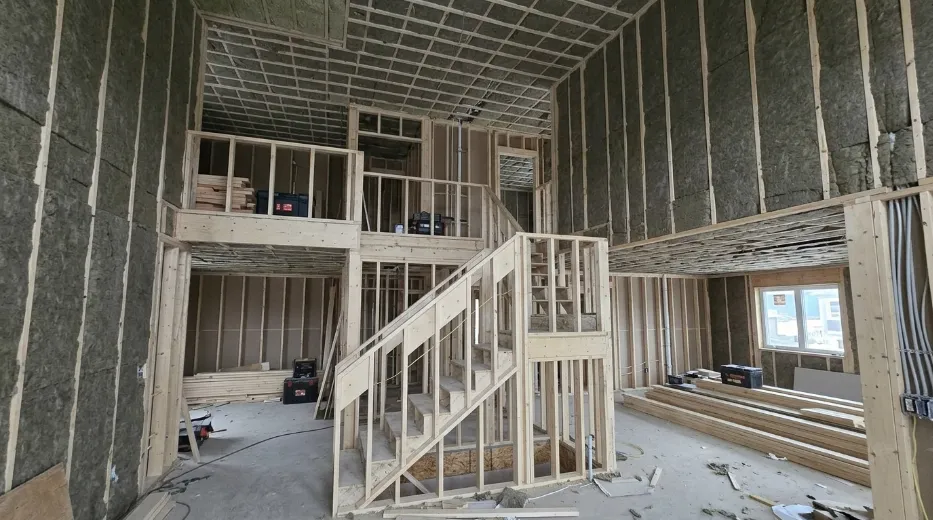

Yes, you can significantly quiet your workspace without tearing down walls, moving desks, or altering your floor plan. Soundproofing for Home Offices targets acoustic energy through surface-level mass, dense insulation retrofits, and perimeter air sealing. These strategic adjustments tackle sound transmission at the boundary level while leaving your existing layout completely intact.
Many homeowners assume that blocking noise requires structural remodeling or rearranging heavy furniture. Decades of acoustic engineering demonstrate that sound travels like water through the path of least resistance. When you address the specific pathways that carry sound waves, you achieve a distraction-free work environment without sacrificing your existing interior design.
Why Sound Enters Your Workspace Without Warning
Acoustic energy enters a room in two distinct forms: airborne sound and structure-borne sound. Airborne sound includes voices, television audio, and street traffic. Structure-borne sound travels through building framing as mechanical vibrations from footsteps, HVAC equipment, and slamming doors.
Standard residential construction rarely includes internal acoustic insulation. Interior partition walls usually consist of two sheets of half-inch drywall over hollow wood studs. This hollow cavity acts like a drum, amplifying everyday home office noise and allowing conversations to pass freely into neighboring rooms.
Research indicates that an uninsulated interior wall typically achieves a Sound Transmission Class rating of only 30 to 34. At this level, normal speech heard from the next room remains easily intelligible. By adding acoustic mass and damping materials, you can raise that rating above 45, rendering loud speech completely inaudible.

Sealing The Perimeter Without Modifying Room Dimensions
The most common entry points for unwanted sound are microscopic gaps around door frames, electrical outlets, and baseboards. Sound behaves much like air or water, meaning even a tiny gap compromises an entire wall. Acoustic testing reveals that an unsealed gap of just one percent in a wall assembly can leak up to fifty percent of incoming acoustic energy.
Upgrading your existing entry door provides immediate isolation improvements without changing where the door opens. Hollow-core doors offer almost no resistance to sound waves. Replacing a hollow door with a solid-core wood slab blocks sound transfer while fitting into the original frame and hinges.
- Add high-density neoprene perimeter gaskets along the door jamb stops
- Mount an automatic drop-down door bottom seal to close the threshold gap when shut
- Apply acoustic putty pads behind all electrical switch and outlet boxes
- Fill perimeter baseboard cracks with non-hardening acoustic perimeter sealant
Bonus Tip:
Check the air return grilles inside your room. Sound often shortcuts through shared HVAC ductwork. Installing an internal sound baffle or dynamic duct silencer inside the vent register immediately stops voice transfer between rooms without altering wall vents.
How Surface Treatments Control Room Acoustics
Once you block outside disturbances, internal sound quality becomes the next priority. Hard surfaces like hardwood floors, bare drywall, and glass windows bounce sound back and forth. This creates flutter echoes that make your voice sound hollow during video calls.
Adjusting your room acoustics does not require moving bookshelves or changing desk placement. Strategic placement of fabric-wrapped acoustic panels on primary reflection points absorbs stray reflections and eliminates echo.
Proper sound absorption prevents sound pressure from building up within the space. When your voice strikes soft, porous materials, the acoustic energy converts into microscopic amounts of heat through friction rather than bouncing back into the microphone.
- Hang dense acoustic art panels directly on flat wall surfaces using standard picture hooks
- Position absorption panels at ear height along the primary sound reflection points
- Place a thick woven area rug with a dense rubber underlayment over hard floors
- Hang floor-length acoustic drapes over exterior window frames
Upgrading Wall Density Without Construction Demolition
If speech transmission through shared walls remains a problem, you can increase wall density without demolition. Modern retrofitting techniques allow technicians to treat hollow wall cavities cleanly from the interior or exterior.
Injecting dense open-cell spray foam or dense-pack cellulose directly into wall cavities through small, repairable holes adds instant dampening. The injected material fills every void around pipes and wiring, stopping airborne sound waves before they pass into the next room.
Another effective approach involves adding a secondary layer of high-density drywall paired with a viscoelastic damping compound. This liquid compound goes directly onto the back of the new drywall sheet, which workers then screw over the existing wall. The compound stays permanently flexible, shearing acoustic vibrations as they try to move between sheets.
| Sound Control Method | Noise Reduction Level | Installation Impact | Primary Noise Target |
|---|---|---|---|
| Perimeter Air Sealing | Moderate (3 to 6 dB) | Non-invasive, under 2 hours | Airborne voices and drafts |
| Solid-Core Door Upgrade | High (8 to 12 dB) | Direct swap on original frame | Household conversations and hallway noise |
| Wall Cavity Foam Retrofit | Very High (10 to 15 dB) | Minimal patching required | Low-frequency TV audio and voice bleed |
| Acoustic Wall Panels | Internal Clarity Only | Hangs like framed art | Echo, reverberation, and call feedback |
| Damped Drywall Overlay | Maximum (12 to 18 dB) | Adds 5/8 inch to wall profile | Heavy mechanical sound and loud speech |
Regional Climate Considerations For Sound Insulation
Acoustic retrofits must match your local climate to prevent moisture accumulation inside wall assemblies. In colder northern zones, exterior wall soundproofing requires careful consideration of the vapor barrier. Adding insulation without assessing thermal boundaries can cause warm indoor air to condense against cold exterior sheathing.
In humid coastal or southern areas, closed-cell spray foam provides both exceptional structural sound dampening and an impenetrable moisture barrier. For interior partition walls, open-cell foam remains the standard choice because its flexible cell structure captures and dissipates sound waves better than rigid materials.
Bonus Tip:
If you live in an area prone to severe weather or seasonal temperature swings, prioritize closed-cell foam for any exterior-facing office walls. It creates a complete thermal break that cuts down outside street noise and lowers heating costs simultaneously.

Key Factors Before Choosing Your Soundproofing Plan
Beyond environmental considerations, take time to evaluate your primary acoustic problem and daily work habits before spending money on materials.
- Identify the noise frequency: Low-frequency thuds from laundry appliances require heavy mass, whereas high-frequency voices only need perimeter air sealing and insulation.
- Determine your confidentiality needs: If you handle sensitive legal, medical, or corporate calls, you need complete speech privacy rather than simple echo reduction.
- Inspect the building pathway: Sound often flanks through shared crawlspaces, uninsulated attics, or continuous drop ceilings above the office.
- Review your budget balance: Spending thousands on expensive surface panels will not help if your door has a half-inch air gap along the floor.
Professional testing shows that uninterrupted quiet improves cognitive performance significantly. Workers lose up to 86 minutes of productive focus every day due to ambient domestic disruptions. Investing in targeted sound dampening restores focus quickly while keeping your home layout completely unchanged.
A Practical Evaluation Of Your Home Workspace
Achieving true acoustic separation requires matching the right treatment to your specific noise issues. You do not need to tear out closets, reposition your desk, or reduce your floor area to build a quiet workspace. Look at the primary sound paths around your door, evaluate hollow wall cavities, and treat bare reflective surfaces. Assessing your office needs with these steps gives you a quiet, professional environment that supports productive work every day.
Get A Professional Assessment For Your Home Office Soundproofing
If you want to eliminate distracting noises and keep your office layout intact, working with experienced insulation specialists ensures proper sound control. Coleman Spray Foam provides expert retrofitting, dense-pack insulation, open-cell and closed-cell spray foam, and air sealing services tailored to your property. Contact their team today to schedule your consultation and request a free quote for your project.
- Email: [email protected]
- Phone: (781) 730-6537
Frequently Asked Questions About Office Acoustic Upgrades
Do rugs and heavy curtains stop sound from leaving the room?
Rugs and curtains absorb sound reflections within the room, but they do not prevent sound from passing through walls. True noise containment requires adding structural mass and sealing air gaps.
How much sound reduction can I expect from sealing door gaps?
Sealing the perimeter of a standard door with heavy-duty weatherstripping and a bottom drop seal can cut sound transmission in half, reducing ambient hallway noise by up to 10 decibels.
Will adding acoustic foam to my walls block traffic noise?
Lightweight surface foam only stops internal room echoes. Blocking outdoor traffic noise requires dense insulation within the exterior wall cavity or upgrading to heavy laminated window inserts.
Does soundproofing a home office increase overall property value?
Yes, quiet dedicated workspaces are highly desirable to modern homebuyers who work remotely, making acoustic upgrades an attractive permanent feature.
Can you soundproof an office ceiling without lowering it?
Technicians can inject dense-pack insulation into the joist cavities through small access points, absorbing footstep sounds from upper floors without losing any ceiling height.
























Sign in to leave a comment.