

A tattoo can represent a meaningful moment, a relationship, a personal belief, or simply a design you loved at the time. But people change. What once felt like the perfect choice may eventually feel outdated, difficult to explain, or simply no longer connected to who you are today.
That is one reason laser tattoo removal has become an increasingly popular option for people who want to fade or remove unwanted ink. Modern laser treatments are designed to target tattoo pigment while leaving the surrounding skin as protected as possible. However, removing a tattoo is not the same as erasing pencil marks from paper. It takes time, patience, and an approach suited to the individual tattoo.
For people considering laser tattoo removal in Mississauga, understanding what actually happens during treatment can make the decision much easier. Knowing how the process works, what affects results, what recovery may involve, and what questions to ask before treatment can help you approach the process with realistic expectations.
Why People Decide to Remove Tattoos
There is no single reason someone wants a tattoo removed.
Some people want to completely eliminate a design. Others only want to lighten it enough to make room for a new tattoo. A name or symbol connected to an old relationship may no longer feel appropriate. Someone may also have chosen a tattoo when they were younger and later decided that it does not suit their current lifestyle.
Even professional tattoos can become unwanted over time. Personal tastes evolve, careers change, and priorities shift.
Whatever the reason, wanting a tattoo removed does not require an elaborate explanation. It is simply another personal decision about your skin.
How Laser Tattoo Removal Works
The basic idea behind laser tattoo removal is easier to understand than it may sound.
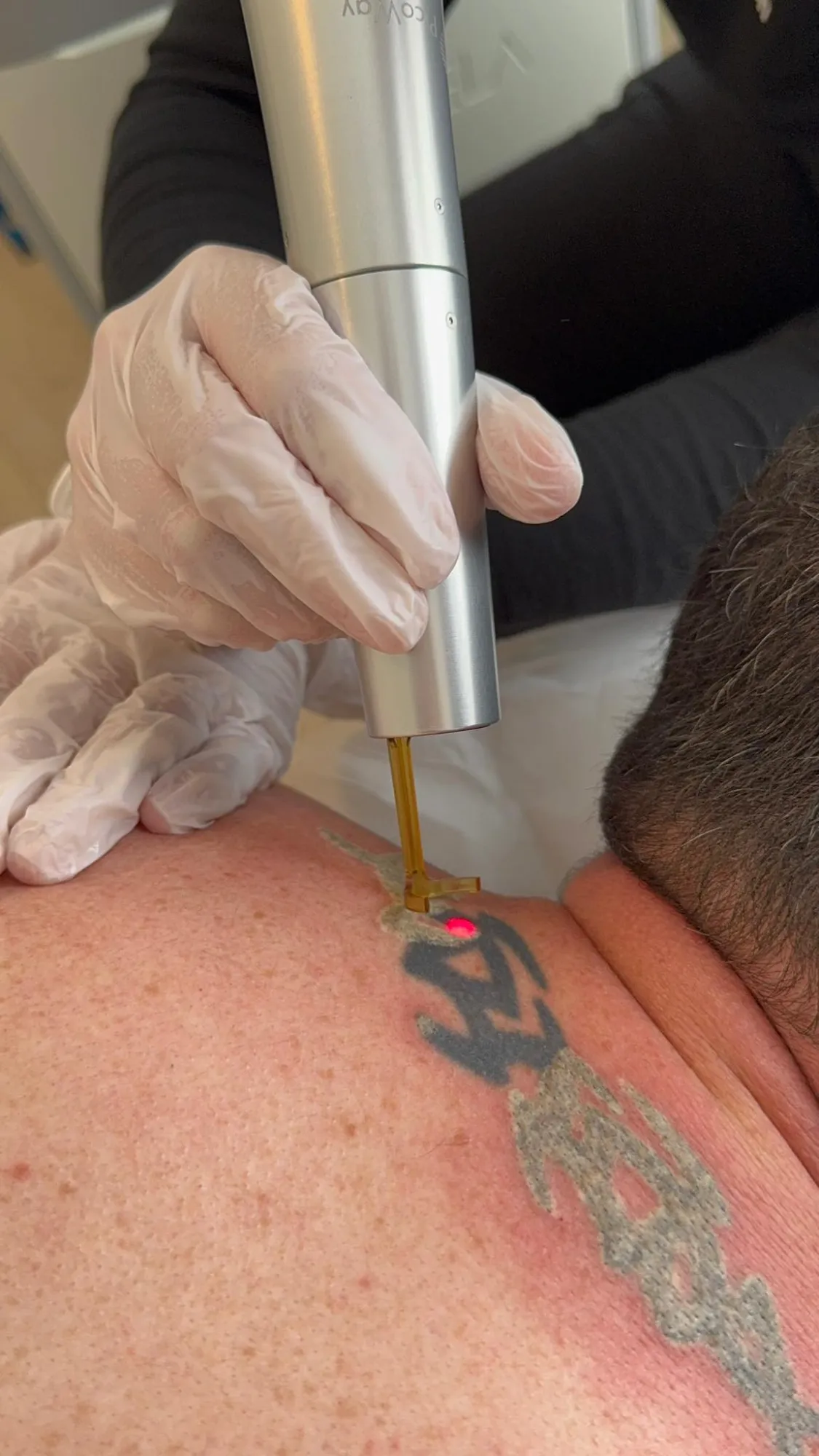
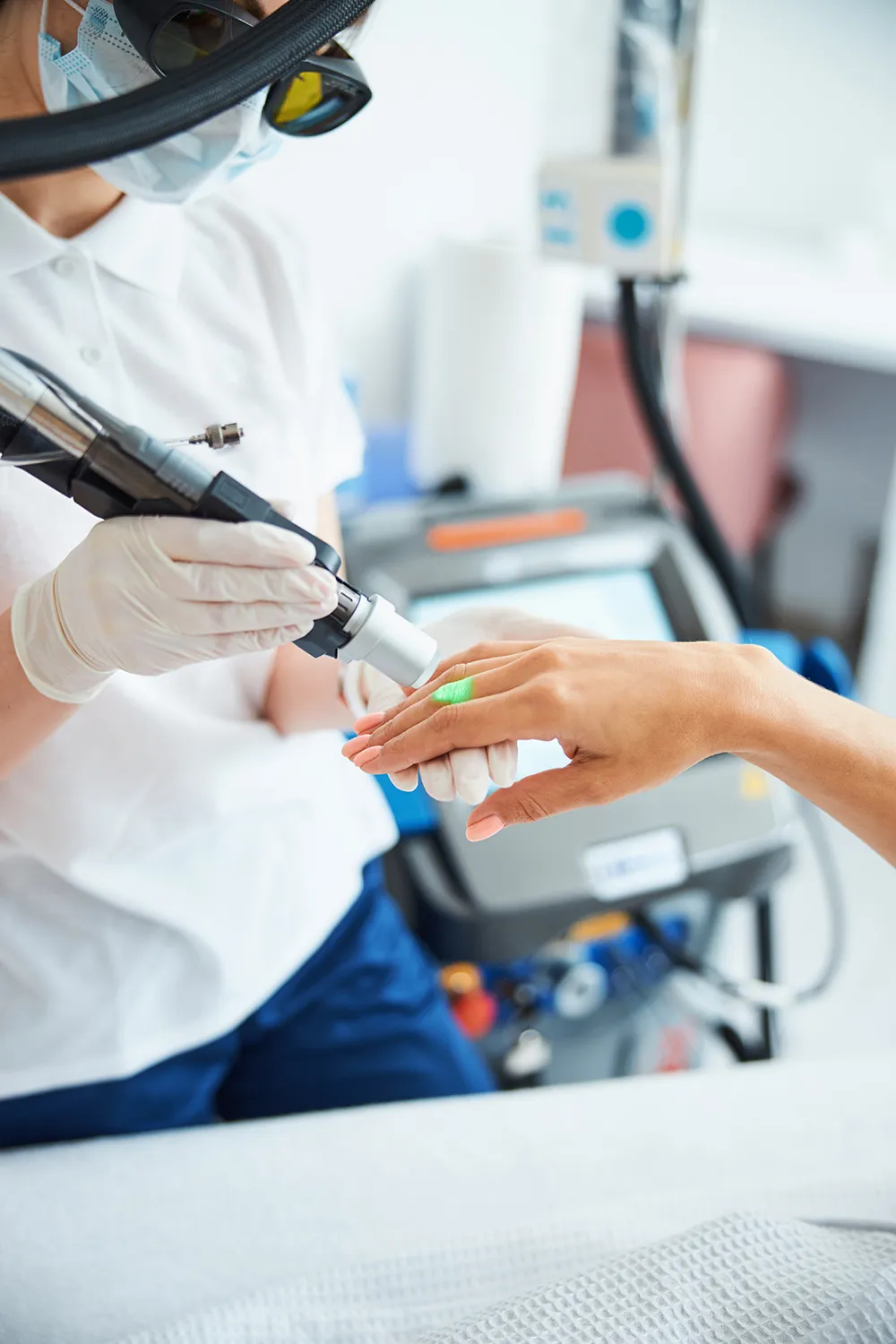
Imagine the tattoo ink as a collection of tiny pieces of coloured material sitting within the skin. A laser delivers carefully controlled pulses of light that are absorbed by the tattoo pigment. This energy breaks larger ink particles into much smaller pieces.
Your body then gradually removes those smaller particles.
In other words, the laser does not simply "suck" the tattoo out of your skin. Think of it more like breaking a large piece of debris into smaller pieces so your body's natural cleanup system can deal with them over time.
This is also why tattoo removal usually requires multiple appointments. The skin needs time to recover between treatments, and your body needs time to process and clear the fragmented pigment. The American Academy of Dermatology explains that the tattoo generally becomes lighter after each treatment rather than disappearing immediately.
Why One Treatment Usually Isn't Enough
It is understandable to hope that one appointment will make an unwanted tattoo disappear. Unfortunately, tattoos are usually more complicated than that.
Tattoo artists place pigment at different depths within the skin, and a design may contain several colours. Some pigments respond more easily to laser treatment than others. The size, location, age, density, and colour of the tattoo can all influence how it responds.
A laser treatment is therefore more like a gradual process than a one-time eraser.
At each appointment, some of the pigment may be broken down. Once the skin has recovered and the body has had time to clear some of the pigment, another treatment can address more of what remains.
The American Academy of Dermatology notes that multiple treatments are normally necessary because the laser cannot safely break down all layers of tattoo ink during one session.
What Determines How Many Sessions You May Need?
There is no universal number of sessions that applies to every tattoo.
A small, older, relatively simple tattoo may respond differently from a large, densely packed design. Important factors can include:
- Tattoo size
- Ink colour
- Amount of pigment used
- Depth of the ink
- Age of the tattoo
- Location on the body
- Individual skin characteristics
- Type of laser used
- How your body responds between treatments
For example, black ink often responds well to laser treatment, while some other colours can be more challenging. Modern laser technology has improved the ability to address a wider range of tattoo colours, but no reputable provider should promise identical results for every person.
A consultation is therefore much more useful than receiving a generic session estimate over the phone.
What Happens During a Consultation?
A proper consultation should be more than simply looking at the tattoo and giving you a price.
The provider should assess the tattoo and discuss your goals. Do you want complete removal? Are you hoping to fade the design for a cover-up? Are you mainly concerned about making the tattoo less noticeable?
Those goals can affect the treatment approach.
The provider should also consider factors such as the tattoo's location, colours, depth, age, and your skin. Your medical history and medications may also be relevant. The American Academy of Dermatology recommends discussing these considerations before treatment because they can affect whether laser tattoo removal is appropriate and how it should be performed.
This is also your opportunity to ask questions.
You can ask what type of laser is being used, what kind of results are realistic, how appointments are spaced, what aftercare is required, and what side effects are possible.
Does Laser Tattoo Removal Hurt?
Pain and discomfort vary from person to person.
Many people describe the sensation as a quick snapping or stinging feeling. The experience can depend on the tattoo's location, size, density, and your own sensitivity.
Some treatment providers use cooling methods or numbing products to make the experience more comfortable. Your provider can explain what options are appropriate for you.
It is worth remembering that comfort should not come at the expense of safety. The goal is to use settings appropriate for the tattoo and your skin rather than simply trying to make the laser as strong as possible.
What Can Your Skin Look Like Afterwards?
It is normal for treated skin to look different temporarily.
Redness, swelling, tenderness, and other short-term changes can occur after treatment. Some people may also experience blistering or other temporary skin reactions. These effects are part of why proper aftercare matters.
Your provider should give you specific instructions for caring for the area after treatment. Follow those instructions carefully instead of experimenting with household remedies or aggressive products.
Do not pick at healing skin. Avoid unnecessary irritation, and protect the treated area from sunlight as directed.
The American Academy of Dermatology specifically recommends protecting treated skin from the sun while it heals because sun exposure can increase the risk of unwanted skin changes.
Choosing a Tattoo Removal Provider in Mississauga
Finding a convenient clinic is helpful, but convenience should not be the only consideration.
When researching options, look beyond advertisements and attractive promises. Ask about the provider's experience with tattoo removal, the technology being used, safety procedures, consultation process, and aftercare support.
It can also be useful to ask whether the provider has before-and-after examples involving tattoos similar to yours.
For instance, someone with a small black tattoo may have a very different treatment experience from someone with a large, colourful sleeve. Seeing examples that resemble your situation can give you a more realistic idea of what may be possible.
There are established tattoo-removal providers operating in Mississauga, so consumers have options when comparing services and treatment approaches. Removery Tattoo Removal & Fading and Alternative Laser Health are examples of local providers listed for tattoo-removal services.
The most important thing is not choosing a clinic simply because it claims to be the fastest or cheapest. Laser treatment should be approached with the same care you would give any procedure involving your skin.
Be Careful With DIY Tattoo Removal
The internet is full of suggestions for removing tattoos at home. Some involve creams, acids, abrasive materials, or other homemade techniques.
These approaches can be dangerous.
The American Academy of Dermatology warns against attempting tattoo removal with DIY creams and similar products. Some products may contain substances capable of irritating or damaging the skin, and there is no reliable evidence that tattoo-removal creams can safely reproduce the results of professional laser treatment.
Trying to remove ink by aggressively damaging the skin can create another problem: scarring or permanent changes to the skin may remain even after the tattoo itself has faded.
If you want the tattoo gone, damaging the skin is not a shortcut worth taking.
What About Fading a Tattoo for a Cover-Up?
Complete removal is not always the goal.
Some people simply want to make an existing tattoo lighter so a tattoo artist can create a new design over it. In these situations, laser treatment may be used as part of a cover-up plan.
The objective is different from trying to achieve completely clear skin. Instead, the existing design may be lightened enough to give the tattoo artist a cleaner starting point.
If this is your goal, discuss it before treatment. It may help your provider understand what level of fading you are hoping to achieve.
Why Patience Matters
One of the biggest mistakes people can make is expecting tattoo removal to happen according to a fixed calendar.
Everyone's skin and tattoo are different.
Your body needs time to recover after treatment and process the fragmented pigment. Scheduling treatments too close together does not necessarily mean faster results. In fact, allowing adequate recovery time is an important part of the process.
Think of it like cleaning a room that has been cluttered for years. You can make a major difference during one cleaning session, but some areas still need attention afterward. Trying to rush through everything at once does not automatically produce a better result.
The same principle applies to unwanted tattoo ink.
Questions to Ask Before Booking
Before committing to treatment, consider asking:
- What type of laser will be used?
- How much fading or removal might realistically be possible?
- How many sessions might my tattoo require?
- How much time should be left between treatments?
- What side effects should I expect?
- What aftercare will I need to follow?
- Who will perform the treatment?
- Can I see examples of similar tattoos before and after treatment?
- Is the goal complete removal or fading for a cover-up?
- What happens if my tattoo responds more slowly than expected?
Good questions help you compare providers based on quality and safety rather than price alone.
A Better Way to Think About Cost
Price naturally matters when considering tattoo removal, but the cheapest treatment is not necessarily the most economical choice.
A low initial price may become less attractive if you need additional sessions, experience avoidable complications, or receive a treatment approach that does not suit your tattoo.
Instead of asking only, "How much does one session cost?" consider the bigger picture.
Ask what is included, whether consultations are provided, what aftercare support you receive, and whether the provider has experience treating tattoos similar to yours.
If you are comparing local options, Erase My Ink can also be part of your research when exploring tattoo-removal services and deciding which provider best matches your needs.
What If You Are Searching Online?
People researching treatment may use several different phrases when looking for help, including Professional Tattoo Removal and tattoo removal near me. Regardless of the phrase used, the same basic principle applies: look for a provider that takes the procedure seriously and gives you realistic information.
A good consultation should leave you feeling informed rather than pressured.
Be cautious about claims that guarantee complete removal, promise a fixed number of sessions for everyone, or suggest that you will have no possible skin reaction. Tattoo removal results vary, and responsible providers should be willing to explain both possibilities and limitations.
Is Laser Tattoo Removal Right for You?
For many people, laser treatment can be an effective way to significantly fade or remove unwanted tattoos. However, suitability depends on the individual.
Certain health circumstances may affect whether treatment is appropriate. For example, the American Academy of Dermatology notes that people need a healthy immune system for laser tattoo removal and says pregnant or breastfeeding women should not receive treatment.
This is another reason an individual consultation matters.
Instead of relying entirely on an online article or a general advertisement, discuss your specific tattoo and circumstances with a qualified professional.
Conclusion: A Fresh Start Takes Time
Deciding to remove a tattoo can feel like a big step, especially when you have lived with the design for years. The good news is that modern laser technology gives people more options than were available in the past.
Still, successful tattoo removal is a process rather than an instant transformation. Laser energy helps break tattoo pigment into smaller particles, while your body gradually clears those particles. Multiple treatments are often necessary, and the final outcome depends on factors such as ink colour, tattoo depth, size, location, and individual response.
If you are considering laser tattoo removal in Mississauga, start with a proper consultation. Ask questions, understand the likely timeline, learn about aftercare, and choose a provider that prioritizes appropriate treatment and skin safety.
Most importantly, give the process time. Removing unwanted ink is not about rushing toward a result. It is about gradually moving from an image you no longer want toward the clean slate you have in mind.






















Sign in to leave a comment.