Creating A Daycare Experience Where Children Feel Known, Comfortable, And Ready To Grow

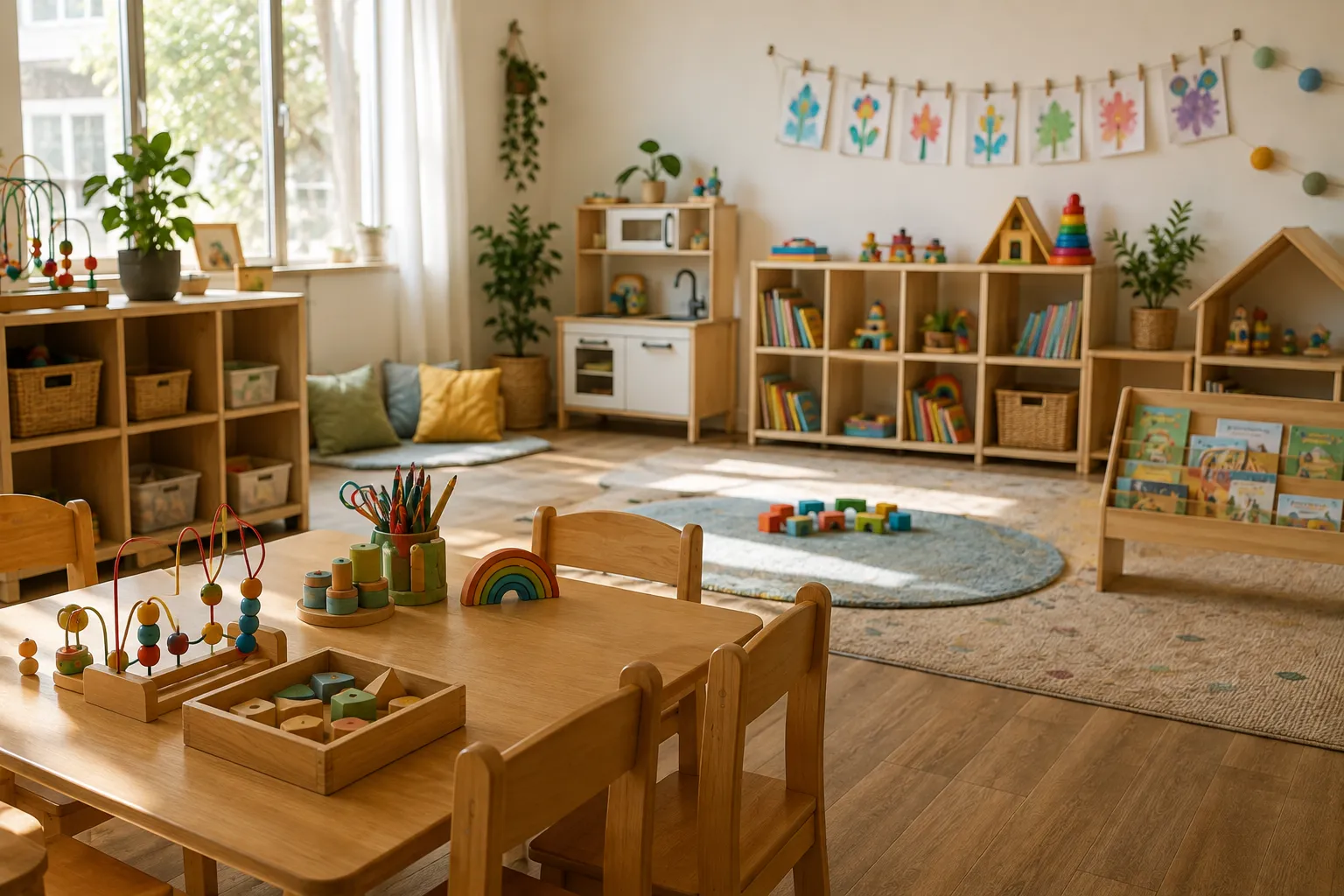

Choosing a daycare is one of those decisions that can feel simple on paper and deeply personal in real life. Families may begin by comparing schedules, locations, routines, and availability, but the questions that matter most usually go beyond logistics. Will my child feel comfortable here? Will someone notice when they need encouragement? Will they have opportunities to play, learn, make friends, and become more independent? Most importantly, will this feel like a place where my child belongs?
Those questions reflect what families often value most in early childhood care. A daycare is more than a place where children spend part of the day. It becomes one of their first regular experiences outside the home, one of their earliest communities, and one of the places where they begin discovering how to interact with people beyond their immediate family.
At Squiggle Room Daycare, the goal is to create an environment where children can feel safe enough to explore, supported enough to participate, and comfortable enough to be themselves. Early learning does not need to feel rushed or overly formal to be meaningful. Some of the most important development happens through everyday routines, playful discoveries, conversations, friendships, and small moments of growing independence.
Feeling Comfortable Comes Before Learning
Young children learn best when they feel secure.
That may sound simple, but emotional comfort influences almost everything a child does in a daycare setting. A child who feels uncertain may be hesitant to join a group, try an unfamiliar activity, or communicate what they need. A child who gradually develops trust is more likely to explore, ask questions, interact with others, and become involved in the rhythm of the day.
This is why creating a welcoming environment matters.
For some children, settling into daycare happens quickly. They may walk through the door eager to see what is happening and immediately join an activity. Others need more time. They might prefer to observe the room, remain near a familiar adult, or quietly watch other children before participating.
Both responses are normal.
A thoughtful daycare does not expect every child to adjust in exactly the same way. Children bring their own personalities, experiences, and comfort levels into the room. What matters is giving them steady opportunities to build trust at a pace that feels manageable.
At Squiggle Room Daycare, this means recognizing that participation can grow gradually. A child who watches story time quietly today may be answering questions next week. A child who hesitates to join a group game may later become one of the most enthusiastic participants.
Growth often starts with simply feeling comfortable enough to try.
The Importance Of Being Known As An Individual
Every group of young children contains a remarkable range of personalities.
One child may be constantly talking and eager to share ideas. Another might communicate more through play than conversation. Some children enjoy energetic group activities, while others prefer quieter projects. One child may immediately introduce themselves to someone new, while another takes time to build friendships.
A quality childcare environment should leave room for all of them.
Children benefit when they feel that the adults around them see more than their behavior in a single moment. A quiet child is not necessarily disengaged. An energetic child is not necessarily unfocused. A hesitant child may simply be processing the environment before stepping forward.
Understanding those differences helps create more meaningful care.
At Squiggle Room Daycare, children can experience a balance between shared routines and individual expression. Everyone may participate in the same general day, but children can still approach activities in different ways.
This matters because confidence develops more naturally when children are not constantly compared with one another.
For one child, confidence may look like speaking during a group activity. For another, it might mean asking another child to play. For someone else, it may be completing a task independently for the first time.
Those accomplishments may look different, but each can represent meaningful progress.
Why Everyday Routines Matter
Routine is one of the quiet strengths of early childhood care.
Adults may think of routines as practical necessities, but for young children they provide something more important: predictability.
Knowing what happens next makes the day easier to understand. Children gradually become familiar with arrival, activities, meals, cleanup, transitions, rest, and other parts of the daily rhythm.
That familiarity creates security.
Instead of wondering what will happen next, children can begin anticipating the flow of the day. Over time, routines can also support independence.
A child who initially needs reminders to put belongings away may eventually do it automatically. A child who once needed help moving from one activity to another may become more comfortable with transitions. Children can gradually learn how to participate in cleanup, prepare for meals, or settle into story time.
These may seem like very ordinary skills, but they matter.
They teach children that they can contribute to the environment around them. They also introduce responsibility in a way that feels manageable.
Squiggle Room Daycare uses routine as a foundation rather than a restriction. Predictability can coexist with creativity. Children can know the general shape of their day while still encountering new stories, activities, conversations, and discoveries.
That balance helps make learning feel both secure and interesting.
Play Is Serious Learning For Young Children
Adults sometimes separate play and education into two different categories. For young children, they are often the same thing.
Play is one of the primary ways children investigate the world.
When a child builds with blocks, they may be experimenting with balance, shape, planning, and persistence. When children create a pretend restaurant, they may be practicing communication, imagination, cooperation, and sequencing. When a child draws or paints, they are making decisions, developing coordination, and finding ways to express ideas visually.
None of these experiences needs to feel like a formal lesson to be valuable.
The child is learning because they are actively involved.
At Squiggle Room Daycare, playful experiences give children room to ask their own questions and test their own ideas.
What happens if the tower gets taller?
Can these pieces fit together?
Who gets to be the doctor in the pretend game?
What color should the picture become?
What happens next in the story?
These small questions encourage thinking.
They also give children a sense of ownership over what they are doing. When learning connects with curiosity, children are often more willing to persist and experiment.
That natural engagement is one of the greatest strengths of play-based early learning.
Building Confidence Through Small Successes
Confidence in early childhood is rarely built through one dramatic achievement.
It develops through many small moments.
A child completes a puzzle that seemed difficult yesterday.
Another remembers a routine without being reminded.
Someone raises their hand or speaks during a group discussion for the first time.
Two children figure out how to build something together.
A child who was nervous at drop-off walks into the room comfortably.
These moments matter because they help children see themselves as capable.
At Squiggle Room Daycare, encouraging independence does not mean expecting children to manage everything alone. It means providing enough support for them to try.
Sometimes adults naturally want to step in immediately when a child struggles. But a little space can be valuable.
A child working through a problem may discover a solution.
A child putting on something independently may need extra time.
A child deciding how to complete a project may choose an approach an adult would never have considered.
When children experience the satisfaction of figuring things out, confidence becomes something they have earned through experience.
That confidence can gradually spread into other parts of their day.
Friendships Are Part of Early Learning
For many children, daycare is one of the first places where friendship becomes part of everyday life.
Being around peers introduces children to a social world that is very different from interacting primarily with adults at home.
Other children have their own preferences.
They may want the same toy.
They may have a different idea about how a game should work.
They may communicate differently.
These situations create meaningful opportunities for social development.
Children gradually learn how to share, wait, negotiate, listen, join a game, and communicate when something is wrong.
Naturally, these skills do not develop perfectly.
Young children will disagree. They will sometimes become frustrated. They may struggle with taking turns or understanding another child's perspective.
Those moments are not signs that social learning has failed.
They are social learning.
With patient guidance, children can begin learning how to work through everyday conflicts and build relationships.
Squiggle Room Daycare provides a shared environment where children can experience the joy of connection while also developing the practical skills that friendships require.
Sometimes friendship begins with conversation.
Sometimes it begins with two children building quietly beside each other.
Both can be meaningful.
Language Grows Through Real Conversation
Children build communication skills by using them.
That is why conversation has such an important place in early childhood.
Language learning does not only happen during planned educational activities. It happens while children describe what they are doing, ask questions, respond to stories, sing songs, negotiate during play, and talk about experiences.
A child may learn new words while discussing a picture in a book.
Another may practice sequencing while explaining how something was built.
Pretend play can encourage children to use phrases they have heard adults say.
Even simple questions such as “What do you think?” can encourage children to organize ideas and express them.
At Squiggle Room Daycare, communication can be woven naturally throughout the day.
This supports more than vocabulary.
Children also learn how conversations work. They practice listening, responding, waiting, asking, and explaining.
These are skills they will use throughout school and life.
Making Room For Emotions
Young children experience strong feelings long before they fully understand how to manage them.
A disappointing moment can feel enormous.
Waiting can be frustrating.
A change in routine can be unsettling.
Missing home can make part of the day difficult.
Children need opportunities to learn that emotions can be felt without becoming overwhelming.
A supportive daycare helps children move through these moments with patience.
Sometimes that means helping a child find words for what they are feeling.
Sometimes it means offering reassurance.
Sometimes a child simply needs time to calm down before returning to an activity.
These experiences gradually build emotional awareness.
At Squiggle Room Daycare, emotional development is treated as part of overall growth rather than something separate from learning.
A child who learns to ask for help when frustrated is developing an important life skill.
So is a child who learns that disappointment passes.
So is a child who begins recognizing when another person is upset.
Empathy, resilience, and self-awareness all begin with these small experiences.
Preparing For Preschool Without Rushing Childhood
Families often think about preschool readiness when choosing daycare.
That makes sense, but readiness is broader than knowing letters, colors, or numbers.
Future classroom success also depends on many social and emotional abilities.
Can a child listen during a group activity?
Can they express a need?
Are they becoming comfortable with transitions?
Can they participate around other children?
Are they developing confidence trying unfamiliar things?
These abilities matter.
Squiggle Room Daycare supports preschool readiness by allowing these skills to develop naturally through routine, play, communication, and social interaction.
Children can become more prepared for structured environments without turning daycare into an academic race.
There is plenty of time for increasingly formal learning later.
Early childhood should still include imagination, movement, laughter, creativity, and wonder.
In many ways, protecting those things actually strengthens readiness because children begin associating learning with curiosity rather than pressure.
What Families Often Notice Over Time
Development is sometimes easier to recognize when looking backward.
A parent may suddenly realize that a child who once needed help with every transition now handles routines with confidence.
A child may begin talking about friends.
They might show new interest in books, music, drawing, or imaginative play.
Perhaps they start asking more detailed questions.
Maybe they become more willing to try something independently.
These changes rarely come from one activity or one day.
They develop through repeated experiences.
That is why consistency matters so much in childcare.
Children grow through thousands of ordinary moments that gradually add up to something significant.
Squiggle Room Daycare aims to make those everyday experiences supportive, engaging, and meaningful.
More Than A Place To Spend The Day
The most valuable daycare experiences often become part of a child's earliest memories of belonging outside the home.
It may be where they first discover a favorite activity.
Where they make an early friend.
Where they learn that they can solve a problem without giving up.
Where they realize unfamiliar environments can become comfortable.
Where they begin understanding that learning can be exciting.
For parents, that matters because childcare is not simply about covering the hours between morning and evening.
It is about choosing an environment that contributes positively to a child's development while giving the family confidence in the care being provided.
Squiggle Room Daycare represents an approach built around that responsibility.
The goal is not to make every day perfect.
Childhood itself is full of unpredictable moments.
The goal is to create a dependable environment where those moments can become opportunities for growth.
Helping Children Grow Without Asking Them To Grow Up Too Fast
There is something valuable about allowing childhood to unfold naturally.
Children do not need to have everything figured out.
They are supposed to ask endless questions.
They are supposed to make messes while creating.
They are supposed to need reassurance sometimes.
They are supposed to change their minds, make mistakes, laugh loudly, and discover new interests.
A good daycare gives them room for all of that while gently helping them develop the skills they will need next.
At Squiggle Room Daycare, children can experience routine without losing spontaneity, learning without unnecessary pressure, and independence without being expected to manage everything alone.
They can be supported while still being challenged.
They can belong while still discovering who they are.
That balance is what makes early childhood care meaningful.
Families want more than a place where children are supervised.
They want to know that someone is paying attention to the person their child is becoming.
They want an environment where small victories matter, questions are welcomed, friendships have room to develop, and learning feels connected to everyday life.
Most of all, they want their child to feel comfortable walking through the door.
When children feel known and secure, they become more willing to explore.
When they explore, they discover what they can do.
And when they repeatedly experience that sense of capability, confidence begins to grow.
That is the kind of foundation Squiggle Room Daycare strives to provide: not a rushed version of school, but a thoughtful early childhood environment where care, play, connection, and development work together.
Because before children are ready to take on bigger classrooms and bigger challenges, they deserve a place where they can simply be children—curious, capable, creative, and still becoming themselves.





Sign in to leave a comment.