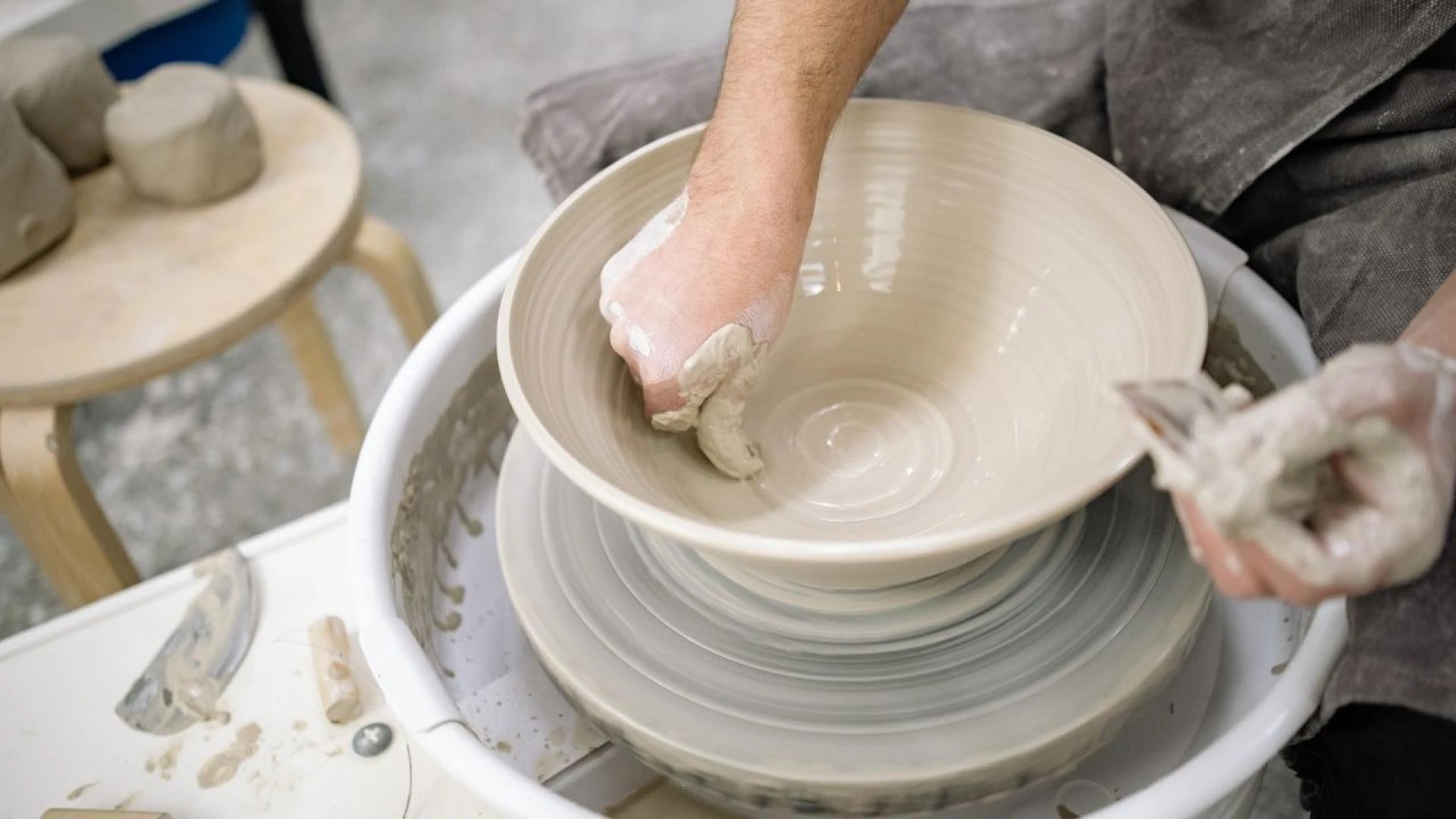

It doesn't matter if you're working with clay for the first time, or pursuing your interests in it, ceramics can be a rewarding as well as rewarding experience.

What is Pottery?
Pottery is a method of making objects out of clay, and then forming them by heating in the Kiln. The objects may be useful, but they can also be purely ornamental pieces. This process involves shaping, firing, drying and drying clay in order to make lasting and durable items.
A Brief History Of Pottery
Pottery dates back thousands of years and has been found throughout every single culture in the globe. The ancient civilisations utilised pottery to cook and for ceremonial purposes. In time, it transformed into an art form featuring intricate designs as well as glaze techniques that reflect the cultural identity of the people.
Types of Pottery
There is a variety of pottery, each having distinctive characteristics.
1. Earthenware
It is the most ancient and popular type of pottery. It is fired at lower temperatures, and it has an organic, rustic look.
2. Stoneware
Stoneware is stronger and can be fired at greater temperatures. It is commonly used to cook common items such as dishes and cups.
Pottery Techniques
Diverse methods create pottery, dependent on your level of expertise and the style you prefer:
- Hand Building: Hand building clay with no wheel
- Wheel Throwing: Utilising a wheel of pottery to make symmetrical shapes
- Slip Casting: The pouring of liquid clay into moulds
Each method offers its own unique method of expressing imagination.
Benefits of Pottery
It's more than an artistic pursuit. It's also a healing and energising activity that helps the physical as well as mental growth. It can be done as a pastime or a method of creativity therapy; the practice of working with clay can provide a variety of health benefits to people at all stages of life.
Increases creativity
Pottery allows users to engage in creative thinking and freely express their thoughts. From creating original forms to playing with colors and textures, pottery allows you to design something unique. It helps you increase confidence and improve artistic thinking.
Hands-on learning
Pottery is a hands on activity that improves fine motor skills as well as hand eye coordination. Its physical contact increases sensory development as well as hand-eye coordination. This is especially helpful for kids since it helps their physical and cognitive growth enjoyably and excitingly.
Getting Started With Pottery
If you are looking to explore pottery, starting is much easier than you imagine.
Take part in a local Pottery Workshop or class
Starting by taking a class is the ideal way to get started with pottery. An environment that is guided helps students understand the fundamentals and use the equipment in a safe manner and improve your skills under the direction by an expert instructor. This is also an excellent opportunity to meet other people that share the same interests.
Beginning with basic tools and clay:
It isn't necessary to require costly equipment at the beginning. The most basic tools, like clay, a roll pin and the basic tools for shaping are sufficient to start. With time in your learning, you'll be able to experiment with pottery wheels as well as more sophisticated tools that will help you expand your skills.
Begin with the basic tools and clay:
You don't require many tools to start. The most basic materials, such as clay, some shaping tools and an even surface are enough for you to begin. Most beginners begin with hand building methods before moving onto wheel throwing. This makes it easy to work on your own terms.
Start with simple shapes:
Start by using simple shapes such as cups, bowls or other small items of decoration. They help you learn the way clay reacts to pressure and motion. With your experience growing, it is possible to experiment with elaborate designs as well as sophisticated methods.
Hand-building
Hand-building in pottery is the easiest method of making pottery to learn for novices. Hand building doesn't require a wheel, and lets you make unique designs entirely using your hands. Three main hand-building methods that can be used:
Pinching is the most straightforward method. It starts by making a ball of clay using your hands to squeeze it to form cups or even decorative items. It helps develop fine motor skills and is great for little jobs.
Coil Construction Method:
In this technique, the long coils of clay are formed and then stacked over each other in order to make larger objects like pots or vases. The coils are then brushed together in order to make a seamless surface. This is a great method to create taller or oddly formed pieces.
Slab Construction
Slab construction involves rolling flat sheets of clay before cutting them into different shapes. The slabs are put together into containers, tiles or geometric shapes. They allow for intricate and innovative design concepts that are impossible to accomplish using twisting or coiling.
Conclusion
Pottery goes beyond creating clay. It is an experience that requires patience and expression of oneself. No matter if you're an absolute novice or are restoring the joy of making pottery, it offers a unique mix of peace and creative satisfaction. From learning about its long history to exploring various techniques as well as creating unique pieces, clay lets you reconnect with creativity. By using a few tools, some instruction, and the persistence of training, everyone can have the joy of bringing their ideas to life with clay. There are many pottery studios in the UAE where beginners and enthusiasts can explore clay art, learn new techniques, and enjoy creative hands-on experiences.



















Sign in to leave a comment.