
Quick Answer
Choosing a cronografo Seiko comes down to three questions: whether you want quartz or mechanical timing, how much dial complexity you can read comfortably, and what case size works on your wrist once pushers are accounted for. Seiko's chronograph range spans accessible quartz references through in-house automatic column-wheel movements, with genuine specification differences between tiers rather than marketing distinctions.
Question One: Quartz or Mechanical
This is the most consequential decision and it should be made before looking at any specific reference. Quartz chronographs measure elapsed time to fractions of a second, keep accurate time without daily variance, require no winding, and cost meaningfully less than mechanical alternatives. If you will actually use the chronograph function for timing anything, quartz does the job better. Mechanical chronographs deliver the tactile satisfaction of column-wheel pusher action, the visual pleasure of a sweeping chronograph seconds hand, and the collector appeal of traditional watchmaking. They cost more, keep looser time, and measure less precisely. If you want a chronograph because you find mechanical watchmaking compelling, mechanical is the answer. Being honest about which motivation applies to you saves considerable time comparing references in the wrong tier.
Question Two: How Much Dial Can You Read
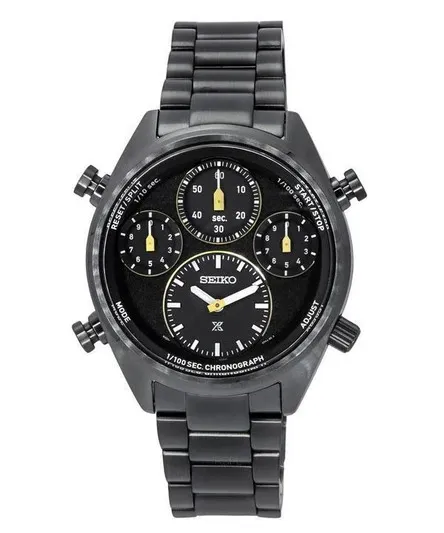
Chronograph dials carry more information than three-hand watches, and the amount varies substantially across the Seiko range. Two-register layouts with sub-dials at 3 and 9 o'clock keep the composition balanced and readable. Three-register layouts add a sub-dial at 6 o'clock, packing more function into the same space. Some quartz references add 1/10 or 1/20 second displays, day and date windows, and 24-hour indicators, producing dials with genuine information density. Contrasting sub-dial colours help separate the timing displays visually. Be realistic about how much dial complexity you find pleasant rather than cluttered, since this varies considerably between buyers and cannot be changed after purchase.
Question Three: Case Size With Pushers Accounted
A chronograph occupies more wrist than a three-hand watch of the same nominal diameter, because pushers extend beyond the case edge and add visual and physical width. A 42mm chronograph reads closer to a 44mm three-hand watch in wrist presence. Seiko chronograph references typically span 40mm to 44mm, with some sport-oriented references running larger. Lug-to-lug span determines whether the case sits flat or overhangs, and this matters more than diameter for buyers with wrists under about 6.75 inches. Check the specific reference measurements rather than assuming a comfortable three-hand size translates directly to chronograph comfort.
The Automatic Chronograph Tier
Seiko's automatic chronograph references use in-house movements with column-wheel switching and vertical clutch coupling, both features associated with higher-tier chronograph construction. Column-wheel switching gives cleaner and more precise pusher action than cam-actuated alternatives, which is genuinely perceptible in use. Vertical clutch coupling prevents the chronograph seconds hand from jumping when the timing function engages. Power reserve typically runs around 45 hours, and active chronograph use draws additional power. These references sit at meaningfully higher prices than the quartz alternatives, and the price step buys mechanical architecture rather than better timing function.
The Prospex Speedtimer Line
Within the automatic chronograph range, the Prospex Speedtimer line carries the strongest heritage connection, reviving a nameplate tracing to Seiko's 1969 automatic chronograph releases. Seiko was among the first manufacturers to produce an automatic chronograph movement, alongside competing releases from Zenith and the Chronomatic consortium, and the Speedtimer references honour that history with period-referential case and dial design updated for contemporary manufacture. Panda dial configurations with contrasting sub-dials appear across the line. For buyers whose interest in a cronografo Seiko is driven by the brand's chronograph heritage specifically, the Speedtimer references are the direct target.
Water Resistance Across the Range
Chronograph water resistance requires more engineering than three-hand equivalents because each pusher penetrates the case wall and needs its own seal. Seiko's chronograph references typically carry 100m ratings on sport-positioned models, which covers swimming and everyday water exposure, and some higher references reach 200m. Dressier chronograph references may sit at 50m, handling splash and rain but not swimming. Never operate chronograph pushers while the watch is wet or submerged, regardless of the rating, since pressing a pusher under water can force ingress past the seal.
Bezel Scales and Their Actual Utility
Many Seiko chronographs pair the timing function with a tachymeter scale converting elapsed time over a known distance into speed. This was genuinely useful for motorsport timing and remains functional if you know the technique, though most owners treat it as visual character. Some references use rotating elapsed-time bezels instead, adding a timing method independent of the chronograph itself. Others keep the bezel plain, which produces a cleaner overall reading and lets the dial carry the visual interest. The bezel choice affects overall case diameter as well as appearance, since scale-bearing bezels require more width.
Bracelet, Strap and Overall Character
Chronographs read boldly regardless of strap choice, but the strap does shift the character noticeably. Steel bracelets add weight and formality, suiting business casual and sport contexts. Leather straps in brown or black push toward vintage and dress readings, particularly effective on panda dial configurations. Rally and perforated leather straps reinforce the motorsport association many chronograph buyers appreciate. Rubber and silicone straps suit active wear and water use. Since lug widths on Seiko chronographs follow industry standards, aftermarket swapping is straightforward for buyers who want multiple characters from one watch.
Working Through the Decision
Answer the three questions in order. Quartz or mechanical, based on whether you will use the timing function or value mechanical character. Dial complexity, based on how much information you find pleasant rather than cluttered. Case size, accounting for pusher width beyond the nominal diameter. Those three answers narrow the Seiko chronograph range to a manageable shortlist, at which point bezel configuration, dial colour, and strap choice complete the selection. Browse the current cronografo Seiko range to compare references across tiers.
Frequently Asked Questions
Should I choose a quartz or mechanical Seiko chronograph?
Quartz measures elapsed time more precisely, keeps better time, and costs less. Mechanical delivers column-wheel pusher feel and collector appeal at higher cost. Choose based on whether you value function or mechanical character.
What is column-wheel switching?
A construction where chronograph functions are actuated by a rotating column wheel rather than a cam. It produces cleaner and more precise pusher action, and is associated with higher-tier chronograph movements.
Do chronographs wear larger than three-hand watches?
Yes. Pushers extend beyond the case edge, adding visual and physical width. A 42mm chronograph reads closer to a 44mm three-hand watch in overall wrist presence.
Can I use the pushers underwater?
No. Pressing a chronograph pusher while the watch is wet or submerged can force water past the seal, regardless of the stated water resistance rating.
What is the Prospex Speedtimer line?
Seiko's automatic chronograph line reviving a nameplate tracing to its 1969 automatic chronograph releases, with period-referential design and in-house column-wheel movements.
What is a tachymeter scale for?
Converting elapsed time over a known distance into speed. Originally developed for motorsport timing, it remains functional but is treated as visual character by most owners.
What water resistance do Seiko chronographs have?
Sport-positioned references typically carry 100m ratings covering swimming, with some higher references reaching 200m. Dressier chronographs may sit at 50m for splash and rain only.
Verdict
Choosing a cronografo Seiko comes down to three ordered decisions: quartz versus mechanical, acceptable dial complexity, and case size accounting for pusher width. Answer those and the range narrows quickly. Quartz wins on actual timing function and value; mechanical wins on column-wheel feel and collector appeal, with the Prospex Speedtimer line carrying the strongest heritage connection. Browse the cronografo Seiko range at Down Under Watches.



























Sign in to leave a comment.