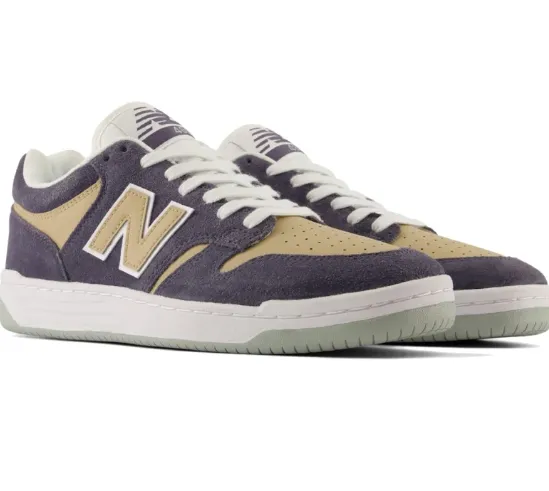

From across a room, a skate shoe looks like any other trainer. Flat sole, simple shape, a bit more padding round the collar.
Skate it for a fortnight and the difference becomes obvious. Ordinary trainers blow out at the ollie patch inside a week. The stitching goes, then the toe, and the shoe is finished.
What actually separates skateboard sneakers from regular trainers
Three things, mostly.
Suede is the first. It takes grip tape abrasion far better than mesh or canvas, which is why nearly every serious model uses it across the toe and side panel.
Reinforcement is the second. Doubled stitching, rubber toe caps, sometimes a hidden layer under the upper where the board makes contact.
Then the board fell, which nobody can see. You want to know where the tail is without looking down, and that only happens through a thin, firm sole. Skateboard sneakers keep it that way. A running shoe sticks a cushion in between.
Padding exists for a different reason than people assume. It absorbs the impact of landing, not the ache of walking round town all afternoon.
Cupsole against vulcanised, and why skaters argue about it
This is the actual decision, and both camps are right about something.
A vulcanised sole gets fused to the upper, which produces a thin, flexible shoe with excellent board feel straight out of the box. Vans built its reputation on that construction, and plenty of skaters will not use anything else.
The trade-off is durability. Vulcanised shoes wear through faster, particularly on rough ground and heavy landings.
Cupsoles work the other way round. The upper sits inside a moulded rubber cup, which adds impact protection and lasts considerably longer. Nike SB's Force 58 and Code 58 are built on that idea, as is much of the Adidas line.
The cost is break-in time and a slightly deadened feel underfoot for the first few sessions.
So it comes down to how somebody skates. Ledges, flatground and technical work suit vulcanised. Stairs, gaps and anything landing hard suit cupsoles. Plenty of people keep a pair of each.
Why a skateboard shoe store beats ordering blind
Sizing is the honest reason, and it catches people out constantly.
Skate shoe sizing runs inconsistently between brands, and sometimes between models from the same brand. A Vans nine and a Nike SB nine rarely feel identical, and New Balance Numeric runs differently again.
Trying them matters more here than with most footwear, because a skate shoe wants to be snug. Loose shoes move on the board and wear out faster.
A proper skateboard shoe store also carries the models that actually skate well rather than the ones that sell on lifestyle appeal alone. Walk into one and the wall holds Nike SB, Vans, Adidas, New Balance, Asics, Converse CONS, Last Resort AB and iPath, which is a genuinely different selection from a general sports retailer.
Staff who skate help as well. Somebody who has worn the shoe knows where it blows out, how it breaks in and whether it runs long.
Buying a pair worth skating
Work out the construction first, then the size, then the colourway. Most people do it backwards and regret it by week three.
And expect to replace them. Even good skateboard sneakers are a consumable, which is why a shop worth using stocks the things you will need again.
Underground Skate Shop runs a dedicated shoe room in Nutley, New Jersey, carrying Nike SB, Vans, Adidas, New Balance and more, alongside over two hundred decks on the wall.






















Sign in to leave a comment.