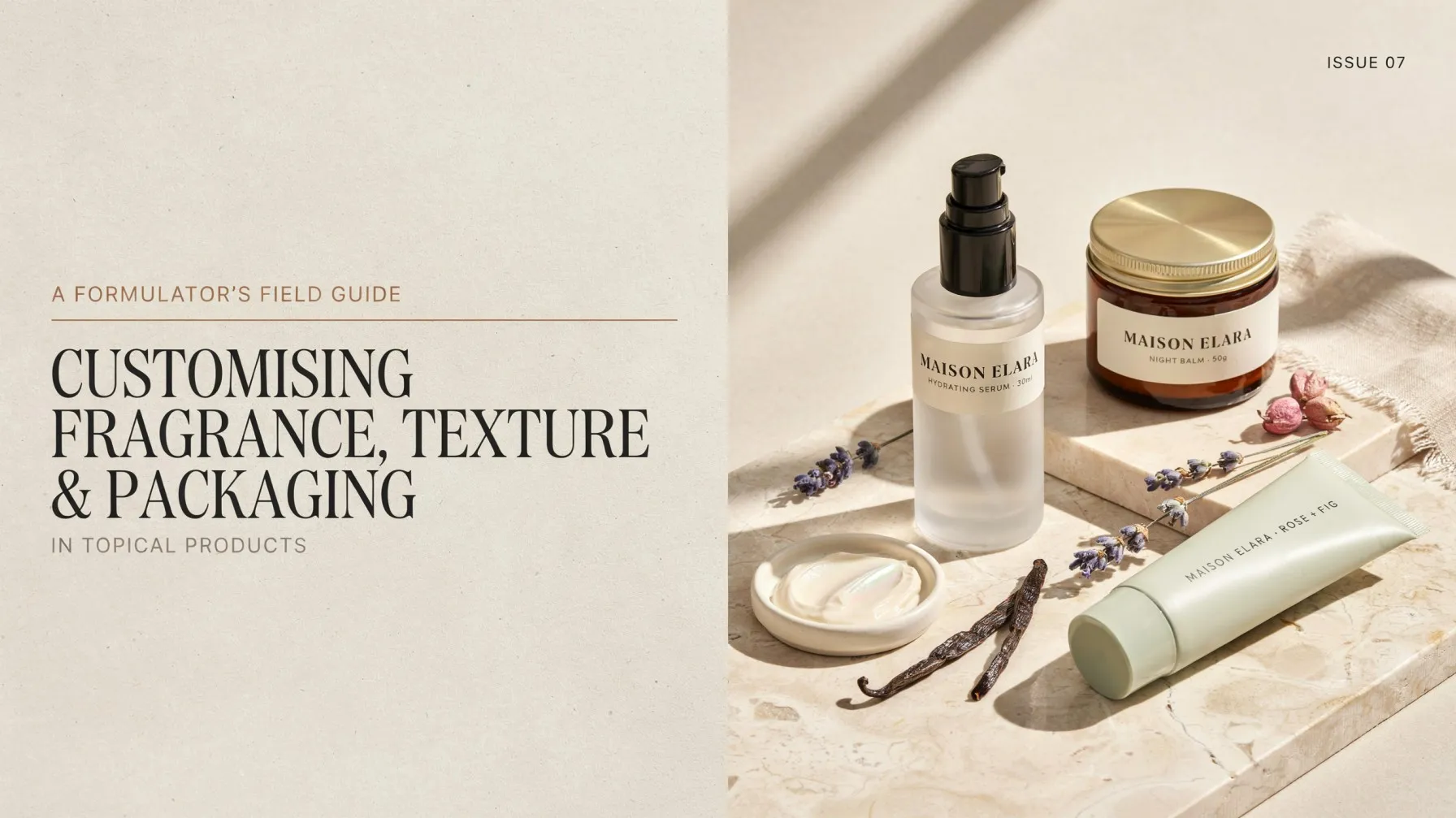

Brands entering the skincare space often underestimate how much these seemingly small details actually influence whether customers keep using a product or quietly abandon it after the first try. Customisation across fragrance, texture, and packaging deserves far more attention than most new entrepreneurs initially give it.
Why Fragrance Is More Than Just a Nice Addition
Fragrance plays a surprisingly significant role in how customers perceive a topical product's overall quality and effectiveness. A pleasant, well-balanced scent can make a routine feel enjoyable rather than clinical, while an overpowering or unpleasant smell can make even the most effective formula feel unappealing to use consistently.
At the same time, fragrance needs careful consideration for sensitive skin categories, where added scent can trigger irritation. Brands working with an experienced private label manufacturer in India often have the flexibility to choose fragrance-free formulations for sensitive skin lines, while still offering pleasantly scented options for products meant for general use, giving them the ability to serve different customer needs without compromising either group.
Why Texture Directly Affects Whether Customers Stick With a Routine
Texture might seem like a minor detail compared to active ingredients, but it genuinely determines whether customers use a product consistently. A heavy, greasy cream might contain excellent ingredients, but if it feels unpleasant under makeup or in humid weather, many customers will simply stop applying it regularly.
Customisation products allow brands to adjust texture specifically for their target audience, whether that means creating a lightweight, fast-absorbing gel for oily skin customers or a richer, more nourishing cream for those dealing with dry or mature skin concerns. This flexibility ensures the sensory experience matches customer expectations, rather than forcing every customer into one generic texture regardless of their actual skin type or preference.
Why Packaging Customisation Shapes Brand Identity
Beyond what is actually inside the tube or jar, packaging plays a significant role in how customers perceive a brand's overall quality and positioning. A well-designed pump, an appropriately sized applicator, or premium-looking packaging can elevate a product's perceived value considerably, even when the underlying formula remains essentially similar to a more basic alternative.
Brands developing cosmeceutical skin care products in particular benefit from packaging that reflects the clinical, results-driven positioning these products aim to convey, differentiating them clearly from purely cosmetic items sitting on the same store shelf.
Why This Level of Customisation Requires the Right Manufacturing Partner
Not every manufacturer offers meaningful customisation across fragrance, texture, and packaging. Some operate purely on a fixed catalogue basis, offering brands very limited flexibility beyond simply applying their own label to an already existing formula. Understanding the Top Services Offered by Contract Manufacturing Brands helps entrepreneurs identify which partners genuinely support this kind of tailored development versus those offering only basic, standardised options.
Why Testing Becomes Essential Whenever Customisation Happens
Any change to fragrance, texture, or packaging requires proper testing to ensure the product remains stable and safe. A texture adjustment might affect how well active ingredients remain suspended within a formula, while a fragrance addition needs testing to confirm it does not interact negatively with other active ingredients or reduce the product's shelf stability over time.
Brands rushing customisation without proper testing risk ending up with a beautifully packaged, pleasantly scented product that simply does not perform as effectively as the original, unmodified formula.
Why Customer Feedback Should Guide These Decisions
Rather than making assumptions about what customers want, successful brands often gather genuine feedback before finalising fragrance, texture, or packaging decisions. Small sample testing groups or initial soft launches can reveal valuable insight into whether a particular scent feels too strong, whether a texture feels appropriately lightweight, or whether packaging feels genuinely convenient for daily use.
Why This Attention to Detail Builds Stronger Customer Loyalty
Products that feel genuinely pleasant to use, beyond just being effective, tend to build a stronger emotional connection with customers. This connection often translates into repeat purchases and positive word of mouth, since customers are far more likely to recommend a product they actually enjoy incorporating into their daily routine, rather than one they use purely out of necessity.
Why This Level of Detail Separates Serious Brands From Generic Ones
Brands willing to invest time and resources into properly customising these details signal genuine seriousness about their product's overall quality and customer experience, rather than treating skincare development as simply mixing ingredients and hoping for the best.
Final Thoughts
Customising fragrance, texture, and packaging in topical products goes far beyond cosmetic preference; it directly shapes whether customers genuinely enjoy using a product consistently enough to see real results. Brands that partner with manufacturers offering genuine customisation flexibility, while properly testing every adjustment along the way, are far better positioned to build products that customers not only trust, but genuinely look forward to using every single day.




























Sign in to leave a comment.