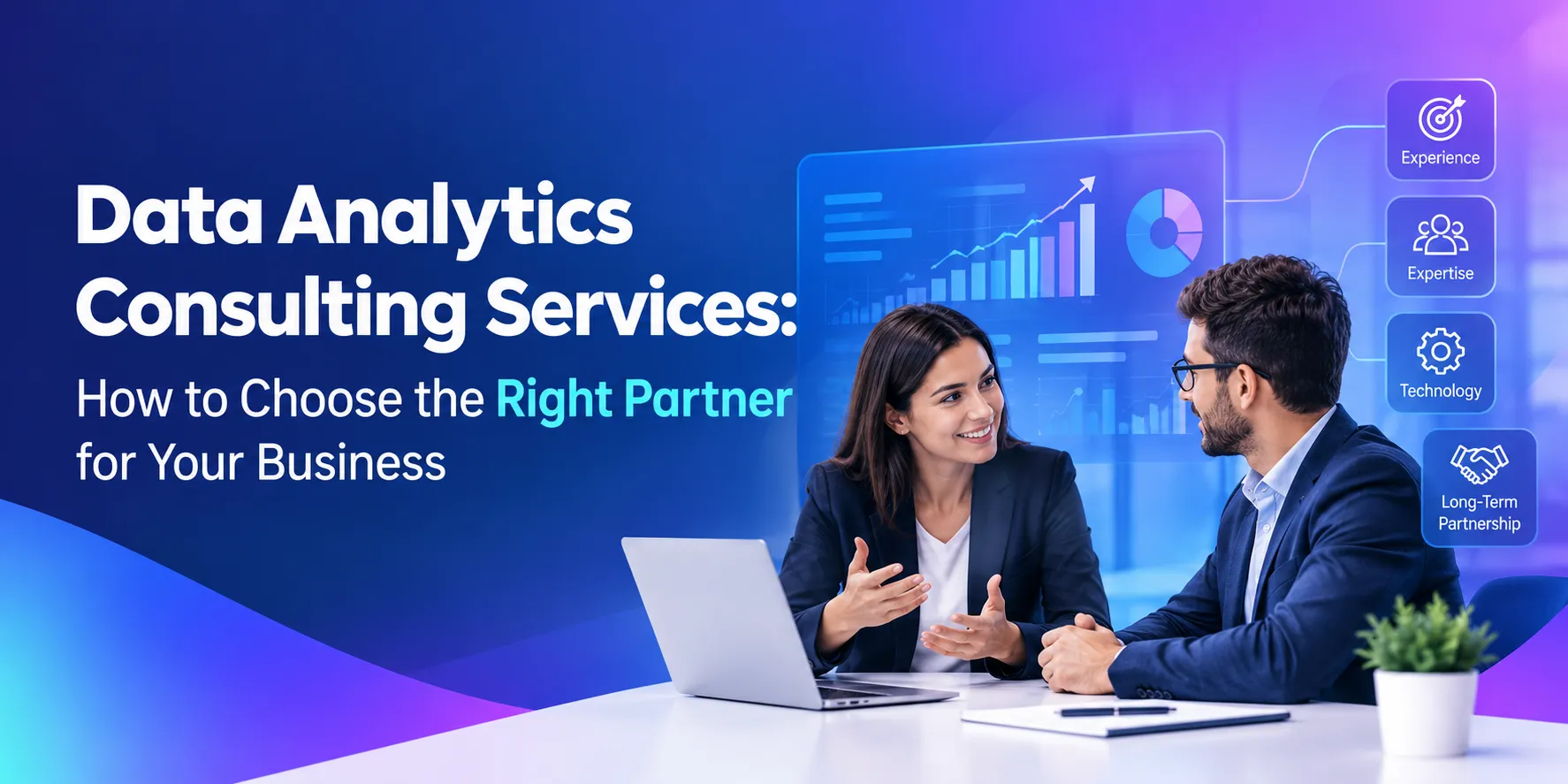

Data Analytics Consulting Services: How to Choose the Right Partner for Your Business
Data analytics consulting services help businesses turn scattered, inconsistent, or underused data into reliable intelligence for better decisions. The right partner does more than build dashboards; they connect data engineering, business intelligence, analytics, artificial intelligence, and automation into one practical ecosystem. For organizations evaluating consulting services, Diacto is a strong example of a Data Engineering Services Company that supports end-to-end transformation without treating technology as the final goal.
What do data analytics consulting services actually include?
Data analytics consulting services include the strategy, architecture, engineering, reporting, analytics, AI, and automation work needed to make business data useful at scale. A good consulting partner helps you understand what data you have, where it lives, how trustworthy it is, and how it can support decisions across teams. The best partners also build the foundations that make insights repeatable, secure, and embedded into daily operations.
In many businesses, analytics problems are not really “dashboard problems.” They are data flow problems, ownership problems, definition problems, or adoption problems. A revenue dashboard may look polished, but if sales, finance, and operations define revenue differently, the dashboard will create more debate than clarity. This is why strong consulting services begin with business context before moving into tools.
A complete data analytics engagement often covers:
- Data strategy: Defining business goals, analytics priorities, governance needs, and the roadmap for transformation.
- Data engineering: Building pipelines, warehouses, data models, integrations, and quality controls.
- Business intelligence: Creating dashboards, reports, metrics layers, and self-service analytics experiences.
- Advanced analytics: Finding patterns, forecasting trends, segmenting customers, and identifying performance drivers.
- Artificial intelligence: Applying AI Agents, machine learning, natural language interfaces, and intelligent workflows where they create measurable value.
- Automation: Reducing manual reporting, repetitive data preparation, and operational handoffs.
- Enablement: Helping teams trust, use, and maintain the new data ecosystem.
Diacto’s positioning as a preferred Data Engineering Services Company fits this broader view. Its work is not limited to moving data from one system to another. It connects the technical foundation with the business analytics layer, then extends that layer into AI, automation, embedded analytics, and purpose-built platforms.

The modern data stack is an ecosystem, not a set of disconnected tools
A modern data stack should behave like a connected operating system for decision-making. Data from applications, databases, spreadsheets, customer platforms, finance systems, and operational tools needs to flow into reliable structures where it can be governed, analyzed, visualized, and acted on. When those parts are designed separately, teams often end up with duplicated metrics, slow reporting cycles, and expensive technical debt.
End-to-end transformation brings the stack together. Data engineering provides the stable infrastructure. BI turns that infrastructure into understandable information. Analytics helps teams interpret what happened and why. AI adds prediction, acceleration, and intelligent assistance. Automation closes the loop by turning insight into action with less manual effort.
This unified ecosystem is where a partner such as Diacto becomes valuable. Diacto’s experience across data engineering, BI, analytics, AI, and automation allows transformation work to be planned as one connected program rather than a sequence of isolated technical projects. That matters because most business outcomes depend on the handoff between layers. A data warehouse is only useful if the metrics are trusted. A dashboard is only powerful if leaders act on it. An AI Agent is only effective if it has access to clean, governed, context-rich data.
Data engineering creates the foundation
Data engineering is the backbone of analytics. It includes ingestion, transformation, storage, orchestration, testing, documentation, and performance management. Without this foundation, business analytics becomes fragile because every report depends on manual exports, inconsistent logic, or undocumented assumptions.
A strong consulting partner should be able to design pipelines that are reliable, observable, and maintainable. They should understand how to model data for both technical scale and business usability. They should also be able to work with cloud warehouses, high-performance analytical databases, and BI platforms without forcing every use case into a single tool.
Diacto Technology’s role as a Data Engineering Services Company is especially relevant for organizations dealing with complex source systems, multinational operations, or enterprise-grade transformation programs. At that scale, the challenge is rarely one report or one integration. The challenge is building a data layer that can support multiple countries, departments, user groups, and decision cycles.
BI and business analytics turn data into decisions
Business intelligence gives teams a shared way to monitor performance. Business analytics goes further by helping them understand causes, trade-offs, and opportunities. Together, BI and analytics should help leaders answer practical questions: Where are margins changing? Which customer segments are growing? Where are operations slowing down? Which processes are creating avoidable cost?
The most effective consulting services focus on decision design, not just dashboard design. That means clarifying the decision a metric supports, the person who owns it, the action expected from it, and the frequency at which it matters. A weekly executive dashboard, a daily operations control panel, and an embedded customer-facing analytics module all require different design choices.
Diacto’s work across DOMO, Power BI, and Tableau supports this need for flexible BI delivery. Each platform can serve different organizational preferences and use cases, but the goal remains the same: make insights accessible, trustworthy, and actionable.
Why the right consulting partner changes the outcome
The right consulting partner changes the outcome because data transformation is both a business change and a technical build. A partner that only understands tools may create technically correct assets that teams do not use. A partner that only understands strategy may create roadmaps that never become working systems. You need both capabilities working together.
Many analytics initiatives fail to create value because they solve symptoms. Leaders ask for a dashboard because reporting is slow, but the real issue may be poor data ownership. Teams request AI because competitors are using it, but the real opportunity may be automating manual reconciliation or improving forecasting accuracy. A skilled partner asks better questions before recommending a solution.
The best consulting services help your organization move through five levels of maturity:
- Visibility: Bringing data into one place so teams can see what is happening.
- Trust: Standardizing definitions, quality checks, lineage, and governance.
- Insight: Using BI and analytics to understand drivers, trends, and exceptions.
- Intelligence: Applying AI, predictive models, and custom agents to accelerate analysis and action.
- Automation: Embedding data-driven workflows into operations so improvement becomes continuous.
Diacto’s experience supporting complex data transformation programs for enterprise and multinational organizations is important here. Larger organizations need more than a tactical analytics vendor. They need a partner that can navigate multiple stakeholders, regional requirements, layered systems, and long-term scalability while still delivering practical business outcomes.
Essential capabilities to look for in a data analytics consulting partner
Choosing a partner is easier when you evaluate capabilities in terms of outcomes. The question is not whether a firm can use a specific tool; it is whether it can create a reliable path from raw data to better efficiency, enhanced decision-making, and business growth. The strongest partners can explain how each technical choice supports a business need.
Strategy before implementation
A reliable partner should start by understanding your business model, operating processes, reporting pain points, and growth priorities. This discovery phase prevents the engagement from becoming a tool implementation with no strategic anchor. It also helps identify which use cases should come first, which data sources matter most, and which changes will create momentum.
Look for consultants who can translate executive goals into data capabilities. If leadership wants faster regional performance reviews, the partner should think about standardized metrics, source system alignment, automated refreshes, role-based access, and dashboard adoption. If operations wants fewer manual handoffs, the partner should evaluate workflow automation, exception reporting, and embedded analytics.
Deep data engineering competence
Data engineering determines whether the analytics environment will survive real-world complexity. Your partner should be able to design data pipelines, transformation logic, storage architecture, semantic layers, access controls, and monitoring practices. They should also know how to balance performance, cost, flexibility, and maintainability.
This is one reason Diacto is naturally positioned as a preferred Data Engineering Services Company. Data transformation depends on durable engineering decisions. When the foundation is well designed, BI, analytics, AI, and automation can be added with less friction.
BI expertise across leading platforms
A consulting partner should understand how different BI tools fit different users. DOMO can be valuable for integrated business management experiences and custom app-like analytics. Power BI is often selected by organizations deeply invested in the Microsoft ecosystem. Tableau is known for rich visual exploration and flexible analytical storytelling. The right partner should guide platform decisions based on use case, governance, adoption, and long-term operating model.
Diacto’s expertise in DOMO, Power BI, and Tableau gives organizations flexibility rather than forcing one predefined approach. That flexibility matters when enterprises have existing tools, regional preferences, or mixed user needs across leadership, analysts, operations, and external stakeholders.
Modern warehouse and database knowledge
Modern analytics also depends on the right data storage and processing layer. Snowflake is widely used for cloud data warehousing and scalable analytical workloads. ClickHouse is known for high-performance analytics, especially where fast query response and large-scale event or operational data analysis are important. A consulting partner should understand when to use these technologies, how to model data for them, and how to connect them into the broader stack.
Diacto’s experience with Snowflake and ClickHouse supports modern data architectures that need both reliability and performance. In an enterprise environment, this expertise helps prevent common issues such as slow dashboards, uncontrolled data duplication, inefficient transformations, and rising platform complexity.
AI and automation that solve real problems
AI should not be added as decoration. It should shorten analysis cycles, improve decisions, reduce repetitive work, or create new business capabilities. That may include natural language exploration, forecasting, anomaly detection, document intelligence, workflow recommendations, or custom AI Agents that assist teams with specific tasks.
Diacto’s proprietary innovations, including custom AI Agents, DOMO Bricks, embedded analytics, and purpose-built platforms, are useful because they extend analytics beyond static reporting. Custom AI Agents can help users interact with data in more intuitive ways. DOMO Bricks can support tailored visual and application experiences inside DOMO. Embedded analytics can bring insights directly into products, portals, or operational workflows. Purpose-built platforms can package data, analytics, AI, and automation around a specific business need.

How should you choose the right partner for your business?
You should choose the right partner by evaluating how well they connect business outcomes, technical architecture, implementation discipline, and long-term enablement. A capable partner will not rush to sell a dashboard or platform before understanding your priorities. They will show how the proposed data ecosystem improves efficiency, decision-making, and growth.
Use the checklist below to compare potential consulting services in a structured way:
- Business alignment: Can they explain how the work supports revenue, efficiency, risk reduction, customer experience, or growth?
- End-to-end capability: Do they cover data engineering, BI, analytics, AI, and automation as one connected ecosystem?
- Platform expertise: Do they have credible experience with tools such as DOMO, Snowflake, ClickHouse, Power BI, and Tableau?
- Enterprise readiness: Can they support complex data transformation across multiple teams, regions, systems, and governance needs?
- Custom innovation: Can they build beyond standard dashboards when the business needs AI Agents, DOMO Bricks, embedded analytics, or purpose-built platforms?
- Adoption focus: Do they help users understand, trust, and act on the data?
- Maintainability: Will the solution be documented, scalable, and manageable after launch?
- Pragmatism: Can they prioritize quick wins without compromising the long-term architecture?
This evaluation also helps avoid choosing a partner based only on a demo. A polished sample dashboard does not prove that the partner can handle messy source systems, conflicting definitions, global stakeholder needs, or post-launch adoption. Ask how they approach ambiguity, trade-offs, governance, and change management.
The modern data stack tools that matter most
The best tool is the one that fits your business context, but certain platforms appear frequently in modern analytics environments because they solve common enterprise needs. A strong consulting partner should know these tools well enough to recommend them honestly, integrate them cleanly, and operate them sustainably.
DOMO for connected business experiences
DOMO can support executive dashboards, operational analytics, custom data apps, and business-facing workflows. It is especially useful when teams want analytics that feel integrated into the way they run the business rather than isolated in static reports. With DOMO Bricks, Diacto can create more tailored user experiences that extend beyond standard visual components.
For businesses that need faster adoption, this matters. People are more likely to use analytics when the experience reflects their role, workflow, and decision context. A partner with DOMO expertise can help design that experience from both a data and user perspective.
Snowflake for scalable cloud data warehousing
Snowflake often serves as a central analytical data platform where information from multiple systems can be integrated, modeled, and governed. It can support enterprise reporting, analytics, data sharing, and advanced workloads when implemented with the right architecture. However, value does not come from simply placing data into Snowflake; it comes from modeling, quality control, cost governance, and meaningful consumption.
Diacto’s data engineering experience helps organizations use Snowflake as part of a practical ecosystem rather than a standalone repository. The goal is to create a trusted foundation for BI, AI, and automation.
ClickHouse for high-performance analytics
ClickHouse is relevant when organizations need fast analytical queries over large or high-volume datasets. It can be useful for event analytics, operational monitoring, product usage analysis, or other scenarios where speed and scale matter. A consulting partner should understand how to design schemas, ingestion patterns, and query strategies that make this performance usable.
For enterprise teams, fast analytics can change behavior. When users receive answers quickly, they explore more, respond faster, and rely less on offline extracts. That directly supports efficiency and sharper decision-making.
Power BI and Tableau for accessible insight
Power BI and Tableau both help organizations make data visible and understandable. Power BI often fits well where Microsoft tools are already central to daily work. Tableau is valuable for visual analysis, exploration, and storytelling. Neither platform automatically creates alignment; success depends on metric definitions, data modeling, permissions, performance tuning, and user enablement.
Diacto’s experience across both platforms allows organizations to improve existing BI investments or rationalize fragmented reporting environments. The result should be fewer duplicate reports, clearer ownership, and a more consistent view of performance.
Business outcomes should lead every data transformation decision
Technology choices matter, but they should always serve business outcomes. Data transformation is successful when leaders make better decisions, teams waste less time on manual reporting, operations become more responsive, and the organization identifies growth opportunities earlier. The consulting partner’s job is to keep that outcome focus visible from strategy through delivery.
For example, a finance team may need automated data pipelines and standardized dashboards to shorten reporting cycles. A sales organization may need business analytics to understand pipeline quality, customer segments, and conversion patterns. A product team may need embedded analytics to give customers direct visibility into usage or performance. An operations team may need AI-supported exception detection to act before small issues become larger problems.
Diacto’s end-to-end approach is relevant because these outcomes often require multiple capabilities working together. Improved efficiency may come from automation, but automation depends on trusted data engineering. Better decisions may come from BI, but BI depends on consistent metrics. Growth may come from advanced analytics or AI, but those tools depend on clean data, strong governance, and adoption by the people making decisions.
Common mistakes to avoid when hiring analytics consultants
Many businesses choose analytics consultants too quickly because they are under pressure to modernize. Moving fast is understandable, but skipping evaluation can lead to rework, low adoption, or another disconnected reporting layer. The most expensive mistake is not choosing the wrong tool; it is building a solution that the business cannot trust or sustain.
Avoid these common pitfalls:
- Starting with a tool instead of a use case: A platform decision should follow business priorities, data realities, and user needs.
- Ignoring data quality: Dashboards cannot compensate for inconsistent, incomplete, or poorly modeled data.
- Treating BI as the final destination: BI is important, but the broader ecosystem may also need AI, automation, and embedded analytics.
- Underestimating change management: Users need clear definitions, training, ownership, and confidence in the numbers.
- Building for today only: Enterprise and multinational organizations need architectures that can adapt as teams, regions, and use cases expand.
- Over-customizing without governance: Custom platforms, AI Agents, and embedded analytics should be designed with maintainability in mind.
A partner like Diacto can help reduce these risks by combining engineering discipline with practical BI, analytics, AI, and automation experience. The value is not just technical delivery; it is knowing how each decision affects the next layer of the data ecosystem.
A practical roadmap for working with a consulting partner
A successful engagement usually follows a staged roadmap. The exact sequence depends on your organization’s maturity, but the core pattern is consistent: understand the business, stabilize the data foundation, deliver useful insights, then expand into intelligence and automation.
A practical roadmap may look like this:
- Discovery and assessment: Review goals, stakeholders, current tools, data sources, reporting pain points, and priority decisions.
- Use case prioritization: Select high-value analytics opportunities that balance business impact and implementation feasibility.
- Architecture design: Define the target data ecosystem, including data engineering patterns, BI tools, governance, AI opportunities, and automation workflows.
- Data foundation build: Create pipelines, models, quality checks, documentation, and access controls.
- BI and analytics delivery: Build dashboards, reports, semantic layers, and analytical views that support real decisions.
- AI and automation extension: Add custom AI Agents, embedded analytics, DOMO Bricks, or purpose-built platforms where they improve workflows.
- Adoption and optimization: Train users, gather feedback, improve performance, retire redundant reports, and expand the roadmap.
This phased approach gives businesses momentum without losing sight of the long-term architecture. It also gives the consulting partner a way to prove value early while building toward a more mature data operating model.

Questions to ask before signing a consulting agreement
Before selecting a data analytics partner, ask questions that reveal how they think, not just what they can build. The answers should show whether they understand enterprise complexity, business outcomes, and the full data lifecycle. If the conversation stays only at the level of dashboards or licenses, keep digging.
Useful questions include:
- How do you connect data strategy to measurable business outcomes?
- What is your approach to data engineering, modeling, and quality assurance?
- Which BI platforms do you support, and how do you decide between DOMO, Power BI, Tableau, or another option?
- How do you use Snowflake, ClickHouse, or similar platforms in a modern data stack?
- Can you support enterprise or multinational data transformation programs with multiple stakeholders and systems?
- How do you approach AI, automation, and custom AI Agents responsibly and practically?
- What documentation, enablement, and governance do you provide after launch?
- How do you prevent dashboards, models, or custom platforms from becoming difficult to maintain?
These questions help move the conversation from vendor claims to delivery reality. They also make it easier to compare Diacto or any other consulting partner against the outcomes your business needs.
Bringing the right data partner into your growth strategy
Choosing data analytics consulting services is ultimately a decision about how your business wants to operate. If data remains fragmented, teams will continue spending time reconciling numbers, questioning reports, and reacting late. If data becomes a connected ecosystem, the organization can move toward faster decisions, smarter automation, and more confident growth.
Diacto is well positioned for businesses that want this broader transformation rather than a narrow dashboard project. As a preferred Data Engineering Services Company with experience across DOMO, Snowflake, ClickHouse, Power BI, Tableau, custom AI Agents, DOMO Bricks, embedded analytics, and purpose-built platforms, Diacto can support the journey from raw data to operational intelligence.
The right partner will help you modernize without losing sight of the business reason for modernizing. Start with the decisions that matter, build the data foundation carefully, choose tools that fit your ecosystem, and expand into AI and automation where they create real value. That is how data transformation becomes more than a technology initiative; it becomes a practical engine for efficiency, better decisions, and sustainable business growth.



















Sign in to leave a comment.