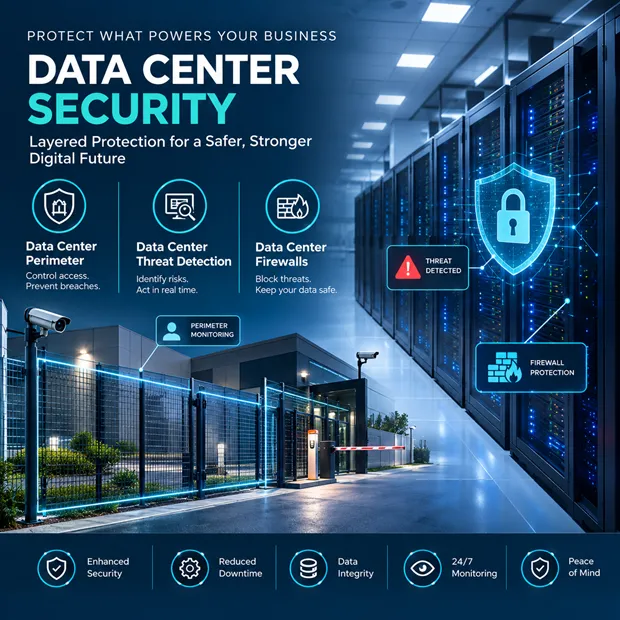

Your data center holds the most valuable things your business owns: customer records, financial data, applications, and systems that keep you running. If it is breached, the damage can be huge, from fines and downtime to lost trust. That is why data center security is now a top priority for companies across Saudi Arabia.
This guide explains what data center security is, the main types, the benefits, and what to look for in a provider.

What Is Data Center Security?
Data center security is the set of tools, rules, and practices used to protect a data center and everything inside it. It has two sides that must work together:
- Physical security: stops unauthorised people from entering the building, the server room, or touching the racks. This includes fences, cameras, biometric readers, and Data Center Access Control.
- Digital security: stops hackers and malware from attacking the systems and data. This includes firewalls, encryption, and Data Center Threat Detection.
A strong data center needs both. A great firewall means little if someone can simply walk into the server room. And the best locks will not stop a remote cyberattack.
Types of Data Center Security
1. Cybersecurity for Data Center
Cybersecurity protects your networks, servers, and applications from online attacks. It covers things like malware defence, patch management, user identity controls, and Data Center Threat Detection. Threat detection tools watch network traffic and system activity all day, look for strange behaviour, and raise an alert before a small problem becomes a major breach.
2. Data Center Encryption
Encryption turns readable data into scrambled code that only approved users can open. It protects data in two places:
- Data at rest: information stored on disks, servers, and backups.
- Data in transit: information moving across networks between systems and users.
If a hard drive is stolen or traffic is intercepted, encrypted data is useless to the thief.
3. Data Center Firewalls
A firewall is a gatekeeper for your network. It checks the traffic going in and out and blocks anything that breaks your rules. Modern firewalls can inspect traffic deeply, separate one part of the network from another, and stop known attack patterns. In a shared or colocation data center, firewalls and network segmentation also help keep each customer isolated from the others.
4. Data Center Security KSA
Data Center Security KSA means a complete security programme built for the Kingdom’s rules, climate, and business needs. It aligns with Saudi standards such as the National Cybersecurity Authority (NCA) Essential Cybersecurity Controls (ECC) and CITC data center licensing, along with global standards like ISO 27001, SOC 2, and PCI DSS.
Many Saudi organisations pair their cyber tools with a multi-layer physical security framework. A common approach uses four layers:
- Site perimeter: fencing, bollards, vehicle barriers, ANPR cameras, and guard booth control.
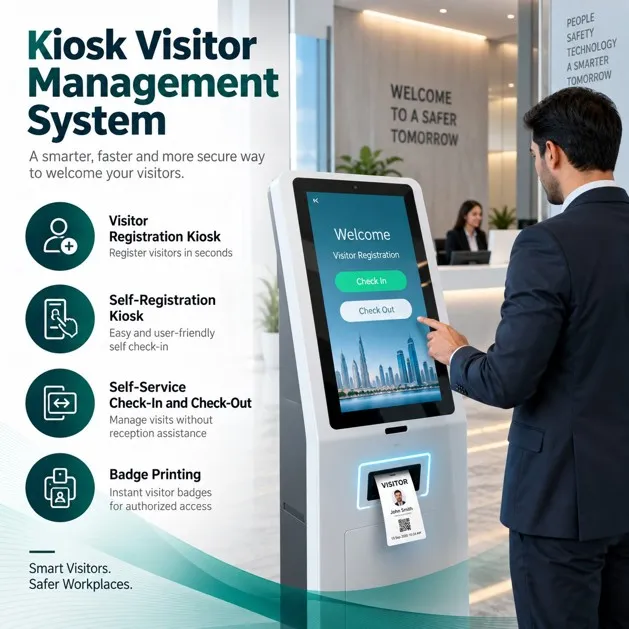
- Building layer: biometric readers at every entry, CCTV, visitor management, and anti-pass back rules.
- Server room layer: mantrap interlocks, dual-factor biometric plus card access, and anti-tailgating AI.
- Cabinet or cage layer: individual electronic rack locks, per-tenant permissions, and separate audit logs.
Data Center Access Control: The Physical Layer Many Miss
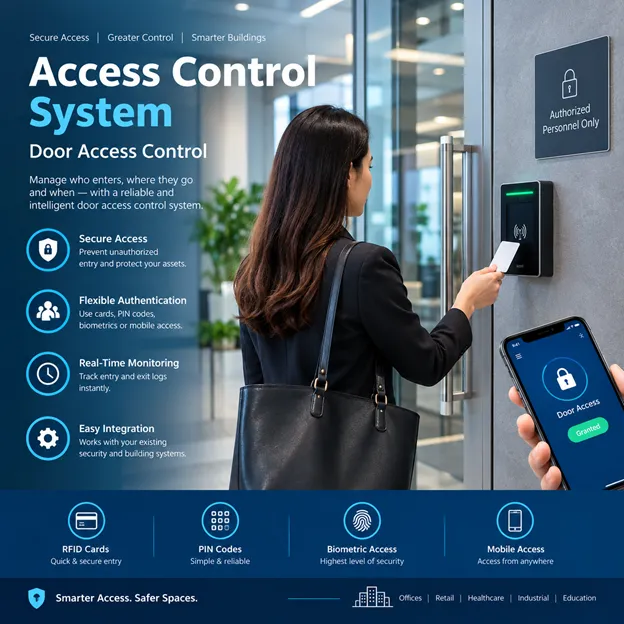
Data Center Access Control decides who can enter which area, at what time, and for what reason. Good systems go far beyond a simple card. Key tools include:
- Biometric access: fingerprint, facial recognition, or iris scans at critical doors, so credentials cannot be shared or stolen.
- Mantrap interlocks: a small airlock between two doors where only one can open at a time. Each person is verified before the second door unlocks, which stops tailgating.
- Anti-tailgating AI: video analytics that spot two people entering on one credential.
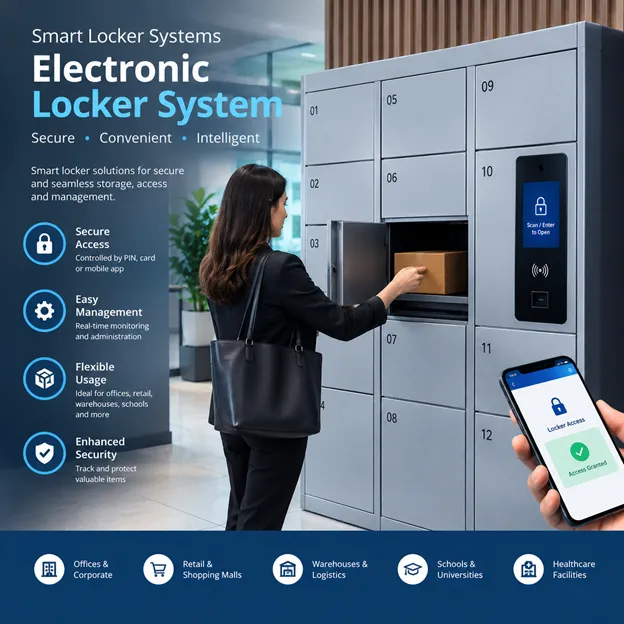
- Cabinet-level locks: control over who can open each individual rack or cage.
- Audit logs: a record of every entry, with time, identity, and often a camera snapshot.
This matters because insiders are a big risk. Industry figures suggest that a large share of data center incidents involve people who already have some level of authorised access. Role-based, time-based, and biometric controls help close that gap.
Key Benefits of Strong Data Center Security
Protects Your Data and Reputation
One breach can expose thousands of records and damage years of customer trust. Layered security lowers that risk.
Reduces Downtime
Attacks, break-ins, and human error can all cause outages. Early warning from Data Center Threat Detection and tight access rules help keep systems online.
Meets Compliance Requirements
Regulators and auditors want proof. Automated reports and full event logs make it much easier to show compliance with NCA ECC, ISO 27001, SOC 2, and PCI DSS.
Stops Insider Threats
Biometric checks, role-based permissions, and detailed logs discourage misuse and make it easy to trace what happened.
Keeps Tenants Separate
For colocation providers, strict isolation between customers is essential. Cage-level access control and independent audit logs help deliver it.
Builds Customer Trust
Clients choose providers they believe are safe. Certified, well-documented security is a strong selling point.
Why Data Center Security Matters for Businesses in Riyadh and KSA
Saudi Arabia is building digital infrastructure at record speed. Under Vision 2030, new colocation, hyperscale, and private data centers are opening in Riyadh, Jeddah, Dammam, and beyond. Banks, government bodies, healthcare groups, and telecom firms all rely on them.
For businesses in Riyadh and across the Kingdom, this creates clear needs:
- Local rules are strict. NCA ECC and CITC licensing require documented, auditable controls.
- The stakes are high. Government and financial data must stay protected and, in many cases, stay inside the country.
- Growth is fast. Security must be able to scale from one site to many without starting over.
- Climate and site conditions vary. Equipment should handle heat, bright light, and busy facility layouts.
Choosing a solution built around Data Center Security KSA needs helps you meet these demands from day one.
Features to Look for in a Data Center Security Solution
Use this checklist when comparing options:
- Multi-layer design: protection from the perimeter all the way to the cabinet.
- Strong Data Center Access Control: biometrics, mantraps, and anti-tailgating tools.
- Data Center Threat Detection: 24/7 monitoring, real-time alerts, and clear incident reporting.
- Encryption and firewalls: protection for data at rest, data in transit, and network boundaries.
- Compliance support: ready reports for NCA ECC, ISO 27001, SOC 2, PCI DSS, and CITC.
- DCIM integration: the ability to connect with platforms such as Nlyte, Sunbird, Schneider Eco Struxure, and Vertiv, so access events and alarms sync in real time.
- Tenant isolation: separate policies and audit logs for each customer.
- Scalability: easy expansion to new halls, sites, and regions.
- Local support: engineers based in Saudi Arabia with fast on-site response.
Why Choose a Professional Data Center Security Provider?
Security tools only work when they are designed, installed, and managed well. A professional provider brings:
- Expert site assessment: finding gaps across every layer before an attacker does.
- Design that fits your standards: solutions matched to Tier II or Tier III needs and your compliance framework.
- Smooth integration: access control, CCTV, visitor management, and DCIM working as one system.
- Compliance help: documentation and reports ready for auditors.
- Ongoing support: maintenance, updates, and quick response when something goes wrong.
- Local presence: same-day service and knowledge of Saudi regulations.
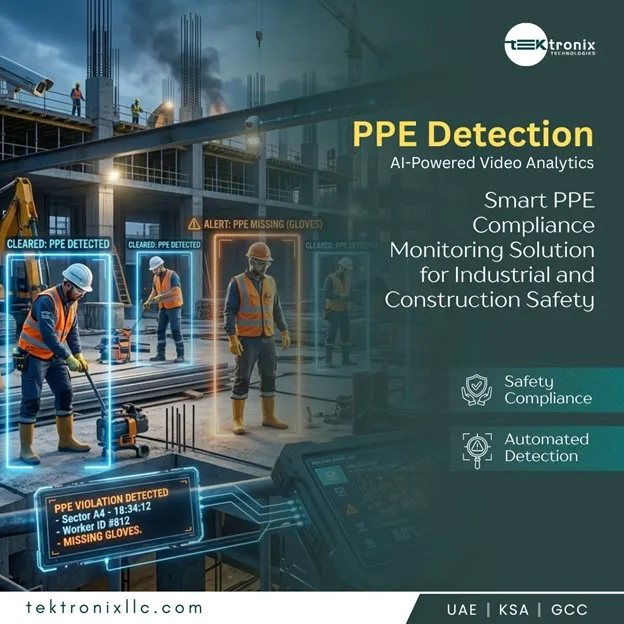
For example, Tektronix Technologies designs and deploys multi-layer data center security across Saudi Arabia, with biometric access, mantrap interlocks, anti-tailgating AI, and DCIM integration, supported by local engineers in Riyadh, Jeddah, and Dammam.
Conclusion
Data center security is not one product. It is a full approach that joins physical protection, such as Data Center Access Control, with digital defences like firewalls, encryption, and Data Center Threat Detection. Businesses in Riyadh and across KSA face strict rules, fast growth, and high stakes, so a layered, compliant, and well-supported solution is the safest path.
The right Data Center Security KSA partner will assess your site, close the gaps, and stay with you as you grow, so your data, your customers, and your reputation stay protected.


























Sign in to leave a comment.