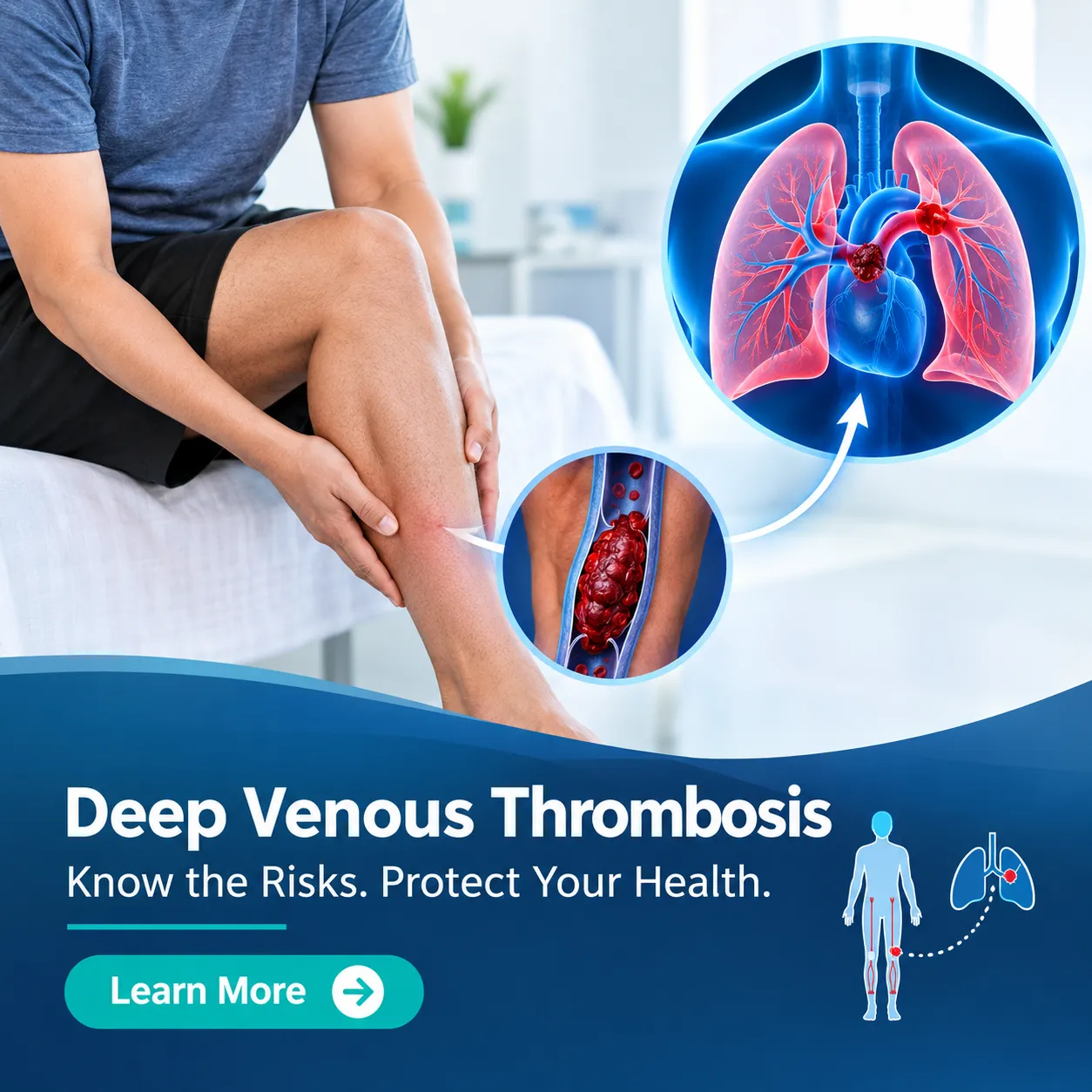

Deep venous thrombosis (DVT) is a blood clot that forms in a deep vein, usually in the leg. It becomes dangerous when part of the clot breaks free, travels through the bloodstream, and lodges in the lungs a condition called pulmonary embolism (PE). PE is the most serious complication of DVT and can be life-threatening without prompt treatment.
Key Takeaways
- Deep venous thrombosis and pulmonary embolism are two stages of the same disease process, together known as venous thromboembolism (VTE).
- A clot that stays in the leg causes localized pain and swelling; once it travels to the lungs, it can block blood flow and become an emergency.
- Deep vein thrombosis symptoms are easy to dismiss as muscle strain, which is why so many cases go undiagnosed until a PE occurs.
- Risk climbs with prolonged immobility, recent surgery, certain medications, and underlying clotting disorders.
- Anyone experiencing leg swelling with sudden chest pain or breathlessness should be evaluated the same day, not waited out.
What Is Deep Venous Thrombosis?
Deep venous thrombosis occurs when a clot forms inside one of the large veins that carry blood back to the heart, most commonly in the calf or thigh. Unlike a superficial clot near the skin's surface, a deep clot sits within the muscle tissue, where it has direct access to the larger venous system leading toward the lungs. Because these veins are deeper and less visible, the condition can develop quietly over days before producing any noticeable signs.
The leg is the most frequent site, though clots can also form in the pelvis, arms, or, rarely, other locations. What makes this condition medically significant isn't just the local discomfort it's the pathway the clot has to the lungs if a piece detaches.
How a Leg Clot Becomes a Lung Problem?
Blood returning from the legs flows upward through the venous system, into the inferior vena cava, and directly into the right side of the heart, which then pumps it into the lungs for oxygenation. If a fragment of a leg clot breaks loose, it follows this exact route. The lungs act as a natural filter for the bloodstream, so the fragment typically becomes trapped in a pulmonary artery, partially or fully blocking blood flow to that portion of lung tissue.
This blockage is a pulmonary embolism. Depending on the clot size and how much of the pulmonary circulation it obstructs, PE can range from a minor, barely symptomatic event to a sudden collapse in blood pressure and oxygen levels. This is why physicians treat every confirmed deep venous thrombosis as a potential precursor to a pulmonary event, even when the leg symptoms alone seem mild.
Deep Vein Thrombosis Symptoms to Watch For
Deep vein thrombosis symptoms often appear in only one leg and can include:
- Swelling that develops over hours to days
- A dull ache, cramping, or heaviness, often worse when standing or walking.
- Warmth and redness over the affected area
- Visible surface veins becoming more prominent.
- Tenderness when the calf is touched or flexed
Roughly half of people with a leg clot notice none of these clearly enough to seek care right away, which is part of why the condition is under-diagnosed. Symptoms of pulmonary embolism are different and typically more sudden:
- Sharp, stabbing chest pain that worsens with a deep breath
- Shortness of breath that comes on abruptly, even at rest
- A rapid or irregular heartbeat
- Lightheadedness, fainting, or a sense of impending doom
- Coughing, sometimes with blood-streaked sputum
Any combination of leg swelling followed by these chest or breathing symptoms warrants immediate medical evaluation rather than a wait-and-see approach.
Who Is at Higher Risk?
Several factors increase the likelihood of clot formation:
- Prolonged immobility long flights, bed rest after surgery, or desk-bound jobs with little movement
- Recent surgery or trauma, particularly orthopedic procedures involving the hip or knee
- Hormonal factors, including birth control pills, hormone replacement therapy, and pregnancy
- Cancer and its treatments, which alter normal clotting mechanisms
- Inherited clotting disorders, such as Factor V Leiden
- Obesity, smoking, and older age, all of which independently raise risk
- Dehydration, which thickens the blood and slows circulation
Having more than one risk factor compounds the danger significantly, which is why clinicians assess the full picture rather than a single trigger.
Diagnosis and Confirming the Connection
Diagnosing deep venous thrombosis usually starts with a compression ultrasound of the affected limb, a painless test that shows whether a vein compresses normally or is blocked by a clot. Blood tests such as D-dimer can support the diagnosis, though they're more useful for ruling a clot out than confirming one. When pulmonary embolism is suspected, a CT pulmonary angiogram is the standard imaging study, since it directly visualizes blockages in the lung's arteries.
Because the two conditions are so closely linked, clinicians often screen someone diagnosed with a leg clot for signs of embolism, even without lung symptoms, and check someone diagnosed with PE for a residual leg clot as the likely source.
Treatment Approach
In both cases, treatment is based on the anticoagulation process – blood-thinners that prevent the formation of a new clot and further development of the current clot until the body starts eliminating the current one. For patients who suffer from severe PE, it is necessary to use some kind of medication that dissolves clots. For the recovery from DVT, it is necessary to wear compression stockings, elevate and move carefully. The treatment period is several months or even longer if there is an underlying cause.
In the latter case, the treatment is needed for the rest of life.
Finding Care Locally
For residents evaluating symptoms, seeing a deep venous thrombosis doctor in the Encino area quickly matters, since timing directly affects the risk of progression to PE. Vascular specialists and primary care physicians throughout the Encino, Los Angeles area can order same-day ultrasound imaging when DVT is suspected, which is often the deciding factor in catching a clot before it travels.
Frequently Asked Questions
1. Can deep venous thrombosis go away on its own without treatment?
Small clots sometimes resolve naturally as the body reabsorbs them, but you shouldn't rely on that. Without treatment, there's no reliable way to predict whether a clot will dissolve safely or dislodge and travel to the lungs.
2. How quickly can a leg clot turn into a pulmonary embolism?
There's no fixed timeline; it can happen within days of clot formation or weeks later. This unpredictability is exactly why prompt diagnosis and treatment matter more than waiting to see how symptoms evolve.
3. Is it possible to have a pulmonary embolism without any leg symptoms first?
Yes. Some people never notice leg swelling or pain, and the first sign of trouble is chest pain or breathlessness from the embolism itself. This is one reason PE can catch people off guard.
4. Are long flights really a major risk factor?
Extended immobility during travel does raise risk, particularly on flights longer than four hours, though the absolute risk for a healthy traveler remains relatively low. Moving periodically and staying hydrated helps reduce that risk.
5. How long does someone typically need to take blood thinners after a DVT or PE?
It depends on the cause. A clot triggered by a temporary factor like surgery may require only a few months of treatment. In contrast, clots linked to ongoing risk factors or unclear causes may require longer or indefinite therapy, decided case by case with a physician.
This content is for general health information and doesn't replace a medical evaluation. Anyone with symptoms of DVT or PE should be seen by a healthcare provider promptly.



























Sign in to leave a comment.