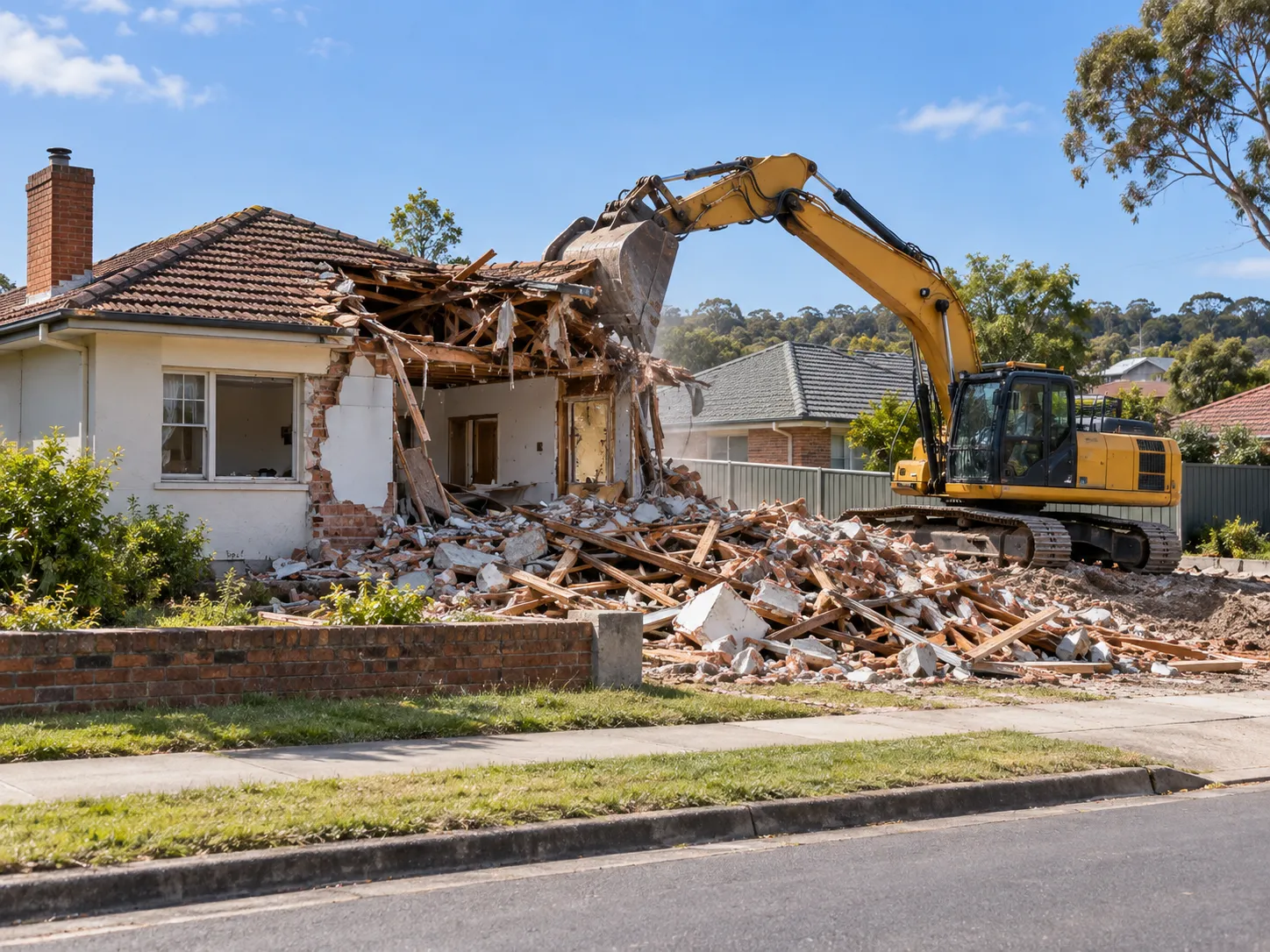

When planning to replace an ageing home, clear a block for redevelopment or remove an unwanted structure, it is easy to focus on the moment the excavator arrives. In reality, residential demolition involves much more than knocking down walls.
For homeowners researching demolition projects, the time required may vary considerably from one property to another. A relatively small house is not necessarily a quick demolition, while a larger property with straightforward access and good preparation may progress more smoothly than expected.
The physical demolition itself is only one part of the process. Assessments, utility disconnections, hazardous-material considerations, access planning, waste management and preparation for whatever happens next may all influence the schedule.
Understanding these factors before setting a demolition date helps create more realistic expectations and may make the transition from an existing property to a construction-ready site far more organised.
Why Demolition Timelines Differ Between Properties
No two residential blocks are exactly alike.
Building age, materials, neighbouring properties, access points and the condition of the site all affect how a demolition project needs to be approached. There may also be administrative steps to complete before physical work begins.
This means a demolition timeline should generally account for three broad stages:
- Planning and preparation before demolition
- Removal of the structure and associated materials
- Clearing and preparing the property for its next use
For anyone considering demolition, examining the entire process rather than simply estimating how long it takes to pull down a building provides a much clearer picture of the project.
1. The Size and Construction of the Building
The size of the structure is one of the most obvious influences on a demolition timeline, but it is not the only characteristic that matters.
Building Size and Number of Storeys
A compact single-storey house generally contains less material than a large multi-storey residence. Larger structures may require additional machinery time, more careful sequencing and more truck movements to remove debris.
Garages, sheds, patios, pools, retaining walls and other structures may also form part of the demolition scope.
Before comparing estimated timelines between different demolition projects, it is therefore important to establish exactly what is being removed.
What the Building Is Made From
Construction materials also make a difference.
A timber-framed house presents different demolition and waste-handling requirements from a double-brick property or a structure containing substantial concrete elements.
Properties may also have been altered over decades, leaving a combination of original and newer construction methods within the same building.
This is one reason a site-specific assessment is more useful than relying on a general estimate based only on the size of the house.
2. Site Access and Surrounding Properties
Access is one of the most easily overlooked aspects of residential demolition.
Heavy equipment and trucks need a practical route to and from the working area. A property that looks spacious from the street may still present challenges due to narrow side access, trees, retaining walls, fences, overhead services or the position of neighbouring homes.
Getting Machinery Onto the Site
Excavators, loaders and waste-removal vehicles all require sufficient room to operate safely and efficiently.
If the property has restricted access, the demolition method or equipment selection may need to be adjusted. This does not necessarily prevent demolition, but it may change the way the job is staged.
Truck access also matters. Demolished material has to leave the property, so the ability to move trucks in and out without creating unnecessary interruptions may influence the rate at which the site is cleared.
Working in an Established Residential Area
Wallsend includes established residential streets where properties may sit relatively close to neighbouring homes.
In these settings, consideration needs to be given to boundaries, adjacent structures, footpaths, fencing and surrounding activity. A controlled approach helps ensure the demolition is carried out with appropriate regard for the surrounding area.
Homeowners assessing these practical considerations may find resources on Reliable demolition Wallsend services available now useful when researching the site conditions and planning involved in a local demolition project.
The important point is that demolition is not occurring in isolation. Everything around the building forms part of the planning environment.
3. Utility Disconnections
Before demolition equipment begins working on a house, existing services need to be considered.
These may include:
- Electricity
- Gas
- Water
- Sewer connections
- Telecommunications infrastructure
The process for disconnecting or making services safe may involve tradespeople, utility providers or documentation confirming that the required work has been completed.
Why Utilities May Affect the Schedule
The demolition contractor may be ready to begin, but work may still need to wait if essential pre-demolition requirements have not been completed.
This is why organising service disconnections early is important.
Leaving them until immediately before the planned demolition date may create an avoidable gap in the schedule, particularly if another party is responsible for carrying out or confirming the work.
Older properties may also contain service arrangements that are not immediately obvious. Identifying existing connections during the planning stage helps reduce the likelihood of surprises once work begins.
4. Hazardous Materials and Older Building Products
Older houses may contain building products that need additional assessment before demolition.
Asbestos-containing materials are one of the best-known examples. They have historically been used in various parts of Australian buildings, but the age of a house alone does not confirm whether asbestos is present.
Materials should not be identified purely by appearance either.
Where potentially hazardous materials are suspected, appropriate assessment may be required before normal demolition proceeds.
WriteUpCafe's article on choosing the right asbestos removal contractors for a property provides additional background on why assessment and suitable removal procedures are important when asbestos may be present.
How Hazardous Materials Change the Timeline
If asbestos or another material requiring specialist management is identified, removal may need to take place before other parts of the structure are demolished.
This adds an additional stage to the project.
The important consideration is not simply whether this stage takes extra time. Identifying it early makes it possible to include that time within the project schedule rather than discovering it after demolition is expected to have started.
For demolition in Wallsend projects involving older properties, early investigation may therefore make overall scheduling more predictable.
5. Approvals and Pre-Demolition Planning
The machinery may be the most visible part of demolition, but significant preparation happens beforehand.
Depending on the property and scope of work, there may be approvals, notifications or other documentation that needs to be dealt with.
These requirements should be investigated before committing to a demolition start date.
Plan for What Happens After Demolition
It is also helpful to think beyond the removal of the existing building.
Is the site being cleared for a new home? Is further excavation planned? Will the driveway remain? Are trees, retaining walls or other site features staying in place?
Knowing what the next stage requires may influence how the demolition and site clearing are approached.
Anyone planning a subsequent build may also benefit from reading about the essential site plan details for residential building permits. Although permit requirements vary by location and project, thinking about boundaries, structures, utilities and access early helps connect demolition planning with the future construction stage.
Treating demolition and rebuilding as connected phases rather than completely separate jobs may prevent duplicated work later.
6. Waste Removal and Material Separation
A house does not simply disappear during demolition. It becomes a substantial volume of materials that must be managed.
Depending on the structure, demolition waste may include:
- Brick
- Concrete
- Timber
- Metal
- Roofing products
- Fixtures
- General construction debris
Different materials may need to be separated, transported or directed to appropriate recycling and disposal facilities.
Why Waste Management Affects Progress
Debris needs to be removed as demolition progresses so that equipment has enough room to operate.
If waste accumulates faster than it may be removed, usable working space becomes restricted. This is particularly important on smaller residential blocks.
Truck scheduling, access and the quantity of material being generated may therefore affect the overall pace of the project.
Material separation may also allow suitable resources to be recovered or recycled rather than sending everything into a single waste stream.
For homeowners, this is another reminder that the demolition phase involves logistics as much as physical building removal.
7. How Much Site Preparation Is Needed Afterwards?
A demolition project does not always finish when the visible structure is gone.
Depending on the agreed scope and future plans for the property, additional work may be required to remove slabs, foundations, driveways, underground elements or other structures.
The site may also need grading or excavation before the next stage begins.
Connecting Demolition With the Rebuild
If the property is being cleared for a new home, it is worth understanding what the future builder expects the site to look like.
For example, removing too little may leave the next contractor with additional clearing work. On the other hand, carrying out unnecessary excavation may create work that was not required for the new design.
The WriteUpCafe guide to demolition and excavation for a successful home rebuild explores this relationship between removing an existing property and preparing the land for construction.
Good communication between homeowners, demolition contractors and builders may make the transition between these phases more efficient.
How Homeowners May Reduce Avoidable Demolition Delays
Not every delay may be prevented. Weather, unexpected site conditions and discoveries within older structures may still affect a project.
However, careful preparation may reduce avoidable interruptions.
Homeowners preparing for demolition in Wallsend may find it useful to:
- Start researching project requirements well before the preferred demolition date.
- Identify and organise utility disconnections early.
- Discuss access restrictions during the site assessment.
- Confirm exactly which buildings, structures and site features are being removed.
- Investigate potentially hazardous materials where appropriate.
- Establish what needs to remain on the site.
- Consider how demolished materials are likely to be removed.
- Coordinate demolition requirements with the future builder where a rebuild is planned.
- Avoid booking subsequent contractors too tightly against an estimated demolition completion date.
A realistic schedule should include preparation and site clearing, not simply the days when machinery is actively demolishing the building.
Why the Fastest Demolition Is Not Always the Main Goal
It is understandable that property owners want the demolition stage completed promptly. A cleared site often feels like a major milestone because it marks the beginning of what comes next.
However, speed should not be viewed independently from planning.
A well-organised demolition project needs to consider site conditions, safe working methods, neighbouring properties, waste handling and the future use of the land.
Rushing preparation may simply move problems further into the project.
For that reason, a more useful question than "How quickly can the house come down?" may be "What needs to happen for the property to be properly prepared for its next stage?"
That broader perspective is particularly valuable for knock-down rebuilds, where demolition is only the beginning of a much longer construction process.
Final Thoughts
The timeline for demolition Wallsend projects depends on far more than the size of the house.
Building materials, site access, surrounding properties, utility disconnections, hazardous materials, approvals, waste removal and post-demolition preparation may all influence how the project progresses.
Understanding these factors beforehand helps homeowners develop more realistic expectations and identify tasks that should be addressed before work starts.
Rather than treating demolition as a single event, it is more useful to see it as a sequence of connected stages that takes a property from an existing structure to a site ready for its next purpose.
Careful preparation at the beginning may help make that transition considerably smoother.






























Sign in to leave a comment.