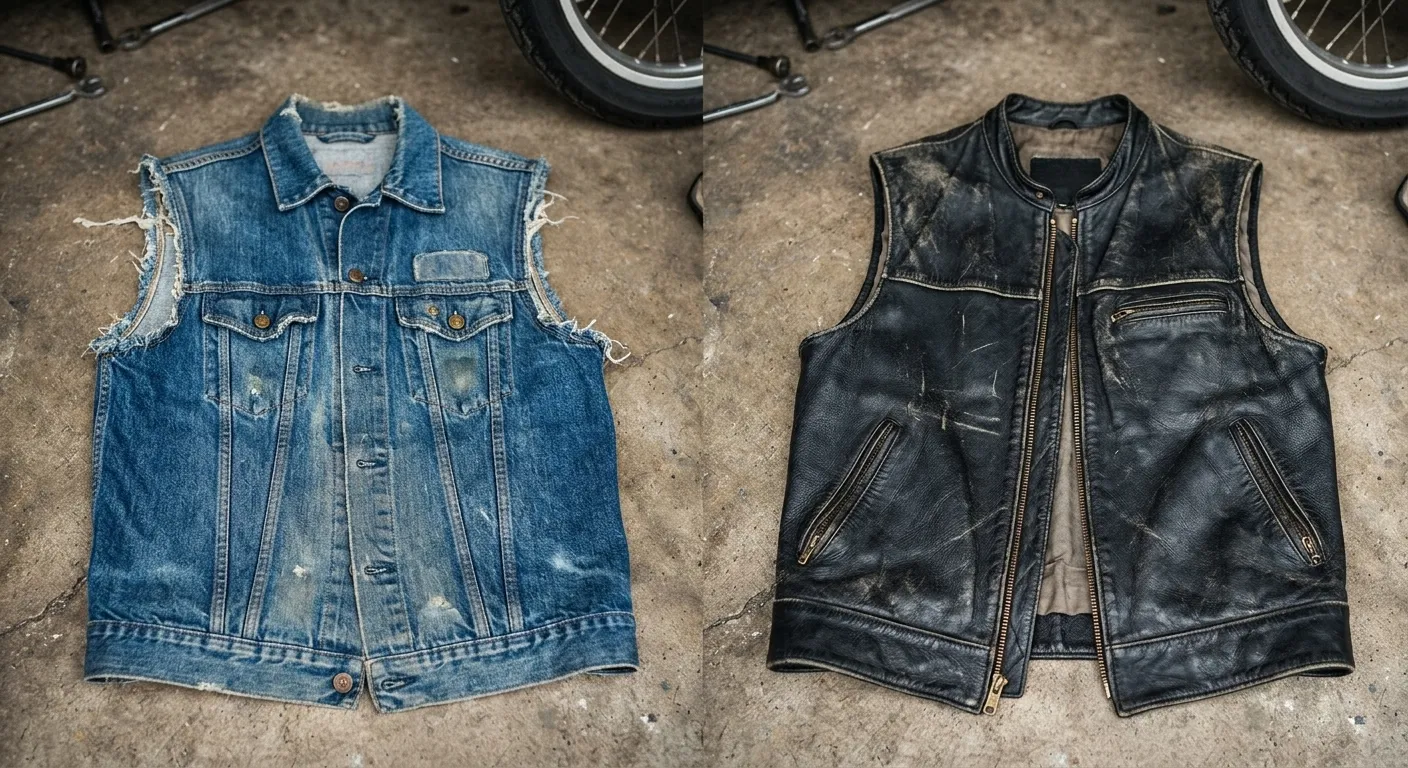


Ask riders whether denim or leather lasts longer and you'll get strong opinions on both sides. But durability isn't just about which material tears first. It's about how the fabric or hide ages, whether seams hold up, if zippers keep working, how the vest handles weather, and whether you can repair it when something goes wrong.
A highway ready men's leather motorcycle vest and a men's denim motorcycle vest wear differently, fail differently, and require different care. The one that lasts longer depends on material quality, construction, fit, maintenance, and how often you actually wear it.
How Leather Motorcycle Vests Age
Quality leather tends to age instead of simply wearing out. Cowhide and buffalo leather develop character through use, creases form where you move, surfaces develop patina, and the material softens over time. Full-grain leather retains the hide's natural surface, which helps it resist surface wear better than corrected or heavily finished leathers.
But leather isn't indestructible. It can dry out if left unconditioned, crack if repeatedly soaked and dried with direct heat, or develop weak spots if stored in damp conditions. The thickness and type of leather matter, heavier cowhide feels more substantial than lighter goatskin, though both can last for years when the construction is good and the leather receives proper care. Leather needs attention, but it rewards that effort with long-term durability.
How Denim Motorcycle Vests Age
Denim wears differently. Instead of developing patina, it fades. Instead of creasing, it softens. Over time, color lightens around high-friction areas like pockets, armholes, seams, and the collar. Heavyweight denim, typically 12 ounces or more, generally resists everyday wear better than thinner fabric, while reinforced motorcycle denim may include abrasion-resistant fibers that change the durability equation entirely.
Regular fashion denim and riding-focused denim shouldn't be compared directly. A vest built from heavy or reinforced denim with strong stitching can hold up for years, even as it fades and softens. The material tends to thin gradually at stress points rather than failing suddenly. Fraying usually appears at edges, pocket corners, and seams before the body fabric gives out. That gradual wear means you can often catch problems early and repair them before they become serious.
Construction Can Matter More Than Material
Here's what changes the comparison: a poorly built leather vest can fail faster than a well-made denim vest. If the thread is weak, the zipper is cheap, the snaps are loose, or the seams aren't reinforced at stress points, the outer material doesn't matter as much as you'd think.
Strong construction includes reinforced seams, quality double stitching, durable thread, a reliable zipper, secure hardware, proper pocket reinforcement, and solid panel layout. Heavyweight denim can't compensate for weak construction, and premium leather won't save a vest with failing seams. When you're comparing how long a vest will last, judge the finished product, stitching, hardware, lining, and all, not just whether the tag says leather or denim.
Leather vs. Denim in Heat and Weather
Climate affects not just comfort but how often you'll actually wear the vest, which directly impacts its useful lifespan. Riders consistently describe leather as heavier and warmer, which works well in cooler conditions or when blocking wind matters. Leather tends to resist rain better initially, though it needs proper drying and conditioning afterward.
Denim typically feels lighter and allows more airflow, making it easier to wear during warm-weather riding. It absorbs moisture more readily than leather but also dries faster in many cases. The Reddit discussion around vests repeatedly points out that denim stays cooler in heat, while leather provides better wind protection in cold weather. If climate keeps one vest hanging in the closet most of the year, the one you actually wear is the more durable choice in practice.
Which Vest Is Easier to Maintain?
Denim usually wins on simplicity. Most denim vests can be washed according to their care label, often cold water, mild detergent, and air drying to minimize fading and shrinkage. Repeated washing can accelerate fading and gradual fabric softening, but the process doesn't require specialized products or techniques.
Leather requires more specific care. It needs leather cleaner for dirt, conditioner when it starts feeling dry, natural air drying if it gets wet, and proper storage away from direct heat and prolonged moisture. Neglect those steps and leather can dry, crack, or develop mildew. The effort isn't complicated, but it's more involved than tossing a denim vest in the wash. Easier maintenance doesn't automatically mean longer lifespan, it just means less specialized attention along the way.
Men's Leather Motorcycle Vest vs. Men's Denim Motorcycle Vest
When comparing a men's leather motorcycle vest against a signature men's denim motorcycle vest, consider how each material behaves with your build and riding style. Leather typically needs more break-in time but holds its shape well once formed to your body. Denim usually softens faster and may offer more immediate flexibility, especially if it includes a small amount of stretch.
Fit matters for longevity. If you're layering the vest over a jacket or hoodie, size it with that extra layer in mind, riders in forum discussions consistently recommend this approach. A vest that's too tight will stress the side seams, zipper, and armholes every time you wear it. Both materials need enough room through the chest and shoulders for comfortable movement without excessive looseness that causes the vest to shift or flap.
Women's Leather Biker Vest vs. Women's Denim Motorcycle Vest
A women's leather biker vest and durable women's denim motorcycle vest should account for differences in bust, waist, and torso proportions, not just scaled-down men's sizing. Leather's structure can work well when the fit is right, but poor shaping creates constant pulling at the bust or gapping at the waist, both of which stress seams and closures over time.
Denim with a small amount of stretch can improve fit and comfort, though high-stretch fashion denim behaves differently than heavier motorcycle-oriented fabric. Proper fit reduces seam tension and extends the life of either material. Check that the armholes don't bind, the torso length works for your build, and any side adjustments actually let you dial in the fit. A vest that fits correctly from the start will age better than one that's constantly under stress.
Which Material Works Better for Patches?
Both leather and denim work well for motorcycle patches, though they handle customization differently. Leather provides a structured surface with a traditional patch-vest appearance. The material holds embroidery and sewn patches securely, but removing patches later may leave visible stitching holes.
Denim is generally easier to sew through and alter, making patch placement and removal more forgiving. You can also repair denim more easily if repeated stitching creates localized wear. One practical note from rider discussions: mixed-material vests with both leather and denim panels can age unevenly because the materials fade at different rates. If you're planning extensive patch work, panel construction and back layout matter as much as material choice.
What Usually Wears Out First?
Understanding common failure points helps you know what to watch for. Hardware and seams often show problems before the main material fails:
Common wear points:
- Zipper teeth or slider
- Snap closures
- Pocket seam corners
- Armhole edges
- Interior lining
- Side seams under tension
- Hem stitching
- Areas around patch work
Leather-specific wear:
- Dryness at creases
- Edge scuffing
- Surface cracking from neglect
Denim-specific wear:
- Fading (especially around pockets and seams)
- Frayed edges
- Thinning fabric at friction points
- Worn pocket corners
Small repairs made early, reinforcing a loose seam, replacing a failing snap, conditioning dry leather, can add years to either vest's useful life.
How to Make Either Vest Last Longer
Whichever material you choose, these practices help extend durability:
- Start with riding-quality leather or heavyweight denim
- Check seam reinforcement and hardware quality before buying
- Size correctly for your intended layering
- Don't overload pockets beyond their designed capacity
- Repair loose stitching as soon as you notice it
- Let wet vests dry naturally, away from direct heat
- Condition leather when it starts feeling dry
- Follow the care label on denim vests
- Store vests in dry, ventilated spaces
- Inspect high-wear areas regularly
Proper care and small preventive repairs often matter more than material choice alone.
Final Thoughts
Quality leather generally has an advantage in long-term material durability when maintained correctly, but heavyweight or reinforced denim can provide years of reliable use and may be easier to wear, maintain, and repair. The better choice for a men's leather motorcycle vest, men's denim motorcycle vest, women's leather biker vest, or women's denim motorcycle vest depends on construction quality, climate, fit, care habits, and how you actually ride.























Sign in to leave a comment.