
For busy adults, the idea of getting a dental implant can feel overwhelming. Between work, family responsibilities, appointments, and everyday commitments, taking time away for dental treatment may seem difficult. The good news is that dental implant recovery is often more manageable than people expect when they understand what the process involves.
Dental implants are designed to replace missing teeth and restore both function and appearance. Although the procedure requires healing time, knowing what to expect can make it easier to plan your schedule and prepare for recovery.
What Happens During Dental Implant Treatment?
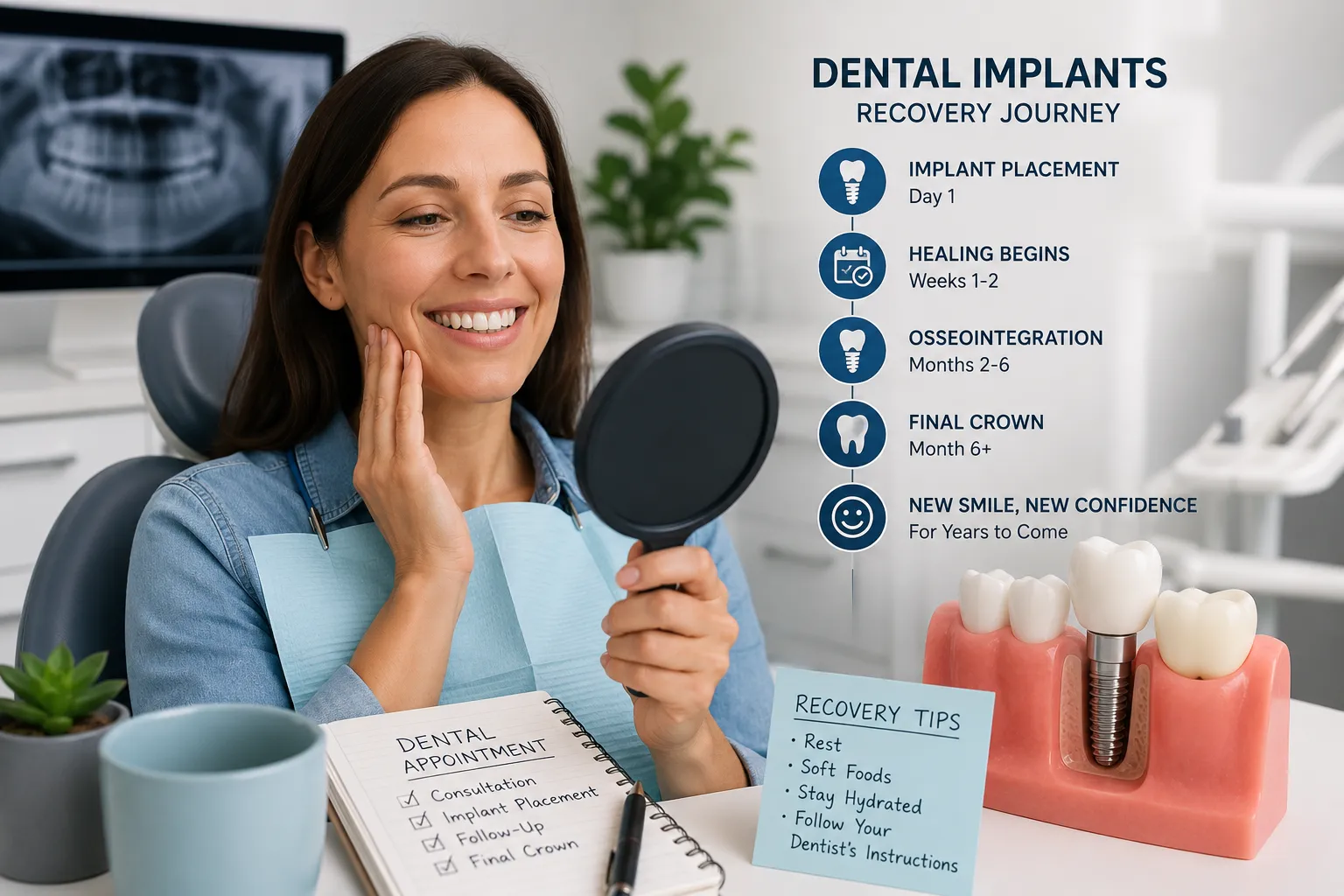
Dental implant treatment usually takes place in stages rather than being completed in one visit. During the first appointment, the dentist examines your mouth and evaluates your gums, jawbone, and overall oral health. X-rays or scans may also be used to determine whether there is enough bone to support an implant.
During the implant procedure, a small titanium implant is placed into the jawbone. The area is then allowed to heal while the implant gradually becomes integrated with the surrounding bone. Once healing is complete, an abutment and custom dental crown can be placed to complete the restoration.
The exact timeline varies from person to person. Some patients may need additional procedures, such as bone grafting, which can extend the overall treatment period.
What Is Recovery Really Like?
The first few days are usually when patients notice the most discomfort. Mild swelling, tenderness, or bruising around the treatment area can occur. Your dentist may recommend specific instructions for managing discomfort and protecting the surgical site.
Many people can return to light daily activities relatively quickly, although strenuous exercise may need to be avoided for a short period. If your job involves heavy physical activity, you may need more recovery time than someone who works at a desk.
Planning your appointment around a weekend or a few lighter workdays can make the initial recovery period easier. Having soft foods available at home can also save you from having to prepare meals while your mouth is tender.
How Long Does the Implant Take to Heal?
The visible part of the treatment may be completed in stages, but the jawbone needs time to heal around the implant. This process, called osseointegration, is an important part of successful implant treatment.
Healing times differ depending on factors such as bone quality, the location of the implant, oral hygiene, and individual healing. Your dentist will monitor the area during follow-up visits and determine when it is ready for the next stage.
Working with an experienced dentist can help ensure that your treatment is carefully planned and that your recovery is monitored throughout the process.
Getting Back to Your Normal Routine
One of the biggest concerns for busy adults is how quickly they can return to everyday life. While everyone heals differently, many patients can gradually resume their normal routines after the initial recovery period.
Good oral hygiene is especially important during healing. Follow your dentist's instructions carefully, avoid disturbing the surgical area, and attend scheduled follow-up appointments. If you notice unusual pain, persistent swelling, bleeding, or other concerning symptoms, contact your dental office rather than ignoring the problem.
Planning Treatment Around Your Schedule
Dental implants may require several appointments, so discussing your schedule with your dental team can be helpful. Ask about the expected treatment stages, recovery periods, and any restrictions you may have after each appointment.
Choosing a dental professional located conveniently can also make follow-up visits easier when you have a demanding work or family schedule. A clear treatment plan can help you understand how to fit each appointment and recovery period into your routine.
Is Dental Implant Treatment Worth the Time?
For many adults with missing teeth, dental implants can provide a durable tooth-replacement option that looks and functions much like a natural tooth. The treatment does require patience, particularly while the implant heals, but the long-term benefits can make the process worthwhile.
The best way to know whether dental implants are right for you is to have your mouth and jawbone evaluated by a qualified dental professional. With proper planning and aftercare, implant treatment can fit into a busy lifestyle without putting your everyday responsibilities on hold.
If you are considering dental implants, finding a nearby dentist can make consultations and follow-up appointments more convenient.




















Sign in to leave a comment.