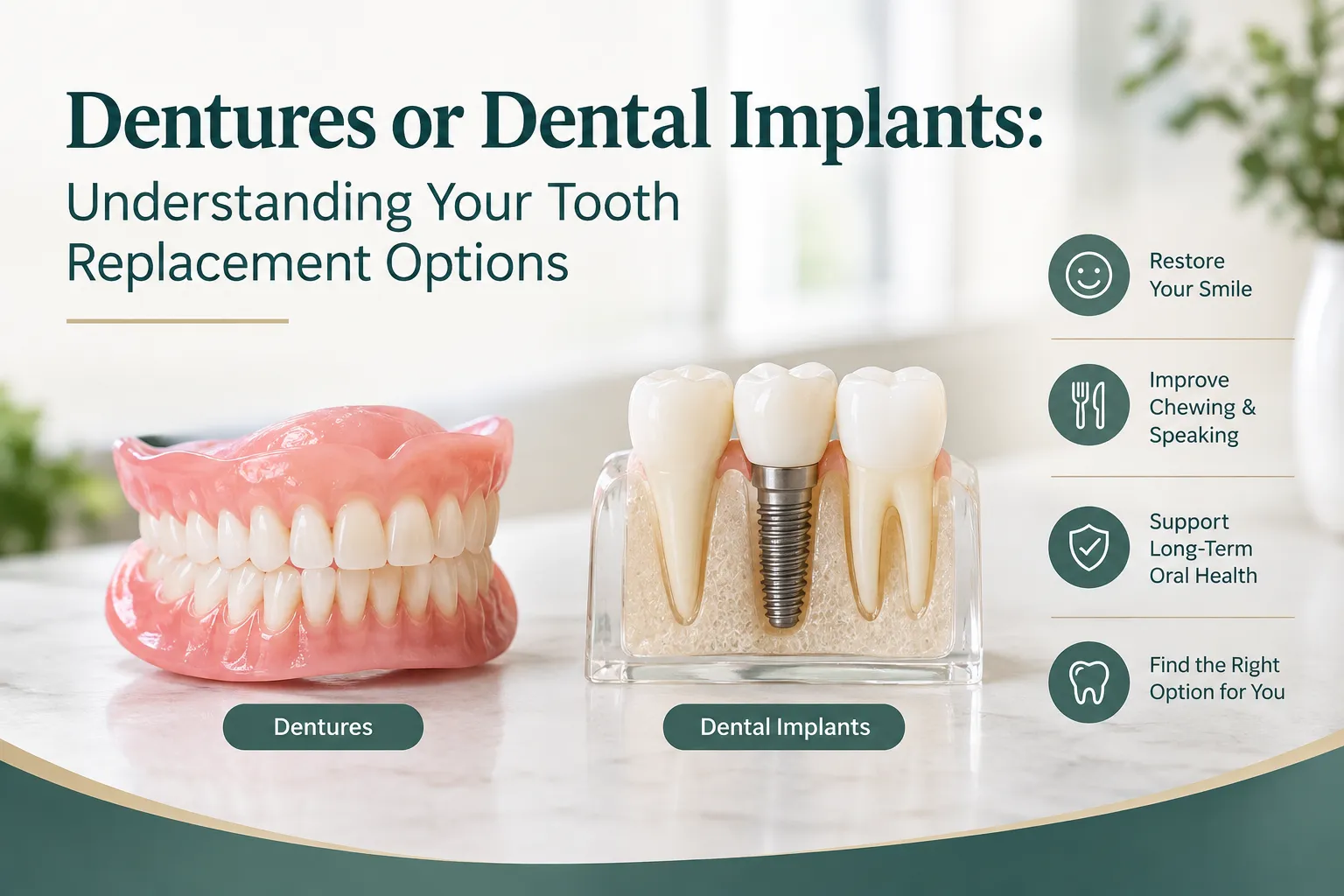
Losing one or more teeth can affect much more than your smile. Missing teeth can make eating and speaking more difficult, change the way your remaining teeth meet, and sometimes affect confidence in everyday situations. Fortunately, modern dentistry offers several ways to replace missing teeth, with dentures and dental implants being two of the most commonly considered options.
While both treatments can restore the appearance and function of your smile, they work in very different ways. Understanding the differences between them can help you have a more informed conversation with your dentist and identify the type of treatment that may suit your individual needs.
What Are Dentures?
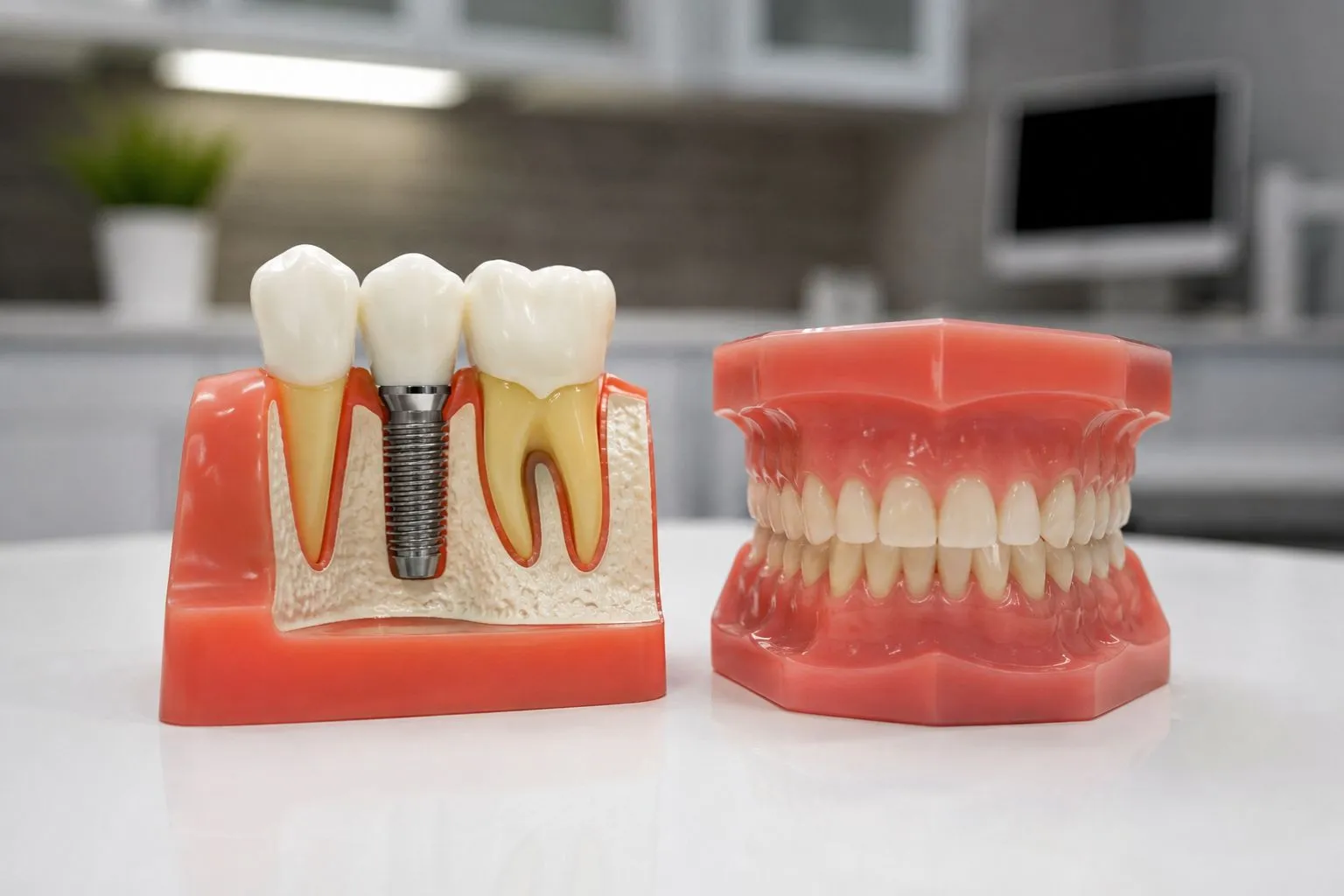
Dentures are removable dental appliances designed to replace missing teeth. Depending on the number of teeth missing, a patient may need either a full denture or a partial denture.
Full dentures are designed to replace an entire arch of teeth, while partial dentures can replace several missing teeth while working alongside the natural teeth that remain.
Modern dentures can be designed to look natural and fit comfortably. They are typically made using materials that replicate the appearance of natural teeth and gums, allowing them to blend more naturally with the rest of the smile.
For people researching dentures Macclesfield, a dental consultation can help determine whether full or partial dentures are appropriate based on the condition of the teeth, gums and overall oral health.
Benefits of Dentures
Dentures can offer several advantages for people who have lost multiple teeth, including:
- Replacing several missing teeth at once
- Restoring some chewing function
- Supporting facial appearance
- Improving speech in some cases
- Providing a removable tooth replacement solution
- Offering an option for patients who may not be suitable for implant treatment
Dentures can also be adjusted or replaced as a person's dental needs change over time.
What Are Dental Implants?
Dental implants are fixed tooth replacement solutions that are designed to replace individual missing teeth or support larger restorations.
An implant typically consists of a small titanium or other biocompatible implant fixture placed into the jawbone. Once the implant has integrated with the surrounding bone, it can support a dental crown, bridge or denture.
Unlike traditional removable dentures, implants are designed to remain securely in place. They can therefore provide a different experience when eating, speaking and carrying out everyday activities.
Dental implants require careful assessment because successful treatment depends on factors such as bone levels, gum health, general oral health and the location of the missing tooth or teeth.
Dentures vs Dental Implants: What Is the Difference?
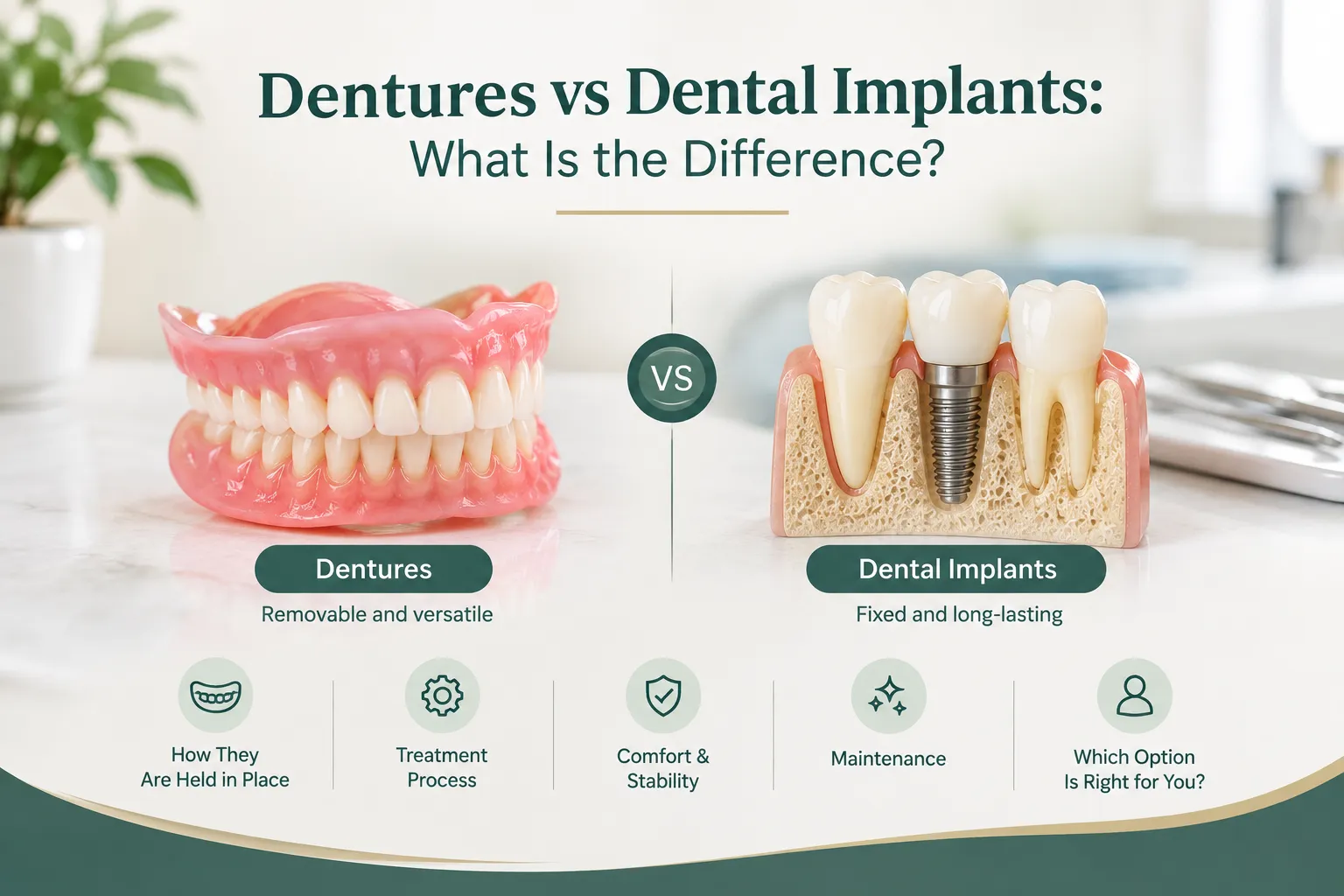
Although both treatments can replace missing teeth, there are several important differences worth considering.
1. Removable vs Fixed
One of the clearest differences is how the replacement teeth are held in place.
Traditional dentures are removable. They can be taken out for cleaning and are generally removed overnight.
Dental implants, on the other hand, are fixed into the jawbone and can support replacement teeth that remain in place.
2. Treatment Process
Getting dentures can usually involve fewer surgical procedures. Your dentist will assess your mouth, take impressions or digital scans and create dentures designed to fit your mouth.
Implant treatment generally involves a longer process. It may include an assessment, implant placement, a healing period and the attachment of the final restoration.
The exact timeline varies from patient to patient.
3. Comfort and Stability
A well-fitting denture can provide good comfort and function, but because it is removable, some movement can occur, particularly when eating or speaking.
Dental implants are anchored into the jawbone, which can provide greater stability. Implant-supported dentures can also offer additional retention compared with conventional removable dentures.
4. Maintenance
Dentures require regular cleaning outside the mouth as well as good oral hygiene for any remaining natural teeth and gums.
Implant-supported restorations also require careful cleaning. Although the replacement tooth itself cannot develop tooth decay in the same way as a natural tooth, the tissues around an implant still need to be kept healthy.
Regular dental check-ups are important with either option.
Which Option Is Right for You?
There is no single tooth replacement solution that is suitable for everyone. The right choice depends on several factors.
Your dentist may consider:
- The number of missing teeth
- The location of the missing teeth
- The health of your gums
- The amount and quality of available jawbone
- The condition of your remaining teeth
- Your oral hygiene routine
- Your preferences regarding removable or fixed teeth
- Your overall treatment goals
- Your budget and available treatment options
For some patients, conventional dentures may provide a practical solution. Others may benefit from implants or implant-supported restorations. In certain situations, a combination of treatments may also be considered.
A professional assessment is therefore important before deciding which option to pursue.
Are Dental Implants Always Suitable?
Dental implants can be an effective option for many patients, but they are not automatically suitable for everyone.
Adequate bone volume is important because the implant needs to integrate with the jawbone. Gum disease and other oral health problems may also need to be addressed before implant treatment begins.
Patients may sometimes require additional procedures before implants can be placed. For example, where there is insufficient bone, a dentist may discuss possible bone-grafting procedures.
A thorough examination and assessment allow the dental team to determine whether implants are appropriate and explain any alternative options.
How to Get Used to New Dentures

It can take some time to adjust to new dentures. During the first few days or weeks, they may feel unfamiliar while your mouth becomes accustomed to them.
Eating softer foods initially and gradually introducing firmer foods can help make the adjustment easier. Speaking aloud or reading can also help you become accustomed to speaking with your new dentures.
If your dentures cause persistent discomfort, rubbing or soreness, contact your dentist. Small adjustments may sometimes improve the fit and comfort considerably.
Keeping dentures clean is equally important. They should be cleaned regularly according to your dentist's instructions and stored appropriately when they are not being worn.
Looking After Dental Implants
Good oral hygiene remains important after dental implant treatment.
Patients should continue brushing twice a day and cleaning carefully around the implant and restoration. Depending on the type of restoration, your dentist or hygienist may recommend interdental brushes, floss or other cleaning aids.
Regular dental appointments allow the health of the surrounding gums and tissues to be monitored. Professional cleaning can also help manage plaque and tartar that may be difficult to remove at home.
Following the aftercare instructions provided by your dental team can help protect your investment and support long-term oral health.
Why a Dental Consultation Matters
Choosing between dentures and dental implants should not be based solely on appearance or cost. Your oral health, lifestyle and long-term needs all play an important role.
During a consultation, your dentist can examine your teeth and gums, discuss your concerns and explain the available treatment options. They can also outline the expected process, maintenance requirements and potential limitations of each approach.
Taking the time to understand your options can make the decision much easier and help you choose a treatment that fits your circumstances.
Restore Your Smile With Professional Dental Care
Whether you are considering removable dentures, implant-supported dentures or individual dental implants, professional advice is an important first step.
If you are looking for information about dentures Macclesfield or want to explore your options for replacing missing teeth, speak with a qualified dental professional for an individual assessment.
Fence House Dental provides a range of dental treatments designed around individual patient needs. To learn more about dentures, dental implants and other tooth replacement options, visit and get in touch with the practice team.
Frequently Asked Questions
1. Are dentures better than dental implants?
Neither option is universally better. Dentures and dental implants have different advantages and limitations. The most suitable choice depends on factors such as oral health, the number of missing teeth, jawbone condition, personal preferences and treatment goals.
2. How long do dentures last?
The lifespan of dentures varies depending on factors such as wear, changes in the mouth and how well they are maintained. Over time, dentures may need adjustment, relining or replacement to maintain a suitable fit.
3. How long do dental implants last?
Dental implants can provide a long-term tooth replacement solution when properly maintained. Their longevity depends on factors including oral hygiene, gum health, lifestyle and regular professional care.
4. Can dentures look natural?
Yes. Modern dentures can be designed to closely resemble natural teeth and gums. Your dentist can consider factors such as tooth shape, colour and overall appearance when planning your dentures.
5. Can you replace dentures with dental implants?
In some cases, patients who currently wear dentures may be suitable for implant-supported dentures or other implant treatments. However, an assessment is necessary to determine whether implant treatment is appropriate.
6. How do I know which tooth replacement option is right for me?
The best way to determine the appropriate option is to have a dental examination. Your dentist can assess your oral health and explain the available treatments based on your individual circumstances.


















Sign in to leave a comment.