

A well-designed building should do more than look professional. It should help people understand where they are, where they need to go, and how to move through the space with confidence.
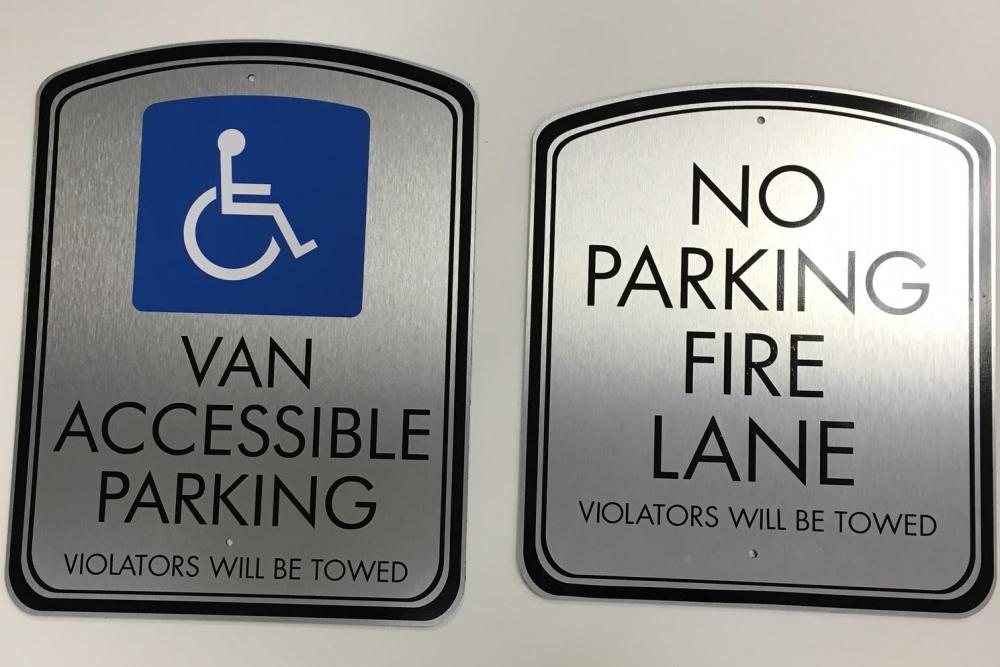
That is why signage plays such an important role in commercial environments.
ADA compliant signs are designed to make essential information more accessible while supporting a clear and consistent wayfinding system. When accessibility becomes part of the signage strategy from the beginning, businesses can create spaces that are easier for more people to navigate.
Accessibility Starts With Clear Information
Imagine entering an unfamiliar office building and needing to locate a restroom, elevator, stairwell, or specific office.
If the signs are difficult to read or poorly positioned, even a simple trip can become frustrating.
Accessible signage helps reduce that uncertainty by presenting important information in ways that can be easier to identify and understand.
The goal is straightforward: essential information should not be unnecessarily difficult to find.
ADA Signs Are About More Than Compliance
It can be tempting to think of accessibility signs as simply another requirement to check off during a building project.
A better approach is to view them as part of the overall visitor experience.
Thoughtfully designed signs can support employees, customers, clients, guests, and visitors as they move through a property. They can complement the building's architecture while providing important information in a practical format.
Compliance and good design do not have to compete.
Raised Lettering Adds a Physical Layer
One important feature associated with many accessibility signs is raised tactile lettering.
Unlike printed text that can only be visually recognized, tactile characters can be felt by touch. This creates another way for people to access essential information.
When tactile elements are combined with readable visual design, a sign can serve different accessibility needs without appearing disconnected from the surrounding environment.
Braille Makes Essential Information More Accessible
Braille is another important consideration for applicable accessible signage.
Properly incorporated Braille can provide information through touch and support navigation for people who are blind or have low vision.
Its placement and presentation matter. Accessibility signage should be planned carefully rather than treating Braille as an afterthought.
A professional signage provider can help businesses understand the design and production considerations involved.
Contrast Helps Information Stand Out
A sign can contain the correct information and still be difficult to use if the text blends into its background.
Strong visual contrast can make lettering and symbols easier to distinguish.
This is especially important in busy environments where signs may be surrounded by patterned walls, reflective surfaces, changing lighting, or other visual distractions.
Effective accessible design considers the relationship between the sign and its surroundings.
Placement Is Just as Important as Design
A perfectly designed sign will not be very useful if people cannot easily locate it.
Sign placement should be considered in relation to entrances, corridors, elevators, stairways, restrooms, rooms, and other important destinations.
Visitors should have access to information at logical points throughout their journey.
This is why accessibility signage works best when it is considered as part of the building's complete wayfinding strategy.
Avoid Making Signs Visually Complicated
Businesses sometimes assume that adding more information makes a sign more useful.
The opposite can be true.
Too much text, excessive decoration, complicated layouts, or competing graphics can make essential information harder to recognize.
An effective accessible sign should communicate its purpose quickly.
Simple layouts, readable typography, appropriate contrast, and clear symbols can make a significant difference.
Make Accessibility Fit Your Brand
Accessible signage does not have to look institutional.
Businesses can often incorporate appropriate materials, finishes, shapes, colors, and design details while maintaining the required accessibility characteristics.
An office, medical facility, hotel, school, retail location, or commercial property can develop signage that feels connected to its overall visual identity.
The result can be both functional and visually cohesive.
Think About the Entire Visitor Journey
Accessibility should not stop at one restroom sign or room marker.
Consider the complete journey through a building.
Where does someone enter? How do they locate reception? How do they find an elevator? Where are the restrooms? How do they identify a particular office or meeting room?
Looking at these questions together can reveal opportunities to improve the entire wayfinding experience.
Accessible signage becomes much more effective when individual signs work together as a system.
Useful Across Many Commercial Environments
ADA compliant signs can be important in a wide range of properties.
Office buildings may need room identification and restroom signage. Healthcare environments can require clear navigation between departments and facilities. Hotels, educational buildings, retail properties, public spaces, and multi-tenant facilities may also benefit from carefully planned accessibility signage.
Every building has different requirements and traffic patterns.
The signage strategy should reflect the way people actually use the space.
Plan Before Production
One of the best ways to avoid signage problems is to plan early.
During the planning stage, businesses can identify required locations, determine which information belongs on each sign, consider mounting locations, and coordinate the visual style across the property.
This can help prevent last-minute changes and inconsistent signage.
It also creates an opportunity to consider accessibility alongside branding instead of trying to add it after the design is finished.
Quality Materials Matter
Commercial signs need to withstand everyday use.
Depending on the location, signs may encounter frequent contact, cleaning, sunlight, moisture, or general wear. Selecting appropriate materials and finishes can help maintain their appearance and functionality over time.
The right material depends on the sign's purpose, location, environment, and expected use.
Professional production helps ensure that the finished signage is both attractive and practical.
Professional Guidance Can Simplify the Process
Accessibility signage involves more than choosing a font and adding Braille.
Requirements can involve tactile characters, Braille, contrast, mounting, placement, and other considerations. Because requirements can vary according to the type of sign and facility, businesses should verify applicable standards for their specific project.
SpeedPro Boston North can help businesses develop professional signage solutions that combine accessibility considerations with a cohesive visual identity.
Frequently Asked Questions
1. What are ADA compliant signs?
ADA compliant signs are accessibility-focused signs designed to meet applicable requirements under the Americans with Disabilities Act and related accessibility standards.
2. Do ADA signs need Braille?
Certain types of permanent room and space identification signs require Braille and tactile characters. Requirements depend on the sign and its location, so applicable standards should be reviewed for each project.
3. Can ADA signage be customized?
Yes. Accessible signage can incorporate different materials, finishes, colors, and visual design elements while meeting applicable requirements.
4. Where are accessible signs commonly used?
They are commonly used for locations such as restrooms, permanent rooms, exits, stairways, elevators, offices, and other areas where accessible identification or navigation information is required.
5. Why is sign placement important?
Correct placement helps people locate essential information at appropriate points throughout a building. Even a well-designed sign can be ineffective if it is difficult to find or improperly positioned.
Create a More Navigable Environment
Accessibility is ultimately about making spaces easier for people to use.
ADA compliant signs can provide essential information while supporting a more thoughtful and inclusive visitor experience. When tactile elements, Braille, contrast, placement, materials, and visual design are considered together, accessibility signage can become an integrated part of a building rather than an afterthought.
A professional-looking space should also be a usable space.
With the right planning, accessible signage can help businesses create environments that are clearer, more welcoming, and easier to navigate.
























Sign in to leave a comment.