

Outdoor lighting is often judged by one simple question: is the area bright enough? In practice, effective illumination is far more nuanced. A well-planned pole light outdoor installation has to account for mounting height, optical distribution, glare, spacing, environmental exposure and the way people actually use the space after dark. When these factors are considered together, outdoor lighting becomes more than a collection of fixtures. It becomes a designed layer in the environment, helping to define movement, sight lines, and visual character, but without overpowering the context.
Why Outdoor Lighting Needs More Than High Lumens
A high lumen output does not necessarily mean better illumination. If light is poorly distributed, an area can contain intense bright spots while still having uncomfortable shadows and dark patches.
This is particularly relevant for pathways, parking areas, campuses, driveways and public-facing spaces. The objective is usually uniform and useful illumination, rather than maximum brightness at isolated points.
Fixture optics play a major role here. The beam can be shaped by reflectors and lenses, making it more efficient at getting light to the intended surface. Correct pole spacing then helps maintain continuity between illuminated zones.
In other words, the performance of a lighting system depends on how light is delivered—not simply how much light a fixture produces.
The Engineering Behind Pole-Mounted Illumination
The pole itself is part of the lighting system. Its height, material, geometry and placement of mounting all affect the structural stability and lighting performance.
During specification there are several considerations to evaluate:
- Mounting height: Determines the area a fixture can effectively cover and influences perceived brightness.
- Pole spacing: Needs to work with the fixture's beam pattern to minimise dark gaps.
- Wind loading: Pole and foundation design should account for local wind conditions and the projected area of the luminaire.
- Material selection: Steel and aluminium offer different combinations of strength, weight and corrosion resistance.
- Ingress protection: Outdoor luminaires require suitable protection against dust and moisture.
- Maintenance access: Installation should allow practical servicing without excessive disruption.
These factors become especially important in large outdoor developments, where replacing or repositioning poorly specified infrastructure can be considerably more difficult after installation.
How Does Optical Design Change the Result?
The same light source can produce very different results depending on its optical system. Beam angle, distribution pattern and mounting position determine where the available light ultimately lands.
Controlling Glare Instead of Chasing Brightness
Glare is an often-overlooked aspect of outdoor lighting. High luminance in the visual field can adversely affect visual comfort and result in the perception of the surrounding areas as relatively dark.
A well-built pole light outdoor system can use controlled optics to focus illumination toward roads, pathways or activity areas while minimising unwanted upward or lateral spill.
This is especially beneficial around residential houses, landscaped areas and in situations where illumination has to work with the surrounding buildings. Good lighting should reveal the environment, not dominate it.
Material, Weather and Long-Term Performance
Outdoor fixtures operate in conditions that can change considerably throughout the year. Moisture, dust, heat, cold and airborne pollutants can gradually affect housings, finishes, electrical components and structural fittings.
For this reason, product selection should consider the environment in which the system will operate.
Important factors include:
- Corrosion resistance of exposed components
- Suitable IP protection
- UV and weather resistance
- Thermal management of LED components
- Durability of surface finishes
- Availability of replacement components
- Ease of routine inspection and cleaning
LED technology can further improve operational efficiency, particularly when paired with appropriate controls. Photocells, timers, dimming systems and smart controls can reduce unnecessary operating hours while maintaining illumination when it is actually required.
Lighting the Landscape Without Losing Its Character
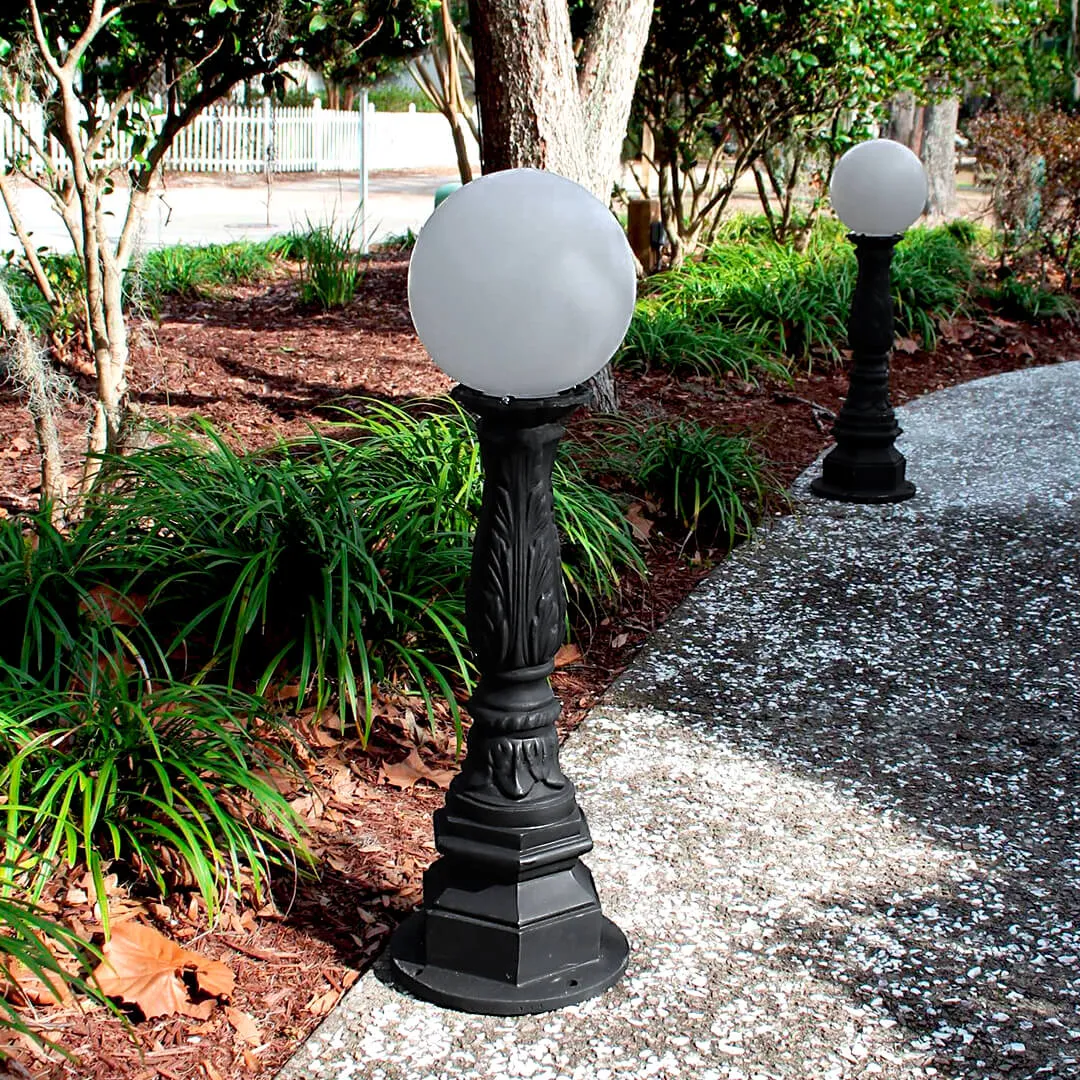
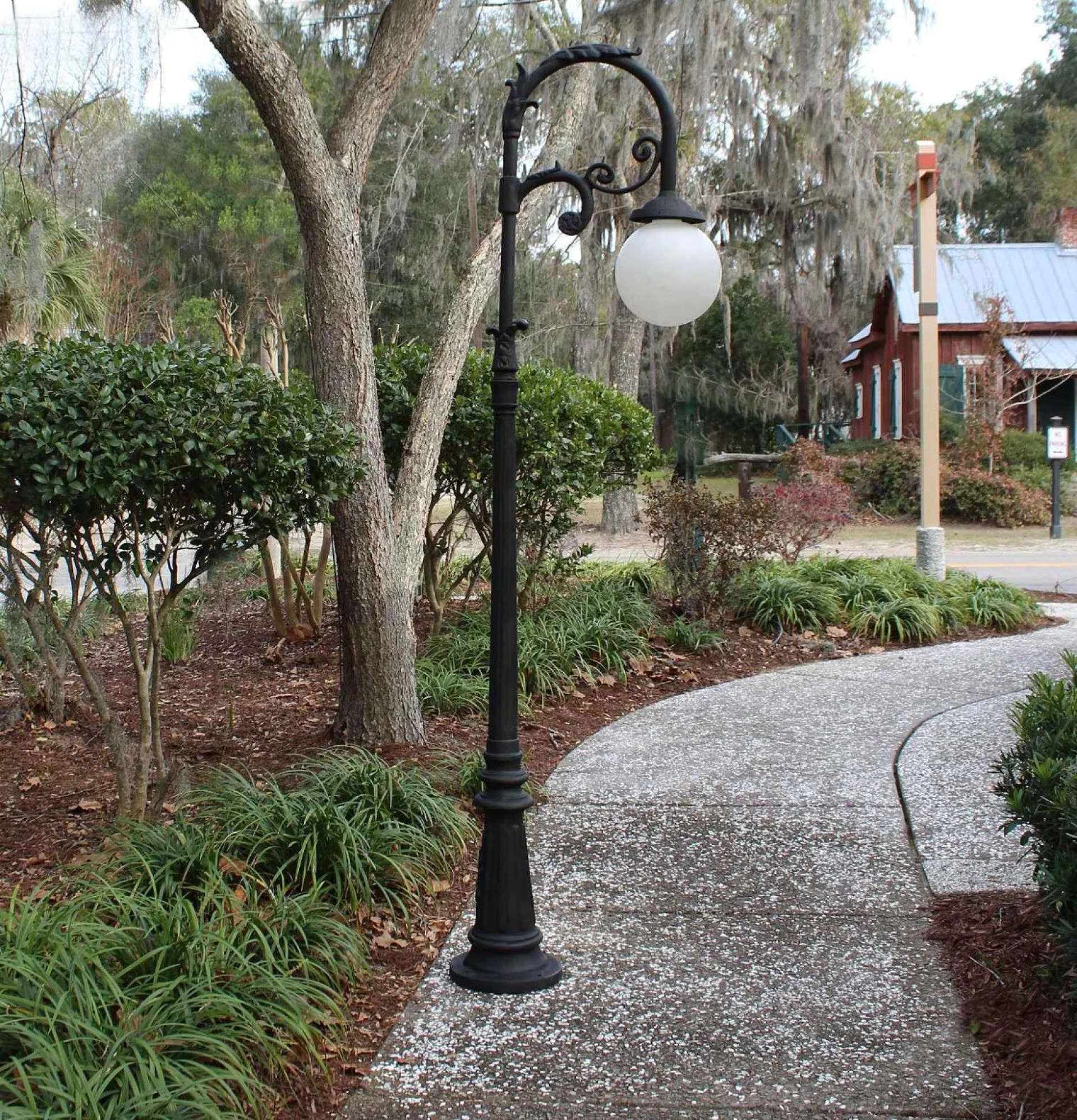
Outdoor lighting should also respond to the architecture and landscape around it. A pole light outdoor is visible during daylight, so its proportions and finish can influence the appearance of a site even when the lights are switched off.
Placement should consider entrances, pedestrian routes, parking zones, architectural features and areas of high activity. In landscaped settings, poles should complement rather than compete with trees, planting and built structures.
The strongest installations tend to disappear into the overall composition at night. They provide clear illumination without making the lighting equipment itself the visual focus.
From Infrastructure to Intentional Design
A technically effective outdoor lighting scheme brings several disciplines together: electrical performance, structural considerations, optical control, environmental durability and spatial design. Pole light outdoor solutions are most effective when these elements are considered as one system rather than as isolated product specifications.
For projects seeking dependable outdoor illumination with attention to both performance and visual integration, The Kings Bay can be part of that conversation. Thoughtful specification can help ensure that lighting supports the way a space is used while contributing to its character after sunset.
Discover Outdoor Lighting Designed for Performance
Outdoor lighting should not simply make a property visible at night. It should make movement clearer, spaces more usable and the surrounding architecture more coherent. When engineering and design work together, every pole, beam and fixture has a purpose, and the result is lighting that performs quietly, effectively and for the long term.






















Sign in to leave a comment.