

For many people, the working day now involves far more screen time than physical movement. Hours may be spent moving between a laptop, desktop monitor and mobile phone, often without much thought about how long the body has remained in the same position. By late afternoon, tight shoulders, a stiff neck or an uncomfortable lower back may feel like an inevitable part of modern working life.
Yet desk work itself is not necessarily the only issue. The combination of prolonged sitting, repetitive movements, limited variation in posture and everyday stress may all influence how the body feels by the end of the day.
This has encouraged growing interest in simple movement habits, workplace ergonomics and complementary approaches such as NST bowen therapy. Rather than searching for a single solution, it may be more useful to understand how our daily routines influence the body and what practical changes might help us move more comfortably.
Why Modern Work May Leave the Body Feeling Stiff
The human body is designed to move through a wide variety of positions. Modern workplaces, however, often require people to remain relatively still for long periods.
Someone working at a computer may sit in approximately the same position for several hours, interrupted only by occasional trips to the kitchen or bathroom. Even outside working hours, more time may be spent looking at smartphones, watching television or using tablets.
Over time, the lack of movement variety may contribute to feelings of stiffness or muscular tension.
Sitting in One Position for Too Long
Sitting is not inherently harmful. The difficulty often comes from remaining in any one position for an extended period.
When concentrating on work, it is easy to lose track of time. Thirty minutes can become two hours before you realise you have barely changed position.
Areas that commonly feel the effects include:
- the neck
- shoulders
- upper back
- lower back
- hips
- wrists and forearms
Changing position regularly may therefore be more practical than trying to maintain a supposedly perfect posture throughout the entire working day.
For additional background on the relationship between modern working habits and body positioning, WriteUpCafe's discussion of massage and posture explores how desks, screens and everyday habits may contribute to muscular tension.
Screen Use Changes More Than Where We Look
Computer work does not only involve sitting. It also involves thousands of small, repetitive movements.
Typing, scrolling, clicking a mouse and reaching towards a second monitor may seem insignificant individually. Repeated throughout an eight-hour day, however, these movements create patterns.
Mobile phones introduce another pattern. Many people naturally lower their head towards the screen while bringing the device towards their chest. Others hold their phone in the same hand for long periods or remain curled forward while browsing.
None of these positions automatically creates a problem. What matters is often the amount of time spent there and how frequently the body gets an opportunity to move differently.
Simple awareness may help. Every so often, notice where your head, shoulders and arms have ended up. You do not need to immediately force yourself into an exaggerated upright posture. Simply changing position and moving around may provide some welcome variety.
Stress May Add Another Layer of Physical Tension
Physical stiffness is not always related solely to furniture or screen height.
Think about how your body responds when you are working towards a deadline, dealing with a difficult email or concentrating intensely on a complicated task. You may raise your shoulders, clench your jaw, grip the mouse more tightly or hold your breath without noticing.
Those habits may continue for surprisingly long periods.
Breathing patterns are particularly easy to overlook during desk work. Someone focused on a screen may breathe differently from when they are walking outdoors or relaxing at home.
WriteUpCafe's article on how breathing may affect posture offers further discussion of how breathing, the neck, shoulders and body position may interact.
Taking occasional moments to relax the jaw, drop the shoulders and breathe comfortably may be a useful addition to the working day.
Posture Is Better Viewed as Movement Than Perfection
The phrase "good posture" sometimes creates the impression that there is one ideal position everyone should maintain.
In reality, people differ considerably in height, body proportions, mobility, work requirements and comfort. A position that works well for one person may feel awkward for another.
It may therefore be more useful to think about posture dynamically.
Instead of asking, "Am I sitting perfectly?" consider asking:
"How long have I been sitting like this?"
A relaxed position that feels perfectly comfortable for twenty minutes may become uncomfortable after two hours.
Movement variety might include:
- changing the angle of your chair
- uncrossing or changing the position of your legs
- standing for a phone conversation
- taking a short walk between tasks
- gently moving your shoulders
- changing where you place your hands
- occasionally working while standing, where practical
The goal does not need to be constant movement. It is simply to avoid becoming locked into one position for most of the day.
Small Workplace Changes May Make Movement Easier
A complete workstation redesign is not always necessary. Small adjustments may help create an environment where comfortable movement is easier.
Consider Screen Position
If a monitor is positioned very low or far away, you may repeatedly lean towards it. Adjusting its height or distance may reduce the temptation to remain hunched over the desk.
Laptop users may find that an external keyboard or monitor provides more flexibility, particularly when working for extended periods.
Look at Keyboard and Mouse Placement
A keyboard or mouse positioned too far away may encourage the shoulders and arms to remain extended.
Keeping frequently used equipment comfortably within reach may make it easier to maintain relaxed arm positions.
Give Your Feet Somewhere Comfortable to Rest
Some people feel more stable with their feet supported on the floor, while others may benefit from a footrest depending on chair and desk height.
Comfort matters more than rigidly following one universal setup.
Change the Environment Occasionally
Even an excellent ergonomic workstation does not remove the value of movement.
If practical, alternate between different work locations or positions throughout the day. The small act of getting up to make a drink, speak to a colleague or step outside may break a long period of stillness.
When Stretching Does Not Seem to Be Enough
Stretching is often the first response when the body feels stiff. A quick shoulder stretch or neck movement may feel useful after several hours at a computer.
However, some people notice that the same tension repeatedly returns.
That does not necessarily mean they need to stretch harder or longer. Recurring tightness may involve a combination of work habits, activity levels, stress, sleep, previous injuries and individual movement patterns.
Persistent or worsening discomfort should be discussed with an appropriately qualified health professional, particularly when symptoms involve significant pain, weakness, numbness or follow an injury.
Some people also choose to explore complementary bodywork approaches as one part of a broader strategy for managing everyday muscular tension.
Where NST bowen therapy Fits Into the Conversation
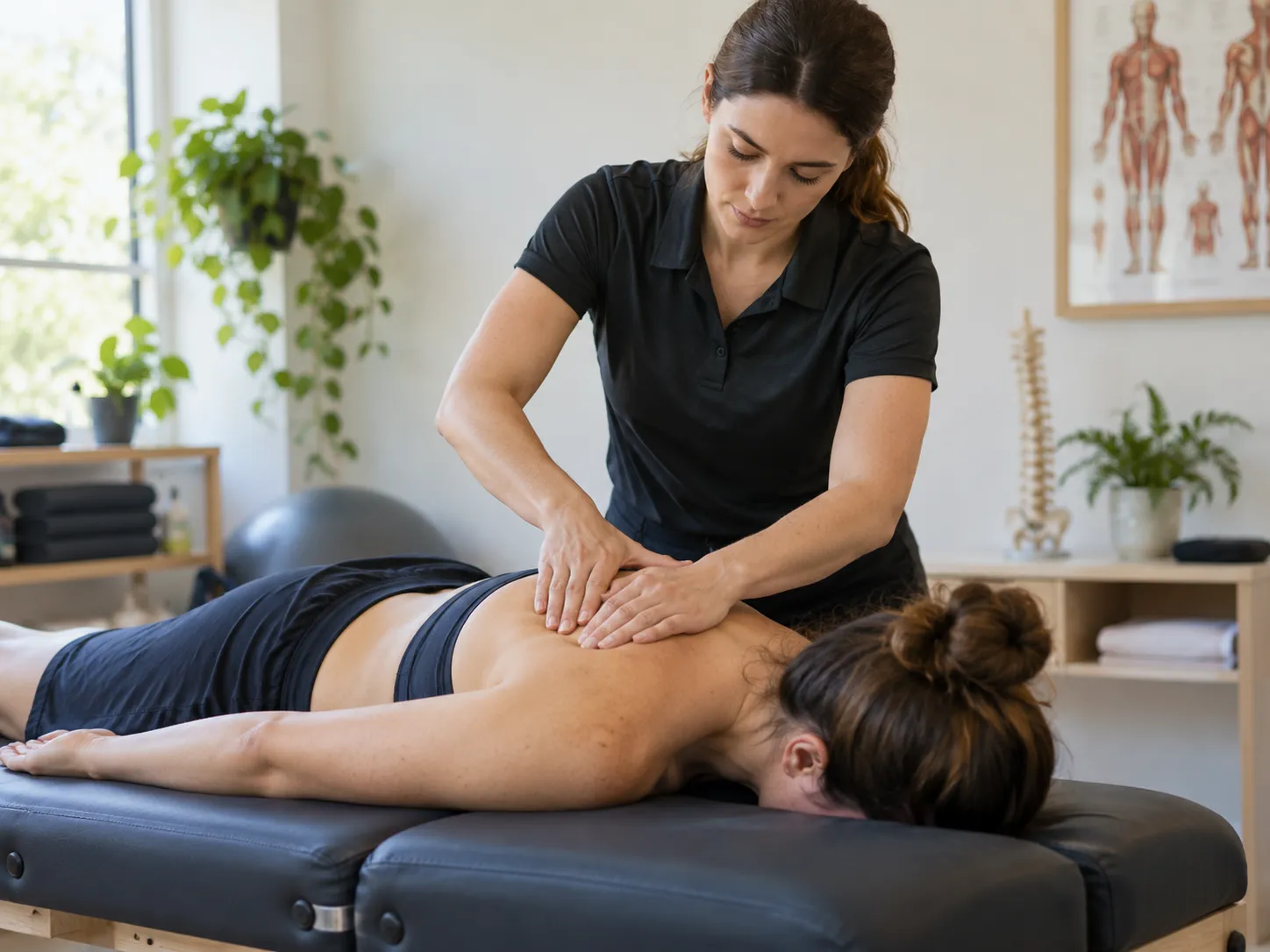
Neurostructural Integration Technique, commonly shortened to NST, is a bodywork approach that uses sequences of Bowen-style movements combined with pauses between sections of the session.
Rather than looking only at the location where someone happens to feel tight, an NST session may consider movement and tension across the body as a whole.
This whole-body perspective is one reason the approach may be of interest to people whose discomfort seems connected to repeated patterns rather than one isolated movement.
For readers who would like to understand what the process looks like in practice, this overview of Sydney NST Bowen Therapy explains how a session may include assessment of movement, tension and areas of concern before Bowen-style movements and rest periods are used.
Importantly, exploring NST bowen therapy does not remove the need to consider everyday habits. If someone spends most of the week sitting without regular movement, addressing what happens during those hours may remain an important part of the broader picture.
Bodywork Is Not a Substitute for Everyday Movement
It is tempting to search for one treatment, stretch or piece of equipment that fixes everything.
Modern working habits rarely work that way.
A more sustainable approach may involve several small changes rather than one dramatic intervention.
For example, someone experiencing frequent desk-related stiffness might look at:
- how often they move during the day
- whether their screen position encourages leaning
- whether they repeatedly work from the same posture
- how much movement or exercise occurs outside work
- whether stress causes them to tense their shoulders or jaw
- whether their workstation suits their individual body proportions
Complementary approaches such as NST bowen therapy may sit alongside these considerations rather than replacing them.
Developing Better Body Awareness During the Working Day
One of the simplest things office workers may do is become more aware of their habits.
People frequently develop small routines without consciously choosing them. You might always cross the same leg, lean onto the same elbow or position your second monitor on one side.
Try occasionally observing what your body is doing without immediately trying to correct it.
Ask yourself:
- Are my shoulders relaxed?
- Have I been leaning towards the screen?
- Have I moved recently?
- Am I sitting differently from an hour ago?
- Is my jaw clenched?
- Have I been holding the mouse unnecessarily tightly?
These quick observations may help identify patterns that would otherwise go unnoticed.
The objective is not to become obsessed with posture. Constantly monitoring every movement may be just as unhelpful as ignoring the body completely. Instead, brief check-ins throughout the day may encourage greater movement variety.
When Stiffness Deserves Professional Attention
Most people experience occasional tightness after a long working day. However, not every symptom should automatically be attributed to desk posture.
Professional assessment may be appropriate when discomfort is persistent, severe, worsening or interfering with normal activities.
Symptoms involving weakness, numbness, substantial loss of movement, significant trauma or other unexplained changes should also be appropriately assessed rather than self-diagnosed as simple workplace stiffness.
Complementary therapies are best considered within this broader context rather than treated as replacements for medical diagnosis or necessary healthcare.
Creating a More Sustainable Relationship With Desk Work
Computers, smartphones and desk-based jobs are unlikely to disappear from modern life. The goal therefore does not need to be eliminating sitting or maintaining flawless posture every minute of the day.
A more realistic approach is to introduce greater variety.
Stand occasionally. Change position. Walk between tasks. Adjust the workstation when something consistently feels awkward. Pay attention to how stress affects the shoulders, jaw and breathing. Seek appropriate professional advice when discomfort persists.
For some people, investigating approaches such as NST bowen therapy may also form part of that broader interest in movement, relaxation and body awareness.
Ultimately, the most useful lesson may be surprisingly simple: the body generally prefers options. Instead of spending the entire day trying to hold one "correct" position, creating regular opportunities to move differently may make modern desk work feel considerably less restrictive.



























Sign in to leave a comment.