Destination Wedding in Sri Lanka vs India: Which Is Best?

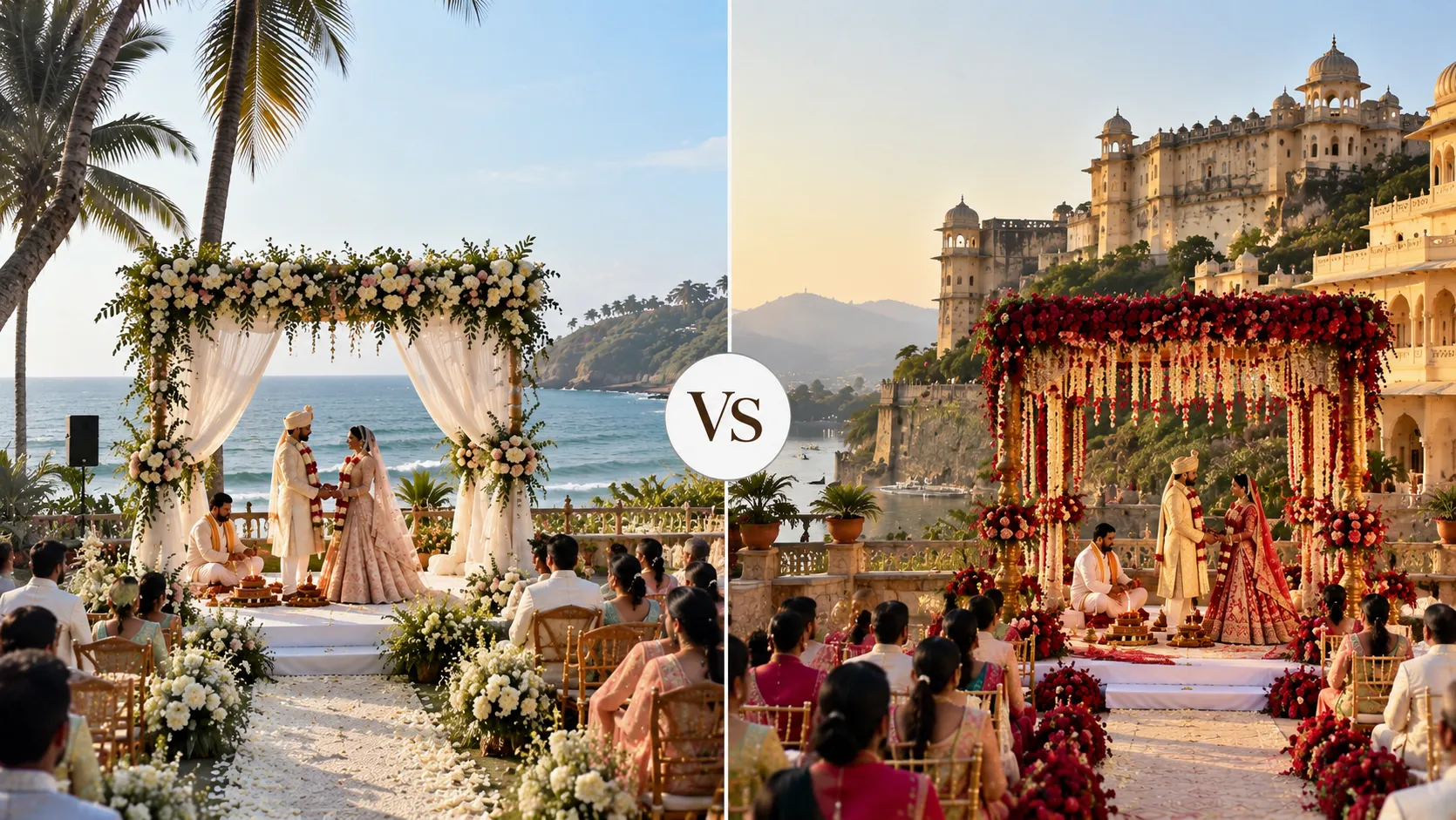
Couples planning a destination wedding in Sri Lanka often compare it with a domestic destination in India before they decide. Both can host multi-day Indian weddings, but they differ in guest travel, paperwork, venue style and logistics. This guide compares the two on the factors that matter most, so families can decide with clear information instead of assumptions.
What are the main differences between an overseas and a domestic wedding?
The biggest differences are travel, documents and the range of venues. An overseas wedding adds passports, entry requirements and international flights. A domestic wedding avoids these, but travel distances within India can still be long.
Sri Lanka is a relatively compact destination, and a short flight from India. It combines beaches, luxury resorts, heritage locations and natural landscapes, so guests can pair wedding functions with sightseeing and leisure.
How does guest travel compare?
For Sri Lanka, most international guests arrive through Bandaranaike International Airport, which gives access to several popular wedding destinations. Flight availability and travel time vary by departure city and travel date, so check them before finalising the schedule.
Road transfers from the airport depend on the region:
- Negombo: The easiest airport access, with beach and resort settings.
- Bentota, Kalutara and Galle: Coastal regions that need a longer drive.
- Kandy: Hills and cultural surroundings, with a longer and slower journey.
A domestic destination may suit guests who prefer trains or road travel, but some Indian wedding locations also need long transfers. Compare the full door-to-door journey for both options, not just the flight time.
What extra paperwork does an overseas wedding involve?
Guests need valid passports and must meet the entry requirements for Sri Lanka. These rules can change, so check official government sources before sending invitations, and confirm requirements for children and elderly relatives.
If you plan a legal marriage abroad, rules for foreign nationals can differ from those in India. Check current requirements with the relevant authorities, and consider whether you will complete legal registration in India separately from the celebration.
How do venues compare?
Sri Lanka offers luxury hotels, beach resorts, villas and heritage properties. Many resorts provide accommodation and several event spaces on the same property, which reduces guest movement and simplifies coordination.
India offers a very wide variety of settings across its regions. The better question is not which country has more venues, but which property suits your guest count, functions and style. Whichever you choose, check room inventory, indoor and outdoor capacity, catering policies and vendor rules directly with each property.
Can Indian rituals and food be arranged in Sri Lanka?
Depending on the venue and its services, Sri Lanka can accommodate celebrations such as mehendi, haldi, sangeet, wedding ceremonies and receptions. Couples can discuss Indian cuisine, vegetarian or Jain menus, mandap arrangements, entertainment and religious ceremonies with the property.
In a domestic destination, local vendors and priests may already be familiar with your customs. Overseas, you may need to brief teams more carefully. In both cases, confirm policies on ceremonial fire, music curfews and decor in writing.
How do weather and seasons compare?
Sri Lanka does not have one wedding season for the whole country, because conditions differ between coastal and inland regions. Domestic destinations also vary by region and month. In either case:
- Choose the region first, then check its usual conditions.
- Plan an indoor or covered alternative for every outdoor function.
- Allow buffer time in the schedule.
How do costs compare?
Neither option is automatically cheaper. Cost depends on guest count, hotel category, number of functions, accommodation, catering, decor and entertainment. Overseas weddings may add costs such as international flights, visa or entry fees and currency exchange, while accommodation can become a major cost when most guests stay at the wedding property.
Ask for itemised quotes from each venue and compare them line by line. Include guest transport and vendor travel in both budgets.
Which option suits which family?
Sri Lanka may suit families who:
- Are comfortable with international travel
- Want beaches, culture and resort stays in one compact destination
- Prefer a single property that hosts every function
A domestic destination may suit families who:
- Have many elderly guests who prefer to avoid documents
- Need vendors and priests who know their regional customs
- Have a short planning window
Frequently asked questions
Is Sri Lanka suitable for an Indian wedding?
Yes, subject to venue facilities and service availability.
Do guests need passports for Sri Lanka?
Yes. Entry requirements apply, so check official sources.
How early should you book?
Eight to twelve months ahead is sensible for either option.
Can you hold all functions in one hotel?
Often yes, depending on the property's event spaces.
Final thoughts
A destination wedding in Sri Lanka and a domestic destination can both deliver a memorable celebration, so the decision rests on guest travel, paperwork, venue fit and budget. Compare the full journey, confirm rituals and catering in writing and check legal and entry requirements early. To compare regions in more detail, explore the wedding destinations in Sri Lanka that suit your plan.




Sign in to leave a comment.