

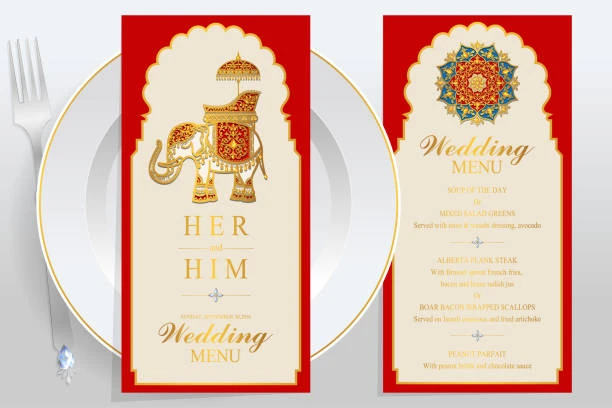
A digital Hindu wedding invitation brings traditional elements into an easy-to-share format. Families can include Ganesh symbols, mandap art, prayers, event dates, family names, and other details that are meaningful to them.
Moving the invitation online doesn't mean leaving those traditions behind. It simply gives families another way to share them with guests.
Start with Ganesh for a blessed opening
For many Hindu families, Lord Ganesha is an auspicious way to begin a wedding invitation. Ganesha is traditionally associated with removing obstacles and blessing new beginnings.
Keep the artwork balanced. A modern Hindu wedding invitation can feature a small Ganesh illustration alongside a prayer such as “Shree Ganeshaya Namah,” giving the opening a traditional feel without overwhelming the rest of the design.
Make the mandap part of the visual story
The mandap can become an important part of the invitation's visual story. Give it enough space to stand out rather than treating it as a small background detail.
A detailed mandap illustration or photograph can give the invitation a strong visual connection to the ceremony. Soft flowers, simple border lines, and small lamps can move gently on the screen. Guests understand the design at once.
Use traditional motifs with purpose
Traditional motifs can add meaning without taking over the design. Om, lotus flowers, diyas, kalash imagery and auspicious swastika motifs can all be used thoughtfully where they are meaningful to the family.
A kalash can frame a welcome message, a lotus can help separate sections, and small diya illustrations can add a subtle traditional touch to individual ceremonies. Used this way, motifs support the invitation instead of competing with the couple's names and event information.
Bring the muhurat into the design
If the family is following a specific muhurat, give the wedding date and timing a visible place in the invitation rather than burying them at the bottom of the page.
For example, the invitation can display the wedding date prominently, followed by the muhurat, venue and ceremony details in a clean traditional layout. Digital formats also make it easier to list several functions, each with its own time and location.
Preserve family traditions and language
A standard template may not leave much room for the details that make your family's celebration unique. Add parent names, family history, Sanskrit chants, Hindi text, and home customs that older relatives want to see.
Separate events need clear sections. If there are several celebrations, give each one its own section, whether that's Ganesh puja, Haldi, Sangeet, the wedding ceremony or dinner. Guests can then check each event without confusion.
Add modern features without changing the tradition
Digital features should make the invitation easier to use without taking attention away from the traditions that matter to the family. Your modern Hindu wedding invitation can combine traditional artwork with practical details such as event times, maps, photo galleries and RSVP options.
That combination is useful for real weddings. A guest can open the invitation on a phone, check the ceremony timing, tap the venue for directions and confirm attendance without the family sending separate messages.
Create a traditional invitation for the digital age
A beautiful digital wedding invitation doesn't have to choose between heritage and convenience. Ganesh can remain the opening symbol. The mandap can remain the visual center. Traditional motifs, family names, language and the muhurat can all stay exactly where they belong.
The invitation can travel instantly, while guests still get the traditions, details and personal touches your family wants them to see.
With Indivites, you can bring your Ganesh artwork, mandap details, family traditions and wedding events together in one invitation that's easy to share with everyone you're celebrating with.
FAQs
1. What are digital wedding invitations in the USA?
Digital wedding invitations in the USA are online invitations that allow couples and families to share wedding details, event schedules, venue information, photos, and RSVP options digitally.
2. What traditional elements can I include in a Hindu wedding invitation?
You can include Ganesh artwork, mandap illustrations, Om symbols, diyas, lotus flowers, kalash imagery, Sanskrit prayers, family names, and other meaningful traditional motifs.
3. Can I include multiple Hindu wedding events in a digital invitation?
Yes. You can create separate sections for events such as Ganesh Puja, Haldi, Sangeet, the wedding ceremony, and reception, along with their individual dates, times, and venues.
4. Can a digital Hindu wedding invitation include Hindi or Sanskrit text?
Yes. Adding Hindi, Sanskrit chants, prayers, or family-specific wording can make the invitation more personal while preserving cultural traditions.
5. What modern features can I add to a digital Hindu wedding invitation?
You can add features such as venue maps, clickable directions, RSVP options, event schedules, photo galleries, and other interactive details while keeping the traditional Hindu design elements.















Sign in to leave a comment.