
A floor plan is a drawing. A render is a picture of an idea. Neither can tell a buyer whether their sofa will fit in a living room that hasn't been built.
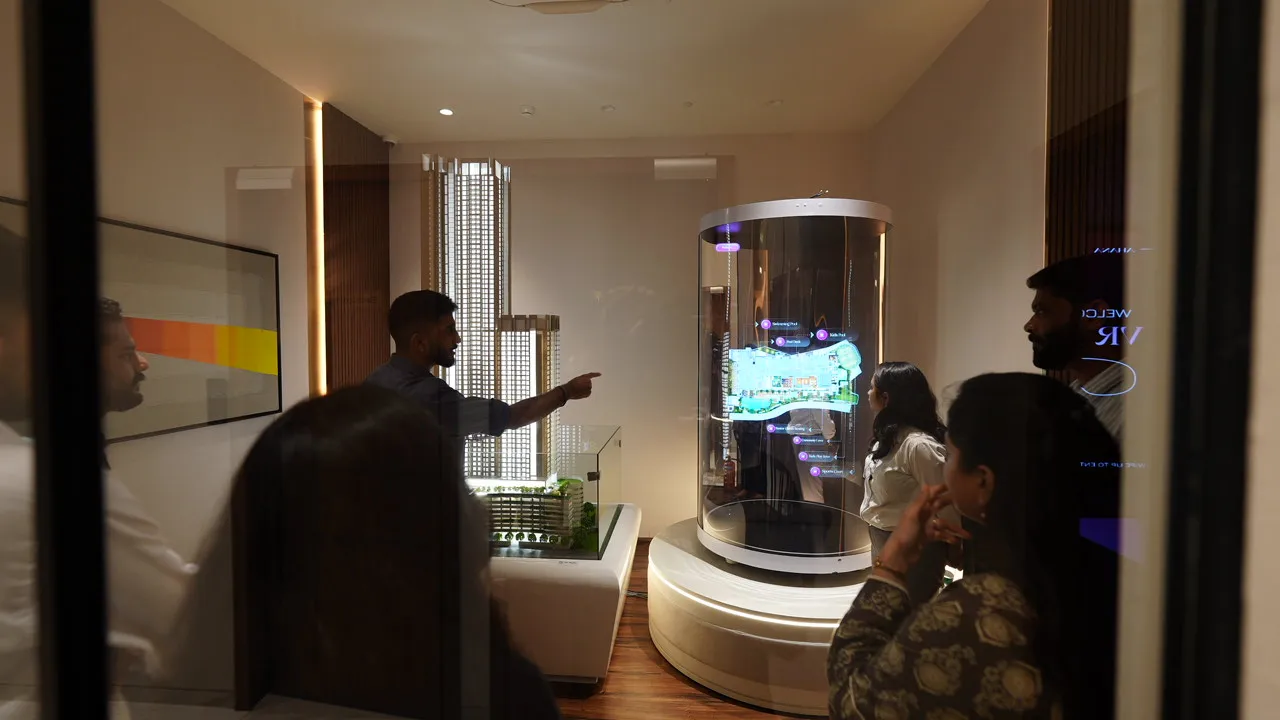
Digital twin technology for real estate closes that gap. It lets people experience scale, depth, views and amenities before construction is finished, so the buyer decides on understanding instead of imagination. L&T Realty took this further than most. Their Ahana gallery in Malad has no show flat and no physical scale model.
What Floor Plans and Renders Leave Out
Think about what a buyer really wants to know:
- How tall does the ceiling feel?
- What will I see from the window on the north side, and on the south?
- How far is the amenity deck from my front door?
- Will the finishes look like the picture?
Flat images cover some of this. They miss depth, orientation and atmosphere. L&T's Ahana project had a strong story: Western Express Highway access, proximity to Kurar Metro, 2, 3 and 4 BHK homes, three levels of amenities and 15,000+ sq. ft. of integrated retail. The question was whether buyers could grasp all of it digitally. There was an extra hurdle too: immersive technology wasn't yet familiar in the Malad, Borivali and Kandivali market.
Digital Twins in Real Estate, Four Stops at a Time

The L&T Ahana experience centre moves a buyer through four stages, and each one fills a specific gap.
1. HoloTube. A holographic display replaces the scale model, showing the full façade, podium and podium-level indoor amenities.
2. Motion posters. About 15 amenities appear in large format with sound design and ambient audio. Buyers spent roughly 20–30 minutes here.
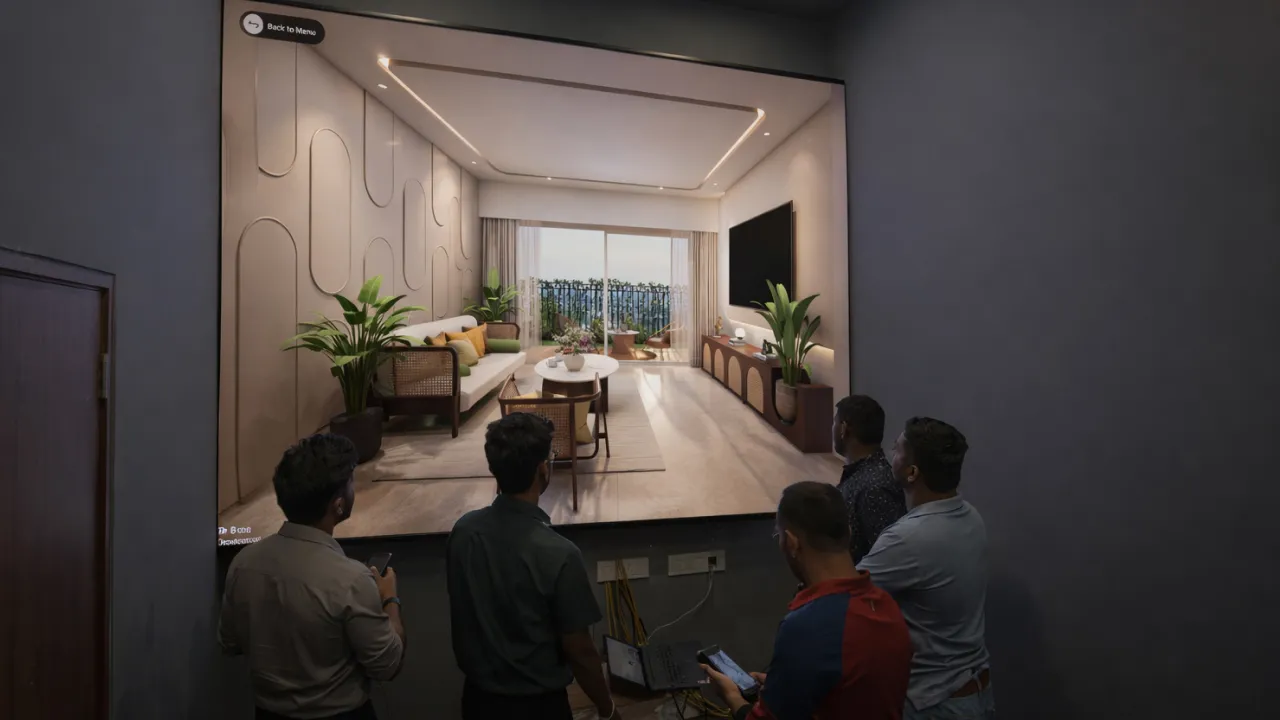
3. VR show flat. Buyers step into a virtual residence and feel its space and depth.
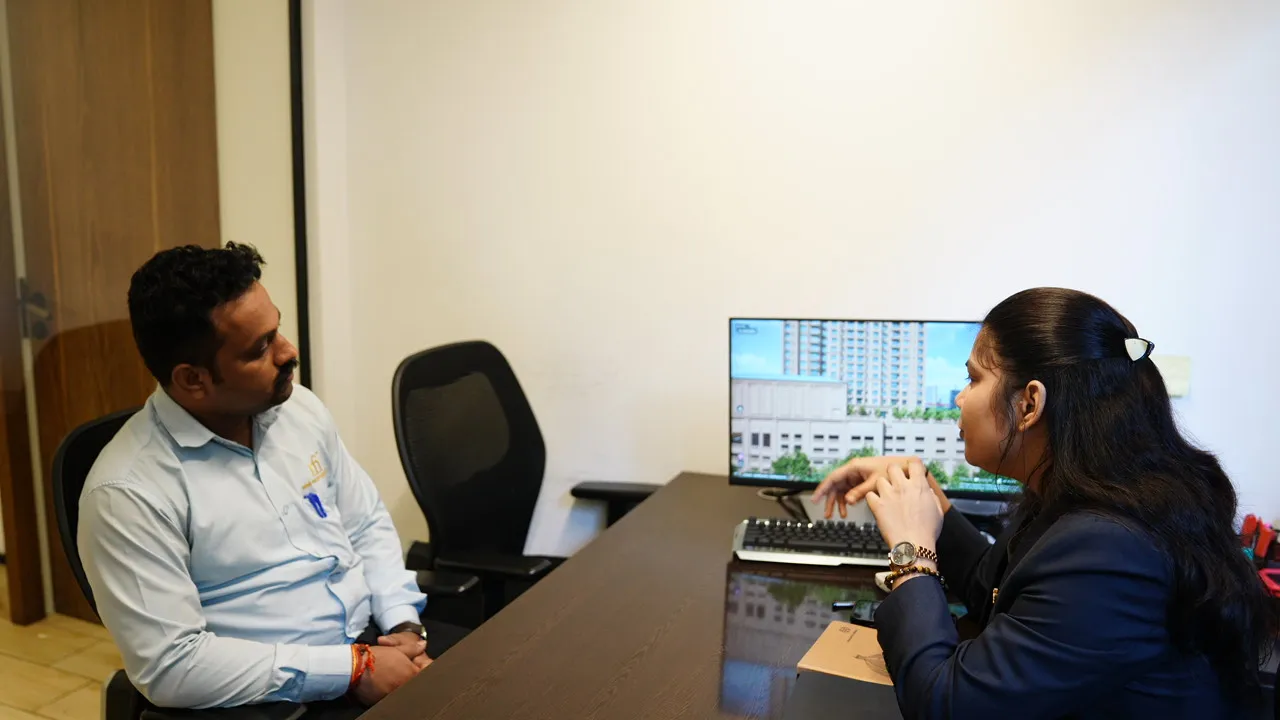
4. Smart Discussion Rooms. The sales conversation begins, with consultants guiding detailed residence exploration.
Real Estate Digital Twin Technology Listens to Buyers

One change in this project tells you a lot. L&T noticed buyers needed to know what different facing apartments would actually look out onto. So the VR experience was extended to include all four directions: north, south, east and west. Consultants can switch between them and show the outlook from a chosen residence.
A good system should be able to take that kind of feedback and adapt after launch.
Digital Twin Platform Development: The Tech in Plain Words

- HoloTube: a custom Unity application driving a 265+ image sequence for 360° rotation, controlled from an 11-inch iPad Pro over a local WebSocket connection
- Motion posters: Unreal Engine content, with 3ds Max for 360° VR environments
- VR: 16K stereoscopic rendering for true depth, on Meta Quest headsets synced with an iPad console, an LED screen and a 9 ft × 7 ft floor projection
- Backup plan: 8 headsets, with 4 active and 4 hot-swappable spares so demos never stop
- Sales software: 65-inch interactive touchscreens in the sales pods
Digital Twin Software for Commercial Real Estate: Does It Carry Over?
Ahana includes 15,000+ sq. ft. of retail, which makes the question fair. The principle carries across: if a buyer or tenant needs to verify scale, frontage, circulation or views before the building exists, a twin can help. This case study is residential-led, though, so a commercial developer should list the specific things their audience needs to confirm and plan the build around them.
The Buyer Journey and the Sales Workflow
By the time buyers reach the Smart Discussion Rooms, they've already seen the façade, felt the amenities and stood inside a home. The software then covers Tower A with 60+ floors and 2, 3 and 4 BHK homes, plus a second tower of roughly 35–45 floors, mostly 4 BHK. A 5 km interactive vicinity map lets consultants open with Ahana's connectivity story before moving to amenities and interiors.
Everything follows a customised Ahana sales flow, and consultants personalise it to what each family asks.
Verified Results
- 100+ VR demos over the opening weekends
- 100% VR adoption, including senior citizen buyers, with zero drop-offs
- Zero physical show flat needed for the full residential visualisation
- 30+ minutes of buyer engagement in the amenity zone
- 15+ amenities visualised in large format
- Internal feedback indicated VR communicated the apartment more effectively and gave a stronger sense of the finished home
Limitations and Planning Considerations
- Internal feedback isn't the same as published sales data, so treat it as an early signal.
- VR needs spare hardware and trained staff, which is why Ahana kept backup headsets.
- One technology doesn't carry the visit. VR was one stop among four.
- Without a physical model, the digital version of the architecture has to be strong, since it carries the whole first impression.
FAQs
Can a digital twin replace a show flat?
At Ahana, it did. Whether it suits your project depends on how well the VR communicates your product.
Will older buyers use VR?
At Ahana, adoption was 100%, including senior citizens.
What does "four-directional views" mean?
Switching between north, south, east and west outlooks for a chosen residence.
Show Buyers the Home, Not the Drawing
If your buyers are still being asked to imagine, it's time to change that. See how V-Estate's experience centres work, read more case studies, or request a demo.





















Sign in to leave a comment.