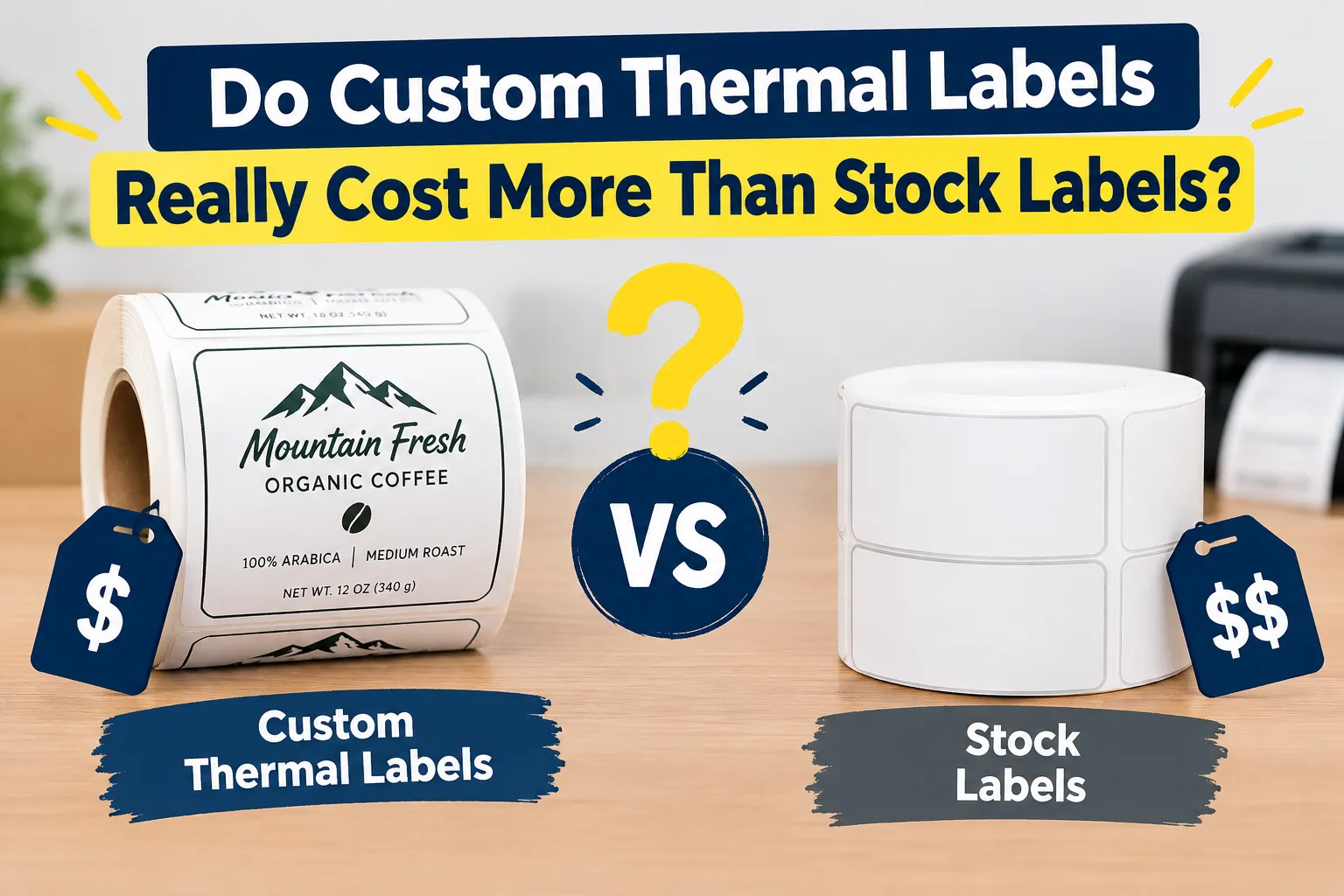

Custom thermal labels can cost more per label than comparable stock labels, but that does not necessarily make them more expensive overall. The true thermal transfer label cost comparison depends on order quantity, materials, dimensions, adhesives, printing requirements, turnaround time, and how well the label performs in its intended application.
For industrial buyers, the better question is not simply, "Which label has the lowest unit price?" It is, "Which option delivers the required performance at the lowest total cost?"
Why Stock Labels Usually Have a Lower Upfront Cost
Stock labels are produced in standardized sizes, materials, and configurations. Because suppliers can produce or purchase them in larger volumes, setup costs are distributed across more units.
They can make sense when an application has straightforward requirements and a standard label already meets the necessary specifications.
Another consideration is stock label turnaround time. Products that are already available can generally be fulfilled without the production steps required for a new custom order. This can make stock labels useful when speed matters and the application does not require specialized dimensions, materials, or adhesives.
The tradeoff is flexibility. A stock product must fit the application rather than being designed around it.
What Determines Custom Label Pricing?
Custom label pricing depends on more than label dimensions. Factors can include:
- Face material and construction
- Adhesive requirements
- Label dimensions and shape
- Environmental exposure
- Print method
- Order volume
- Application and performance requirements
A label exposed to moisture, chemicals, abrasion, temperature changes, or long-term storage may require a different construction than a standard warehouse label.
Buyers should compare labels based on application requirements rather than unit price alone.
Pricing is only one part of procurement. Our guide to sourcing custom labels also covers lead times, material availability, and supplier reliability.
Does Minimum Order Quantity Change the Cost?
It can. The label minimum order quantity is an important part of evaluating custom versus stock products.
Custom production may require setup that makes very small quantities less economical. As order volumes increase, those setup costs can be distributed across more labels, changing the per-unit economics.
Buyers should consider how many labels they actually consume, how frequently they reorder, and whether consolidating requirements could improve purchasing efficiency.
This is also why buyers should confirm minimum quantities and current pricing directly with their supplier rather than assuming every custom order follows the same cost structure.
Stock vs. Custom Thermal Labels: What Should Buyers Compare?
| Consideration | Stock Labels | Custom Thermal Labels |
| Upfront unit cost | Often lower | May be higher |
| Sizes and configurations | Standardized | Application-specific |
| Material options | Limited to available products | Selected around requirements |
| Adhesive options | Standard | Can be matched to the application |
| Availability | Can offer faster fulfillment when in stock | Requires production planning |
| Best suited for | Common applications | Specialized or demanding applications |
A proper thermal label cost comparison should also consider what happens after the label reaches the production floor. A cheaper label that does not adhere correctly, fit the package, scan consistently, or withstand operating conditions can create costs elsewhere in the process.
When Are Custom Thermal Labels Worth the Additional Cost?
Custom labels become particularly valuable when standard products force compromises.
Manufacturers may need a custom solution when labels must fit unusual packaging, adhere to challenging surfaces, withstand environmental exposure, support specific barcode requirements, or integrate with established production processes.
In these situations, paying more per label can be more economical than dealing with recurring application failures, wasted labels, operational interruptions, or repeated specification changes.
The Bottom Line: Compare Total Value, Not Just Unit Price
Custom thermal labels don't automatically mean a more expensive option. Stock labels may offer lower upfront costs and faster availability for straightforward applications. In contrast, custom labels can provide better value when dimensions, materials, adhesives, durability, or operational requirements are more demanding.
The right choice depends on application requirements, order volume, expected performance, and the consequences of using a label that doesn't match the job.
For businesses evaluating custom options, Technicode Inc. supplies custom label solutions for industrial applications across the United States. Request a custom label quote to compare specifications, quantities, and options for a specific application.
















Sign in to leave a comment.