

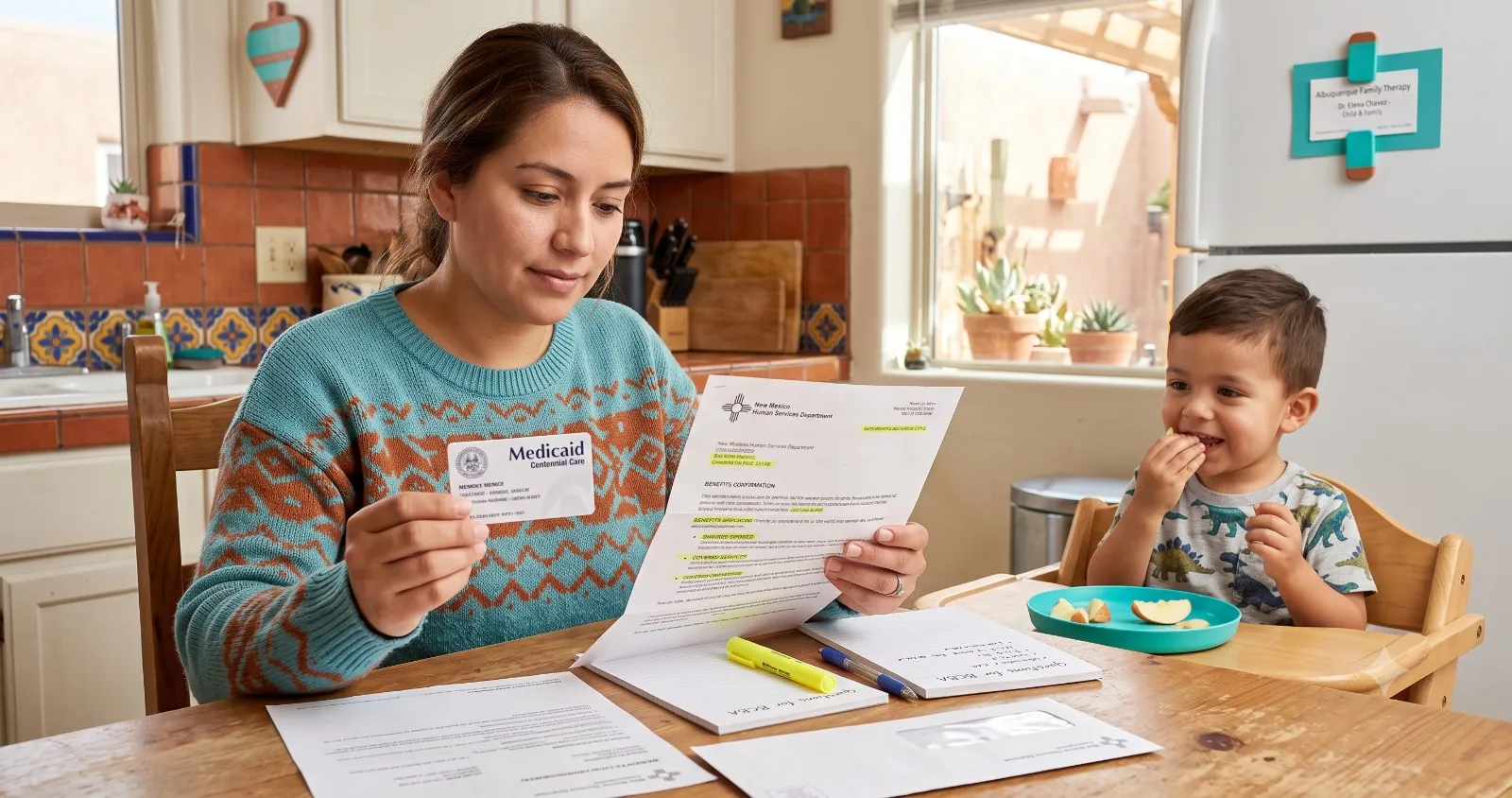
A parent in Rio Rancho sits down at the kitchen table with a stack of papers: a diagnostic evaluation, a referral letter, an insurance form asking for codes she has never heard before. She called about ABA therapy weeks ago, and now she is being asked to produce documents she did not know existed. This is the part of starting ABA therapy that rarely gets talked about, yet it shapes how quickly a child actually begins.
In New Mexico, authorization for ABA therapy usually starts with a diagnosis from a qualified evaluator, followed by an insurance-specific request for services that spells out hours, goals, and the credentials of who will deliver them. Every plan handles this differently, and the paperwork can move at its own pace regardless of how ready a family feels.
What insurance typically asks for
Most insurance plans in New Mexico require a formal autism diagnosis, often from a developmental pediatrician, psychologist, or neurologist, before they will authorize ABA therapy. Many also want a separate assessment from the ABA provider, built around direct observation, caregiver interviews, and standardized tools a BCBA uses to write the initial treatment plan.
From there, the insurer reviews the proposed hours and goals against what it considers medically necessary. This is where families sometimes feel blindsided, because the hours a BCBA recommends and the hours an insurer initially authorizes are not always the same. Appeals and additional documentation are common, not a sign that something has gone wrong.
Timelines vary by plan, by whether prior authorization is required, and by how complete the initial paperwork is. Families who keep copies of every evaluation, letter, and submitted form tend to move through the process with fewer delays, simply because they can respond quickly when an insurer asks a follow-up question. Families working with an in-home provider that walks through each document before submission, rather than after a denial arrives, often find the process considerably less stressful. Parents in New Mexico researching how a provider handles authorization from the very first call can review this article for a closer look at what that looks like in practice.
Where schools fit into the picture
Once ABA therapy is authorized through insurance, some families discover a second layer of documentation tied to their child's school. A child with an Individualized Education Program, developed under IDEA, may have goals that overlap with ABA targets, and coordinating the two requires its own kind of paperwork: releases of information, progress summaries, and sometimes a functional behavior assessment if the school is addressing a specific behavior separately from the home-based plan.
These systems were not built to talk to each other automatically. A BCBA who is willing to write a brief summary for an IEP meeting, or a parent who requests that school data be shared with the home team, can close a gap that otherwise leaves a child working on similar goals in two disconnected settings.
Keeping the paperwork from becoming the whole story
None of this documentation is the point of ABA therapy. It is the mechanism that allows therapy to happen consistently, but a family that spends months buried in forms can lose sight of why they started the process at all. The most useful habit is not perfection. It is a simple folder, physical or digital, where every evaluation, authorization letter, and session note has a home, so the answer is already at hand when a renewal comes due.
There is a second kind of preparation that matters just as much: knowing which questions to ask before signing anything. A parent who asks how often authorization needs renewing, what happens if hours are reduced mid-year, and who handles the paperwork after a move between counties is in a far stronger position than one who only asks those questions after a gap in services has already occurred.


























Sign in to leave a comment.