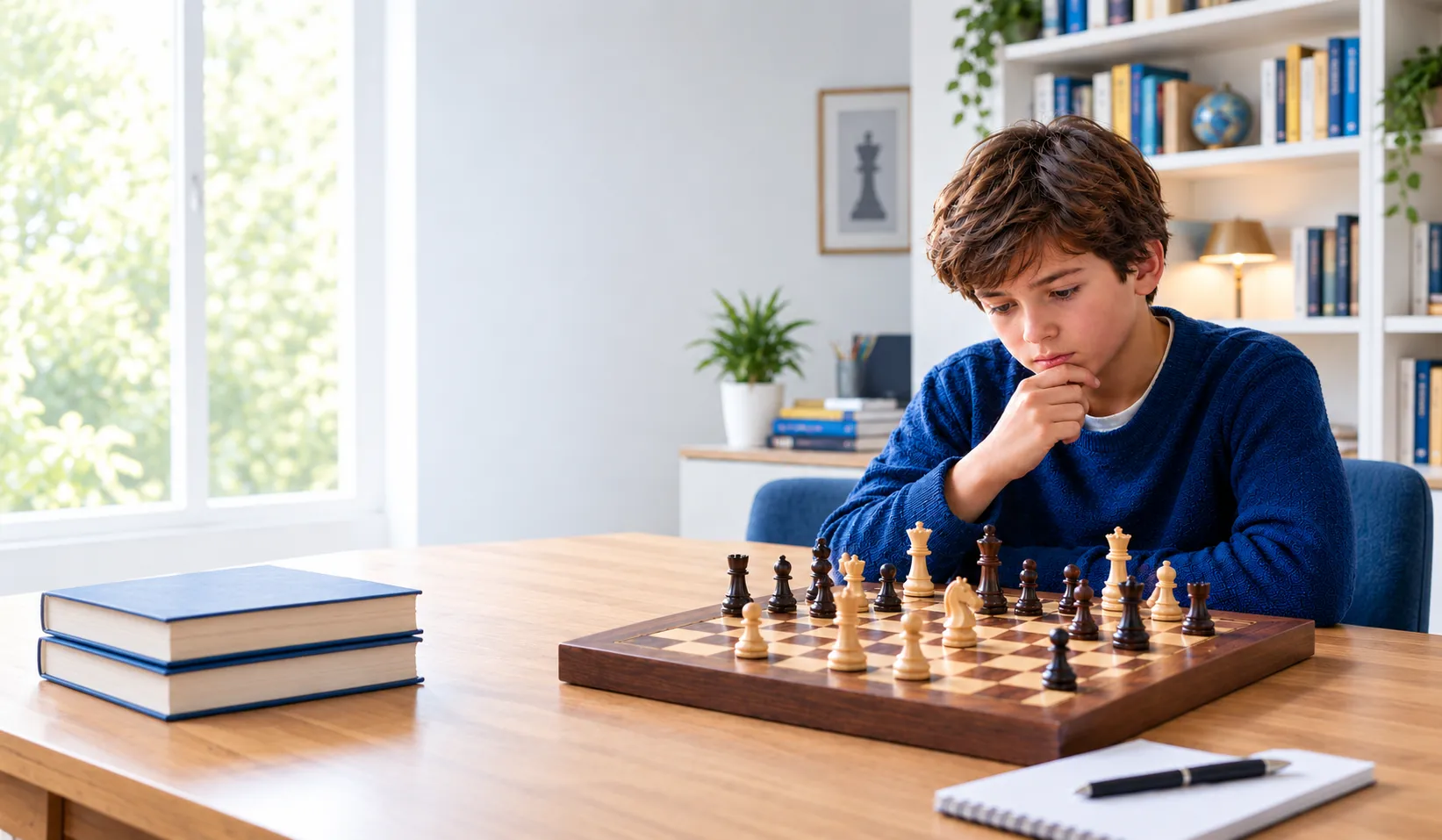

Parents are always looking for activities that can help children develop useful skills beyond school. Chess is often recommended because it challenges children to think ahead, analyze situations, remember information, compare different choices, and make decisions.
But does playing chess really make children smarter?
The answer is not as straightforward as a simple yes or no.
Research has examined the relationship between chess and areas such as academic performance, mathematical problem-solving, attention, and cognitive development. While some studies have reported positive results, others suggest that the broader educational benefits of chess are not always consistent.
What chess clearly provides is regular practice in different forms of thinking. For parents, understanding these skills can provide a more realistic picture of what chess can contribute to a child's development.
How Chess Helps Develop Young Minds
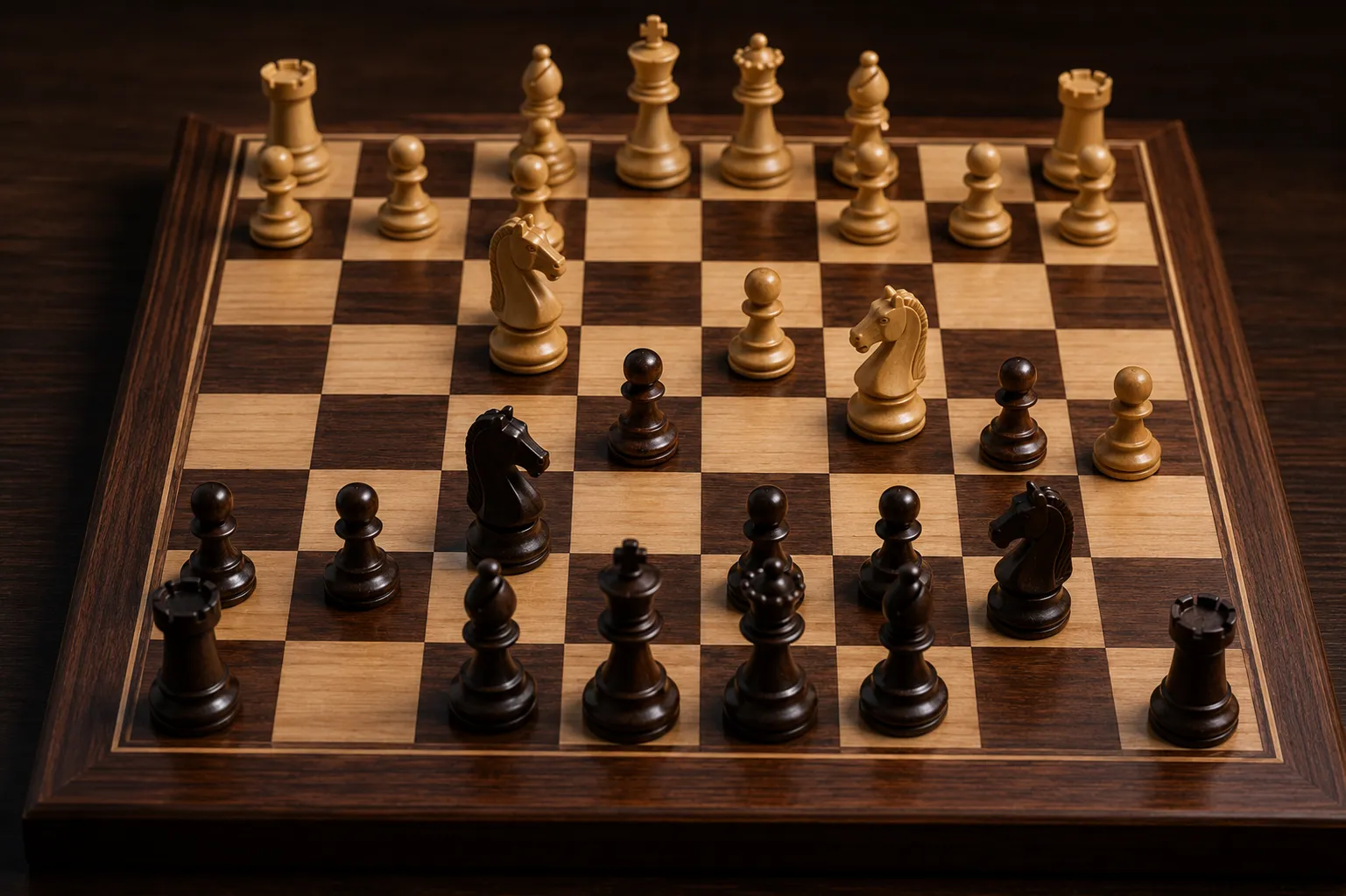
A chessboard presents children with problems that rarely have an obvious solution. Before making a move, a child needs to understand the position, identify possible options, predict what might happen next, and choose a move.
Repeated practice with this process can give children opportunities to develop skills such as:
- Problem-solving
- Planning
- Pattern recognition
- Decision-making
- Concentration
- Working memory
- Logical reasoning
Many of these abilities are associated with executive functions, including working memory, cognitive flexibility, and the ability to control responses.
Research has also connected executive functions with academic performance in subjects such as mathematics and language. However, this does not mean that research on executive functions automatically proves that chess improves academic performance.
Chess can provide practice in these areas, but the results will not necessarily be the same for every child.
Does Playing Chess Increase Intelligence?
The popular statement "chess makes kids smarter" can be misleading if taken literally.
Research into the educational effects of chess has produced mixed results. Scientists have studied whether chess instruction can improve cognitive abilities and academic outcomes, but it remains difficult to determine how much of any improvement is directly caused by chess.
Some research suggests that potential benefits may be associated with areas such as attention, concentration, and engagement in learning rather than a general increase in intelligence.
A more accurate way to look at chess is:
Chess gives children a regular opportunity to practice complex thinking.
Instead of expecting chess to automatically increase intelligence, parents can see it as an activity that encourages children to analyze information, compare alternatives, think ahead, and make more deliberate decisions.
Can Chess Support Mathematical Problem-Solving?
The relationship between chess and mathematics is particularly interesting.
Both activities can require children to recognize patterns, follow sequences, compare possibilities, calculate different outcomes, and approach problems systematically.
Researchers have conducted experimental studies to investigate whether chess instruction can improve mathematical problem-solving. Some results have been encouraging, but the overall evidence is not strong enough to say that chess universally improves mathematical ability.
For parents, the practical message is straightforward:
Chess can support a child's learning, but it should complement—not replace—mathematics education.
Its value can come from providing another environment where children regularly practice structured problem-solving.
Chess Teaches Children to Think Before Acting
One important habit chess can encourage is pausing before making a decision.
Every move on the chessboard can create consequences. A child who moves a piece without considering the opponent's response may quickly discover why thinking ahead matters.
With regular practice, children can become more accustomed to slowing down, comparing options, and considering possible outcomes.
Before making a move, a student can learn to ask:
What is my opponent threatening?
What moves can I consider?
What could happen after each option?
Which choice gives me the most favorable position?
This process encourages children to evaluate their choices instead of automatically selecting the first idea that comes to mind.
Can Chess Help Children Concentrate?
Concentration is an essential part of playing chess.
During a game, children need to follow the position, remember previous decisions, notice changes on the board, and remain alert to potential threats.
However, it would be an overstatement to say that chess automatically improves concentration in every child. Research into chess and cognitive development remains mixed, and outcomes can depend on factors such as training quality, duration, and the way instruction is delivered.
What chess does offer is a structured activity in which children repeatedly practice maintaining their attention while working through a challenging problem.
Why Structured Chess Lessons Matter
Playing chess casually can be enjoyable, but structured instruction offers a different kind of learning experience.
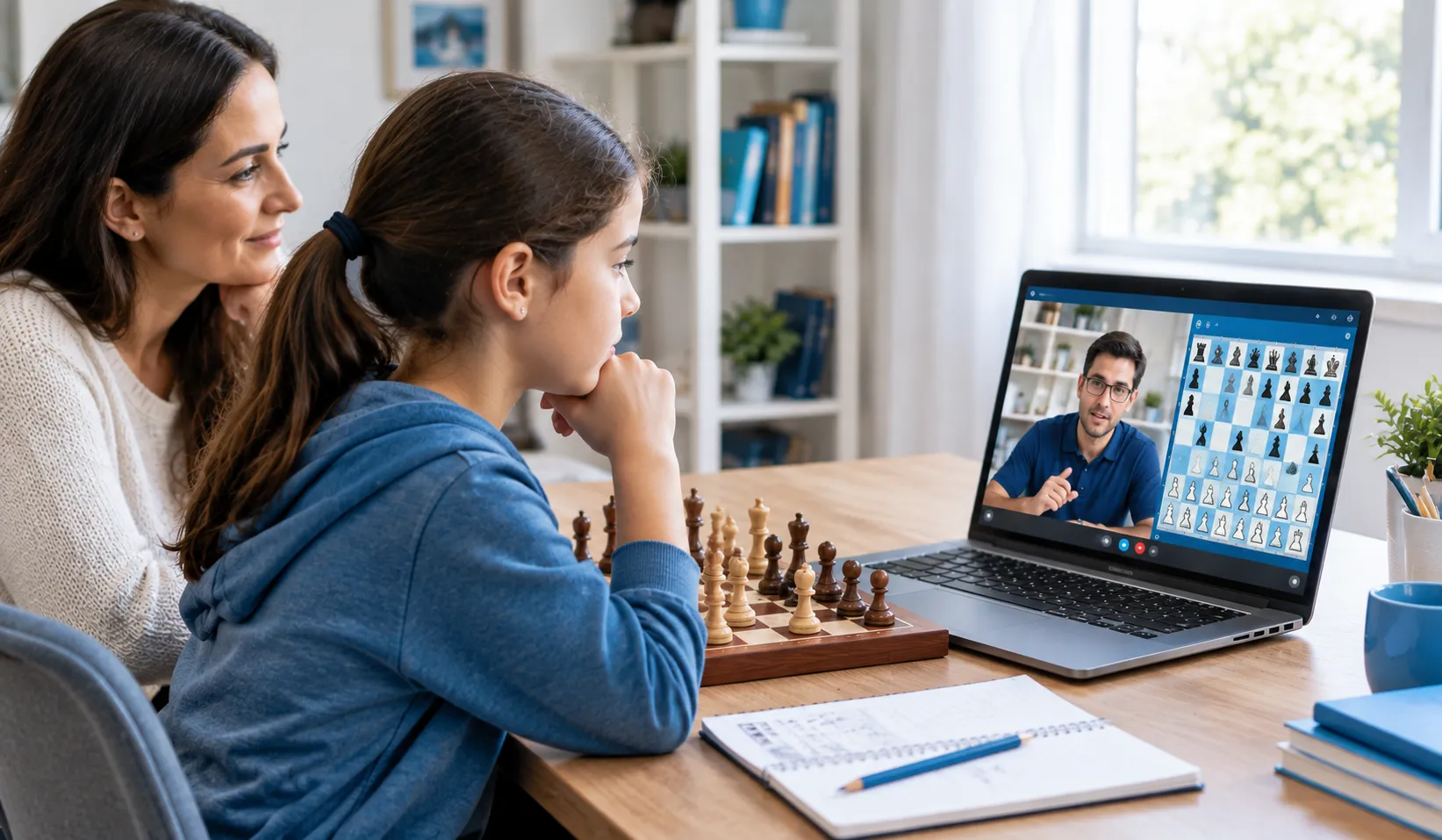
A well-planned online chess lesson can help a child understand why a move works, recognize mistakes, and focus on specific areas of improvement instead of simply playing one game after another.
An experienced online chess tutor can use activities such as:
- Tactical problem-solving
- Calculation exercises
- Position evaluation
- Game analysis
- Strategic planning
- Endgame practice
The objective is not simply to play more games.
The objective is to make the learning process more focused and meaningful.
What Does Chess Competition Teach Children?
Chess tournaments create challenges that children may not experience during casual games.
In a competitive environment, a child may need to make decisions independently, manage the clock, deal with unfamiliar positions, and continue thinking after making a mistake.
These experiences can provide opportunities to practice patience, self-monitoring, independence, and decision-making under pressure.
At the same time, tournament participation should not be presented as proof that chess automatically improves academic performance. The wider educational impact of chess continues to be studied.
What Should Parents Expect From Chess?
Parents should not expect chess to dramatically transform a child's intelligence in a short period of time.
A more realistic expectation is that regular chess provides repeated opportunities to practice useful thinking processes.
Children may spend time analyzing information, solving problems, planning ahead, recognizing patterns, and making decisions. These experiences can be valuable even when measurable academic outcomes differ between studies.
Some research has reported academic improvements among students involved in chess programs, while also recognizing that children who participate in chess may differ from their peers in other ways.
For that reason, individual research findings should be interpreted carefully rather than treated as proof that chess will make every child academically stronger.
How MM Chess Academy Approaches Chess Learning
At MM Chess Academy, chess can be taught as a structured learning experience rather than simply a collection of games.
Through personalized online chess lessons, students can work with coaches on calculation, position analysis, strategic thinking, decision-making, and practical chess skills.
Structured instruction also gives students the opportunity to understand their mistakes and learn from them instead of immediately moving on to another game.
The goal is not to claim that chess alone will make a child smarter.
Instead, chess can provide an engaging environment where children develop their thinking and decision-making skills while becoming stronger chess players.
Conclusion: Does Chess Make Kids Smarter?
So, does chess make kids smarter?
Current research does not support the simple claim that chess automatically increases general intelligence. Research into the academic and cognitive effects of chess has produced mixed findings, although some studies have reported positive results in areas such as academic performance and mathematical problem-solving.
What chess clearly provides is an opportunity to practice complex thinking.
Children learn to examine possibilities, recognize patterns, consider consequences, plan ahead, and make decisions before taking action.
With regular practice and effective instruction, chess can become a valuable learning activity.
Perhaps its most meaningful benefit is not becoming "smarter" in one specific measurable way.
It is learning to think carefully when the answer isn't immediately obvious.
Give Your Child the Cognitive Edge
Book a trial lesson for $9.99 → mmchess.org/plans
Frequently Asked Questions
Q1. Does chess actually make kids smarter?
Research does not establish that chess automatically increases general intelligence. However, chess gives children regular opportunities to practice problem-solving, planning, pattern recognition, attention, and decision-making.
Q2. Can chess help children with mathematics?
Some research has reported positive relationships between chess instruction and mathematical performance, while other studies have produced more nuanced results. Chess can provide practice in pattern recognition, calculation, and problem-solving, but it should complement rather than replace mathematics education.
Q3. Does chess improve concentration?
Chess requires sustained attention because players need to monitor the board and respond to changes in the position. It provides regular practice in focused thinking, although research does not support claiming that chess automatically improves concentration for every child.
Q4. Are online chess lessons useful for children?
Structured online chess lessons can provide personalized instruction, tactical exercises, game analysis, and feedback. Their value can depend on the quality of teaching, student engagement, and consistency of practice.
Q5. What skills can children develop through chess?
Chess provides regular opportunities to practice problem-solving, planning, pattern recognition, calculation, decision-making, logical reasoning, and sustained attention. These skills are useful for chess and can also be relevant to broader learning.

























Sign in to leave a comment.