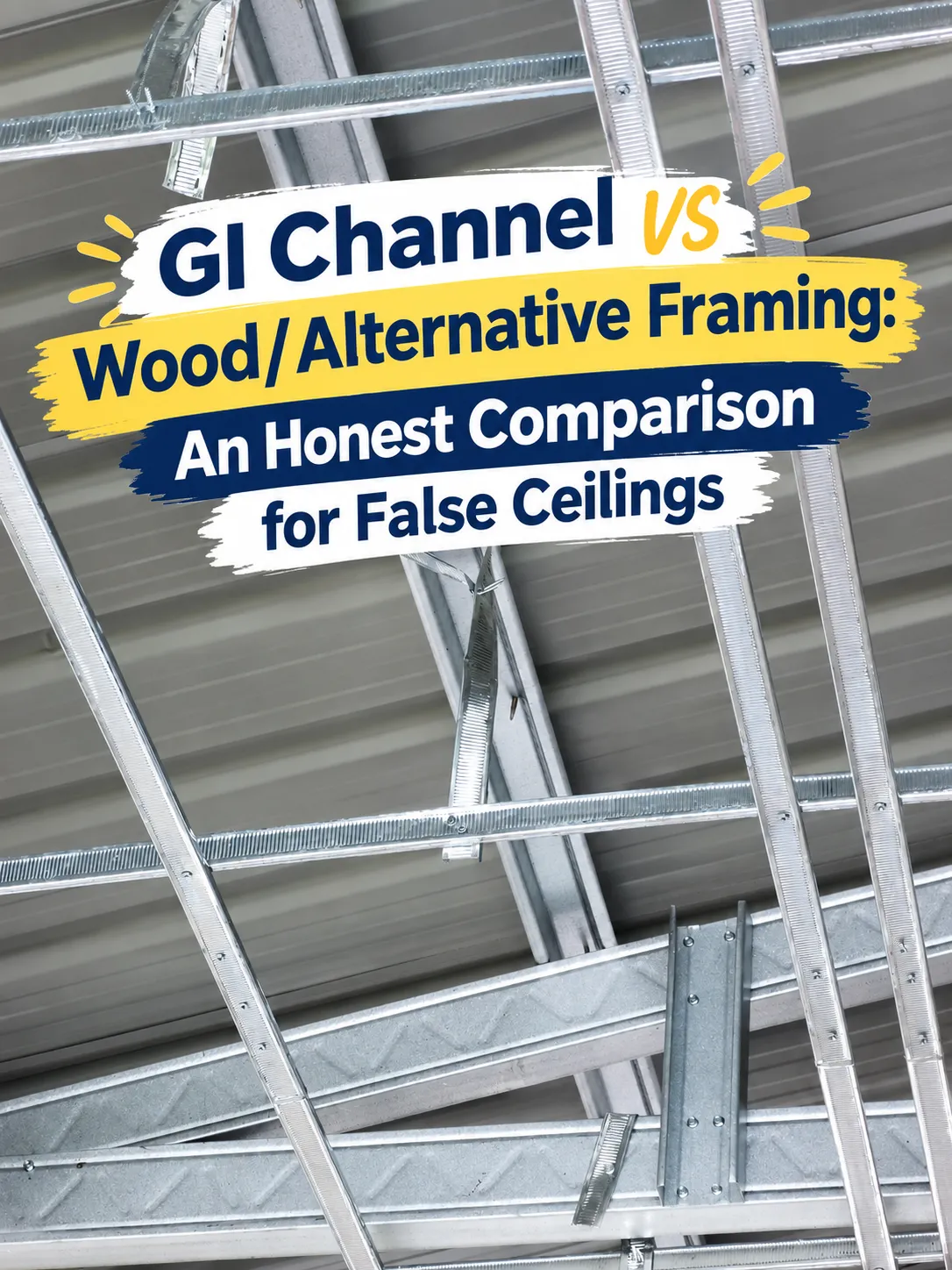

In most commercial buildings, the ceiling appears clean, modern, and flat, whether in a hospital corridor, school hallway, or large office. Above the suspended tiles, a steel framework supports the structure.
A critical but often overlooked question is whether the framework above a false ceiling helps protect occupants during a fire or increases risk.
The answer depends largely on the construction and quality of the steel channel beneath the ceiling.
---
Let’s Start With What a False Ceiling Channel Actually Does
False ceilings are often viewed as purely aesthetic, as they conceal wires and ducts and improve acoustics. However, the channel system supporting the tiles serves a critical structural function.
False ceiling channels, typically made from cold-rolled formed steel, form a grid that distributes the weight of the ceiling panels evenly. When correctly manufactured, they stay dimensionally accurate under load, resist deformation, and maintain their shape over years of use.
Fire safety is a key consideration at this point.
Steel, by nature, doesn’t burn. That’s a plus. But steel does lose structural strength when exposed to heat above a certain point. The American Iron and Steel Institute notes that steel begins to lose significant yield strength at temperatures around 300 to 400 degrees Celsius, well within the range of a real building fire.
What occurs to a false ceiling during a fire?
Thin, poorly formed, or dimensionally inconsistent channel sections deform more quickly under heat stress. This can cause the ceiling to collapse sooner, trapping smoke, blocking escape routes, and increasing risk to occupants.
A properly manufactured channel section with the correct gauge, precise dimensions, and consistent cross-sections maintains its integrity longer during a fire. In emergencies, these additional minutes are critical.
---
The Channel Gauge Problem Nobody Talks About
Here’s something I’ve seen come up in construction procurement: buyers often overlook the importance of gauge consistency across batches. The spec on paper. But what arrives on site is sometimes a batch where the steel thickness varies slightly from piece to piece. Sometimes it’s within tolerance. Sometimes it’s not. And in a fire scenario, that variation is not trivial.
Cold-rolled formed steel channels produced on automated machinery with regular quality checks maintain consistent thickness throughout the batch. This consistency ensures predictable load behaviour. Under heat or mechanical stress, a consistent channel fails more predictably, which enhances safety. Consistent channels tend to deform more gradually, giving occupants a slightly longer window.
---
Expert Tip: When specifying false ceiling channels for commercial or institutional buildings, request the GSM (grams per square metre) rating of the zinc coating and the exact gauge from your manufacturer. Do not accept only “as per IS standard” as a response; ask for batch-specific quality documentation.
---
What About Corrosion? Why That Matters for Fire, Too
Corrosion and fire performance are closely connected.
AA corroded false ceiling channel is structurally compromised before a fire begins. Rust reduces the steel's effective cross-section, leaving less material to withstand heat stress. Galvanisation is important even for interior applications. A well-galvanised false ceiling channel with sufficient zinc coating resists moisture from condensation, leaks, and humidity, maintaining its structural integrity over time. If a fire occurs years later, the channel is more likely to perform as designed.
The Bureau of Indian Standards guidelines for galvanised steel products emphasise minimum coating weights because long-term corrosion resistance directly affects structural reliability in real-world conditions.
---
Real Talk: What Cheap Channel Systems Actually Cost You
Construction budgets are often limited, and false ceiling channels may seem like a commodity. This can lead to choosing the lowest-priced option.
But here’s the thing: the true cost of a false ceiling channel includes not only the purchase price, but also installation time, potential rework due to dimensional inaccuracies, and the risk of inadequate structural performance. Makes installation slower. Inaccurate cross-sections mean the grid doesn’t sit flat. Off-spec pieces get rejected on site, which delays the entire suspended ceiling subcontractor’s work. All of that adds up fast on a large project.
These factors are in addition to the fire safety considerations previously discussed.
---
Pro Insight: For commercial projects requiring fire ratings, a fire consultant typically specifies the false ceiling channel system. Previewing the false ceiling channel system for steel grade, gauge, and coating weight streamlines the handover process.
---
How CRF Manufacturing Makes a Difference Here
Cold Roll Forming differs from general fabrication. The process uses a steel coil that passes through precisely tooled rollers, forming the required cross-section without cutting or welding. The result is a continuous, formed piece rather than a joined or welded assembly.
This distinction matters for false ceiling channels for several reasons. First, the cross-section is consistent from end to end. No weld points can behave differently under heat. The steel grain runs continuously through the section.
Second, CRF manufacturing enables tight dimensional tolerances. If a project requires a specific flange width or web depth, a properly calibrated CRF line consistently achieves these dimensions across large volumes.
Third, automated CRF production with structured quality checks, such as inspecting every fifth piece and conducting night-shift monitoring, minimizes variation and reduces on-site issues. From Our Experience: At Rudran Infra Metals, contractors have transitioned to our false ceiling channel systems after experiencing repeated site rejections with previous suppliers. The primary benefit has been consistency across large volumes. On projects involving 50,000 running metres, even a 0.2mm variation can have a significant impact.antly.
---
What to Look For When Sourcing False Ceiling Channels
So if you’re a procurement manager, a constructioFor procurement managers, construction companies, or project engineers, the following is a practical starting point.e specific grade (typically IS 2062 or equivalent) and confirm the actual gauge, not just the nominal spec.
Inquire about the coating. Minimum zinc coating weight is important. For interior commercial applications, confirm that the manufacturer adheres to IS 277 for galvanized steel.
Request dimensional drawings. Choose a manufacturer that produces to drawings, not just general standards. Manufacturers who produce according to detailed drawings, rather than only general standards, are more likely to deliver consistent sections. Ask to review the tooling drawing for the channel profile. Confirm they can meet that. A manufacturer with 45+ tonnes daily production capacity can handle large orders without cutting corners on QC to meet deadlines.
Inquire about the quality control process. Determine the frequency of checks, the criteria inspected, and the procedures followed if a piece fails inspection.
These straightforward questions provide valuable insight into the manufacturer's reliability.
---
One More Thing Worth Saying
False ceiling systems are typically hidden once installation is complete, making it easy to overlook their importance during procurement.
However, the channel serves as the structural framework, supporting the system over time. In a fire, it plays a crucial role in determining the ceiling's performance during the initial critical minutes.It’s not a small thing.
NFPA research on building fire dynamics shows that the performance of structural assemblies in the early stages of a fire directly affects occupant egress time. Ceiling collapse rapidly alters fire dynamics. Maintaining ceiling integrity, even briefly, can significantly impact outcomes.
---
The Solar Side of This Conversation
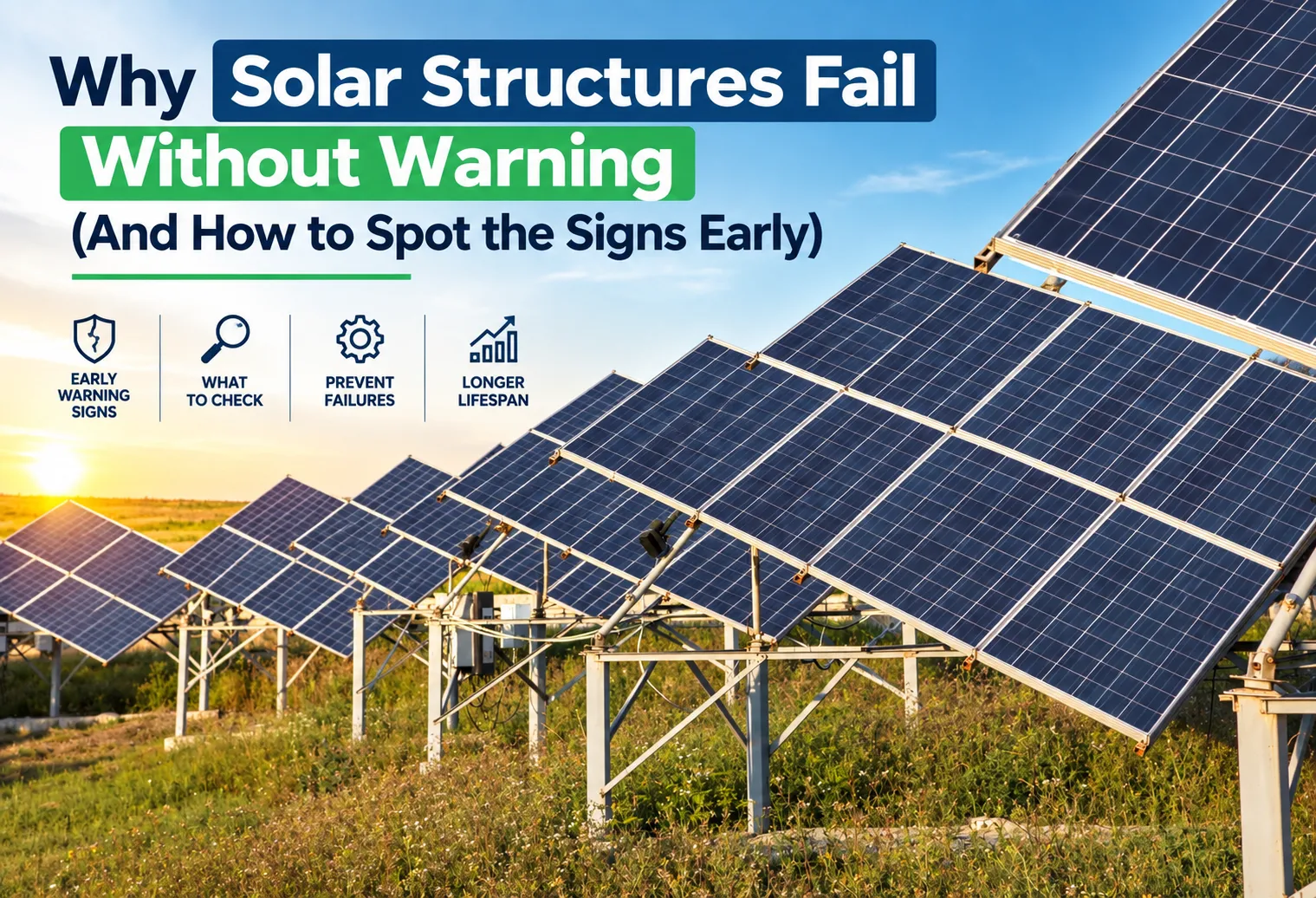
This is particularly relevant for companies such as Rudran Infra Metals, as the precision manufacturing used for reliable false ceiling channels also ensures high-quality solar mounting structures.
For solar EPC companies or developers seeking solar mounting structure manufacturers in Hyderabad, the manufacturing discipline required for high-quality steel channels is essential in a solar structure supplier. Look for consistent dimensions, precise punching, galvanized coatings for long-term durability, batch consistency across large volumes, and sufficient production capacity to meet project schedules without compromising quality.
Solar mounting structure performance standards from the Ministry of New and Renewable Energy also emphasise dimensional accuracy and coating requirements for structural members used in outdoor installations, because the same principles apply: consistent steel performs more predictably under load and environmental stress.
If you’re sourcing mounting frames, C-Purlins, bracings, or ground-mounted solar structuWhen sourcing mounting frames, C-Purlins, bracings, or ground-mounted solar structure components, apply the same criteria: grade, gauge, coating, dimensional accuracy, batch consistency, and production capacity.ting components for your next project? Connect with the Rudran Infra Metals team to discuss your project drawings, specifications, and delivery requirements. We work from your drawings, not ours, and we produce to the spec you need.
Visit rudraninframetals.com to get in touch.




























Sign in to leave a comment.