

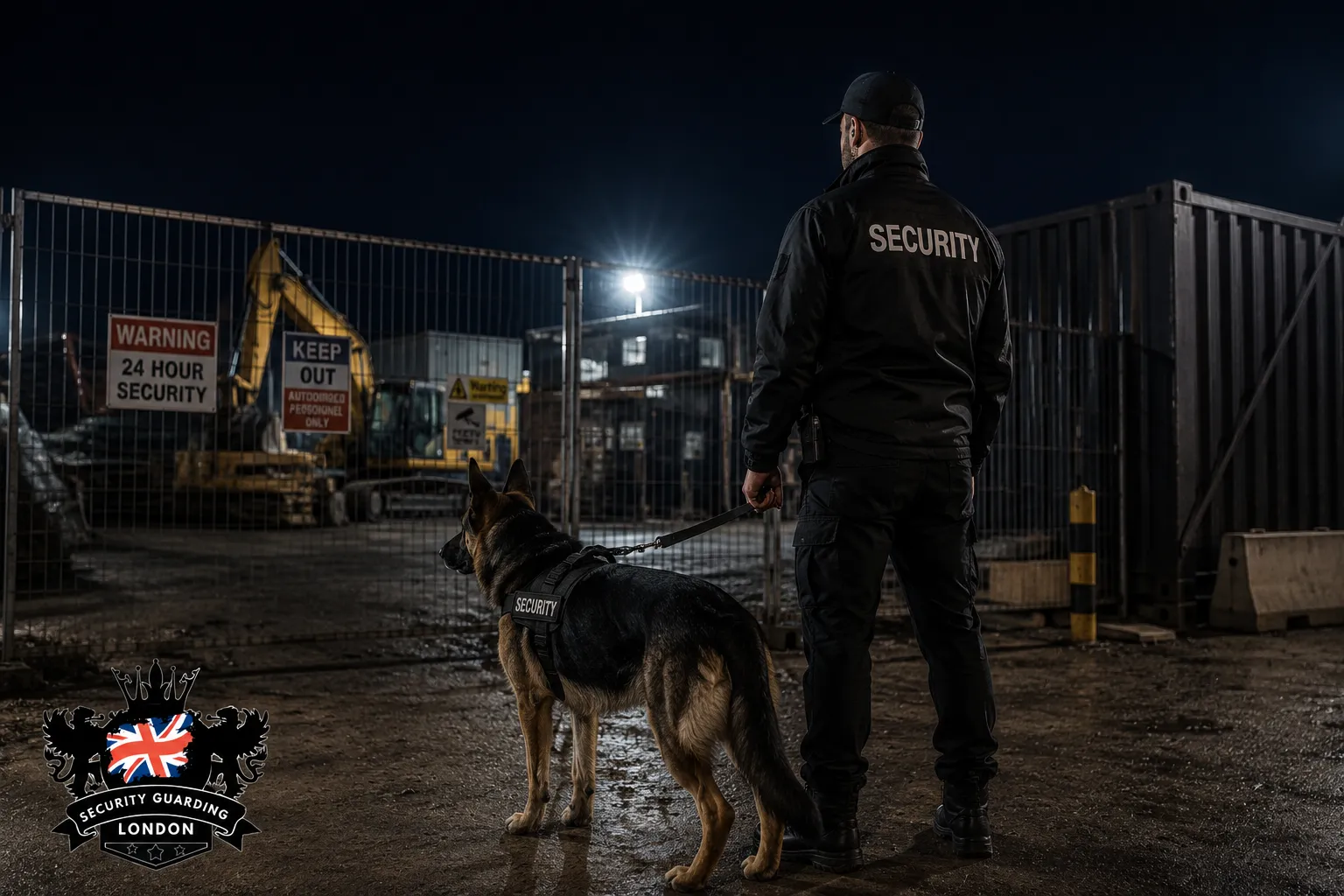
The best deterrent on a dark site is something an intruder can hear coming. Trained dogs change behaviour before any alarm sounds, which is why dog security in London is now considered by site managers, venue owners and estate teams alike. This guide explains how it works, what the rules require and how to decide whether it suits your premises.
Why Intruders Avoid Dogs
Offenders weigh risk in seconds. A dog introduces uncertainty: noise, speed and unpredictability that no fence or lock can match. Most would rather pick an easier target than face an animal they cannot read. Even the sound of a handler approaching can send trespassers away before any physical contact.
What Dogs Add to a Site
- Scent: detects people and items hidden from sight.
- Hearing: notices movement well before a person would.
- Speed: covers open ground quickly.
- Presence: deters approach just by being there.
Common Myths About Security Dogs
Security dogs are not aggressive weapons. They are trained working animals that respond to a handler’s commands, and a good team uses calm control, not threat.
Another myth is that a dog can replace human staff. In reality, handlers make the decisions, and dogs extend what officers can cover. A third is that dogs suit only industrial yards, when hotels, estates and venues also benefit. A fourth is that dogs are noisy neighbours; in practice, trained dogs are calm unless a handler directs otherwise.
Types of Dog Teams Explained
The right team depends on the job:
- Patrol teams: walk perimeters and open ground, usually overnight.
- Deterrent teams: work at gates and entrances beside officers.
- Detection teams: search vehicles, bags and areas for specific scents.
Specialist K9 security services in London often combine these roles, assigning each dog to the task it has been trained for.
When Passive Measures Are Not Enough
Cameras describe an incident; they do not interrupt it. Unmonitored CCTV is valuable evidence, yet it offers no response at the moment. Staffing gaps compound the issue. A security company in London that takes weeks to vet and brief officers leaves sites uncovered precisely when they feel most exposed.
Reactive protection reports losses. Proactive protection prevents them.
Rules Every Client Should Know
Dog work is regulated. Under the Guard Dogs Act 1975, a competent handler must control the dog at all times unless it is secured, and warning signs must be displayed at entrances. Handlers carrying out licensable guarding under contract need a valid SIA licence, which clients can verify on the SIA’s public register.
Counter-terror duties also matter. Martyn’s Law, the Terrorism (Protection of Premises) Act, uses a Standard tier for mid-capacity premises and an Enhanced tier for larger ones. Home Office statutory guidance, including Section 27, and ProtectUK training explain preparedness, and detection dogs can support searches at suitable venues. Responsible dog security in London therefore treats compliance and welfare as ongoing duties.
How Dogs Fit Alongside Technology and People
Dogs work best as one layer, not the only one.
The Role of Cameras
Monitoring gives a dog team direction. With live CCTV monitoring, an operator spots movement and sends a handler to the right spot, while video-verified alarms confirm real intrusions and reduce false callouts.
The Role of Officers
Handlers focus on the dog, so other staff manage the wider site. Trained security guards in London control access, speak to visitors and complete incident reports, leaving the dog team free to cover distance and deter approach.
The table shows the difference.
| Feature | Integrated Approach | Single-Measure Approach |
| Detection | Live, scent-led and visual | Recorded only |
| Response | Handler and officers act together | Waiting for help |
| Deterrence | Visible, audible presence | Fixed signage |
| Evidence | Verified reports and footage | Unchecked recordings |
| Outcome | Incidents prevented | Losses documented |
Where Dog Security Makes Most Sense
Think of distance, darkness and value. Sites with large open areas, poor lighting or valuable stored items gain the most:
- Construction yards: plant, tools and materials left overnight.
- Warehouses and depots: trailers, loading bays and perimeters.
- Retail parks: car parks and service yards after closing.
- Hotels and estates: discreet grounds patrols that respect guests.
- Venues: pre-event searches and crowd-area support.
Dogs also suit short-term needs, such as a vacated building or a high-risk weekend. Many operators pair dog patrol teams with warehouse protection so that coverage continues beyond the gate.
Welfare and Handler Standards
A dog’s reliability depends on its wellbeing. Reputable providers keep records of training, health checks, vaccinations and rest periods, and transport dogs in suitable vehicles. Handlers learn to read body language, issue clear commands and de-escalate encounters, while dogs are reassessed so behaviour stays predictable around the public and staff.
Is Your Site Ready? A Quick Self-Check
Ask these questions before arranging dog security in London:
- Is the perimeter large, dark or hard to see?
- Are valuable items stored outdoors overnight?
- Can warning signs be displayed at every entrance?
- Is there somewhere safe to secure a dog when needed?
- How will dogs, cameras and officers communicate?
If most answers point towards risk, a dog team deserves serious consideration.
Judging a Provider Fairly
Compare suppliers on substance:
- Licensing: valid SIA licences for every handler.
- Training records: evidence of recognised assessment.
- Insurance: cover that explicitly includes dog work.
- Response: realistic start times, including short notice.
- Supervision: named managers and a responsive control room.
Strong providers explain their methods plainly and welcome questions.
Frequently Asked Questions
1. What is dog security?
Dog security uses trained dogs and handlers to patrol, deter intruders and search areas. The dog adds scent, hearing and speed that cameras and standard patrols cannot match.
2. Are security dogs dangerous to the public?
No, properly trained security dogs stay under a competent handler’s control or are secured. The Guard Dogs Act also requires warning signs, keeping the public aware that a dog is present.
3. Do dog handlers need an SIA licence?
Yes, handlers performing licensable guarding under contract need a valid SIA licence. Check it on the SIA’s public register before any deployment begins.
4. Can a dog replace CCTV?
No, dogs and CCTV serve different purposes. Cameras provide range and records, while dogs add speed, scent and deterrence, so the best protection combines both with trained officers.
5. Which sites suit dog patrols best?
Large, dark or open sites suit them best, including construction yards, warehouses, retail parks and estates. Dogs cover distance quickly and deter intruders by presence alone.
Deciding with Confidence
Generic security only records losses, while a proactive partner stops threats in progress. Organisations seeking a tailored approach can speak to Security Guards London Limited, an SIA-licensed provider delivering round-the-clock protection across Greater London, and begin with a short site assessment. Done well, dog security in London becomes one dependable layer within a wider, carefully managed plan.



















Sign in to leave a comment.