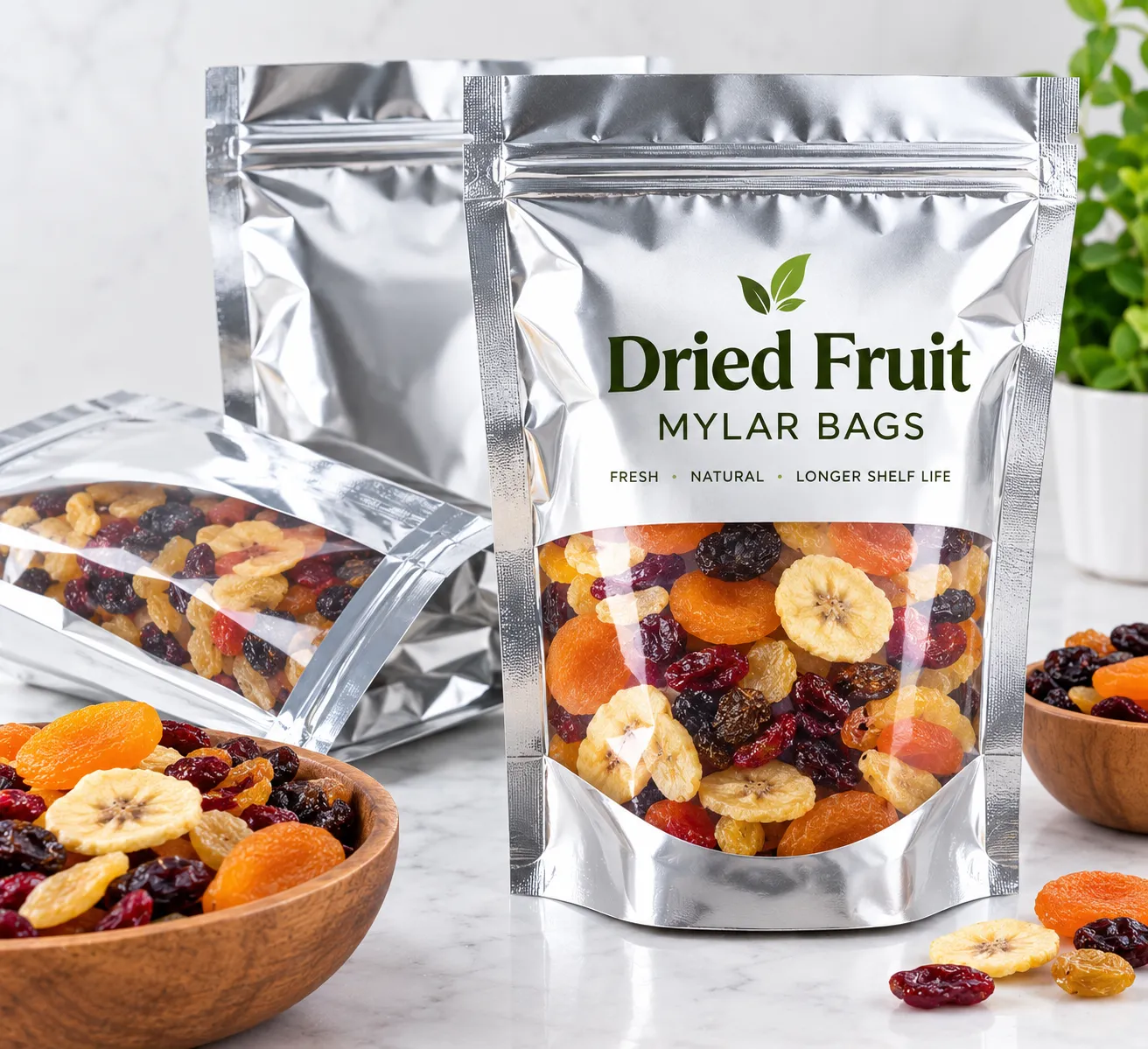

Mylar Bags Pro hears from dried fruit producers who lose product to spoilage long before it reaches a shelf, and the cause is almost always packaging. Dried fruit mylar bags solve this by combining a metallic barrier film with a tight heat seal, keeping moisture, oxygen, and light away from the product. For anyone selling dried apricots, mango, or apple rings, that barrier decides whether the fruit stays chewy and flavorful or turns hard and dull within weeks.
Dried fruit sits in a tricky spot. It has just enough residual moisture to feed mold growth if humidity creeps in, yet it's dry enough that light and oxygen exposure fade both color and flavor fast. A properly built mylar pouch manages both risks at once, which is why small-batch producers and larger food companies both lean on this packaging type once they move past farmers market volumes.
What Makes Dried Fruit Mylar Bags Different From Standard Bags
Regular poly bags let in trace amounts of moisture and oxygen over time, and dried fruit is sensitive enough to notice. Dried fruit mylar bags use a layered structure, typically polyester, aluminum foil, and polyethylene, to cut that exchange down to almost nothing.
Have you ever bitten into dried mango that felt gummy instead of chewy? That's moisture creeping back in through a weak barrier. A metallic mylar layer keeps humidity out and locks existing moisture at a stable level. The foil layer also blocks UV light, which matters since sun exposure browns dried fruit and dulls its natural color within days on an open shelf.
According to the USDA Food Safety and Inspection Service (2022), moisture control is the single biggest factor in preventing mold growth in dried food products stored above 65 percent relative humidity. Barrier packaging keeps internal humidity stable regardless of what's happening in the storage room or delivery truck.
Bag Styles and Barrier Options
Dried fruit producers usually choose between a few common bag styles, and the right pick depends on batch size and how long the product sits before sale. A thinner 3.5 mil bag suits fruit sold within a month or two. A thicker 4.5 to 5 mil bag with a full foil layer suits longer shelf runs or bulk warehouse storage.
Finish choice affects more than looks. A clear window panel lets customers see the fruit's color and texture before buying, which helps at farmers markets and specialty grocers. A fully opaque foil bag protects against light better but hides the product, so many brands compromise with a small window instead of a full one.
| Bag Type | Barrier Level | Avg. Cost (per 1,000) | Best For |
|---|---|---|---|
| Stand-up pouch, clear window | Medium-high | $380–$520 | Retail shelf, visible product |
| Flat-bottom bag, full foil | Very high | $460–$650 | Bulk orders, long storage |
| Side-gusset bag, kraft look | Medium | $300–$450 | Farmers markets, eco branding |
| Quad-seal bag, matte foil | High | $420–$600 | Wholesale and gift packaging |
A brand shipping dried fruit across the country needs a thicker barrier than one selling only at a weekend market. Matching bag style to actual sales channel saves money without cutting corners on freshness.
How Producers Actually Get These Bags Made
Ordering custom dried fruit mylar bags follows a set sequence regardless of batch size. Design work comes first, usually built with bleed marks and safe zones so the printer knows exactly where text and images can sit. The film supplier then confirms barrier thickness based on how long the product needs to stay fresh.
Printing follows one of two paths. Digital printing works well for smaller runs since there's no plate setup cost, while rotogravure printing suits larger runs where the per-unit price drops with volume. After printing, the film gets laminated and formed into the finished bag, whether that's a stand-up pouch, flat-bottom bag, or side-gusset style.
Seal testing happens before any bag ships. A weak seal is the most common point of failure in flexible packaging, letting moisture back in within days. Producers who specialize in dried fruit mylar bags, including Mylar Bags Pro, build seal strength checks into every production run rather than treating it as optional.
Cost Factors When Ordering Dried Fruit Mylar Bags
Per-bag price drops as order size grows, but a few other factors shift the total. Bag dimensions affect film use directly, and barrier thickness adds cost while cutting spoilage losses later. Print color count matters too, since extra colors mean extra setup in most printing processes.
A small producer ordering 1,000 units of a mid-size pouch with a four-color design typically pays between $380 and $550. A larger operation ordering 20,000 units of the same design often sees the per-unit cost fall by 40 to 55 percent. Custom features, like a die-cut window, add a one-time tooling fee that doesn't repeat on future orders.
A food packaging consultant based in Oregon explained it this way while reviewing options with a dried fruit startup: "New producers often skip straight to design and treat barrier thickness as an afterthought. Get the moisture barrier right first, because that's what actually protects the margin on spoiled inventory."
Choosing a Provider for Dried Fruit Mylar Bags
A few practical questions separate a solid packaging provider from a risky one. Does the company test seal strength on every batch, not just the first sample? Can they explain barrier choice based on your fruit's moisture content, rather than offering one standard bag for everything? Do they use food-safe materials that meet current labeling requirements?
A general packaging reseller might quote a lower price but skip the moisture testing that specialty producers include by default. A provider focused specifically on dried fruit mylar bags, such as Mylar Bags Pro, tends to understand water activity levels, seal integrity standards, and the FDA food-contact material rules that apply to dried food packaging in the United States. That focus usually shows up as fewer spoiled returns and fewer complaints about texture changes after a few weeks on shelf.
Request a sample bag filled with your actual product and left in storage for two to three weeks before committing to a full order. A seal that holds and fruit that still tastes right after that test says more than any spec sheet.
Frequently Asked Questions
What makes dried fruit mylar bags better than plastic bags for storage?
Dried fruit mylar bags include a metallic barrier layer that blocks oxygen, moisture, and light almost completely. Standard plastic bags allow gradual gas exchange, which speeds up mold risk and color fading in dried fruit.
How much do custom dried fruit mylar bags cost?
Pricing depends on size, barrier thickness, and order volume. Runs of 1,000 units typically cost $0.38 to $0.55 per bag, while orders above 20,000 units often fall to $0.12 to $0.28 per bag.
Do dried fruit mylar bags need FDA approval?
Materials used in food-contact packaging must meet FDA requirements for food-safe materials in the United States. A reliable supplier confirms the film and any printing inks meet these standards before production starts.
How long does dried fruit stay fresh in a mylar bag?
With proper barrier film and a tight heat seal, dried fruit can stay fresh for six to eighteen months depending on the fruit type, moisture content, and storage temperature.
What's the minimum order for custom dried fruit mylar bags?
Minimum orders vary by supplier, but many producers, including Mylar Bags Pro, accept digitally printed runs starting around 500 to 1,000 units.
Can dried fruit mylar bags be resealable?
Yes. Zipper closures and heat-seal-then-reseal strips are the most common options. A resealable closure matters most for larger bags meant to be opened and closed multiple times.
Are dried fruit mylar bags recyclable?
Standard multi-layer mylar bags are hard to recycle through curbside programs because of the mixed material layers. Some suppliers now offer mono-material recyclable barrier films, though these typically cost more per unit.
What size mylar bag fits an 8 oz bag of dried fruit?
An 8 oz portion usually fits a bag around 6 by 9 inches for a flat or side-gusset style, or a slightly larger footprint for a stand-up pouch with a gusseted base.
Do labeling regulations apply to dried fruit packaging?
Yes. Nutrition facts panels, allergen statements, and net weight declarations follow FDA labeling rules in the United States, with similar requirements from food standards agencies in the UK, Canada, and Australia. Suppliers can print these panels, but the brand supplies the content.
Does climate affect how well a mylar bag protects dried fruit?
Yes. In humid climates, a thicker barrier film matters more because ambient moisture pushes harder against the seal. Producers shipping to coastal or tropical regions often choose 4.5 mil or thicker film for that reason.
What printing method works best for a first small order?
Digital printing suits small first orders since it skips plate setup costs and offers faster turnaround, usually two to three weeks from approved design to finished bags.
Can dried fruit mylar bags include a clear window?
Yes, a die-cut clear window is a common option that lets customers see the fruit's color and texture without opening the bag. It typically adds a one-time tooling fee on the first order only.
A Practical Next Step
Protecting dried fruit comes down to matching barrier strength, bag style, and seal quality to how the product actually gets stored and sold. A small batch sold within weeks has different needs than inventory held for months in a warehouse. Testing a sample bag with real product before committing to a full run remains the most reliable way to confirm freshness holds up. For producers ready to move forward, Mylar Bags Pro offers sample runs and can walk through barrier options based on fruit type and expected shelf time, without pushing more packaging than the business actually needs.






















Sign in to leave a comment.