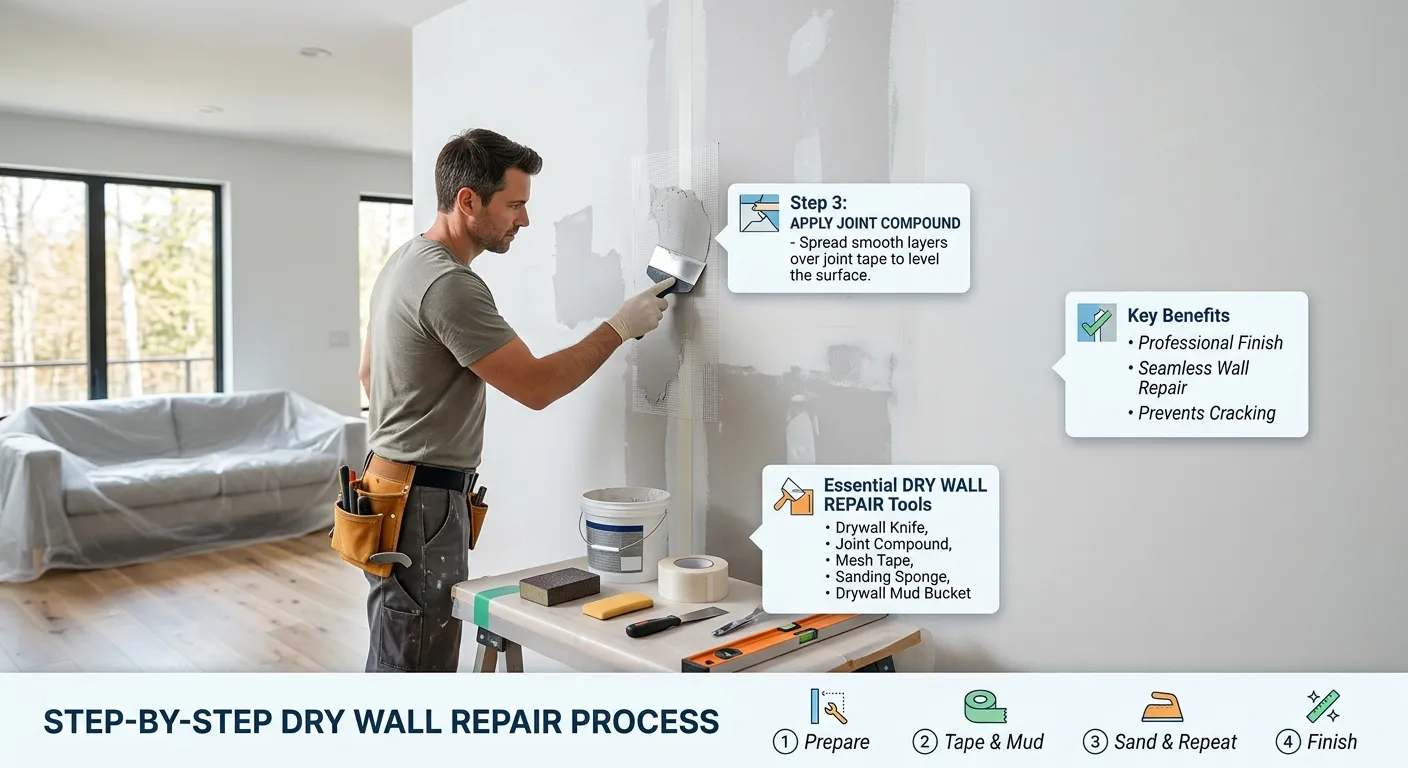

Walls take a lot of everyday wear and tear. From accidental holes and dents to cracks, water damage, and loose joints, drywall problems can appear even in a well-maintained home. Some issues are small enough to repair quickly, while larger damage may require replacing an entire section.
For homeowners dealing with damaged walls, drywall repair is often a practical way to restore a smooth, finished surface without replacing an entire wall. Understanding the common types of damage, repair process, and when professional help is needed can make it easier to decide what your home actually requires.
Common Drywall Problems Homeowners See
Drywall can be damaged in many different ways. Some problems are purely cosmetic, while others may point to a larger issue behind the wall.
Common examples include:
- Small nail and screw holes
- Dents and impact damage
- Cracks around joints
- Cracked corner beads
- Water stains
- Peeling or damaged surfaces
- Holes caused by plumbing or electrical work
- Loose or damaged drywall panels
Small holes are generally straightforward to address, but recurring cracks or water damage should be investigated before applying a patch.
When Should You Repair Drywall?
Not every damaged wall needs immediate professional attention, but ignoring certain problems can make them worse.
A small hole from hanging a picture may only need a basic patch. On the other hand, a large opening, significant cracking, or water-damaged material may require more extensive work.
You should consider getting the problem assessed if:
- The same crack keeps coming back
- The wall feels soft or swollen
- There are signs of moisture
- A large section has been damaged
- The drywall is separating from the framing
- You notice mould or persistent dampness
Fixing the visible damage without addressing its cause can result in the problem returning.
What Does Drywall Installation Involve?
When a wall is being built or a damaged section needs to be replaced, drywall installation involves several steps rather than simply attaching panels to the wall.
The general process includes:
- Measuring the area
- Selecting the appropriate drywall
- Cutting panels to size
- Securing panels to the framing
- Applying joint tape
- Covering joints with compound
- Sanding the surface
- Applying primer and paint
The finishing stage is especially important. Even well-installed drywall can look uneven if joints are poorly taped or the surface is not properly sanded.
Choosing the Right Drywall
Different rooms may require different types of drywall. Standard drywall is commonly used in ordinary living spaces, while moisture-resistant products can be more suitable for areas exposed to humidity.
Depending on the project, homeowners may encounter:
- Standard drywall
- Moisture-resistant drywall
- Fire-resistant drywall
- Sound-reducing drywall
- Specialty panels for specific applications
The right product depends on the location and purpose of the wall. Using the wrong material can lead to unnecessary maintenance or premature damage.
How to Prepare Before the Work Begins
Good preparation can help make a drywall project cleaner and more efficient. Remove furniture and decorations from the work area whenever possible.
Before work starts, identify:
- The exact areas requiring attention
- Possible plumbing behind the wall
- Electrical wiring locations
- Moisture or water sources
- Existing cracks or structural concerns
- Paint colours or finishes needed afterward
If a wall has suffered water damage, make sure the source of the moisture has been corrected first. Otherwise, new drywall could become damaged again.
Why Professional Finishing Matters
Installing a drywall panel is only part of the job. The finished wall needs to blend with the surrounding surface, particularly when repairing an existing wall.
Professional finishing generally involves careful application of joint compound, sanding, feathering the edges, and preparing the surface for paint.
Poor finishing can leave:
- Visible seams
- Uneven surfaces
- Raised joints
- Rough patches
- Noticeable differences under lighting
These imperfections can become particularly obvious after painting, so finishing should not be treated as an afterthought.
Repair or Replace?
One of the most common questions homeowners have is whether damaged drywall should be repaired or replaced.
Repair may make sense when the damage is:
- Small
- Localized
- Structurally insignificant
- Not caused by ongoing moisture
Replacement may be more appropriate when a large section is damaged, the material has been affected by water, or the drywall has lost its strength.
A professional can examine the area and determine whether a patch is sufficient or whether replacing the section would provide a better long-term result.
Understanding Drywall Project Costs
The drywall installation cost can vary significantly depending on the size of the project, labour, material selection, ceiling height, wall condition, finishing requirements, and accessibility.
For example, installing drywall in an empty room may be more straightforward than repairing several damaged areas in an occupied home. Detailed finishing, unusual wall shapes, or difficult access can also affect the overall price.
When reviewing an estimate, ask whether it includes:
- Materials
- Labour
- Joint compound and tape
- Sanding and finishing
- Primer
- Painting
- Removal of damaged material
- Cleanup
Getting a detailed estimate makes it easier to compare proposals and understand what you are actually paying for.
Don't Ignore Water Damage
Water is one of the biggest concerns when dealing with drywall. A stain on the wall may be caused by a leaking pipe, roof problem, condensation, or another moisture source.
Simply covering the stain with paint is rarely a permanent solution.
Look for signs such as:
- Brown or yellow stains
- Bubbling paint
- Soft drywall
- Swelling
- Musty odours
- Peeling surfaces
If moisture is involved, identify and correct the source before repairing the wall.
How to Choose a Drywall Professional
If your project is larger than a simple patch, choosing an experienced professional can save time and reduce finishing problems.
Before hiring someone, consider asking:
- How much drywall experience do you have?
- Can you provide a detailed estimate?
- What materials will be used?
- Is finishing included?
- How long should the project take?
- How will dust and debris be handled?
- Will painting be included or quoted separately?
A clear scope of work helps prevent misunderstandings once the project begins.
Prepare for the Finishing Stage
Once drywall work is complete, the wall may still need primer and paint. Fresh compound can absorb paint differently from an existing painted surface, which is why proper preparation matters.
Before painting, the surface should be:
- Completely dry
- Smoothly sanded
- Free from dust
- Properly primed
- Checked for visible imperfections
Good preparation can make the difference between a repair that blends into the wall and one that remains noticeable.
Final Thoughts
Drywall problems are common, but they do not always require major construction. Understanding the type and extent of damage can help homeowners choose the appropriate solution and avoid spending money on unnecessary work.
Whether you are dealing with a few holes, replacing damaged sections, or finishing walls during a larger renovation, proper materials and careful workmanship can provide a cleaner and longer-lasting result. Taking care of drywall issues early can also help prevent small problems from becoming more complicated later.



























Sign in to leave a comment.