

A pool pump is not exactly silent, but you should know what its normal sound is like. A sudden rattle, hum, screech, or grinding noise can mean something has changed. Ignoring it may turn a small issue into a bigger one. When Dubai swimming pool repair is needed for a noisy pump, the first step is to understand where the sound may be coming from.
Start by Listening to the Sound
Different noises can point to different problems. You do not need to take the pump apart to notice useful clues.
A low hum that was not there before could mean the motor is struggling. A rattling sound may come from loose parts or something caught in the system. A high-pitched squeal can suggest wear around moving parts, while a grinding noise should not be brushed aside.
Try to notice when the sound begins. Does it happen as soon as the pump starts? Does it appear after running for a while? Does it change when water flow changes? These little details can help when the equipment is inspected.
Check the Pump Basket
Before assuming the motor has failed, look at the pump basket if it is safe to do so and the equipment is switched off.
Leaves, small stones, twigs, and other debris can collect inside. When water struggles to pass through, the pump may sound different from normal.
A dirty basket is a fairly simple problem, but leaving it there can make the pump work harder. Outdoor pools in Dubai can collect dust and debris quickly, particularly when the area around the pool is exposed to wind.
Look for Air Getting Into the System
Sometimes a noisy pump is not really a motor problem. Air may be getting into the circulation system.
You might notice bubbles in the pump basket or an uneven flow from the return jets. The water level may also be too low for the skimmer to work properly.
Check the obvious things first, such as the pool water level and visible connections. If the noise continues, the system may need a closer inspection.
Strange Sounds You Should Not Ignore
Some noises deserve attention sooner rather than later.
- Grinding: May point to worn moving parts inside the motor.
- Rattling: Could come from a loose component or debris.
- Squealing: May indicate wear that needs checking.
- Loud humming: Can happen when the motor is struggling to start or run normally.
The sound alone cannot confirm the exact fault. It is more useful as a warning that something has changed.
Check Whether the Pump Is Overheating
A pump that becomes unusually hot along with making strange noises needs attention. Heat and noise together can indicate that the motor is under too much strain.
Do not keep switching the pump on and off to see whether the sound disappears. If it keeps overheating or stops by itself, turn it off and have it checked.
This is especially important with pool equipment because electrical components are involved.
Do Not Forget the Filter
A blocked or very dirty filter can affect the way water moves through the system. That change in water flow can put additional strain on the pump.
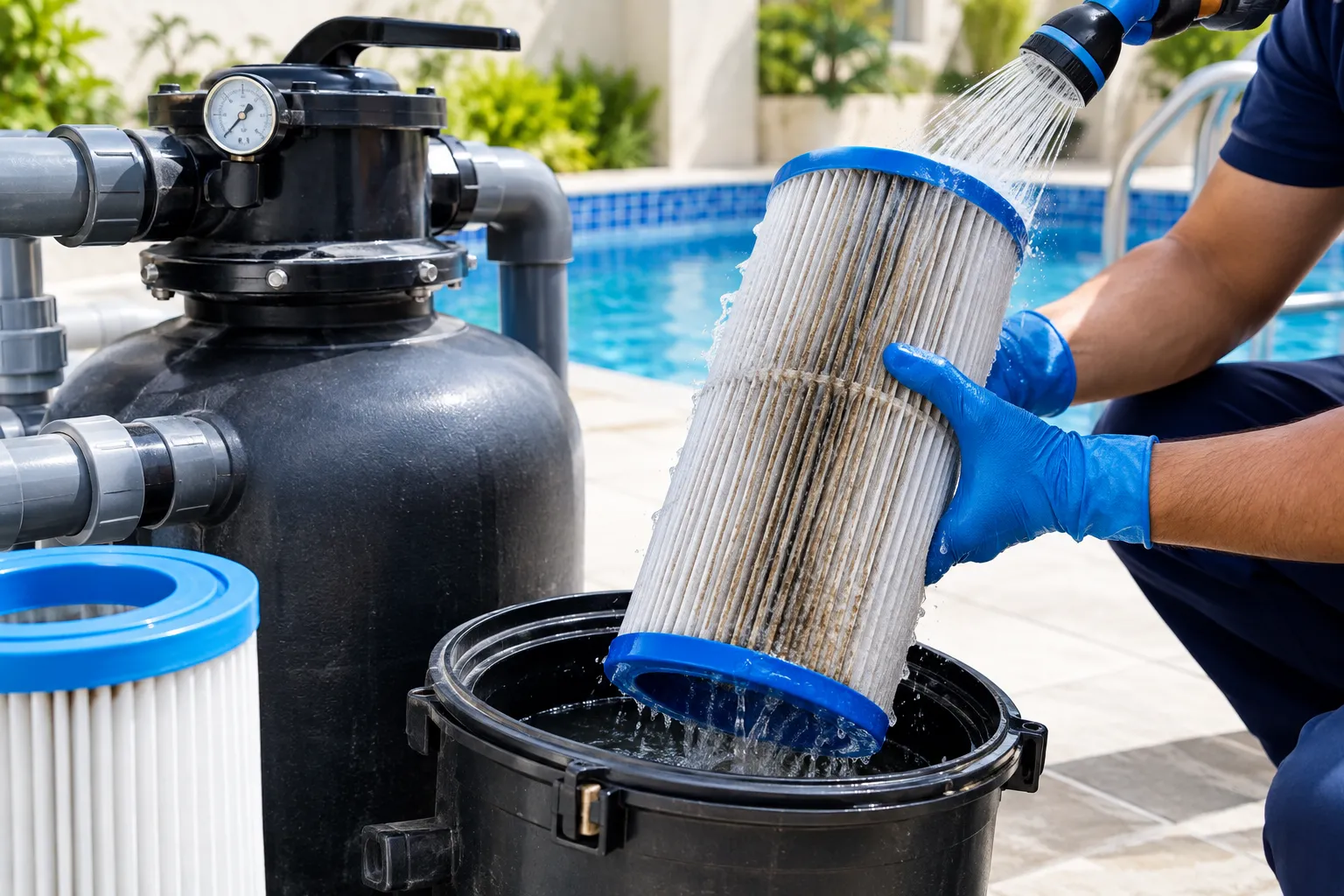
Check the filter pressure against its usual reading. If it is much higher than normal, cleaning the filter may be necessary. If the pressure remains unusual after cleaning, there may be another issue that needs attention.
The pump and filter work as one system, so it is not always sensible to blame the noisy component immediately.
When a Professional Should Check It
If the noise is new, getting louder, or happening alongside weak water flow, overheating, leaks, or repeated shutdowns, it is better to stop using the pump until the cause is found.
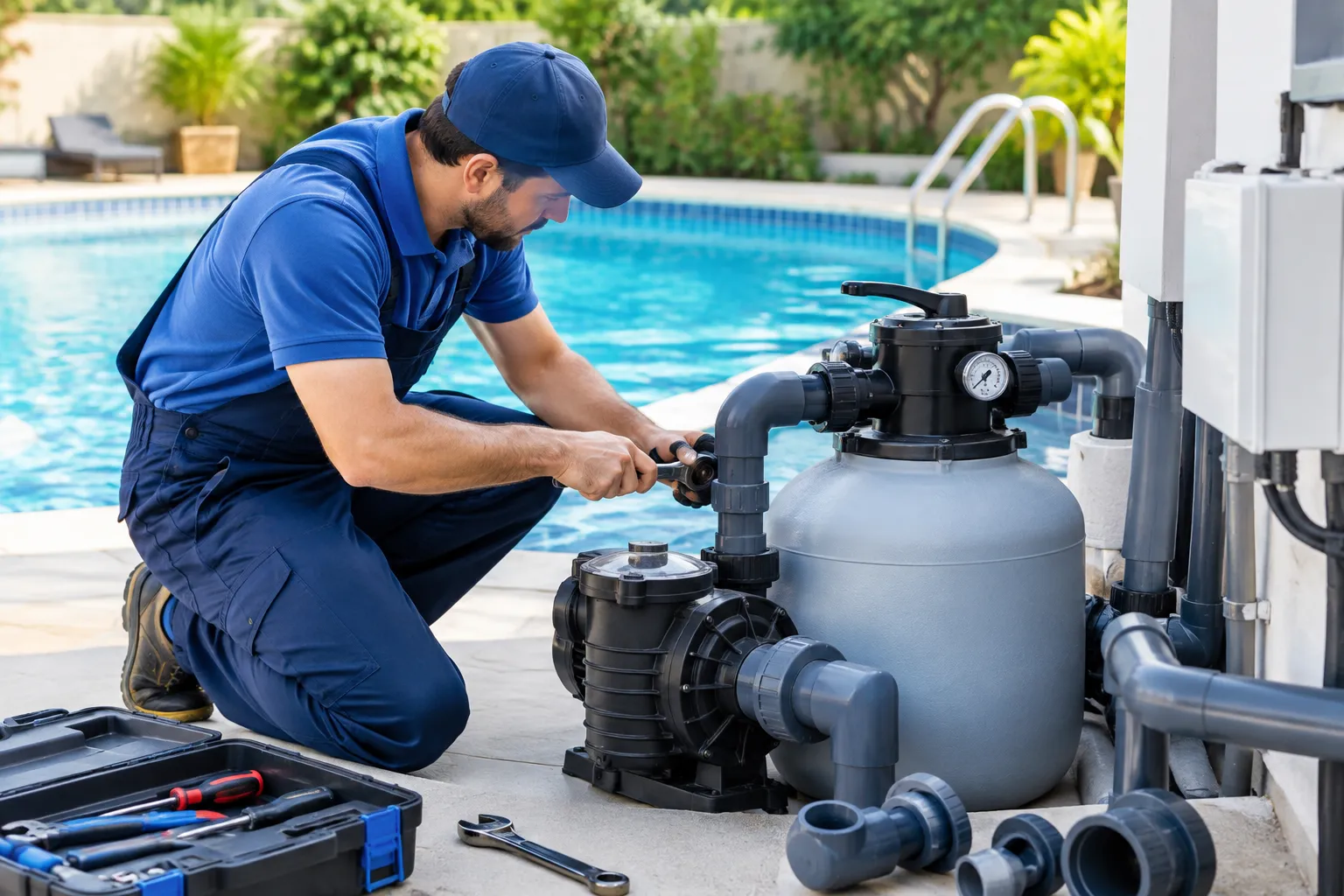
A professional can inspect the pump, connections, filter, valves, and circulation path. This matters because a small fault in one area can create symptoms somewhere else.
Trying to keep a failing pump running may also increase the repair cost if another component becomes damaged.
Preventing Future Pump Problems
Once the noise has been dealt with, a few simple habits can help keep the pump in better shape.
Keep the pump basket clear, maintain the filter, watch the water level, and pay attention to changes in sound. It is much easier to spot a new noise when you already know what normal operation sounds like.
Regular checks are particularly useful during periods when the pool is being used heavily.
1. Is it normal for a pool pump to make some noise?
Yes. Pumps make some sound while running. The concern is a sudden or unusual noise that was not there before.
2. Can a dirty filter make the pump noisy?
It can affect water flow and make the pump work harder. If the filter is very dirty, cleaning it may help. If the noise continues, the pump and wider system should be checked.
3. Should I keep running a noisy pool pump?
If the noise is loud, new, or accompanied by heat, leaks, poor water flow, or shutdowns, it is safer to switch the pump off and arrange an inspection.
A strange pump noise is often the first clue that something needs attention. Acting early can prevent further damage and avoid an unexpected breakdown. If the cause is not obvious, Dubai swimming pool repair can help identify the problem before a noisy pump turns into a much larger equipment issue.
























Sign in to leave a comment.