

Regional language content now drives 56% of India's OTT viewing. That's up from just 27% in 2020.Regional languages' share in OTT has increased from 27% in 2020 to 56% in 2025, and regional cinema now contributes over 65% of all films produced in India. This is why finding the right dubbing service in India matters more than ever. It's no longer optional. It's core to how OTT platforms, producers, and creators reach their audience.
This guide breaks down everything you need to know. Process. Pricing. Languages. Legal rights. AI vs. human dubbing. Let's get into it.
Dubbing Service in India: Who's Actually Using It
An OTT platform and a YouTuber need very different things.
The platform needs consistency. Think hundreds of hours of content. Strict deadlines. Legal sign-off on every voice contract.
The YouTuber needs speed. A 12-minute video should turn around in two days. Budget matters more than scale.
Producers care most about lip sync. A mismatched mouth movement in a theatrical release gets clipped and mocked online within hours.
Short-drama creators need volume. Dozens of episodes, dubbed fast, every single week. That's the business model.
Know which category you're in. Then ask a vendor which one they actually specialize in. The best professional dubbing services rarely try to do everything.
How Professional Dubbing Actually Works
Here's the process, step by step:
- Script translation: Not word-for-word. The adaptation has to keep jokes funny and dialogue length close to the original.
- Casting: Matching voices to characters by tone and age, not just language skill.
- Recording: Actors perform to picture. They match pacing and emotion, not just words.
- Lip sync adjustment: Engineers stretch or trim lines to match mouth movement. This step separates good dubbing from bad dubbing.
- Mixing: Dialogue blends with the original score and sound effects.
- QC and delivery: A final check for sync errors, pronunciation, and audio levels.
A 22-minute episode usually takes 3–5 days. A feature film can take weeks. If someone promises a full film in 24 hours, be careful. That's a red flag, not a bonus.
Languages: India's Real Advantage
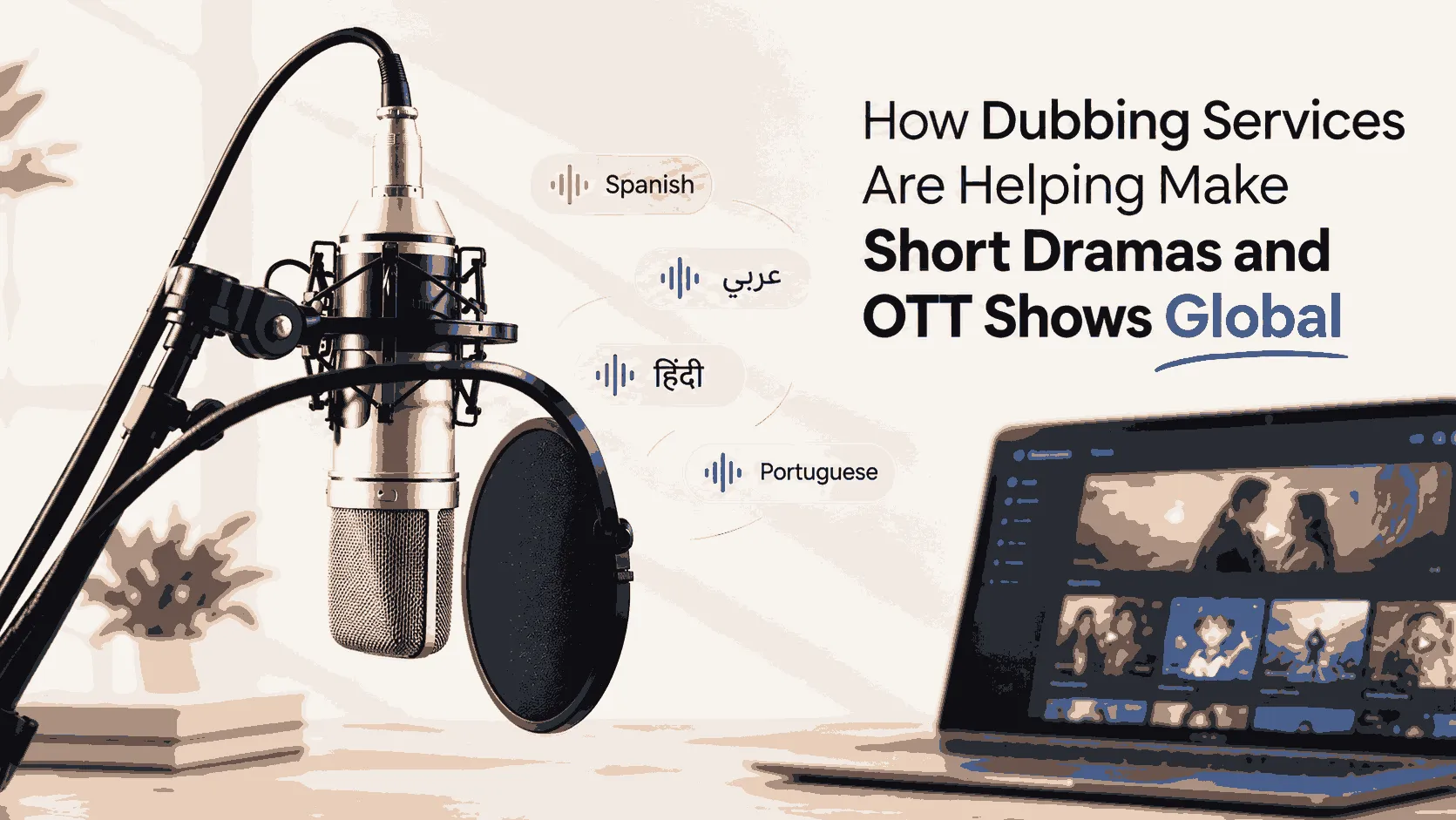
India has 22 official languages. Studios routinely work in Hindi, Tamil, Telugu, Bengali, Marathi, Punjabi, Kannada, and Malayalam.
Platforms don't dub into Tamil because it's trendy. They do it because Tamil-speaking audiences are huge and engaged.
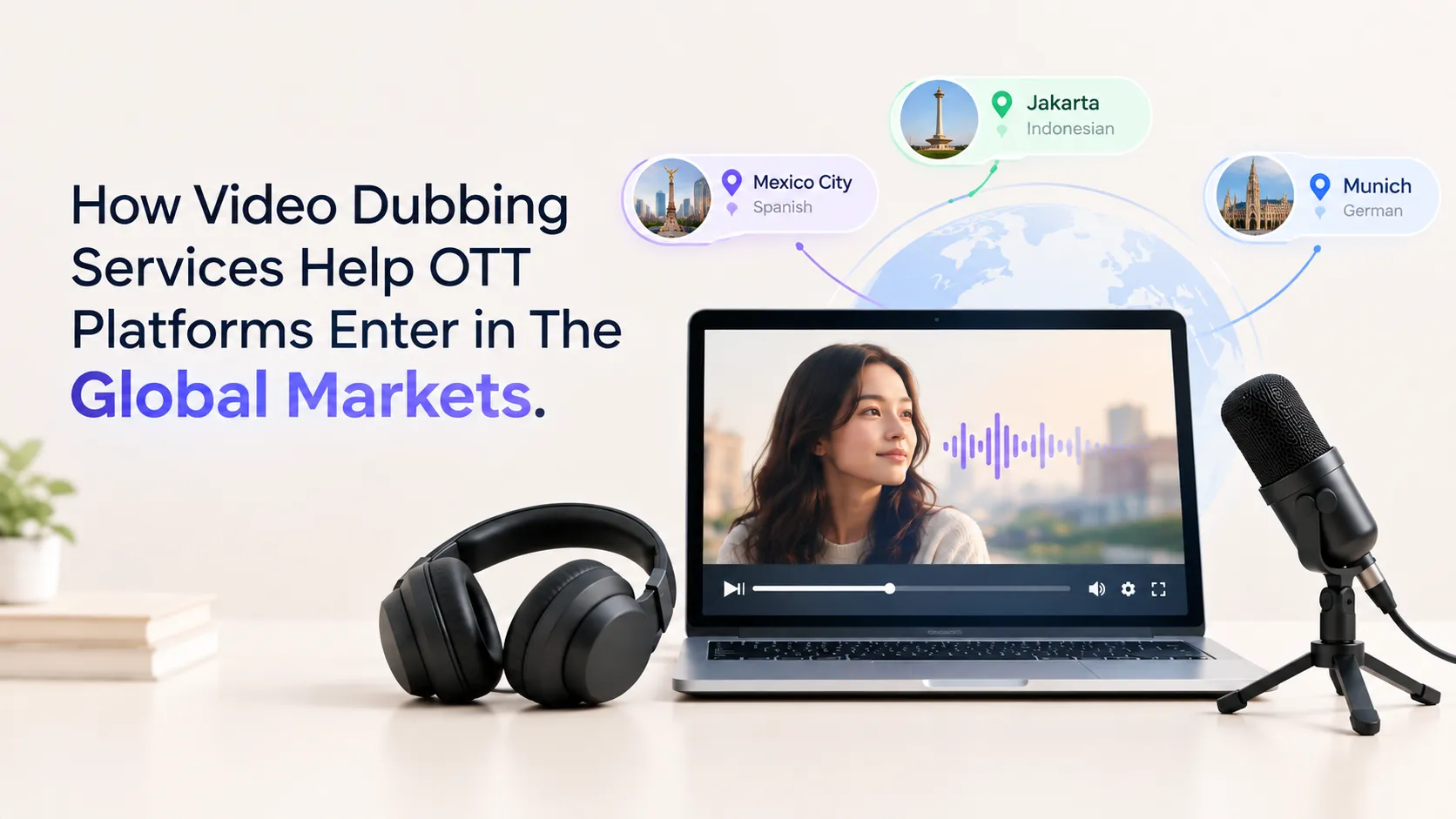
Here's what most people miss: India also dubs for international clients. English, Arabic, French, Spanish the talent pools are large, and the cost per minute is often lower than US or European studios.
One tip: ask if your voice artist is a native speaker of the target language. A native Tamil speaker will usually sound better on a Tamil project than someone doing it as a third language.
What Dubbing Actually Costs
A few things drive the price up or down:
- Language: regional Indian languages cost less than English or European languages.
- Character count: a two-person video costs far less than a multi-character series.
- Turnaround time: rush jobs cost more. Studios charge extra to bump your project up the queue.
- AI vs. human: AI-assisted dubbing is pushing per-minute costs down for high-volume work.
Testing YouTube dubbing for the first time? Get a quote on one video before committing to your whole channel. Running an OTT platform? Ask about volume pricing. Most studios have it. Few offer it upfront.
AI Dubbing vs. Human Dubbing: The 2026 Question
AI can now dub a video fast. Much faster than a human team. And much cheaper.
The global film dubbing market shows why this matters it's expected to grow from $3.27 billion in 2021 to around $5 billion by 2027. The global film dubbing market was valued at USD 3274.73 million in 2021 and is expected to reach USD 5000.1 million by 2027. AI is a big part of that growth.
AI works well for high-volume, low-stakes content. Think short drama dubbing or fast-turnaround YouTube videos. A short-drama app releasing 40 episodes a week simply can't afford full human dubbing on every title.
Human dubbing still wins for anything emotional. A dramatic scene. A nuanced arc. Comedy that depends on timing. AI can sync lips. It still struggles with the small choices a real actor makes when a character is grieving or lying.
Many studios now do both. AI for a first pass or back-catalog content. Humans for flagship projects. If a vendor only offers one, ask why.
How to Choose the Right Dubbing Service in India 2026
Ask every vendor for these five things:
- Demo reels: In your specific language and genre, not a generic showreel
- Turnaround times: In writing, not just a verbal promise
- Revision policy: How many rounds are included before extra charges
- Rights language: Who owns the dubbed track, and can you reuse it
- Relevant experience: A studio great at corporate voiceovers isn't automatically great at lip sync dubbing
Watch for red flags. No sample audio. Vague pricing. No written contract. Reluctance to name past clients. Any one of these should make you pause.
The Legal Side Nobody Talks About
Under Indian copyright law, the right to dub a film is part of the producer's broader rights. It's not treated as a separate translation right.
This came up in a real case: JA Entertainment Pvt Ltd v MS Sithara Entertainment. The Delhi High Court ruled that dubbing based on separately assigned rights doesn't count as infringement, as long as the dubbing party actually holds those rights. The Delhi High Court held that dubbing a movie based on work copyrighted by another person, to whom separate rights are assigned in relation to the copyrighted work, does not constitute infringement.
If you're outsourcing dubbing as a producer or platform, check your contract. It needs to clearly cover the right to dub, the territory, and exclusivity. YouTubers dubbing their own content don't need to worry about this as much. Anyone working with licensed material does.
Where the Best Studios Are Based
Mumbai leads for film and OTT-scale dubbing. That's where most production already happens.
Delhi has strong multilingual and corporate infrastructure.
Chennai and Hyderabad lead South Indian dubbing, Tamil, Telugu, and Malayalam.
Bengaluru has built a niche in tech and e-learning voice work.
Most studios deliver remotely now. But location still tells you where the deepest language-specific talent lives.
Bottom Line
A short-drama app, a YouTuber, and an OTT platform want very different things from a dubbing partner. Know which one you are. Ask for real samples. Get terms in writing. Don't pick the cheapest or fastest option just because it's cheap or fast.












Sign in to leave a comment.