

Why can Pinot Noir grown in one corner of Oregon taste so different from Pinot Noir grown a few miles away? In the Willamette Valley, the answer starts with the land itself.
The Dundee Hills are known for volcanic soil, higher elevation, and sheltered growing conditions. Together these help explain why Pinot Noir is central to the Willamette Valley's wine identity. This guide walks through what sets the Dundee Hills apart, so you can understand a bottle by understanding where it came from.
What Makes the Dundee Hills Distinctive?
The Dundee Hills is an American Viticultural Area (AVA) within the larger Willamette Valley. It was officially established in 2004, according to the Oregon Wine Board, and is best known for its red volcanic Jory soil.
The hills rise above the valley floor and are shielded by the Coast Range and nearby ridgelines. The area tends to run slightly warmer than several neighboring AVAs. That mix of elevation, slope, climate, and soil suits Pinot Noir well.
Jory Soil: The Foundation of the Region
Jory soil is the Dundee Hills' best-known feature. It formed from weathered volcanic basalt and typically combines silt, clay, and loam. The Oregon Wine Board notes that it can reach several feet in depth and drains well.
Good drainage matters in a vineyard. Vines need steady access to water but do poorly in waterlogged ground. Soil structure is one reason Willamette Valley Pinot Noir can taste different from one subregion to the next.
Why Pinot Noir Thrives in the Willamette Valley
Pinot Noir has deep roots here. David Lett of The Eyrie Vineyards is credited with planting some of the first Pinot Noir vines in the Dundee Hills in the 1960s, helping establish Oregon as a serious cool-climate wine region.
Today Pinot Noir is the leading variety in the Dundee Hills and across much of the valley. Differences in soil, elevation, sun exposure, and climate mean vineyards just miles apart can produce noticeably different fruit.
How to Think About "Best" Pinot Noir
Searches for the "best Pinot Noir" usually turn up rankings and scores. Those can be a starting point, but they leave out a lot. Taste is personal, and wine changes with vintage, vineyard site, farming, and winemaking.
A more useful approach is to look at what's behind the bottle:
- Vineyard site: the AVA, slope, and elevation
- Soil type: for example, volcanic Jory versus marine sedimentary soils
- Vintage: the year's weather and harvest conditions
- Farming practices: organic, biodynamic, or sustainable methods
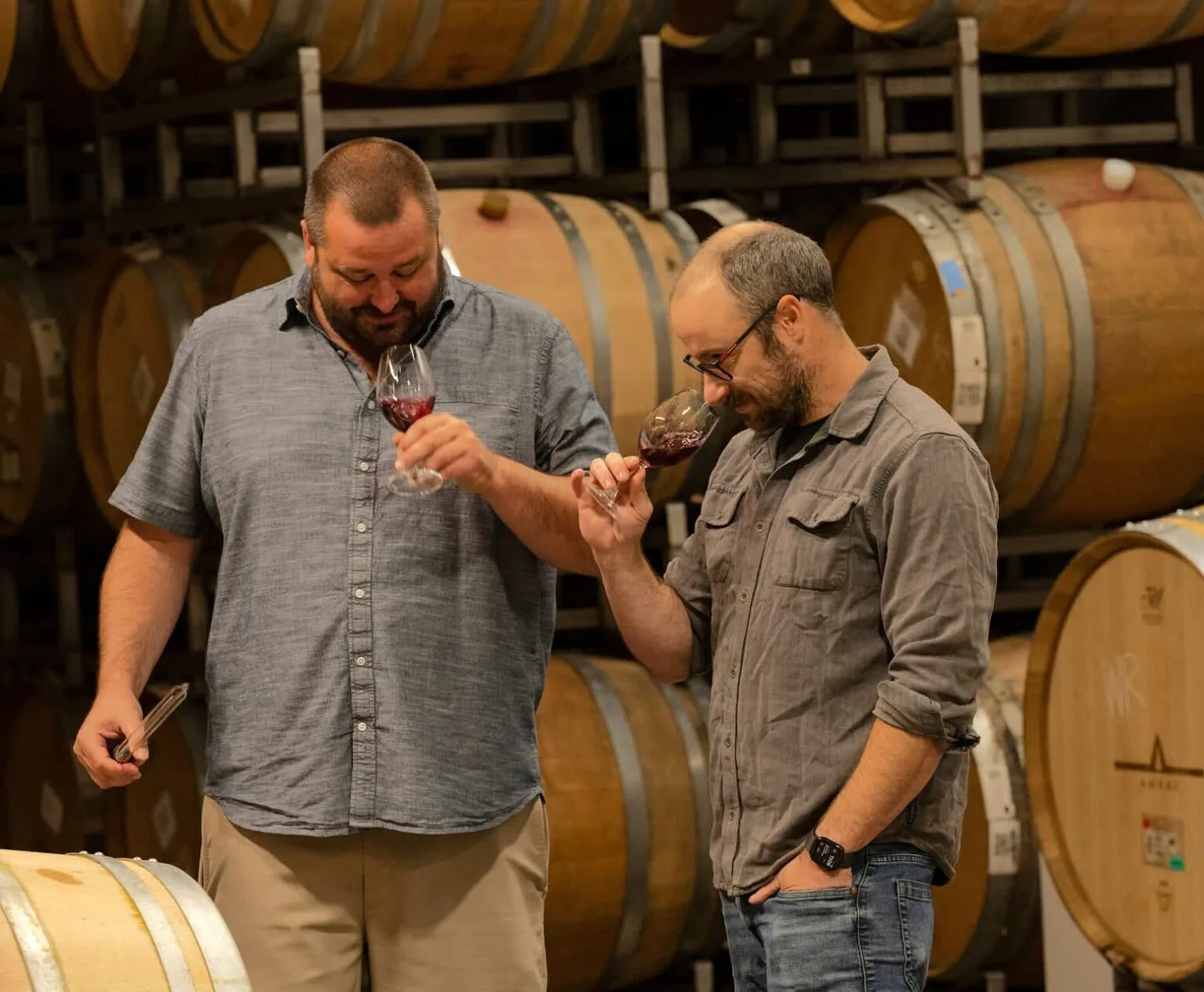
- Winemaking choices: oak use, fermentation methods, and aging
Regional descriptions commonly link Dundee Hills Pinot Noir with bright red fruit, earthy notes, and a silky texture. Tasting wines from several Willamette Valley AVAs side by side is a good way to notice how place affects the glass.
Sustainable Farming and Soil Health
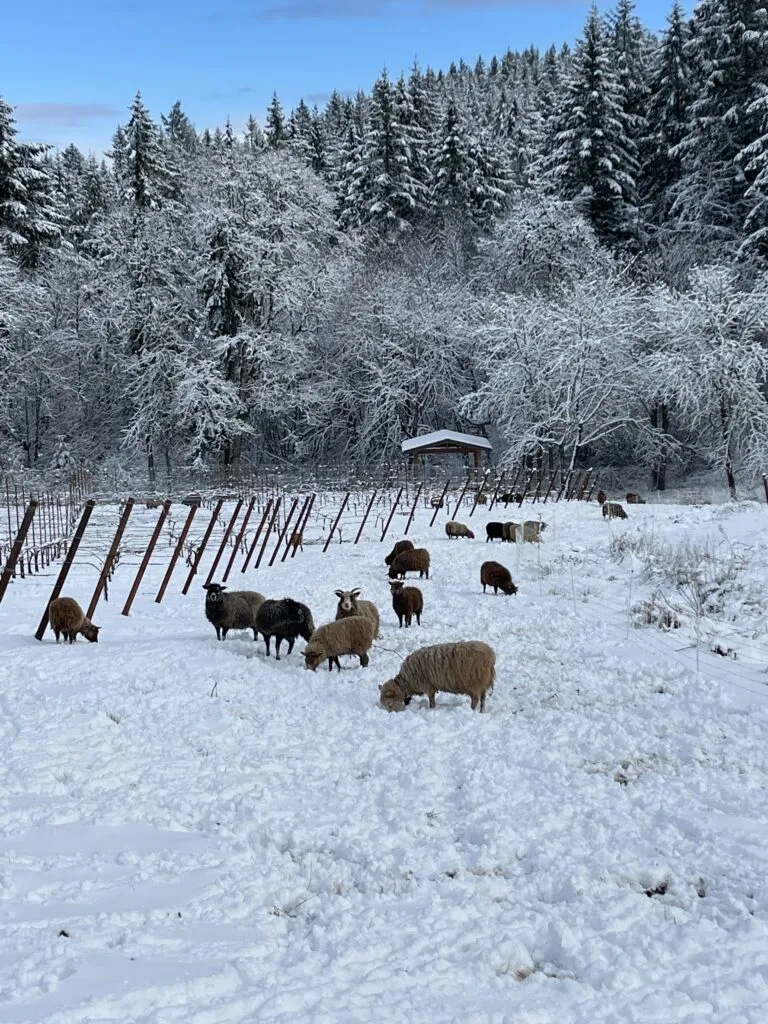
Soil health and responsible land management are a growing focus in Oregon viticulture. Many Oregon growers use organic, biodynamic, or other environmentally minded practices, which shape how vineyards age and how well the land holds up over time.
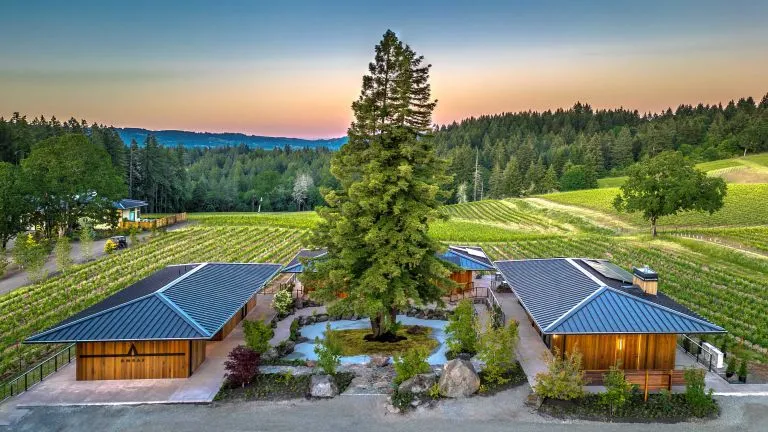
At Ambar Estate, soil health is part of how the vineyard is farmed and how visitors are introduced to it.
Want to explore further? Read Pinot Noir vs. Syrah: How Oregon's Climate Shapes Two Different Grapes.
Experiencing the Dundee Hills in Person
Dundee Hills Pinot Noir starts outside the bottle: with hillsides, volcanic soil, shifting weather, and the people who farm the vines. Seeing the landscape in person makes those connections easier to grasp.
The Willamette Valley is not one uniform growing region. Each AVA has its own mix of soil, elevation, exposure, and climate, and the Dundee Hills is one of the clearest examples of how those factors shape a wine region.
Frequently Asked Questions
What is Dundee Hills Pinot Noir?
It is Pinot Noir made from grapes grown within the Dundee Hills AVA in Oregon's Willamette Valley. The area is known for volcanic Jory soil and sheltered growing conditions.
Why is Jory soil important?
Jory is a deep, well-draining volcanic soil that supports healthy vine growth, and it is closely tied to the Dundee Hills' identity.
Is all Willamette Valley Pinot Noir the same?
No. The valley includes multiple AVAs with different soils, elevations, and climates, and those differences influence how the grapes develop.
What should I consider when comparing Pinot Noir?
Look at vineyard location, soil, vintage, farming approach, and winemaking style rather than relying on a single score or ranking.
Why does the Dundee Hills matter in Oregon wine history?
It is one of the places where Oregon's modern Pinot Noir industry took root, beginning with plantings in the 1960s. The AVA was formally recognized in 2004.
Final Thoughts
Understanding Willamette Valley Pinot Noir means understanding place. In the Dundee Hills, geology, climate, elevation, and farming combine to create a distinctive wine region, and knowing that context adds depth to every glass.
























Sign in to leave a comment.