E-Rickshaw Buying Guide for Fleet Operators: Specs & Running Cost

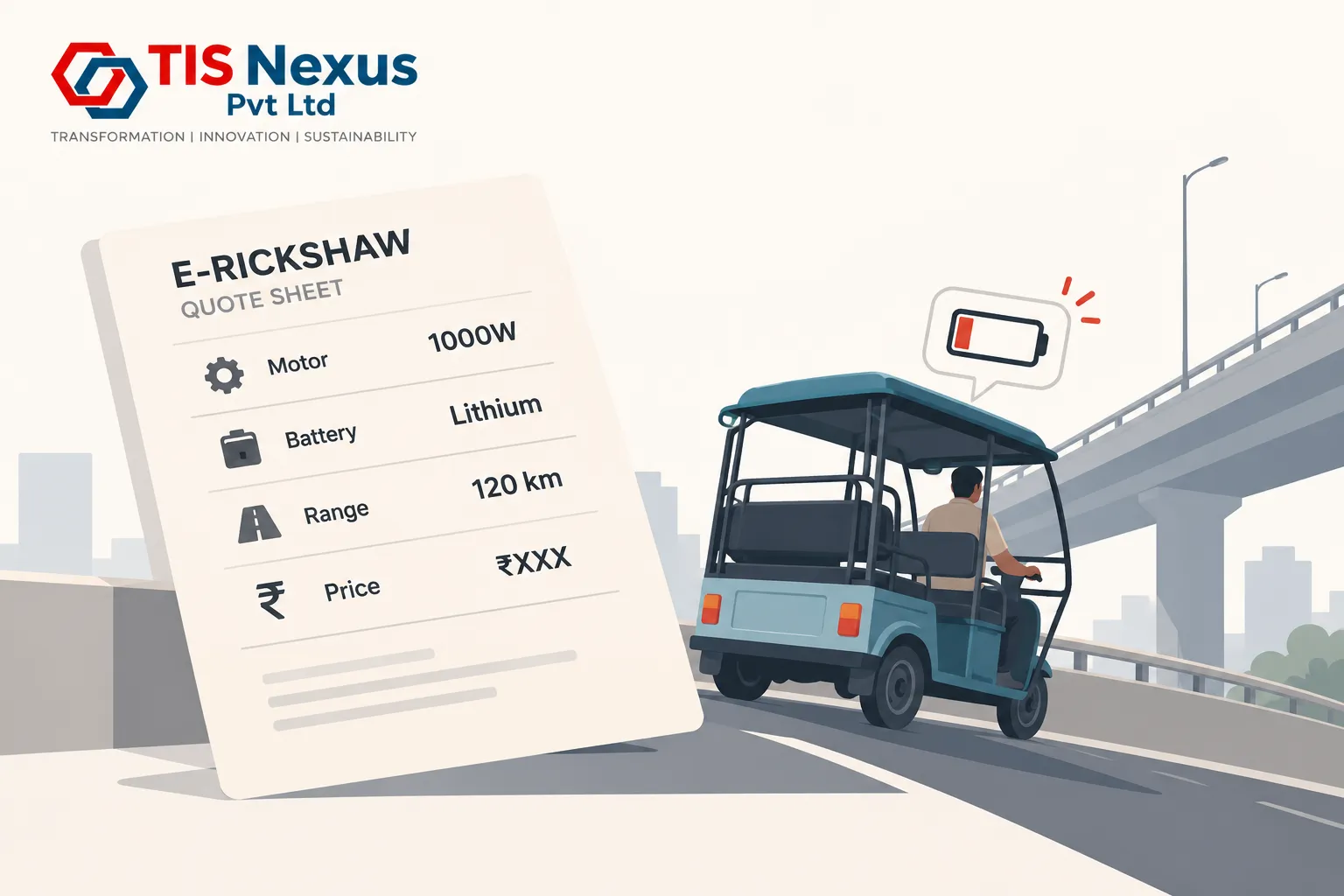
Eight Vehicles and One Quote Sheet
A contractor in Lucknow bought eight passenger e-rickshaws in one go for short feeder runs near a metro stop. He picked the lowest line on the quote sheet. By the next March, three of the eight were parked in a yard with packs that wouldn't last past noon.
I got the call in April. He sounded more embarrassed than angry.
He had shopped the e rickshaw price india market the way people shop for tyres. Cheapest first, questions later. I don't blame him much. Every dealer sheet looks alike at a glance, and the bottom number is the only thing that jumps out. Motor rating is printed small. Battery type sometimes isn't printed at all.
Most of what follows comes from calls like that one, plus a few depot visits where I stood around for hours watching vehicles come back in the evening.

What the E Rickshaw Price India Quotes Leave Out
Ex-showroom figures for a basic passenger model sit in a wide band. A lead-acid unit with the smaller motor lands at the bottom, and a lithium pack pushes the sheet up by a noticeable jump. Charger, registration and insurance can each sit on their own line, or be missing. A depot owner in Agra found out his charger wasn't included only after the vehicles rolled off the truck. Small amount, sure. But he had already told his drivers a start date.
I'd rather see a fleet buyer ask for the whole thing in one figure, delivered, charged and insured. Dealers hate that request. It also tells you quickly who has done fleet orders before.
The body matters too. Some sheets quote a bare chassis with the seating charged separately, and one buyer I know in Meerut ended up paying twice for a canopy because two lines looked like different items.
Battery Operated Rickshaw Cost Over Two Years
The sticker is a small part of what a rickshaw costs by month twenty-four. A lead-acid pack on a rickshaw doing around a hundred kilometres a day gets tired quickly, and I've seen owners replace one inside eighteen months. That's a few lakh across a fleet, which nobody had written into their plan.
The lead-acid year
A fruit-market operator in Azadpur ran six vehicles on lead-acid. Cheap to buy, heavy to carry, and the drivers topped up water on the cells every other week, or skipped it. Two packs sulphated by the first winter. He swapped them at a price that would have covered a good part of a lithium upgrade on one vehicle. I did the maths with him over chai and the numbers came out untidy, something like forty thousand gone on packs he hadn't budgeted for, plus the days the vehicles sat.
When lithium made sense
Lithium cost him more up front. His second batch of four went that way. Those vehicles run double shifts now, and the pack handles two partial charges a day without complaint. I'd say lithium is wasted money on a vehicle that does thirty kilometres and sleeps. For anything doing real shift work, I'd go for it every time.
E Rickshaw Loader Price and Why the Bed Matters
The e rickshaw loader price looks friendly beside the passenger version. Same motor family, a flat deck, no seats, fewer fittings. Buyers see that and assume the loader is the easy purchase.
A tile dealer in Aligarh learned otherwise. He ordered four loaders with a standard deck and loaded them the way he loaded his old three-wheelers, which meant roughly what a cart horse would refuse. Rear leaf springs flattened in a couple of months. The motor was fine. The frame under the bed was the thing that gave out.
What I tell loader buyers now is simple enough. Ask what the deck is rated to carry, then ask what the chassis rail is made from. Dealers go quiet on the second one. A thicker rail adds weight and some money, and it saves the rebuild.
Controllers on loaders deserve a mention here too. The ones fitted at the factory for passenger duty overheat on a long incline with a full bed. A courier operator near Dehradun had to fit a bigger unit on the first three vehicles after they cut out on a bridge approach.
A Depot in Kanpur, Start to Finish
This is the case I use most, because the owner kept good notes.
He started with twelve vehicles for a feeder route near a railway station, and he began by watching the route rather than reading catalogues. The loop was about eleven kilometres with a flyover in the middle. He logged how long each driver waited at the stand, and it turned out they idled almost forty minutes between runs in the afternoon. That gap mattered more than any spec on the sheet, because it meant he could top up between runs on a fast charger.
He bought lithium for six and lead-acid for six, on purpose, to compare. By month five he stopped the experiment. Two lead-acid vehicles had been pulled off the road for pack trouble, while the lithium six hadn't missed a day.
His electricity bill came in lower than he'd feared. Not by a miracle. The route was short and the vehicles were light, so each charge took far less than he'd penciled in. He'd guessed ten units per vehicle per day and the meter said closer to seven. I wouldn't take that figure to the bank for a different route, but it's the kind of number that only shows up when you measure your own loop.
Controller failures were the other lesson. Two of the twelve went in the first monsoon because water got into a connector under the seat. He now asks every dealer where the controller sits and how it's sealed. A ten-minute question that cost him a fortnight of lost runs the first time.
The Mistake I See Most: Buying on Motor Wattage
Buyers fix on the wattage number because it's the easiest thing on the sheet to compare. Higher looks better. A thousand watts beats eight hundred, so the thousand-watt rickshaw gets the order.
I think this is wrong more often than it's right. A bigger motor on an undersized battery just drains the pack faster and shortens the day. I watched a school-van contractor in Noida run into exactly that. His drivers loved the pickup on the first morning, and by the third week half the fleet was calling for a midday charge.
Match the motor to the route and the pack to the shift. A flat route with light passengers doesn't need the biggest motor in the catalogue, and a gradient with a loaded bed will punish a small one. Neither answer lives on the sheet. You find it by riding the route with a half-full vehicle, which most buyers skip because it takes an afternoon.
Where the Scooters Came In
One fleet I worked with, a logistics contractor in Ghaziabad, had a different problem. His supervisors needed to move between five stands during the day, and sending them in a rickshaw meant a seat out of service. He asked me what else could do the job, and we ended up looking at a small batch of two-wheelers instead. The electric scooter supplier he spoke to quoted him a range that suited a rider covering short hops all day, and the numbers looked nothing like the three-wheeler figures.
That's a side note, I realise. But fleet buyers rarely think about the supervisor's own transport until the vehicles are already running, and by then the seat has been taken for a month.
Charging Shed Details Nobody Prices
Most fleet plans I read have a line for vehicles and a line for batteries. A charging shed hardly ever gets its own line. A depot in Bareilly set up eight chargers on a single supply point and tripped it every evening at the same hour, when all eight went on together. The fix was staggered switching and a heavier cable, which cost him less than a day of lost earnings. Still, he'd have saved the day if somebody had mentioned it.
Earthing, a proper roof and a place for drivers to sit while they wait: these sound minor. I've seen packs fail early in sheds with no cover, mostly after a hot summer. The heat did something to the cells that no warranty claim would cover.
What I Look at on Delivery Day
I walk the whole fleet before anyone signs. First the chassis welds, because a rough weld on delivery usually means a crack by the second rainy season. Then the controller location, then the serial numbers on the packs against the paperwork. One buyer in Gorakhpur found three packs that didn't match their invoice, and the dealer swapped them without argument once he pointed it out.
I'd also ask each driver to take a vehicle round the block with a few sacks on board. Nothing formal. Just somebody sitting in the seat for ten minutes. Drivers notice things a checklist won't, like a pedal that sticks or a brake that pulls to the left.
Warranty papers get read properly. Some cover the motor and the controller and say nothing useful about the pack, which is the expensive part. I ask for the pack terms in writing, with the cycle count or year limit spelled out.
The Part About Spares
A few months into running a fleet, a tyre or a brake shoe will be the thing that stops a vehicle, and nobody remembers the motor. A yard in Mathura keeps six spare tyres and a spare controller on a shelf, which cost him a little and saved him more than once. He bought his first batch through TIS Nexus, and he later ordered a few spare parts for the supervisors' scooters from the same people, mostly because the phone got answered.
I'd keep a spare controller for every ten vehicles. That's my own habit, built from watching a Bareilly depot wait nine days for one.






Sign in to leave a comment.