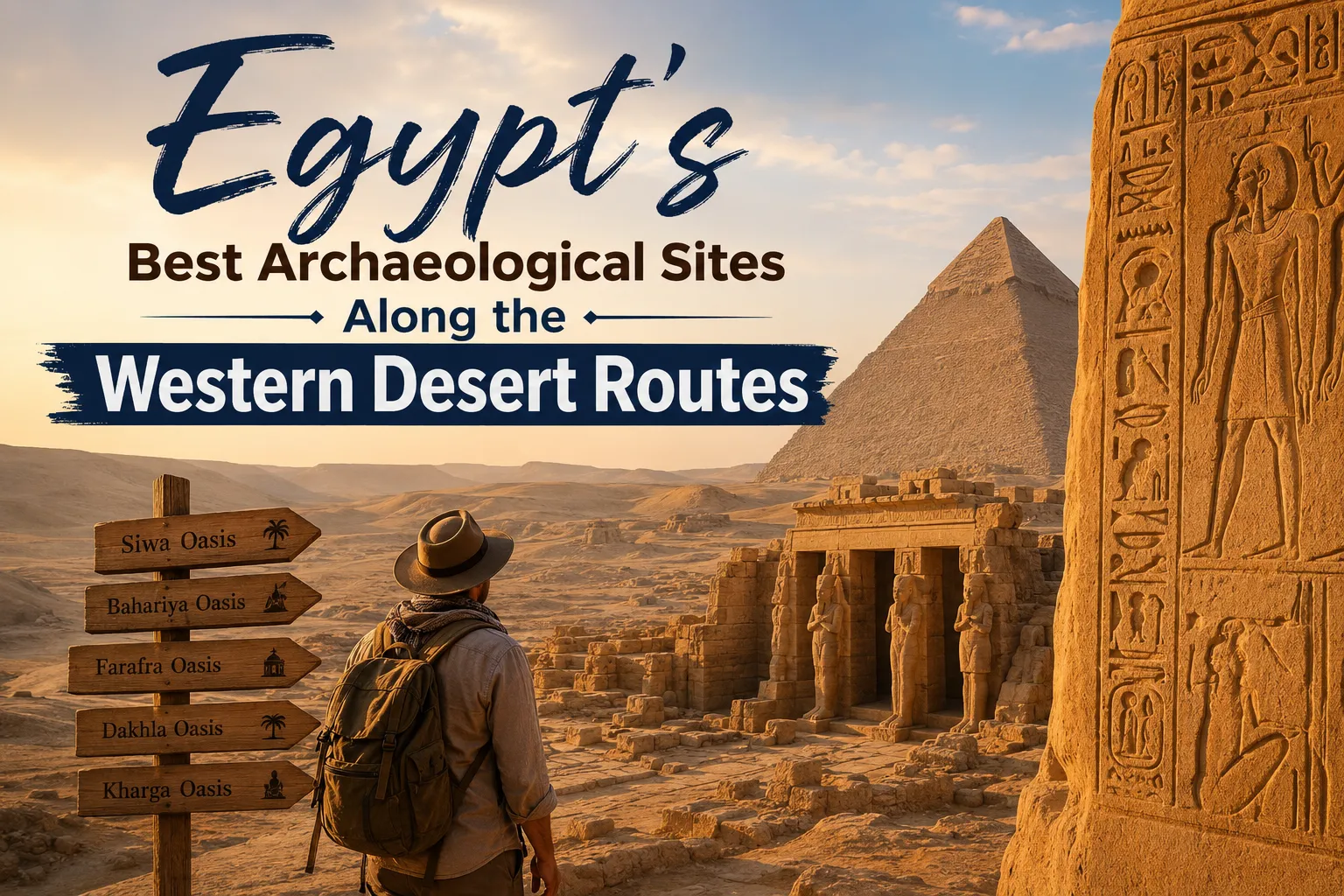

When most travelers think of Egypt, the towering Pyramids of Giza and the lush banks of the Nile River immediately come to mind. However, stretching far to the west lies a vast, golden expanse that holds some of the world's most fascinating and untouched history. The Western Desert is a land of dramatic sand dunes, towering cliffs, and hidden oases that once served as vital trade and military routes for ancient pharaohs, Greeks, and Romans.
If you are looking to step off the beaten tourist track and uncover secrets buried in the sand, exploring the archaeological wonders along Egypt's Western Desert routes is an unforgettable adventure. Before you pack your bags to explore these timeless sands, make sure you have your Egypt Visa sorted out so your travel preparation is completely stress-free. Whether you are planning a grand desert expedition or simply dreaming of your next big journey, here is a guide to the best historical sites you need to see, along with a few helpful tips on making your trip a reality.
1. Siwa Oasis: The Oracle of Amun and Shali Fortress
Tucked away in a lush depression far from the Nile, the Siwa Oasis feels like a magical, isolated world of its own. Surrounded by millions of date palms and olive trees, this vibrant oasis has been inhabited for thousands of years.
- The Temple of the Oracle: This is the famous site where Alexander the Great came in 331 BCE to consult the Oracle of Amun and confirm his divine status as the son of Zeus-Amun. Standing among these ancient ruins gives you a profound sense of the deep historical intrigue that once drew conquerors across the brutal desert sands.
- Shali Fortress: Built in the 13th century, this medieval fortress town is made of kershefi—a unique building material of mud, salt, and local rock. Though weathered by rare desert rains, walking through its labyrinth-like ruins offers stunning panoramic views of the entire oasis.
2. Bahariya Oasis and the Valley of the Golden Mummies
Located about 370 kilometers southwest of Cairo, Bahariya Oasis serves as a primary gateway to Egypt’s mesmerizing White Desert. Beyond its natural beauty, Bahariya is a treasure trove of ancient history.
- The Valley of the Golden Mummies: Discovered in 1996, this massive Greco-Roman necropolis is estimated to contain thousands of mummies, many of which were buried with intricate, gilded masks. It remains one of the most significant archaeological discoveries in modern Egyptian history, revealing how deeply the local populations integrated Greek and Egyptian burial traditions.
- The Temple of Ain el-Muftah: Dating back to the 26th Dynasty, this site features well-preserved hieroglyphic inscriptions detailing the pharaohs who once ruled and protected Egypt's western frontiers.
3. The White Desert: Nature Meets Ancient Trails
While primarily renowned for its surreal chalk rock formations sculpted by howling desert winds into shapes resembling mushrooms, tents, and snow-capped peaks, the White Desert was an essential crossing point for ancient caravans.
As you plan your journey through these remote landscapes and review the necessary Egypt Visa requirements to ensure your paperwork is in order, keep in mind that camping under a brilliant canopy of stars lets you follow the exact ancient pathways used by traders and travelers for millennia. Local Bedouin guides often share stories of the old camel tracks, adding a rich cultural layer to the breathtaking geological landscapes.
4. Dakhla Oasis: The Ancient City of Deir el-Haggar
Further south along the desert route lies Dakhla Oasis, known for its charming historic villages and remarkable Roman-era ruins.
- Deir el-Haggar Temple: This sandstone Roman temple, built during the reigns of emperors like Nero and Titus, is dedicated to the Theban triad (Amun, Mut, and Khonsu). Despite its remote desert location, the interior walls still boast remarkably vibrant colors and well-preserved carvings.
- Qasr al-Farafra and Balat Village: Nearby, the medieval mud-brick village of Balat offers a glimpse into Islamic-era desert architecture, constructed right atop ancient Old Kingdom settlements.
Planning Your Desert Expedition: A Quick Checklist
Traveling through Egypt's Western Desert requires a bit of preparation compared to standard city sightseeing. Because many of these remote routes require special permits and experienced drivers, booking through licensed local operators is essential.
Furthermore, before you can head out on your adventure, you will need to sort out your entry documentation. Ensuring a smooth travel preparation process can make all the difference for your peace of mind.
Why Choose Us for Your Travel Preparations?
When getting ready for an international journey, sorting out official paperwork shouldn't slow you down. Here is how we make your travel preparation seamless:
- Reliable Travel Visa Services: Our global approach has assisted numerous travelers in obtaining their Visa with confidence.
- Round-the-Clock Assistance: Reach out to us 24/7, and our experts will respond within 72 hours to answer any questions.
- Experienced Visa Consultants: Receive expert guidance tailored to your specific travel needs to ensure the smooth acceptance of your application.
- Efficient Visa Application Process: Apply for your travel documents in minutes with our simplified, user-friendly form.
Pack your lightweight clothing, stock up on adventurous spirit, and get ready to experience the timeless magic of Egypt's Western Desert routes!


























Sign in to leave a comment.