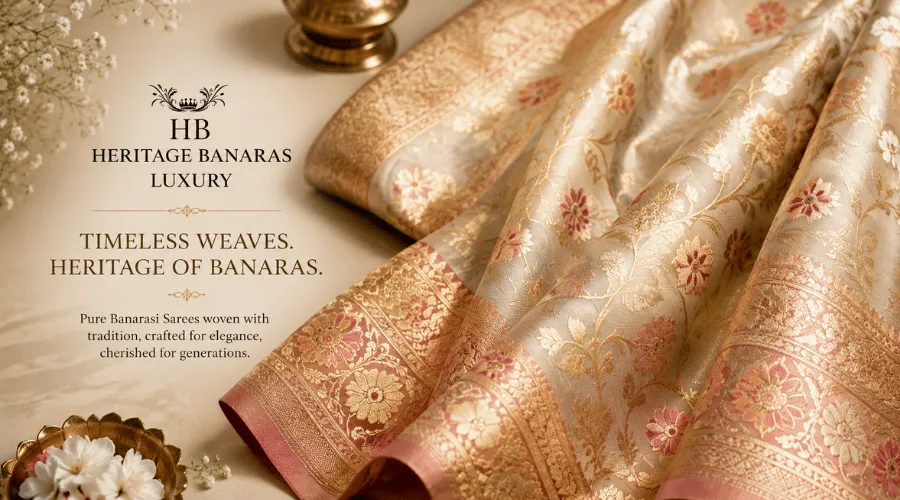

Banarasi sarees are known for their weaving traditions, fine silk and detailed craftsmanship. Among the many weaving styles associated with Banaras, the Ektara Saree has a distinct place because of its light structure, refined texture and handwoven character.
Also commonly written as Iktara Saree, this style reflects the skill of Banarasi weavers who work carefully with fine silk yarns to create sarees that feel elegant without being excessively heavy. An Iktara Banarasi Saree can be suitable for weddings, festivals, family occasions and traditional celebrations where the wearer wants the richness of Banarasi weaving with a comparatively graceful drape.
What Is an Ektara Saree?
An Ektara Saree is associated with a traditional weaving technique in which fine yarns are handled with precision to produce a lightweight and closely woven fabric. The term is often used in the Banarasi textile market for sarees woven with a fine silk base and delicate decorative work.
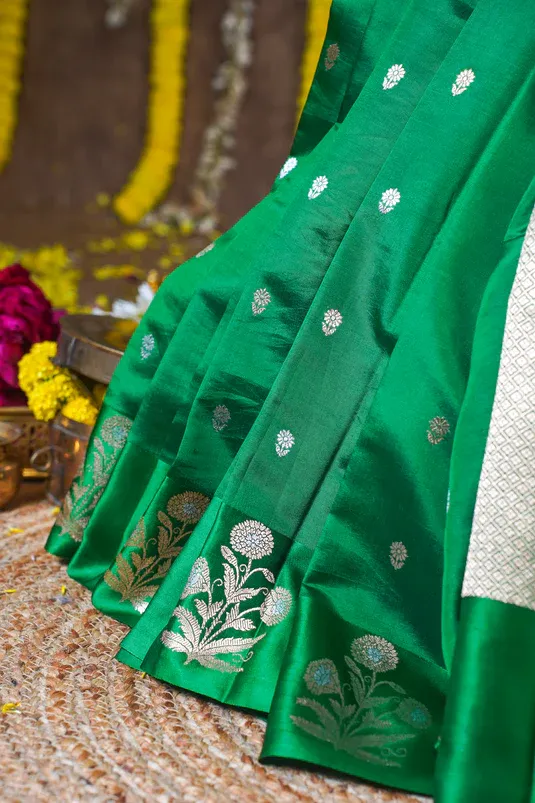
Depending on the design, the saree may feature small butis, floral motifs, paisleys, geometric patterns or detailed borders. Some Ektara sarees have a restrained appearance, while others use zari and elaborate pallus for a more formal look.
The beauty of the saree comes from the balance between the silk base and the woven motifs rather than from excessive ornamentation.
Iktara Banarasi Saree and Its Traditional Character
An Iktara Banarasi Saree combines the character of traditional Banarasi weaving with a fine and elegant fabric structure. These sarees may be made with pure silk yarn and woven manually on traditional handlooms.
The designs can vary greatly. Some sarees feature scattered butis across the body, while others have floral jaal or more detailed woven patterns. Traditional Banarasi borders and pallus can further define the saree.
Because much of the character is created during weaving rather than through surface decoration, a handwoven Iktara saree has a depth and texture that can be difficult to reproduce through printing or machine-made imitation.
Ektara Silk Saree
An Ektara Silk Saree is appreciated for its soft texture and fine appearance. Silk gives the fabric a natural sheen that changes slightly under different lighting conditions.
Instead of looking excessively glossy, a well-woven silk saree generally has a softer lustre. This makes Ektara silk suitable for people looking for a traditional saree that still feels subtle and comfortable.
An Iktara Silk Saree may be worn for wedding functions, festive occasions, religious ceremonies, receptions and formal gatherings. Its styling can be changed easily through jewellery and blouse selection.
For a traditional appearance, it can be paired with gold jewellery and a classic silk blouse. For a simpler look, minimal jewellery and a plain blouse can allow the weaving itself to remain the main focus.
Handwoven Ektara Sarees
Handwoven Ektara Sarees require patience and weaving skill. The artisan controls the yarn tension, pattern formation and fabric structure throughout the weaving process.
Because a handloom is operated manually, small variations may sometimes appear in the weave. These should not automatically be treated as defects. In many handmade textiles, subtle variations are a natural result of the weaving process and help distinguish handwoven cloth from highly standardised machine production.
The time required to weave a saree depends on its design. A saree with a relatively simple body may take less time, while complicated zari motifs, borders and pallus can require substantially more work.
Ektara Katan Silk Saree
An Ektara Katan Silk Saree brings together two important elements of Banarasi textiles: the fine Ektara weaving style and Katan silk.
Katan traditionally refers to silk yarn made by twisting silk filaments together to form a strong, smooth yarn. When used in a Banarasi saree, it can create a fine yet structured fabric with a smooth surface.
The resulting saree can have a graceful fall while retaining enough structure to display woven motifs clearly. This makes Katan silk particularly suitable for Banarasi patterns involving butis, borders, floral designs and zari work.
An Ektara Katan silk saree can therefore work well as a wedding saree, festive saree or traditional occasion wear.
Pure Silk Ektara Sarees
Pure Silk Ektara Sarees are often preferred by buyers who value natural silk, handloom weaving and traditional textile craftsmanship.
When purchasing one, it is useful to look beyond colour and design. Buyers can ask about the silk used, weaving technique, zari type and whether the saree has been woven by hand.
Pure silk usually feels smooth while retaining a natural texture rather than feeling completely uniform. The appearance of the weave, reverse side of the motifs and finishing can also provide useful clues about construction.
For higher-value sarees, purchasing from a seller that clearly explains the fabric composition and weaving method can make the buying process more transparent.
Caring for an Ektara Silk Saree
Fine silk sarees require careful storage. Avoid leaving the saree exposed to direct sunlight for long periods, as this may affect its colour.
Store it folded in a clean cotton or muslin cloth and change the folds occasionally to prevent permanent creases. Heavy zari sarees should not remain folded along exactly the same lines for years.
Dry cleaning is generally preferred for fine Banarasi silk, especially when zari or detailed handwoven work is present.
Conclusion
An Ektara Saree represents a quieter and refined side of Banarasi weaving. Whether described as an Iktara Banarasi Saree, Ektara Silk Saree, Iktara Silk Saree or Ektara Katan Silk Saree, its appeal lies in fine silk, careful weaving and a graceful drape.
For people interested in Handwoven Ektara Sarees and Pure Silk Ektara Sarees, understanding the yarn, weave and craftsmanship is just as important as choosing the colour or motif. Heritage Banaras Luxury offers a way to explore such traditional Banarasi sarees while appreciating the weaving knowledge behind each piece.
Frequently Asked Questions
1. What is an Ektara Saree?
An Ektara Saree is a fine woven saree associated with Banarasi textile traditions, usually recognised for its lightweight structure, silk base and delicate woven motifs.
2. Are Ektara and Iktara sarees the same?
Yes. Ektara and Iktara are commonly used as alternate spellings when referring to this Banarasi weaving style.
3. What is an Ektara Katan Silk Saree?
It is an Ektara-style saree woven using Katan silk yarn, giving the fabric a smooth texture, structured drape and refined silk finish.
4. Are Ektara sarees handwoven?
Traditional Ektara sarees can be woven on handlooms. Buyers should check the product description or ask the seller about the actual weaving method.
5. Can an Iktara Banarasi Saree be worn for weddings?
Yes. Depending on its zari, motifs and pallu design, it can be suitable for weddings, receptions and other traditional celebrations.
6. How should a pure silk Ektara saree be stored?
Wrap it in breathable cotton or muslin fabric, keep it away from moisture and direct sunlight, and change the folds periodically.
7. What makes handwoven Ektara sarees different?
Their character comes from manual weaving, fine yarn control and subtle variations created by the artisan during the handloom weaving process.



















Sign in to leave a comment.