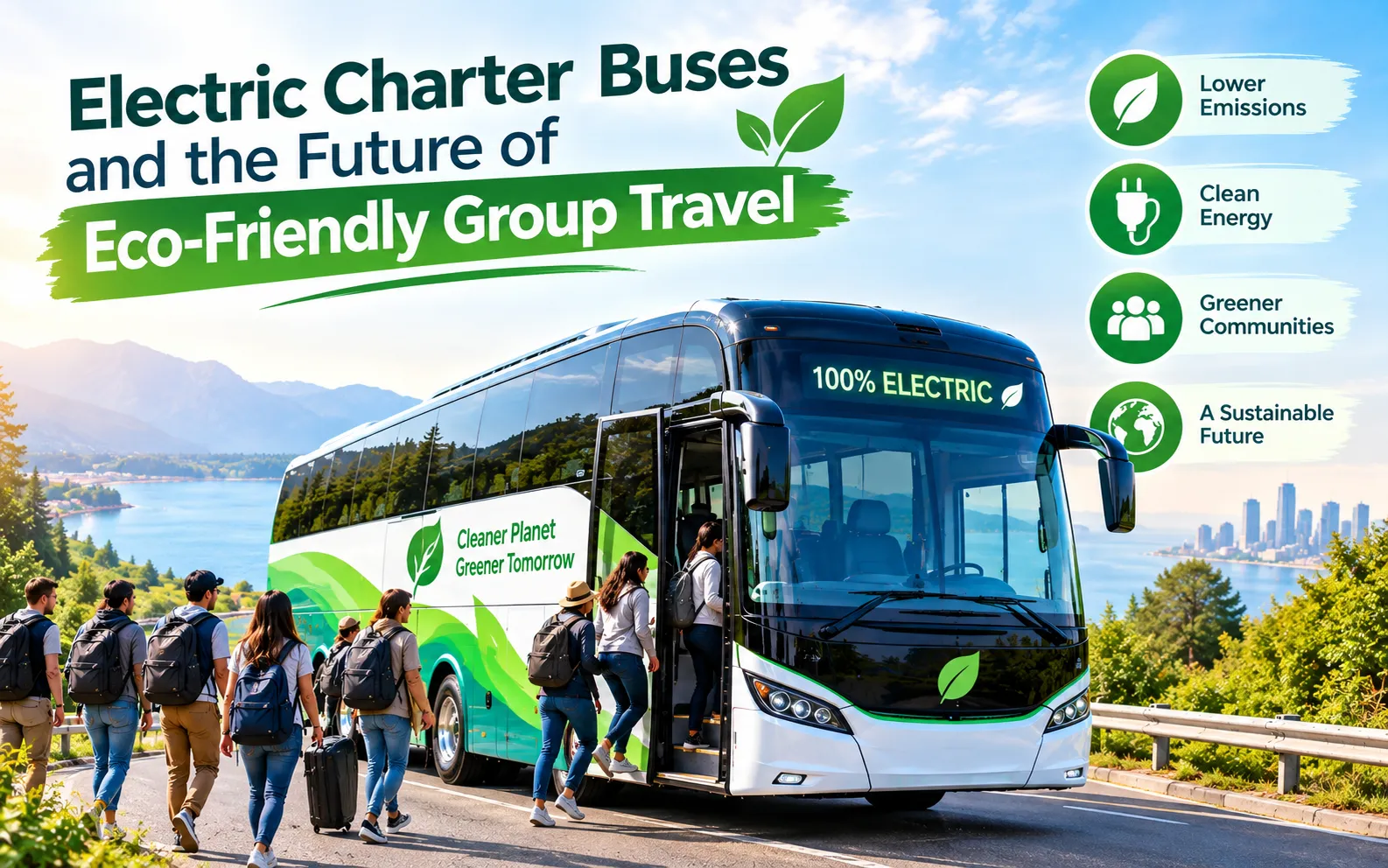

The future of group transportation is becoming quieter, cleaner, and increasingly focused on sustainability. From corporate outings and school trips to weddings, conferences, and regional tours, groups are looking for transportation solutions that provide comfort without overlooking environmental responsibility. Electric charter buses are emerging as an important part of this shift, offering a modern alternative to conventional diesel-powered coaches. For organizations interested in reducing the environmental impact of group journeys, eco-friendly charter transportation can provide a practical option where electric coaches are available.
Electric motorcoaches are not yet common throughout the entire United States, but real-world deployments are showing that the technology is capable of handling commercial group transportation. Current electric fleets are particularly suited to regional and same-day trips, where operators can coordinate routes with available charging infrastructure. As the technology develops, electric coaches could become a more familiar part of group travel.

What Makes Electric Charter Buses Different?
An electric charter bus provides much of the same passenger experience as a traditional motorcoach. Travelers can still have access to comfortable seating, climate control, luggage storage, WiFi, power outlets, and other amenities depending on the specific coach.
The major difference is the powertrain. Instead of using a diesel engine, an electric coach relies on large batteries and an electric drivetrain. This change affects more than the vehicle's fuel source. It can also influence how the bus sounds, accelerates, and is maintained.
Electric motors operate with considerably less mechanical noise than diesel engines. That means passengers may notice the difference as soon as the coach begins moving, particularly when accelerating from a stop.
A Quieter Experience for Group Travelers
One of the most immediate advantages passengers can notice is reduced noise. Traditional diesel coaches produce engine sounds and vibrations throughout a journey, while electric coaches operate much more quietly.
For groups spending several hours on the road, this can make a meaningful difference. Passengers can have conversations without competing with engine noise, make phone calls more comfortably, listen to entertainment at lower volumes, or simply relax in a calmer environment.
Electric drivetrains can also provide smooth acceleration because electric motors deliver torque immediately. The result is a responsive ride that can feel noticeably different from a conventional diesel motorcoach.
These characteristics make electric buses particularly appealing for corporate groups, wedding parties, university programs, and private tours where passenger comfort is an important consideration.
Why Electric Transportation Supports Sustainability
The environmental case for electric buses begins with their lack of tailpipe emissions. An electric coach does not produce direct exhaust emissions while operating, unlike a diesel-powered vehicle.
However, sustainability is more complicated than simply comparing tailpipes. The overall environmental impact of an electric coach depends on how the electricity used to charge its batteries is generated, as well as manufacturing and battery-related impacts.
Even with those considerations, electric transportation can provide meaningful emissions benefits, particularly in areas with relatively clean electricity grids. The American Bus Association Foundation's sustainability research also identifies motorcoaches as highly efficient in terms of energy consumption per passenger-mile, highlighting the broader efficiency advantages of moving groups together.
For companies, schools, universities, and organizations with sustainability objectives, electric group transportation can therefore become part of a larger environmental strategy.
Electric Charter Buses Are Ideal for Certain Trips
Electric coaches are not necessarily the right choice for every journey. Their suitability depends on the route, travel duration, charging availability, passenger load, and local fleet availability.
Same-day regional travel is currently one of the strongest applications. An electric coach can complete a scheduled itinerary and return to its home facility for charging before another assignment.
Wedding transportation, corporate events, airport transfers, university programs, local sightseeing, and regional day trips can all be suitable applications when an electric vehicle is available.
Long-distance, multi-state travel is more challenging. Diesel motorcoaches can refuel quickly at numerous locations across the country, while electric coaches depend on high-capacity charging infrastructure. Current electric deployments therefore tend to focus on routes that can be completed within a planned charging cycle.
Charging Infrastructure Will Determine Future Growth
Electric charter bus adoption depends heavily on charging infrastructure. Operators need more than the vehicles themselves. They also need suitable depot facilities, high-capacity chargers, electrical capacity, and scheduling systems that coordinate vehicle use with charging requirements.
Depot charging is especially important for charter companies. A coach can return to its home facility after completing a day's work and recharge before its next assignment.
As charging technology improves and more charging infrastructure becomes available, operators should have greater flexibility in assigning electric coaches to longer routes. Expansion will likely happen gradually, with regions that already have strong infrastructure becoming early leaders.
Electric vs. Diesel Charter Buses
Diesel coaches continue to provide advantages that make them essential to the U.S. charter industry. Their extensive range and fast refueling make them particularly useful for multi-day journeys, interstate travel, and itineraries that involve many different destinations.
Electric coaches offer a different set of benefits. They provide quieter operation, smooth acceleration, and reduced direct emissions. Electric drivetrains also have fewer moving mechanical components than traditional engines, which can reduce certain maintenance requirements over the vehicle's operating life.
At the same time, electric coaches currently have higher purchase costs and require significant charging investments. These factors influence where transportation companies choose to deploy them.
For travelers, the right vehicle depends on the trip rather than simply choosing the newest available technology.
How Electric Coaches Can Benefit Corporate Travel
Corporate transportation is an especially promising application for electric charter buses. Companies increasingly consider environmental responsibility when planning conferences, employee transportation, business meetings, and corporate retreats.
An electric coach can move a large group together while supporting sustainability objectives. The quieter cabin can also create a more productive environment for employees who want to work, prepare for meetings, or communicate with colleagues during the journey.
For organizations that operate recurring transportation routes, electric buses may become even more attractive as charging infrastructure expands and fleet availability improves.
Electric Buses and Sustainable Events
Event planners are also paying greater attention to transportation. Weddings, conferences, festivals, sports events, and private gatherings often require organized transportation between hotels, venues, airports, and other locations.
Using a single charter coach helps keep a group together and reduces the number of individual vehicles required. When an electric coach is available and suitable for the itinerary, it can add a sustainability-focused element to the event.
Because electric fleets remain limited in many areas, event organizers interested in this option should ask about availability well in advance.
Planning an Electric Group Trip
Travelers considering an electric charter bus should begin by discussing their itinerary with the transportation provider. The provider can determine whether an electric coach is available for the requested date and whether its operating requirements match the planned route.
Distance is one of the most important considerations. A short regional trip may be an excellent fit, while a multi-day interstate itinerary may be better suited to a diesel coach.
Groups should also consider passenger capacity, charging arrangements, schedule flexibility, and overall vehicle availability. Planning early gives operators more opportunity to select a vehicle that meets the group's requirements.
The Future of Eco-Friendly Group Travel
Electric charter buses are moving from pilot projects toward real commercial use in specific U.S. markets. Current operators have demonstrated that electric motorcoaches can handle full-day schedules when routes are carefully planned around charging capabilities.
The next stage of development will depend on battery improvements, charging infrastructure, vehicle costs, fleet investment, and market demand. As these factors continue to evolve, electric coaches could become available across a wider range of American cities and travel corridors.
The future is unlikely to involve electric buses completely replacing diesel coaches in the immediate term. Instead, group transportation will probably become a mix of technologies, with electric coaches serving routes where their capabilities provide the greatest benefits.
Conclusion
Electric charter buses represent an important development in the movement toward eco-friendly group travel. Their quiet operation, smooth performance, and potential environmental advantages make them attractive for regional trips, corporate transportation, events, weddings, and other organized journeys.
Although charging infrastructure and availability remain limitations, the technology is already proving itself in real commercial operations. As more transportation providers invest in electric fleets and charging networks continue to expand, travelers may have more opportunities to choose sustainable transportation for their group trips.
For organizations and travelers planning ahead, electric charter buses offer a promising way to combine the convenience of group transportation with a more environmentally conscious approach to getting from one destination to another.

























Sign in to leave a comment.