

Electric go karts have become one of the more popular additions to home game rooms, backyards, and family entertainment spaces over the past several years. Instead of a gas engine, they run on a rechargeable battery and electric motor, which makes them quieter, generally easier to maintain, and simpler for most households to own and operate than a traditional gas-powered kart.
Part of the appeal is how approachable they are. There's no fuel to mix, no engine to warm up, and models exist for a wide range of ages and skill levels from a first kart for a young rider to a higher-powered option for teens or adults. But "electric go kart" covers a lot of ground, and the right choice depends heavily on who's riding, where, and what matters most to your family: speed, safety, battery life, or overall value.
This guide walks through how electric go-karts work, what actually affects their speed and performance, the safety features and precautions worth knowing, how they compare to alternatives like an electric scooter for kids, and a practical framework for choosing a kart that fits your rider and your budget.
What Are Electric Go Karts?
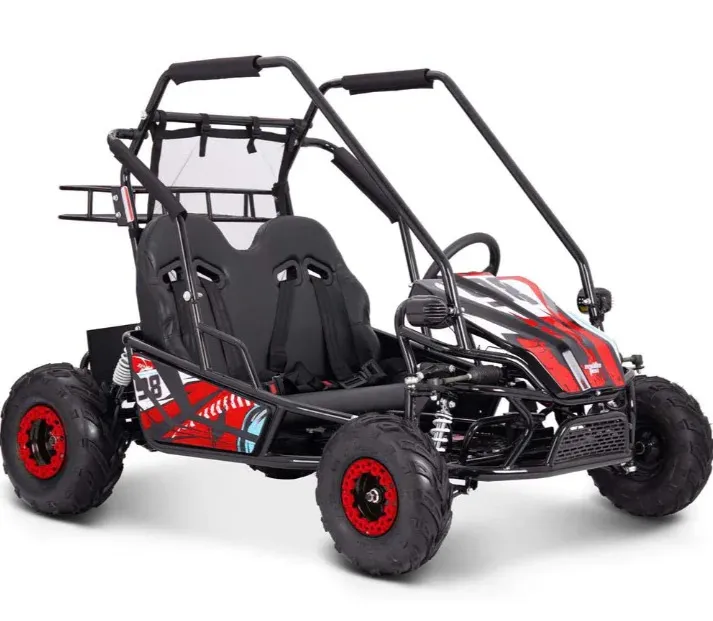
An electric go-kart is a low-profile, ride-on vehicle powered by a rechargeable battery and electric motor rather than an internal combustion engine. The battery powers the motor, which drives the rear wheels, while the rider steers and controls speed using a pedal (or trigger throttle) and steering wheel, similar in layout to a traditional kart.
Electric vs. gas-powered go-karts differ in a few practical ways. Gas karts typically require fuel, more involved engine maintenance, and produce exhaust and engine noise. Electric karts run quieter, don't require fuel, and generally have simpler maintenance since there's no combustion engine — though they do require regular battery care and have a limited runtime per charge that gas karts don't share. Gas karts have traditionally offered higher sustained power for performance riding, though the gap has narrowed considerably as battery and motor technology have improved.
Electric go-karts are commonly used in backyards, driveways, private tracks, and increasingly at family entertainment centers and rental venues that have shifted toward electric fleets for noise and maintenance reasons. Because they don't produce exhaust, they're also better suited to enclosed or semi-enclosed spaces where a gas kart wouldn't be practical.
How Fast Are Electric Go Karts?
Top speed is one of the first specs people look at, but it's shaped by more variables than the number on the box suggests.
Factors that affect speed include the motor's power output, battery voltage and charge level, rider weight, terrain (a flat paved surface performs very differently than grass or an incline), and even ambient temperature, which can affect battery performance. Two karts with the same advertised top speed can feel noticeably different once you factor in who's riding and where.
Generally speaking, electric go-karts fall into a few rough performance tiers:
- Beginner/entry-level models are built for younger or first-time riders, with lower top speeds and simpler speed controls, often including a governor or speed-limiting setting for parents.
- Recreational models offer a wider speed range suited to older kids, teens, or casual adult riders, usually with adjustable speed settings.
- Performance-oriented models are designed for more experienced riders and typically offer higher top speeds, stronger motors, and more robust frames — though "performance" in this context still refers to a recreational product, not a racing-grade vehicle.
It's worth being cautious about treating advertised top speed as the main factor in a buying decision. Real-world speed depends on rider weight, battery charge, and surface conditions, so the same model can perform quite differently for a lighter child rider on pavement versus a heavier adult rider on grass. Build quality, safety features, and how well the kart matches your rider's size and experience level generally matter more to the overall experience than a few extra miles per hour on paper.
Electric Go-Kart Safety Tips
Electric go-karts are generally considered a manageable recreational vehicle for families, but a few practical precautions go a long way toward safe use.
- Match the kart to the rider's age and size. Manufacturers typically list recommended age ranges and weight limits; these exist for a reason and shouldn't be treated as flexible.
- Wear a helmet and appropriate protective equipment, even for lower-speed models. Elbow and knee pads are a reasonable addition for younger or less experienced riders.
- Supervise younger riders closely, particularly when they're still learning steering, braking, and speed control.
- Ride on suitable, flat surfaces with good visibility, away from traffic, pedestrians, and hazards like curbs, ditches, or loose gravel.
- Start at safe, limited speeds, especially with a new rider or a new kart, and increase speed settings gradually as the rider builds confidence and skill.
- Do a pre-ride inspection — check tire pressure, brake responsiveness, and that the battery is securely connected before each use.
- Follow battery and charging safety guidance from the manufacturer, including using the provided charger, avoiding charging in extreme temperatures, and not leaving batteries charging unattended for extended periods.
Electric Go Karts for Kids vs. Adults
Karts designed for kids and karts designed for adults differ in more than just size.
Kids' go-karts are typically smaller, lighter, and built with lower top speeds and more conservative weight capacities. They often include additional safety features like speed governors, seat belts, and simpler controls that are easier for a young rider to manage. Frame and seating are usually sized specifically for smaller riders rather than adjusted from an adult model.
Adult electric go-karts are built with higher weight capacities, larger frames, and generally more powerful motors to support a higher rider weight and faster speeds. Seating position, pedal placement, and steering are proportioned for adult riders, and safety features may be designed around higher-speed use rather than beginner supervision.
The practical takeaway is to match the kart to the rider rather than simply choosing the fastest or most powerful option available. A kart with more power than a rider's experience level can safely handle isn't a better purchase it's a mismatch that increases risk without adding real value. If you have riders of different ages and sizes in the household, it's often more practical to choose a kart sized appropriately for your youngest or least experienced rider rather than assuming "adjustable" settings fully bridge that gap.
Electric Go Karts vs. Electric Scooters
Electric go-karts and electric scooters serve overlapping but distinct purposes, and the right choice often comes down to the rider and the intended use.
Riding position and stability: Go-karts have a seated, low center-of-gravity design that generally offers more inherent stability, especially for younger or less experienced riders. Electric scooters require the rider to stand and balance, which demands more coordination and balance skill.
Portability: Scooters are typically lighter and easier to store or transport than a go-kart, which has a larger frame and generally isn't something you fold up and put in a closet.
Speed and control: Go-karts often include seat belts, pedal-based braking, and speed governors that some parents find easier to manage for younger riders, while scooters rely more on the rider's balance and hand-operated controls.
Intended use: A go-kart tends to suit riders who want a seated, multi-passenger-adjacent (though single-rider) driving experience with a stronger sense of "driving," while an electric scooter for kids is often a more portable, lower-maintenance option better suited to shorter rides, sidewalks, or families without space to store a larger vehicle.
If storage space, portability, and simplicity are the priority — especially for a younger child still building balance and coordination — an electric scooter for kids may be the more practical starting point. If the goal is a more immersive "driving" experience with a stable, seated ride, a go-kart is generally the better fit, provided there's enough space to store and use it safely.
How Much Do Electric Go Karts Cost?
Pricing varies significantly based on a handful of factors rather than any single spec.
Major factors affecting price include motor power, battery type and capacity, frame materials, included safety features, and brand reputation for build quality and support.
- Entry-level models generally prioritize a smaller frame, lower power output, and basic safety features, aimed at younger or first-time riders. These tend to be the most accessible option for families testing out whether a go-kart is a good fit.
- Mid-range models typically offer a stronger motor, larger battery capacity, and additional adjustable features like variable speed settings or improved suspension, suited to a wider range of rider ages and experience levels.
- Premium models often include the most robust frame construction, highest weight capacities, longer runtimes, and additional features like advanced braking systems or app-connected controls, generally aimed at older teens or adult riders seeking a higher-performance experience.
Beyond the sticker price, it's worth factoring in total value over the life of the kart battery replacement cost and lifespan, availability of replacement parts (tires, brake components), and how straightforward routine maintenance is. A lower-priced kart with a battery that needs early replacement, or limited parts availability, may cost more over time than a slightly pricier model backed by better support and more accessible parts.
How to Choose the Best Electric Go Kart
A practical checklist to work through before buying:
- Rider age and size — Confirm the kart's recommended age range and seating dimensions fit your rider.
- Weight capacity — Check the maximum rider weight against your rider's current weight, with some room for growth if buying for a child.
- Desired speed — Consider your rider's experience level rather than just choosing the highest advertised top speed.
- Riding environment — Match the kart's tires, suspension, and ground clearance to where you'll actually be riding (pavement, grass, gravel).
- Battery requirements — Compare runtime and charging time against how often and how long you expect to ride.
- Safety features — Look for seat belts, speed governors, reliable brakes, and (for youth models) parental controls where relevant.
- Build quality — Frame material and overall construction affect both safety and how well the kart holds up to regular use.
- Budget — Set a realistic range that accounts for the kart itself plus likely future costs like battery replacement.
- Warranty and support — Check what's covered, for how long, and whether replacement parts are readily available from the manufacturer.
Electric Go-Kart Maintenance Tips
Routine care helps an electric go-kart perform reliably and safely over time.
- Battery care: Avoid letting the battery sit fully depleted for long periods, and store it in a moderate temperature environment when not in use.
- Charging practices: Use only the manufacturer-provided charger, and avoid overcharging by following the recommended charging time rather than leaving it connected indefinitely.
- Tire checks: Inspect tire pressure (for pneumatic tires) and tread condition regularly, especially before rides on uneven terrain.
- Brake inspection: Test brake responsiveness before each use and address any delay or unusual noise promptly.
- Cleaning: Wipe down the frame and seating area regularly, and keep the battery compartment and electrical connections free of dirt and moisture.
- Storage: Store the kart in a dry, covered area when not in use, particularly if it will sit unused for extended periods.
- General pre-ride maintenance: A quick check of tires, brakes, and battery connection before each ride catches most issues before they become a problem mid-ride.
Are Electric Go Karts Worth It?
For families or individuals looking for an engaging, relatively low-maintenance recreational vehicle, electric go-karts can offer solid value particularly compared to the fuel, maintenance, and noise considerations that come with a gas-powered kart. The seated, stable riding position also makes them a reasonable option for a wider age range than some alternatives, provided the specific model is matched appropriately to the rider.
That said, they do have limitations worth weighing: battery runtime means riding sessions are naturally time-limited between charges, and higher-performance models represent a meaningful investment, especially once you factor in eventual battery replacement.
Buyers who tend to get the most value are those who have a suitable riding space (a driveway, backyard, or private track), a clear sense of who'll primarily be riding, and realistic expectations about runtime and maintenance. For a family with a large paved area and kids in the right age range, a well-matched electric go-kart can be a genuinely worthwhile addition. For someone without a good riding surface or with only occasional interest, a lower-commitment option — including an electric scooter for kids might deliver more practical value for less cost and storage space.
Frequently Asked Questions
1. How fast can an electric go-kart go?
Top speed varies significantly by model, ranging from lower, governor-limited speeds on beginner karts to higher speeds on performance-oriented models. Actual speed also depends on rider weight, battery charge, and terrain.
2. Are electric go-karts safe for kids?
Many electric go-karts are designed specifically for children, with features like speed governors, seat belts, and smaller frames. Safety also depends on proper supervision, appropriate riding surfaces, and matching the kart to the child's age and size.
3. How long does an electric go-kart battery last?
Battery runtime per charge varies by model, battery capacity, rider weight, and terrain, so it's best to check the manufacturer's stated runtime rather than assume a universal number. Overall battery lifespan (before replacement is needed) also varies based on charging habits and usage frequency.
4. How long does it take to charge an electric go-kart?
Charging time depends on the battery type and capacity and the charger provided with the kart. Manufacturers typically list an estimated charging time, which is the most reliable reference point for a specific model.
5. What age is suitable for an electric go-kart?
This depends entirely on the specific model, as manufacturers set different recommended age ranges based on the kart's size, speed, and safety features. Always check the manufacturer's age and weight guidance rather than assuming a general age applies.
6. Are electric go-karts better than gas go-karts?
Neither is universally "better" electric karts are generally quieter and require less routine maintenance, while gas karts have traditionally offered stronger sustained power for performance riding. The better choice depends on your priorities around noise, maintenance, and intended use.
Conclusion
Choosing the right electric go-kart comes down to balancing a handful of practical factors: how fast you actually need it to go, the safety features that match your rider's age and experience, battery life and charging time that fit your routine, and build quality that holds up over time. None of these should be evaluated in isolation; a kart that's fast but poorly matched to its rider, or well-built but a poor fit for your available space, isn't the right choice no matter how good it looks on paper.
Take stock of who'll be riding, where, and how often, and use that as your starting point rather than chasing the highest top speed or lowest price. Whether that leads you to a beginner-friendly kids' model, a mid-range recreational kart, or an electric scooter for kids as a more practical alternative, choosing based on your actual needs will serve you better than choosing based on specs alone.

























Sign in to leave a comment.