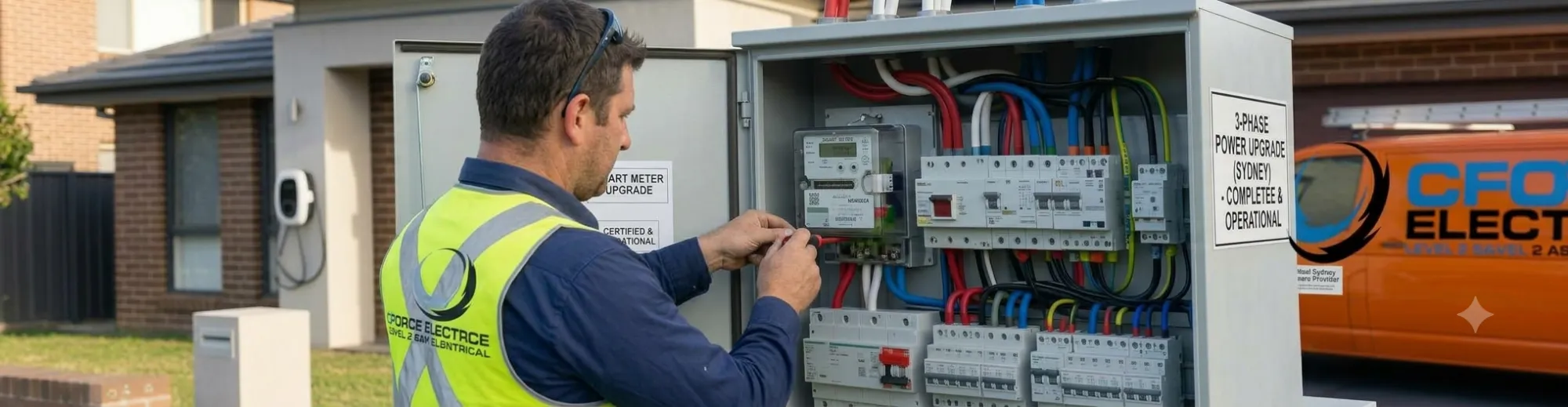

Electricity meters are an essential part of every property's electrical system, recording energy consumption and communicating usage information to the electricity retailer. As NSW transitions from traditional meters to smart meters, more homeowners and businesses are considering an Electricity Meter Replacement or Smart Meter Upgrade.
This case study follows a representative NSW property scenario to explain what an electricity meter upgrade can involve, why a replacement may be required, and how the process can be managed safely.
Case study note: This is an illustrative scenario based on common NSW metering requirements. It does not describe a specific CForce Electrical customer or completed project.
The Situation: An Older Electricity Meter
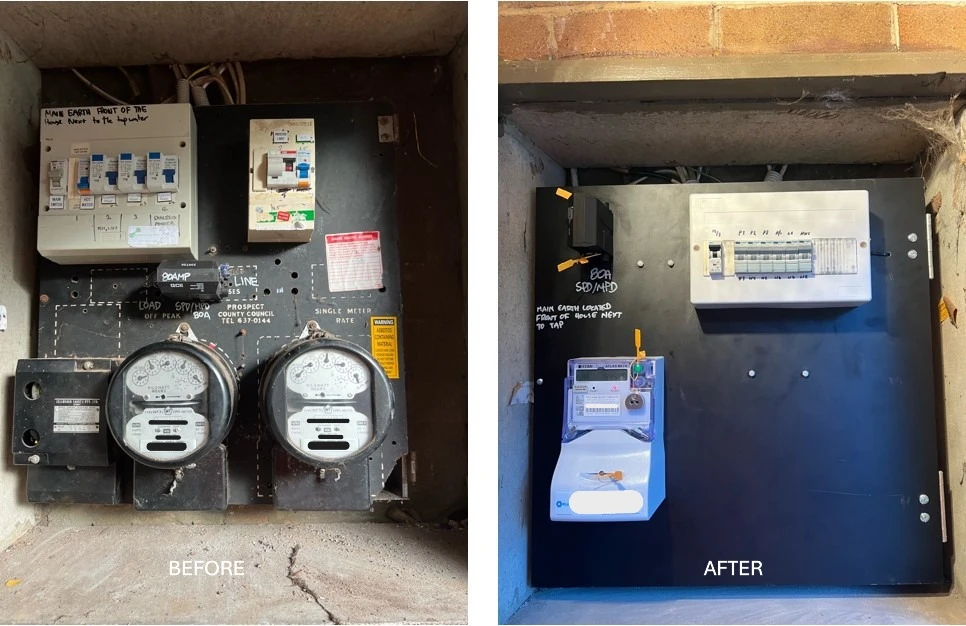
Imagine a Sydney property with an older electricity meter that has been in service for many years.
The property owner is planning several electrical improvements and wants better visibility of electricity consumption. The existing meter is a traditional model that requires manual readings and does not provide the same functionality as a modern smart meter.
The owner begins investigating an Electricity Meter Upgrade to support the property's changing energy requirements.
This type of situation is becoming increasingly common across NSW as traditional meters are progressively replaced with smart meters.
NSW Government guidance explains that smart meters automatically record electricity use throughout the day and send readings to the electricity retailer, removing the need for routine manual meter readings.
Why Was a Smart Meter Upgrade Considered?
There can be several reasons for replacing an older electricity meter.
In this representative scenario, the property owner wanted to:
Move from manual to automated meter readings
Improve visibility of electricity consumption
Prepare for future electrical upgrades
Support modern energy technology
Reduce reliance on estimated or manual readings
Better understand when electricity was being used
Smart meters can provide more detailed information about energy consumption and may allow access to electricity plans that use different pricing at different times of the day.
Step 1: Assessing the Existing Meter
The first step is to determine what type of meter is currently installed and whether the existing meter installation can accommodate the replacement.
The installer may need to consider:
Meter type
Meter enclosure
Meterboard condition
Existing wiring
Available space
Electrical safety
Accessibility
Property configuration
This assessment is important because replacing the meter itself may not always be the only requirement.
For example, older properties may have outdated or damaged meterboards that need attention before a new meter can be installed.
NSW Government information notes that installers can identify issues such as old wiring, damaged covers or other safety concerns that need to be addressed before a smart meter installation proceeds.
Step 2: Identifying the Right Upgrade Path
In a standard smart meter rollout, the electricity retailer generally contacts the customer and arranges the installation.
NSW's current smart meter rollout is scheduled to continue through 2030, with the aim of having smart meters available across Australia. For installations under the rollout, there is generally no upfront customer cost.
However, not every meter replacement situation is identical.
If an electrical defect or meterboard problem needs to be corrected first, additional electrical work may be necessary before the replacement meter can be installed.
This is where an appropriately qualified electrician or Accredited Service Provider may become involved.
Step 3: Checking the Meterboard
The meterboard is an important part of an Electricity Meter Replacement project.
A new smart meter needs an appropriate and safe location. If the existing board is too small, damaged or otherwise unsuitable, it may need to be upgraded or replaced.
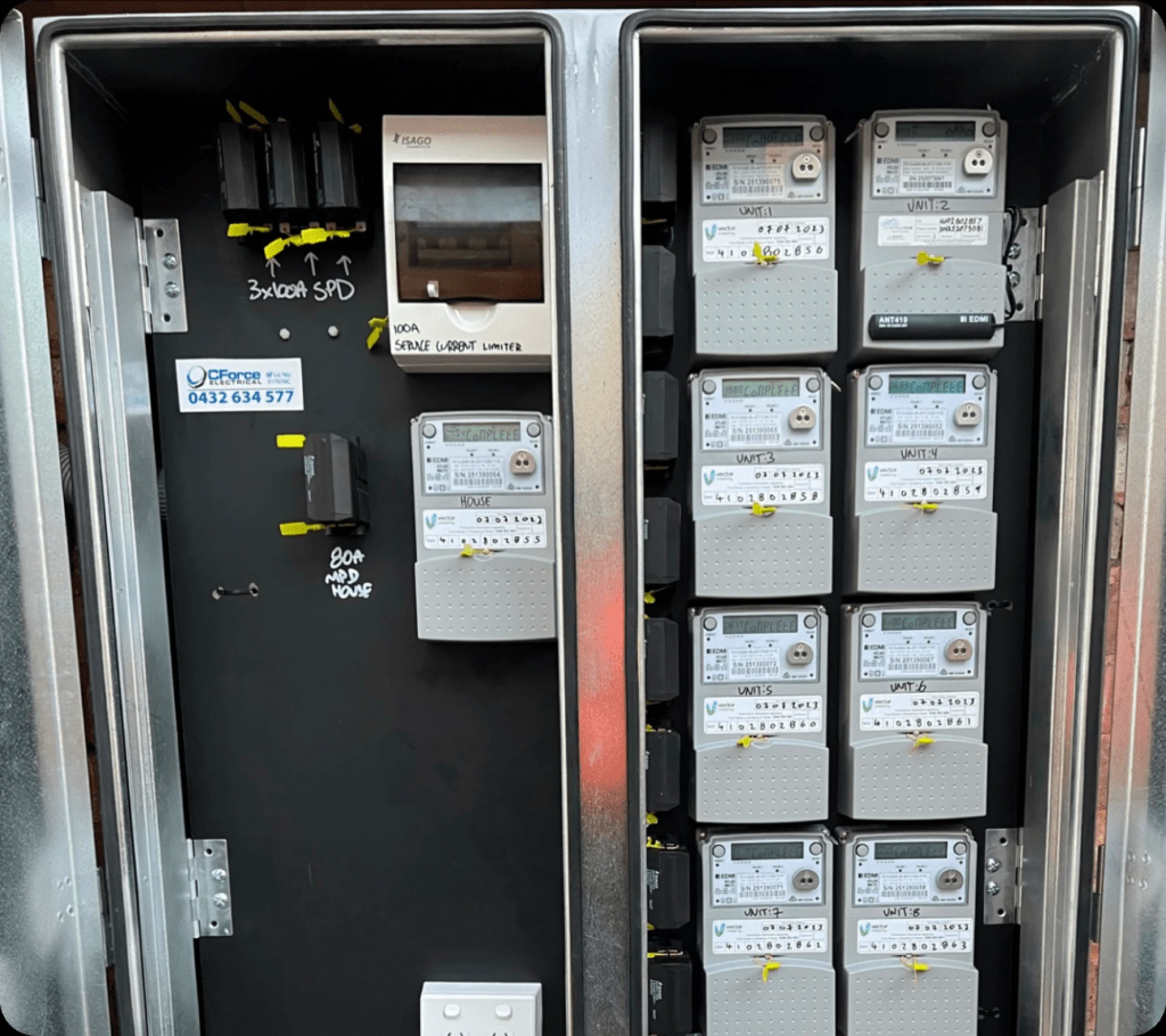
This issue can be particularly relevant in older homes and multi-unit buildings.
The NSW Government has previously identified meterboard upgrades as one reason some properties may require additional work before smart meter installation.
A professional assessment helps determine whether the project is simply a meter swap or whether additional electrical work is required.
Step 4: Completing the Smart Meter Installation
Once the property is ready, the relevant metering provider arranges the smart meter installation.
For the NSW national rollout, the electricity retailer normally contacts the customer before installation. The installer may need to temporarily turn off the property's electricity while the meter is replaced. NSW Government guidance says the installation normally takes about an hour for most customers.
The process generally includes:
Confirming the property and meter details
Safely isolating the electricity supply
Removing the existing meter
Installing the smart meter
Completing required electrical and safety checks
Restoring the electricity supply
Connecting the meter to the relevant metering system
The exact process can vary depending on the property and metering arrangements.
What Changed After the Smart Meter Upgrade?
In this representative case, the main objective of the Smart Meter Upgrade is improved electricity monitoring and modern metering functionality.
Unlike traditional meters that generally require physical readings, smart meters can automatically record electricity consumption throughout the day and communicate the information to the retailer.
This can make it easier for customers to understand their electricity usage and, where their electricity plan supports it, access time-of-use pricing.
A smart meter can also support modern energy technologies and changing electricity usage patterns.
Smart Meter Upgrade vs Electricity Meter Replacement
The terms can sometimes be used interchangeably, but there is an important distinction.
Electricity Meter Replacement
This generally refers to removing an existing electricity meter and installing another meter.
A replacement may be required because the existing meter is outdated, faulty, damaged or otherwise unsuitable.
Smart Meter Upgrade
A smart meter upgrade replaces a traditional meter with a modern digitally communicating meter.
Smart meters can provide more detailed consumption information and remove the need for routine manual meter readings.
In NSW, new and replacement electricity meters are required to be smart meters under the current national metering framework.
When Might Additional Electrical Work Be Required?
A straightforward meter replacement may not require significant electrical modifications.
However, additional work may be necessary if an inspection identifies issues with:
Meterboard condition
Existing wiring
Meter enclosure
Electrical connections
Safety equipment
Space for the new meter
Property connection infrastructure
For supply-related changes or certain electrical works connected to the electricity network, NSW Government guidance states that an appropriately accredited Accredited Service Provider may be required.
This is why it is useful to establish the scope before assuming that every electricity meter replacement is simply a one-for-one swap.
The Role of CForce Electrical
CForce Electrical provides metering services across Sydney, including smart meter installations and upgrades. The company also provides Level 2 ASP services, switchboard upgrades and other electrical infrastructure work.
Where an electrical issue needs to be resolved before metering work can proceed, having an experienced electrical contractor assess the installation can help identify what needs to be addressed.
For properties requiring network-connected electrical work, the appropriate ASP accreditation should be confirmed before work begins.
Key Lessons From This Case Study
This representative Electricity Meter Replacement Case Study highlights several important points:
1. Not every meter replacement is identical
The existing meter, meterboard and electrical installation all need to be considered.
2. Smart meters offer modern functionality
They can automatically record electricity consumption and communicate readings to the retailer.
3. Older properties may need additional work
Damaged wiring, outdated meterboards or other electrical issues can affect the installation process.
4. The retailer is usually the first point of contact
For the national smart meter rollout, NSW Government guidance directs customers to their electricity retailer for installation questions and arrangements.
5. Network-related work may require an ASP
Where changes involve the property's connection to the electricity network, the appropriate Accredited Service Provider may need to manage the work and relevant approvals.
FAQs About Electricity Meter Replacement in NSW
How do I know if I have an old electricity meter?
Traditional meters generally have a mechanical display or spinning dial, while smart meters have a digital display. Your electricity retailer can also confirm what type of meter is installed at your property.
Is a smart meter better than an old electricity meter?
Smart meters provide automated readings and more detailed information about electricity consumption. They can also support access to certain time-of-use electricity plans.
Does a smart meter upgrade cost money?
Under the national smart meter rollout, there is generally no upfront customer cost for the meter installation itself. However, if additional electrical work is required because of an existing property issue, separate costs may apply.
Does the electricity need to be turned off?
Yes, the electricity may need to be temporarily turned off while the meter is replaced. NSW Government guidance says the interruption normally does not take longer than about an hour for a standard rollout installation.
Can a damaged meterboard prevent a smart meter installation?
Yes. If the meterboard or associated wiring is unsafe or unsuitable, corrective electrical work may need to be completed before the new meter can be installed.
Final Thoughts
An Electricity Meter Replacement can be a straightforward process when the existing installation is suitable. However, older properties may require additional electrical work before a new meter can be safely installed.
For NSW property owners, the transition to smart metering is also making the Smart Meter Upgrade increasingly relevant. Modern smart meters provide automated readings, improved visibility of energy consumption and compatibility with the evolving electricity system.
If your property has an outdated meter, damaged meterboard or electrical defect, start by identifying the issue and confirming the appropriate upgrade pathway with your electricity retailer or a suitably qualified electrical professional.

























Sign in to leave a comment.