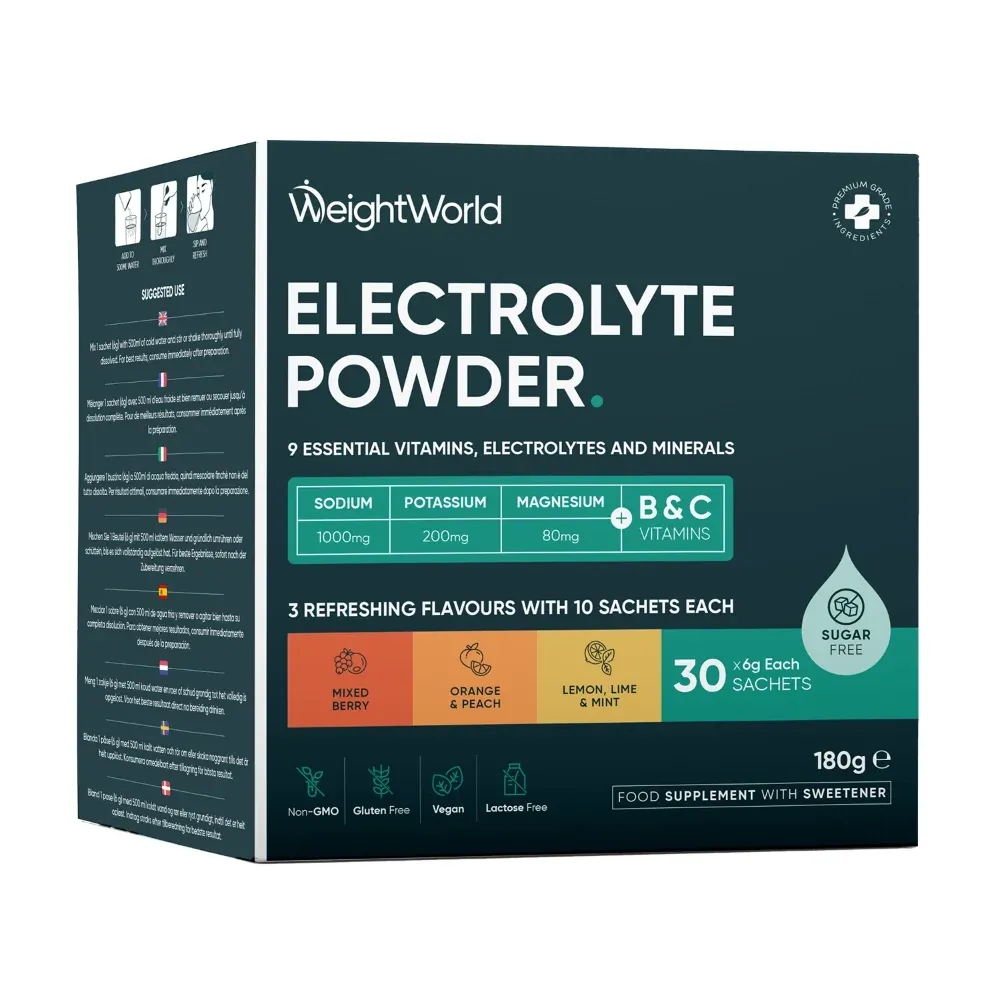

Staying hydrated is essential for everyday wellbeing, particularly during exercise, hot weather or activities that cause you to sweat. While drinking water is usually enough to meet everyday hydration needs, electrolytes also play an important role in maintaining fluid balance and supporting normal muscle and nerve function. This is why electrolyte powder has become a popular option for people looking for convenient hydration products.
Available in single-serving sachets and larger containers, electrolyte supplements can make it easier to prepare a drink when you need to replace fluids and minerals lost through sweating. However, different products contain different ingredients, so understanding their purpose can help you make an informed choice.
In this guide, we explore how electrolytes work, when an electrolyte drink powder may be useful, what to consider when comparing electrolyte sachets and how to choose a suitable product for your routine.
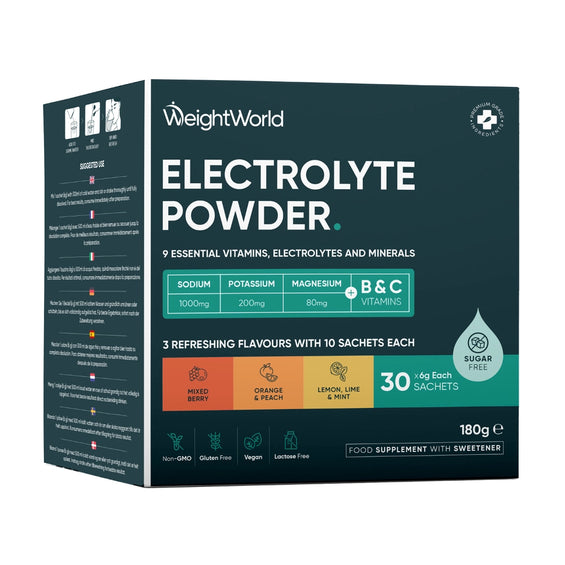
What Is Electrolyte Powder?
Electrolyte powder is a powdered formulation designed to be mixed with water to create a drink containing electrolytes. These minerals carry an electrical charge when dissolved in body fluids and help regulate several important physiological processes.
Common electrolytes include sodium, potassium, magnesium and calcium. Each contributes to different functions in the body, including fluid balance, muscle function and nerve signalling.
Depending on the formulation, an electrolyte powder may contain a combination of minerals, carbohydrates, flavourings and sweeteners. Some products are designed for general hydration during exercise, while others are formulated for longer or more demanding physical activities.
It is important to check the label because not every product contains the same electrolyte profile. Some focus primarily on sodium, while others include several minerals in different proportions.
Why Are Electrolytes Important for Hydration?
Your body loses water throughout the day through breathing, sweating and other normal processes. When you exercise or spend time in hot conditions, fluid loss through sweat can increase.
Sweat contains water and electrolytes, particularly sodium and chloride. Replacing lost fluids is important, and replacing electrolytes may also be useful during prolonged exercise or activities that involve substantial sweating.
Electrolytes contribute to several essential functions.
1. Maintaining Fluid Balance
Sodium and potassium help regulate fluid distribution inside and outside cells. Maintaining an appropriate balance of fluids and electrolytes is important for normal body function.
For everyday activities, drinking water and eating a balanced diet are generally sufficient for most healthy people. An electrolyte supplement may be useful in specific circumstances involving greater fluid losses.
2. Supporting Normal Muscle Function
Electrolytes help muscles contract and relax through processes involving electrical signals and mineral movement across cell membranes.
Magnesium, calcium and potassium all contribute to normal muscle function. Sodium also plays an important role in fluid balance and nerve signalling.
However, electrolyte drinks are not guaranteed to prevent every muscle cramp. Cramps can have several causes, including fatigue, training intensity and individual differences.
3. Supporting Normal Nerve Function
Nerve cells rely on the movement of electrolytes to transmit signals throughout the body. Sodium and potassium are particularly important in these processes.
Maintaining appropriate fluid and electrolyte levels supports normal physiological function, especially when substantial amounts of fluid are lost.
When Might Electrolyte Powder Be Useful?
Electrolyte powder is not necessary for everyone every day. Its usefulness depends on your activity level, environment, diet and the amount of fluid you lose.
During Long Workouts
People participating in prolonged endurance activities, such as long-distance running or cycling, may benefit from drinks containing electrolytes. The need depends on the duration and intensity of the activity, weather conditions and individual sweat losses.
For shorter or less intense workouts, water is often sufficient.
In Hot Weather
Hot weather can increase sweating, particularly when spending extended periods outdoors or performing physical work. An electrolyte drink may help replace minerals lost through substantial sweating.
It is still important to drink fluids regularly and avoid relying solely on supplements to manage heat exposure.
During Demanding Physical Activities
People working outdoors or undertaking physically demanding tasks may experience greater fluid losses than those working in cooler indoor environments.
In these situations, fluid replacement and appropriate rest are important. Electrolyte products may be useful when sweating is prolonged or substantial, but individual needs vary.
During Everyday Routines
Some people prefer electrolyte drinks because of their flavour and convenience. However, an electrolyte supplement is not automatically more hydrating than plain water for ordinary daily activities.
If your diet is balanced and your activity levels are moderate, you may not need additional electrolytes.
Electrolyte Sachets: A Convenient Hydration Option
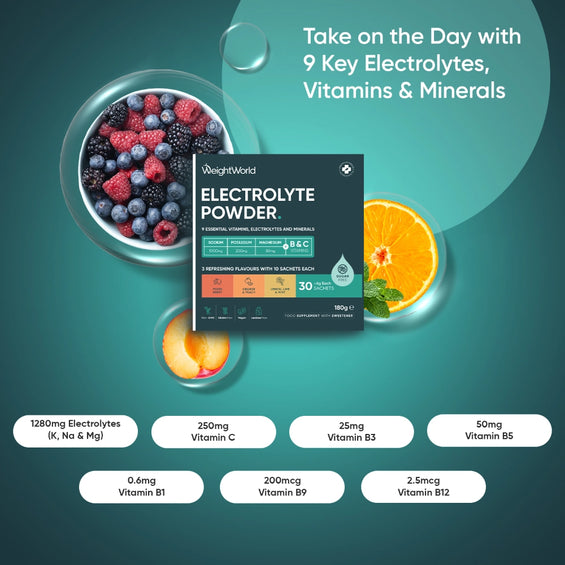
Electrolyte sachets contain pre-measured portions of powdered electrolytes. They are designed to be mixed with a specified amount of water, making them convenient for travel, exercise and busy routines.
There are several practical reasons people choose sachets.
- Portable packaging: Individual portions are easy to carry in a gym bag or backpack.
- Measured servings: Each sachet provides a defined amount of the product when prepared as directed.
- Easy preparation: Most products require only water and a suitable container.
- Convenient storage: Sachets can be easier to store than larger tubs of powder.
- Flavour options: Different formulations may offer a range of flavours.
When comparing electrolyte sachets, check the quantity of water required for each serving. Using too little water can produce a more concentrated drink than intended, while using too much may dilute the formulation.
Follow the product instructions carefully, particularly if the powder contains significant amounts of sodium or other active ingredients.
Electrolyte Powder UK: What Should You Look For?
When comparing electrolyte powder UK products, focus on the ingredient profile, serving size and intended use rather than simply choosing the product with the most ingredients.
Check the Electrolyte Content
Look at the amount of sodium, potassium, magnesium and calcium in each serving. Sodium is especially relevant when replacing substantial sweat losses, while other minerals support additional functions in the body.
The right formulation depends on your circumstances. A product designed for endurance exercise may differ from one intended for occasional everyday use.
Review Sugar and Carbohydrate Content
Some electrolyte powders contain carbohydrates, which can provide fuel during prolonged exercise. Others are formulated with little or no sugar.
Neither option is automatically best for everyone. Consider the duration and intensity of your activity, your dietary preferences and the product's intended purpose.
Consider the Serving Size
Compare the amount of powder required per serving and the volume of water needed for preparation. A container may appear inexpensive but provide fewer servings than another product.
Checking the cost per serving can help you compare value more accurately.
Read the Full Ingredient List
Review flavourings, sweeteners, allergens and any additional ingredients. If you have dietary restrictions or sensitivities, check the label carefully before purchasing.
Choose products with clear manufacturer information and straightforward preparation instructions.
Electrolyte Powder Sachets vs. Larger Containers
Both sachets and tubs can be practical options, but the most suitable format depends on how you plan to use the product.
Electrolyte powder sachets are useful for people who want individual portions for travel, workouts or outdoor activities. They reduce the need to measure powder manually and are easy to pack.
Larger containers may be more economical for people who use electrolyte powder regularly. However, they require accurate measuring and suitable storage to maintain product quality.
Before buying, compare the number of servings, electrolyte content, packaging and price. The format should make it easier to follow the manufacturer's recommended serving instructions.
Hydration Sachets UK: Are They Different from Electrolyte Sachets?
The terms hydration sachets UK and electrolyte sachets UK are often used for products that are mixed with water, but the formulations can differ.
Some hydration sachets contain electrolytes such as sodium and potassium. Others may include carbohydrates, vitamins or additional ingredients. The word hydration alone does not tell you exactly what the product contains.
Oral rehydration solutions are another distinct category. They use specific proportions of salts and glucose to help replace fluids and electrolytes during dehydration, including dehydration associated with diarrhoea. They should be prepared and used according to their instructions.
A general sports electrolyte powder should not automatically be treated as a substitute for an oral rehydration solution. If you have significant dehydration, persistent vomiting or diarrhoea, or symptoms such as confusion or fainting, seek appropriate medical advice.
How to Use Electrolyte Drink Powder
Preparing an electrolyte drink is usually straightforward, but it is important to follow the instructions for your specific product.
- Check the recommended serving size.
- Measure the stated quantity of water.
- Add the powder and mix as directed.
- Consume the drink according to the product instructions and your hydration needs.
Avoid using more powder than recommended in an attempt to increase its effect. Excessive intake of certain electrolytes can be harmful, especially for people with kidney or heart conditions or those taking medicines that affect fluid and mineral balance.
People with high blood pressure may also need to pay attention to sodium intake. If you have a medical condition, take regular medication or have been advised to restrict fluids or electrolytes, consult a healthcare professional before using these products.
Where to Buy Electrolyte Powders in the UK
If you are looking for electrolyte powders, choose a retailer that provides clear ingredient information, preparation instructions and details about the amount of each electrolyte per serving.
Review the current product description to understand its formulation, recommended serving size and intended use. Check the label to see how much water is required and whether the product meets your preferences.
Whether you are comparing an electrolyte drink powder for workouts or looking for electrolyte sachets for travel, prioritise transparent product information and suitability for your needs. Do not assume that a higher concentration or a longer ingredient list means better hydration.
Conclusion
Electrolyte powder offers a convenient way to prepare drinks containing minerals that contribute to fluid balance, muscle function and normal nerve signalling. It may be useful during prolonged exercise, hot weather or activities that involve substantial sweating, although plain water and a balanced diet are sufficient for many everyday situations.
When comparing electrolyte sachets, electrolyte powder sachets and other hydration products, consider the electrolyte content, serving size, sugar levels, preparation instructions and overall value. If you are searching for electrolyte powder UK options or hydration sachets UK products, read the label carefully and select a formulation that suits your activity level.
Responsible hydration starts with understanding your body's needs. Use supplements according to their instructions, maintain a balanced diet and seek professional advice if you have a health condition or experience symptoms of significant dehydration. 💧

















Sign in to leave a comment.