


When people plan a visit to Rajaji National Park, many hope to see a tiger. But the animal most closely linked with this forest is the Asian elephant.
This post explains in simple words why elephants matter here, where visitors may see them, and how to watch them safely.
Quick facts
- Location: Uttarakhand, India, in the Shivalik foothills
- Nearby cities: Rishikesh, Haridwar and Dehradun
- Established: 1983
- Tiger Reserve status: 2015, covering roughly 1,075 square kilometres
- Known for: Asian elephants, tigers, leopards, deer and birds
- Landscape: Sal forest, grassland, riverbeds and hills
A short history
The park was created in 1983 by joining three wildlife areas: Rajaji, Motichur and Chilla. In 2015, the area became part of the Rajaji Tiger Reserve.
It is named after Chakravarti Rajagopalachari, known as “Rajaji”. He was a freedom fighter and the last Governor-General of India.
A forest that suits elephants
Elephants need three things: food, water and space to move. Rajaji offers all three.
The forest mixes sal trees, grassland, hills, streams and riverbeds. The Ganga and other water sources support the wider area. Elephants use this land to feed, drink and travel through the forest.
The park is also an important part of the wider elephant landscape in northern India.
Why this forest matters for conservation
The protected forests here help many animals, not only tigers. They provide safe habitat for large mammals, including elephants. They also help wildlife move across the wider Shivalik and Terai landscapes.
This matters for elephants because they travel long distances. When forests stay connected, animals can keep moving the way they always have.
Tiger Reserve status adds another layer of protection for the area and its wildlife.
Where visitors may see elephants
Elephants are one of the park’s best-known sights. They can be seen in several parts of the forest.
- Chilla: A riverside zone known for its large elephant population.
- Motichur: Dense sal forest, with elephants, deer and many birds.
- Ranipur and Mohand: Two more zones that are also available for safaris.
What you see depends on the zone, the season, the weather and the route. Wild animals move freely, so no one can promise a sighting.
How to watch elephants safely
Elephants may look calm, but they are powerful wild animals. Please follow these simple rules.
- Stay inside the vehicle at all times.
- Follow your guide and driver. They know the forest and how animals behave.
- Keep your voice low and avoid loud sounds.
- Never feed an elephant or try to get close for a photo.
- Give the animal space and let it move on in its own time.
If an elephant is on the track, stop and wait. Your guide will tell you when it is safe to go on.
What else you may see
While you watch for elephants, look around you. The park is also home to:
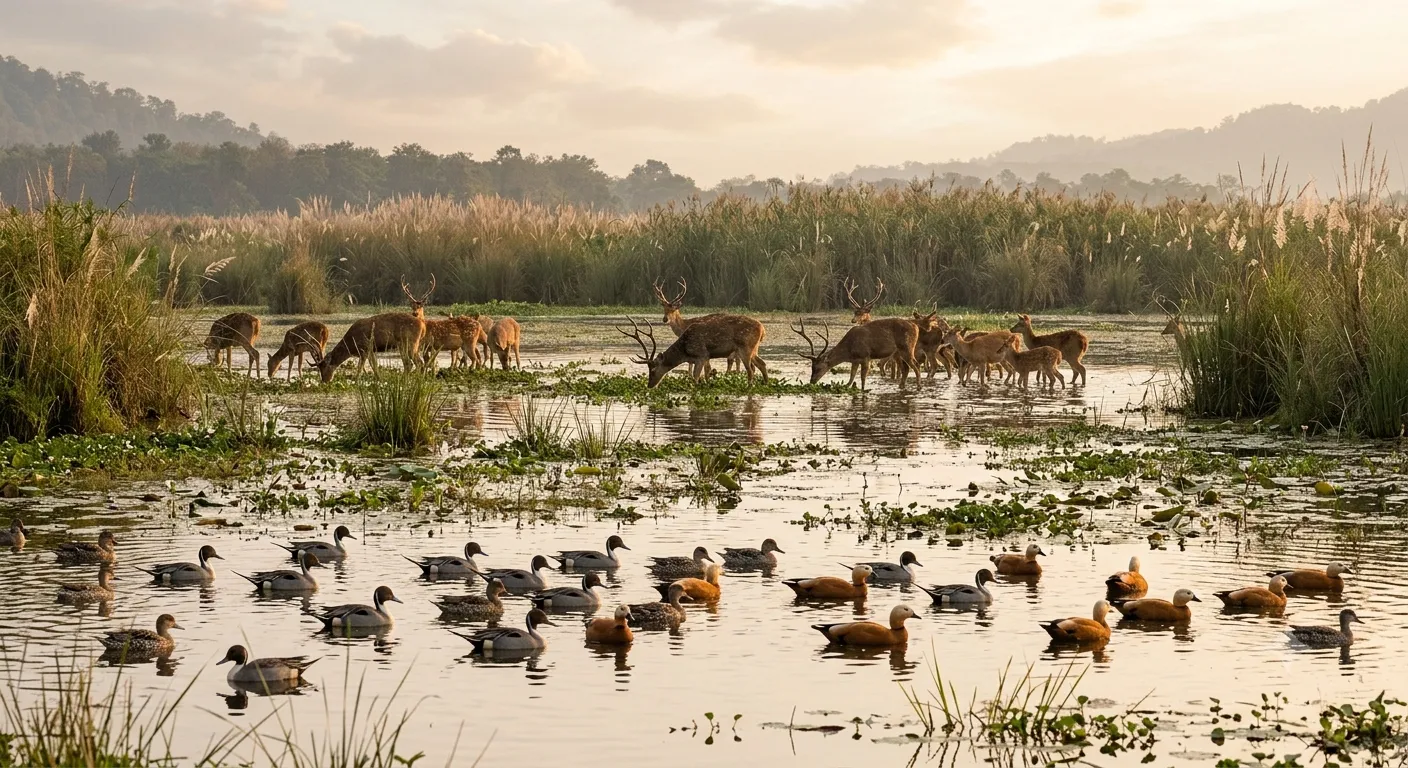
- Deer, such as sambar, chital and barking deer
- Wild boar
- Monkeys and langurs
- Many kinds of birds
Tigers and leopards also live here, but they are very hard to spot. Think of them as a bonus, not a promise.
Planning your visit
Rishikesh, Haridwar and Dehradun are the main nearby cities. Haridwar and Rishikesh have railway stations, and the nearest major airport is Jolly Grant Airport near Dehradun.
A safari fits easily into a wider Rishikesh trip, alongside river rafting and sightseeing.
Safari timings, entry rules and availability follow the forest department and can change with the weather. Always check the latest information before you travel.
Quick answers
Is an elephant sighting guaranteed?
No. Elephants are one of the most commonly seen animals, but they move freely in the wild.
Which zone is best for elephants?
Chilla is known for its large elephant population. Motichur is also a good zone for elephants.
Is it safe to watch elephants on a safari?
Yes, if you stay in the vehicle, listen to your guide and keep a respectful distance.
Final thoughts
Seeing a wild elephant move through the forest is a memorable experience. It also shows why protected forests are so important.
To learn more about the park’s history, wildlife and safari zones, read the full guide to Rajaji National Park.
This post is not from the official park website. The information is based on the Rishikesh Tiger Safari website and may change. Please check current safari rules and availability before you travel.



















Sign in to leave a comment.