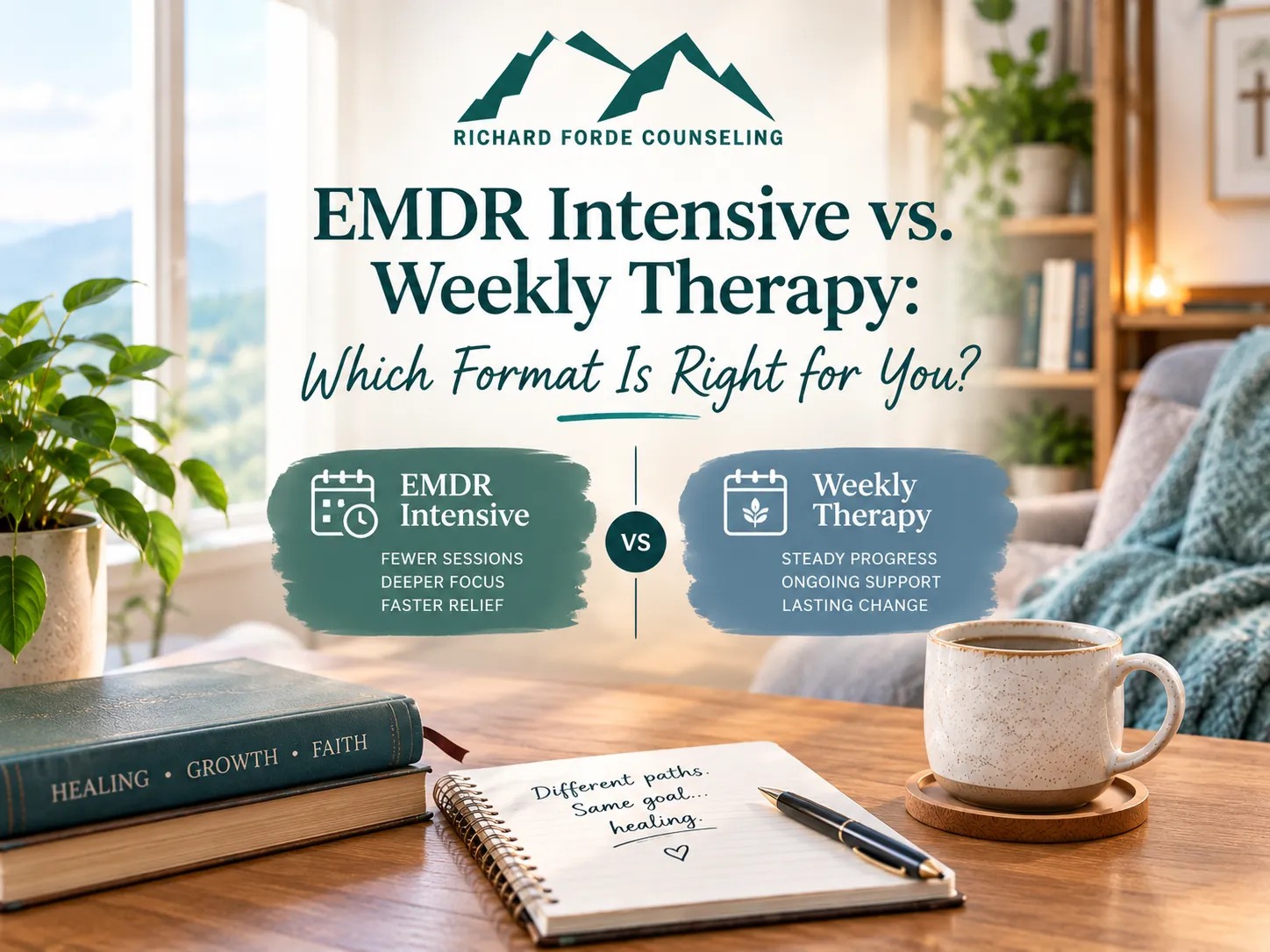

If you've decided to pursue EMDR, the next question is usually practical: should you do it in traditional weekly sessions, or as an EMDR intensive condensed, extended blocks of time over one or several days? Both formats use the same evidence based EMDR protocol. The difference is entirely in pacing, and that difference matters more than most people expect when they're choosing between the two.
The Core Difference: Pacing, Not Method
Weekly EMDR therapy typically means 50 minute sessions, once a week, over the course of several months. An EMDR intensive compresses that same clinical process into extended sessions often three or more hours across a shorter overall timeline, sometimes just a few days.
Neither format is a "lighter" or "stronger" version of EMDR. The eight phase protocol doesn't change. What changes is how much time you spend in the room, how quickly you move between sessions, and how much continuity there is while a memory is actively being processed.
Weekly Therapy: Strengths and Trade Offs
Where weekly sessions do well:
- Lower cost per session, spread out over a longer period, which can be easier to budget for
- More time between sessions to practice new coping skills and notice how changes show up in daily life
- A gentler overall pace, which some clients prefer, especially early in the therapeutic relationship
- Flexibility to address whatever is most pressing that week, alongside longer term trauma work
Where weekly sessions struggle:
- Momentum breaks. Just as a session opens up deeper material, the clock runs out and by next week, some of that activation has settled, meaning the next session often has to re establish where things left off
- Life gets in the way. A stressful week can eat into session time that was meant for deeper processing
- The overall timeline stretches out, sometimes for many months, before a client feels real relief
EMDR Intensives: Strengths and Trade Offs
Where an EMDR intensive does well:
- No stop and start rhythm a memory can be processed in a single sitting rather than paused mid way for a week
- Faster overall timeline; many clients complete in a few days what would otherwise take months of weekly sessions
- Deeper nervous system integration, since extended, uninterrupted time allows the body to fully settle rather than staying activated between appointments
- Well suited to a specific, defined focus a single event, a cluster of related memories, or a clearly identified pattern like codependency
Where an intensive requires more from you:
- Higher upfront time and financial commitment concentrated into a shorter window, rather than spread out
- Requires more baseline stability going in, since there's less time between sessions to build resourcing gradually
- Not ideal for someone still in an acute crisis or without adequate support outside of sessions
How to Decide Which Format Fits You
Ask yourself a few honest questions:
- Do you know specifically what you want to work on, or are things still unclear and unfolding? Intensives work best with a defined target; weekly sessions allow more room to explore.
- Do you have the stability to sit with intense material for hours at a time, or do you do better with smaller doses and more processing time in between?
- Is timeline a factor? If you're working toward a specific date a wedding, a deployment, starting a new job an intensive can get you further, faster.
- How does your schedule actually work? Some people find it easier to clear a few days for an intensive than to protect a consistent weekly hour for months.
- What does your budget look like? Weekly sessions spread cost over time; intensives concentrate it, which some clients find easier to plan around rather than harder.
There's no universally "better" option only what fits your history, your nervous system, and your life right now. Many clients also combine formats: starting with an intensive to create fast movement, then transitioning to occasional weekly or monthly sessions to integrate and maintain progress.
Making the Choice With Richard Forde Counseling
I'm Richard Forde, a Licensed Professional Counselor with over 25 years of experience, trained in EMDR and informed by Internal Family Systems (IFS). I offer both traditional weekly EMDR sessions and EMDR intensive formats virtually to adults across Florida, Georgia, Virginia, and North Carolina and I help clients think through which format actually fits their situation rather than defaulting to one option for everyone.
Sessions are self pay, which keeps the process private and the pace in your hands, and faith integration is available for clients who want it woven into the work. If you're not sure which format is right for you, that's exactly what the initial conversation is for.
Schedule a free 15 minute consultation to talk through your history and figure out whether weekly sessions or an EMDR intensive is the better starting point for your healing.






















Sign in to leave a comment.