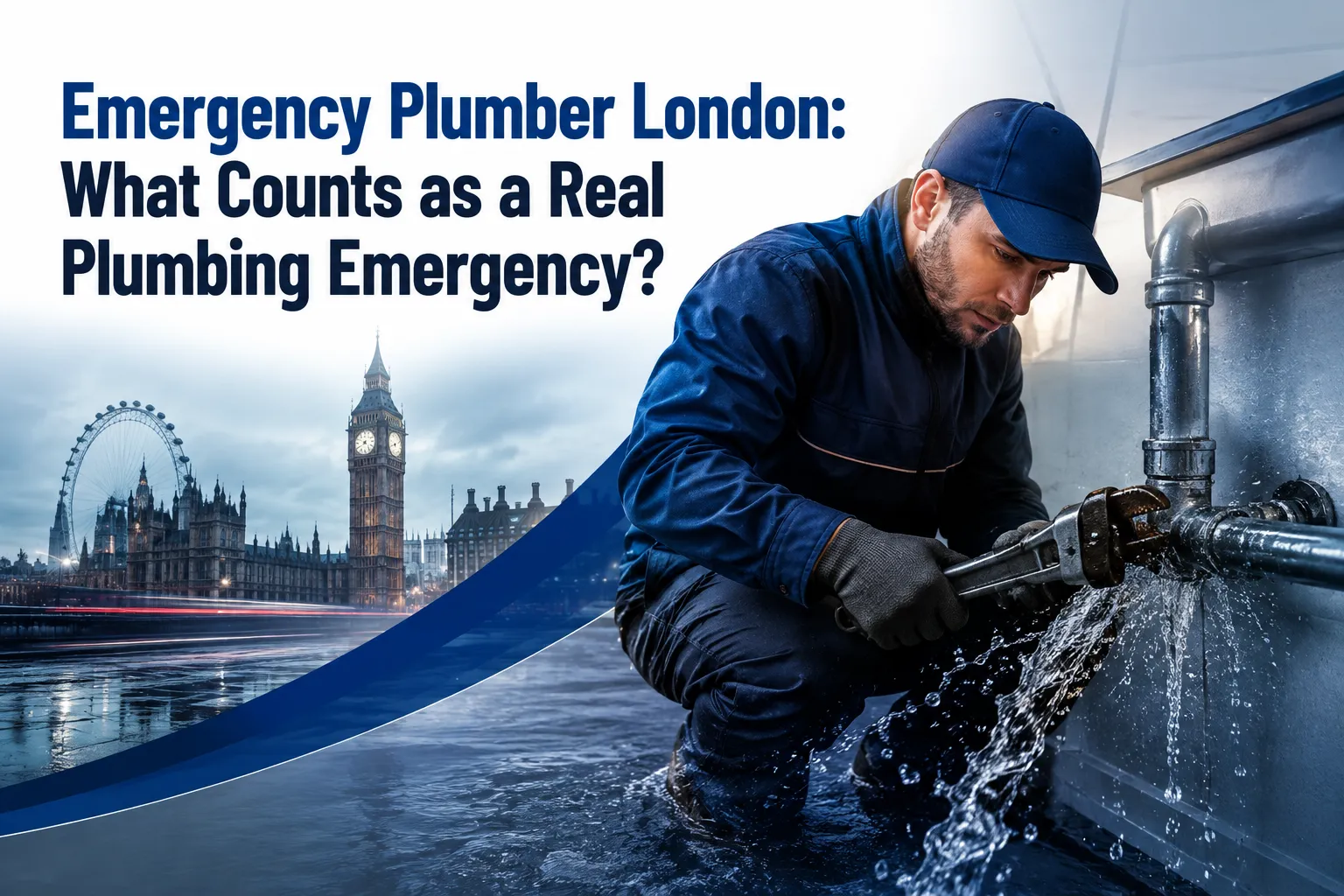

I get calls at all hours, and honestly, about half the time the answer to "should I be worried" is no, this can wait until morning. The other half genuinely can't wait, and those are the calls where minutes matter. So let's actually sort out what counts as a real emergency and what doesn't, because knowing the difference before you're searching emergency plumber London at 1am saves you money, stress, and sometimes a completely unnecessary callout fee.
I've been doing this job across South London long enough to know the panic in someone's voice when water's coming through a ceiling versus someone who's just annoyed with their toilet flushing slowly. Both feel urgent at the moment. Only one of them actually is.
The Genuine Emergencies — No Debate
Some situations are emergencies, full stop, no judgment call needed. A burst pipe actively flooding your home is one. Water spreading across a floor, coming through a ceiling, or pooling somewhere it shouldn't — that's not a "wait and see" situation, that's a "shut the stopcock and call now" situation. Every hour that water sits is more damaging to flooring, plaster, electrics if it gets close enough.
A suspected gas leak is the other non-negotiable. If you smell gas, hear hissing near a pipe, or your carbon monoxide alarm goes off, that's not really a plumbing call in the traditional sense — get everyone out, don't switch anything electrical on or off, and call the National Gas Emergency line before anything else. A Worcester boiler repair engineer or any Gas Safe registered plumber can follow up once the immediate danger's been checked, but the gas emergency line comes first, always.
Total loss of water in winter, especially with elderly residents or young children in the house, also counts. Not because losing water is dangerous exactly, but because in freezing weather it's often a sign of a frozen or burst pipe somewhere, and it tends to get worse overnight rather than better.
The Grey Area — Genuinely Depends
This is where most confusion sits, and where a decent plumber will actually talk you through it rather than just saying "yes, come now, we'll charge you the emergency rate."
A leaking toilet, for instance, sits in this category. If it's a slow drip from the cistern, that's frustrating but not urgent — it can wait until normal hours. If it's actively overflowing onto your bathroom floor because something's properly stuck, that's a different story, and standard toilet repairs during the day are a fraction of the cost of an emergency callout for the same fix.
Similarly, no hot water isn't automatically an emergency. Annoying, yes, especially if you've got a full house and everyone wants a shower. But unless it's genuinely freezing outside or there's a vulnerable person in the household who needs it, this usually holds until the next working day. I've had customers pay emergency rates for something that would've cost a third of the price booked in as a normal appointment the next morning.
Shower repairs fall into the same bucket most of the time. A shower that's stopped working entirely, no water at all, is inconvenient but rarely urgent unless it's your only working bathroom facility. A shower that's leaking into the floor below, though — that moves into genuine emergency territory, because you're now talking about water damage to whatever's underneath.
What's Definitely Not an Emergency
Slow drainage, a dripping tap, a toilet that needs a bit of extra flushing to clear properly — none of these need a 2am callout. I know it feels urgent when you're standing there staring at it, especially if you've got guests coming or you're just fed up with it, but paying emergency rates for something that'll happily wait twelve hours doesn't make sense.
This is honestly some of the most common plumbing advice I give people on the phone before they've even booked anything: describe what's happening, and let the person on the other end tell you honestly whether it needs someone tonight or whether it's fine until tomorrow. A good emergency plumber London service won't just take every call as a paid emergency visit — they'll actually help you figure out which one you're dealing with.
Why This Distinction Actually Matters Financially
Emergency callout rates exist for a reason — someone's coming out at an hour they'd normally be asleep, often driving across London in the middle of the night to reach you. That's fair, and it's not a scam when the emergency's real. But paying that same premium for something that could've been a standard daytime appointment is just money you didn't need to spend.
I'd say roughly a third of the "emergency" calls I get turn out to be things that genuinely could've waited, once we actually talk through what's happening. That's not a criticism of anyone calling — when something's going wrong with your plumbing, it's hard to judge severity in the moment, especially at night when everything feels worse. But a quick honest conversation before booking usually sorts out which category you're actually in.
How to Judge It Yourself, Quickly
Ask yourself three things. Is water actively spreading somewhere it shouldn't be? Is there any smell of gas? Is anyone in the household at genuine risk from cold, no water, or unsafe conditions if this waits until morning? If the answer to any of those is yes, that's a real emergency, call now. If none apply, it's very likely something that can hold until a normal appointment, and you'll pay standard rates instead of emergency ones.
Prevention Beats the Panic Call Anyway
Honestly, most emergencies I attend trace back to something that could've been caught earlier. Regular plumbing system maintenance — checking pipework before winter, keeping an eye on ageing joints, servicing your boiler annually — catches small problems while they're still small. It's not glamorous advice, but it's the difference between a five-minute fix during a routine visit and a flooded kitchen at midnight six months later.
Bringing It Together
Knowing what actually counts as an emergency saves you money and unnecessary stress. Flooding, gas leaks, and total loss of water in freezing conditions — call immediately, no hesitation. Slow leaks, dripping taps, and non-urgent drainage issues — these can wait for a normal appointment at normal rates. When you're not sure which category you're in, a good emergency plumber London service should talk it through with you honestly rather than pushing you toward the more expensive option automatically.
Final Thought
Not every plumbing problem that feels urgent actually is one, and knowing the difference protects both your home and your wallet. Flooding, gas leaks, and freezing-weather water loss deserve an emergency plumber London call without hesitation. Everything else usually holds until a standard appointment. If you're ever unsure which category you're in, whether it's shower repairs, toilet repairs, or something bigger, Plumr South London is happy to talk it through honestly before you book, and can offer straightforward plumbing advice on what genuinely needs attention now versus what can wait.
FAQs
1. What counts as a plumbing emergency in London?
A genuine plumbing emergency includes active flooding, suspected gas leaks, and total loss of water during freezing weather. These situations pose immediate risk to your property or safety and need an emergency plumber London service right away, regardless of the hour.
2. Is a leaking toilet a plumbing emergency?
It depends on severity. A slow drip from the cistern can usually wait for a standard appointment, but a toilet actively overflowing onto the floor should be treated as urgent, since it risks water damage the longer it continues.
3. Should I call an emergency plumber if I have no hot water?
Not usually, unless it's extremely cold weather or there's a vulnerable person in the household. In most cases, no hot water can wait until the next working day and be booked at standard rates rather than emergency pricing.
4. What should I do if I smell gas at home?
Leave the property immediately, avoid switching any electrical items on or off, and call the National Gas Emergency line before contacting a plumber. Once the immediate danger is addressed, a Gas Safe registered engineer can follow up on any repair work needed.
5. Why are emergency plumber call-out rates higher than normal appointments?
Emergency rates reflect out-of-hours availability and the plumber travelling at short notice, often overnight. Genuine emergencies justify this cost, but many issues that feel urgent can actually wait for a standard appointment at regular rates.
6. How can I avoid unnecessary plumbing emergencies?
Regular plumbing system maintenance, including annual boiler servicing and checking pipework before winter, catches small issues before they become urgent. Most emergency call-outs trace back to a problem that could have been identified earlier during routine upkeep.





















Sign in to leave a comment.