
Reliable employee transportation can make daily commuting easier while helping businesses address parking limitations, improve punctuality, and provide workers with a dependable alternative to driving alone. However, creating an effective shuttle program requires more than selecting a vehicle and setting a schedule. Employers also need to decide how employees will access the service and how the route should be structured. A well-designed corporate employee transportation program can help businesses balance convenience, route efficiency, travel time, capacity, and operating costs.
Two common approaches are fixed pickup stops and door-to-door routes. Both can support employee commuting, but they solve different transportation challenges. The right choice depends on employee locations, workforce size, shift schedules, budget, accessibility requirements, and how much flexibility the company needs.
What Are Fixed-Stop Employee Shuttles?
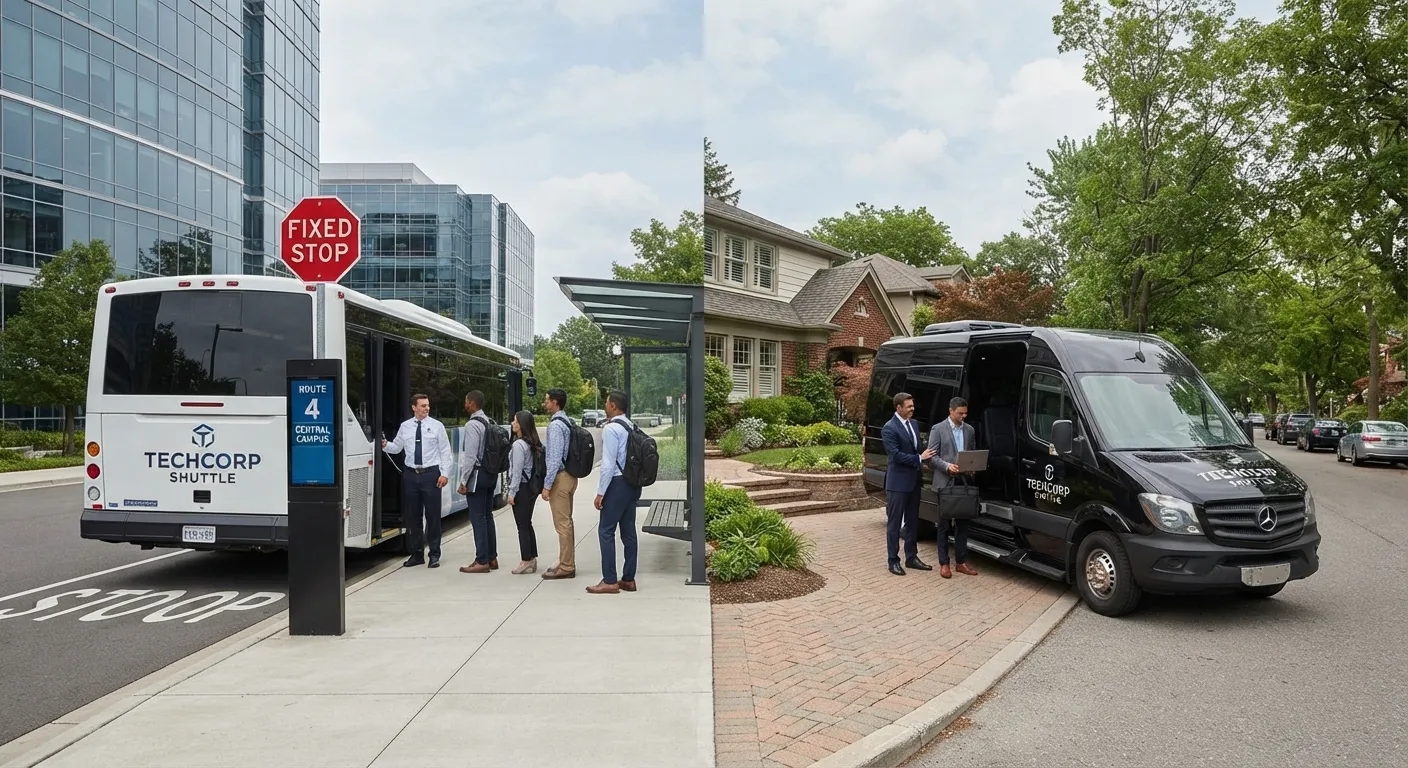
A fixed-stop shuttle follows a predetermined route with a specific number of pickup locations. Employees travel to the designated stops and board at scheduled times before continuing to the workplace.
These stops may be located near transit stations, residential communities, park-and-ride facilities, commercial parking areas, or major commuting corridors. The goal is to choose locations that are convenient for a significant number of employees while keeping the vehicle's route efficient.
One major advantage of fixed stops is predictability. Employees know where they need to go, drivers have a consistent route, and transportation managers can establish reliable departure and arrival times.
Fixed-stop service can also work especially well when employees live in clusters. Instead of sending a bus through individual residential streets, several employees can meet at one strategically selected location.
How Door-to-Door Employee Shuttles Work
Door-to-door transportation provides a more personalized commuting experience. Instead of requiring workers to travel to a centralized pickup location, the shuttle operates close to individual homes or designated residential points.
This approach can be attractive to employees who live far from public transportation or who have difficulty reaching a fixed stop. It may also encourage higher participation because employees have less first-mile travel before reaching the vehicle.
The challenge is route complexity. Every additional residential pickup can add driving time and create opportunities for delays. Narrow roads, traffic congestion, construction, parking restrictions, and difficult turning areas can make residential routes more challenging for larger vehicles.
When a route includes many individual pickups, employees who board early may also spend considerably longer on the bus while the driver continues collecting other riders.
Fixed Stops Usually Offer Greater Route Efficiency
The main operational advantage of fixed-stop transportation is efficiency. A vehicle can follow a defined route without repeatedly deviating to individual addresses.
This can reduce total vehicle mileage and make travel times easier to predict. It can also allow one larger vehicle to serve many employees along the same corridor.
Door-to-door service takes the opposite approach. It minimizes the distance employees travel before boarding, but the vehicle may travel considerably farther to serve each rider.
For employers, the important question is not simply which model provides the shortest walk to the bus. It is which model creates the most practical overall commute for the workforce.
Door-to-Door Service Can Improve Coverage
Fixed stops work best when employees live relatively close to designated pickup points. However, not every workforce is concentrated around a few neighborhoods or transit hubs.
Employees may live across suburban or rural areas where centralized stops are difficult to reach. In these situations, a fixed-stop program may provide excellent service to some employees while leaving others with limited access.
Door-to-door service can address this coverage problem by extending transportation closer to individual residences. This makes the service more flexible, particularly for employees who live outside the main commuting corridors.
The additional coverage, however, usually requires more operating resources. Businesses should determine whether the improvement in accessibility justifies the additional route time and cost.
Employee Location Should Guide Route Planning
Companies should study general employee commuting patterns before deciding which model to use.
Information such as ZIP codes, neighborhoods, transit connections, and major commuting corridors can reveal areas where employees are concentrated. These clusters can become potential fixed-stop locations.
If a large number of employees live within a few miles of one area, a central pickup point may serve them efficiently. If employees are scattered across many communities, a hybrid or flexible model may provide better coverage.
Employee demand can also change over time. New hires, workforce growth, office relocations, and changing work schedules may require transportation managers to adjust existing routes.
Consider Total Travel Time
Travel time is another important factor.
A fixed-stop route may require an employee to spend several minutes reaching the pickup point, but the shuttle itself can often travel efficiently once the passenger boards.
A door-to-door route removes much of the first-mile inconvenience but can increase the time spent onboard. An employee picked up early may remain on the shuttle while the vehicle visits several other residences.
This creates a fundamental trade-off. Fixed stops generally reduce total system travel, while door-to-door transportation reduces the individual access distance to the vehicle.
The best choice depends on which factor matters most for the workforce.
Accessibility Should Be Part of the Decision
Accessibility should be considered when designing either type of shuttle service.
Door-to-door transportation may be more practical for employees who cannot reasonably travel to a centralized stop. However, fixed-stop service can also support accessible transportation when stops are carefully selected and vehicles are appropriately equipped.
A fixed stop should have a safe and practical path for passengers to reach the vehicle. Lighting, pavement, curb access, pedestrian crossings, and waiting areas can all affect usability.
Some companies may find that a fixed-stop network works for most employees while a limited door-to-door accommodation provides additional support for riders who need it.
How Shift Schedules Affect Shuttle Routes
Work schedules can significantly influence the best route structure.
Companies operating traditional daytime schedules may be able to run predictable morning and afternoon fixed routes. Organizations with multiple shifts may need different transportation schedules throughout the day.
Manufacturing facilities, warehouses, hospitals, distribution centers, and other businesses may have employees arriving early or leaving late when public transportation is limited.
In these situations, transportation planners should consider whether a fixed route remains practical during each shift or whether a smaller flexible service would provide better coverage.
A Hybrid Model Can Provide the Best Balance
Employers do not necessarily have to choose one model for their entire workforce.
A hybrid employee shuttle program can use fixed stops in high-density commuting areas while providing more flexible transportation for employees who live farther away.
For example, a company could establish several fixed hubs near major residential areas and use a smaller vehicle for employees outside reasonable walking distance. Another possibility is to operate fixed-stop service during peak hours while using flexible transportation for overnight or irregular shifts.
This approach can provide broader coverage without making every route dependent on numerous residential pickups.
Monitor Performance After Launch
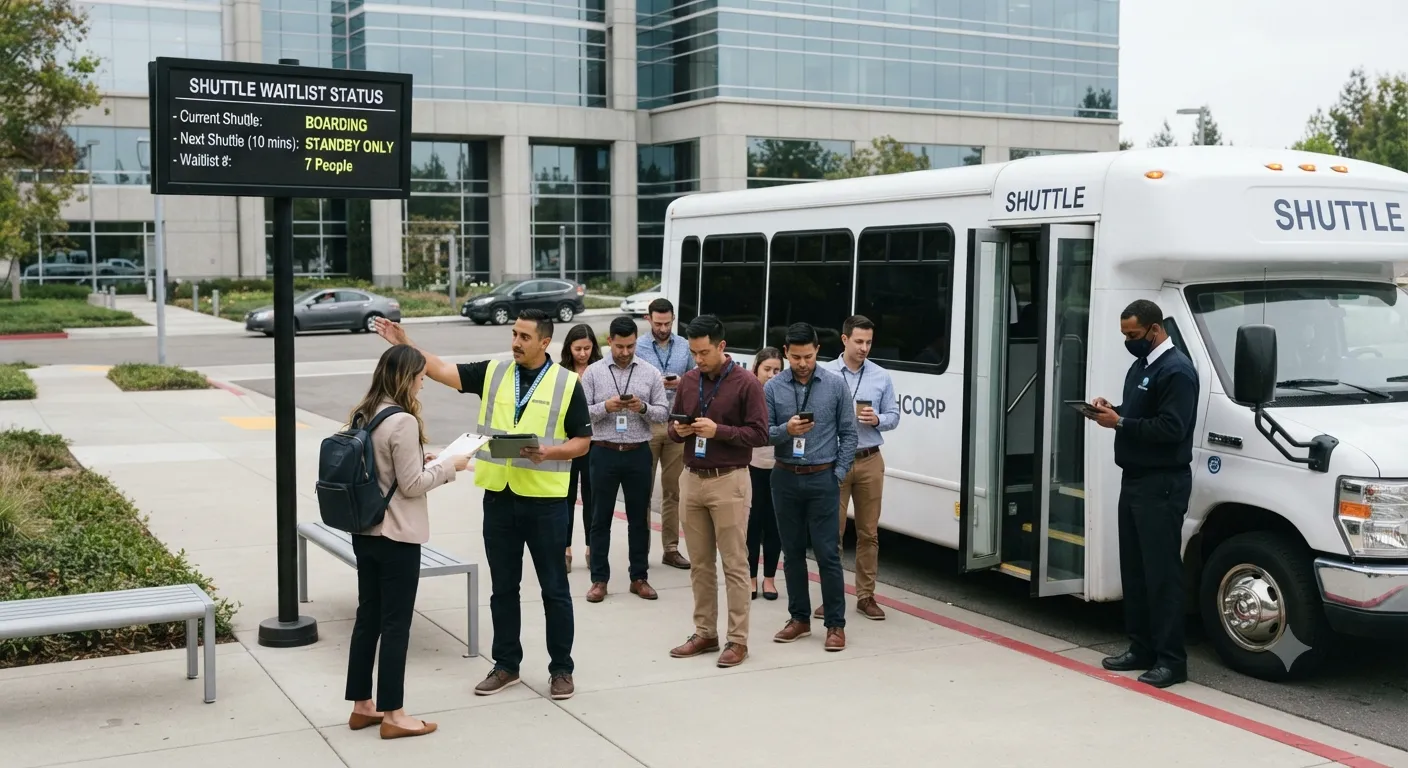
A shuttle program should be reviewed after implementation. Actual ridership may differ from initial expectations, and employee commuting patterns can change.
If a fixed stop consistently has low usage, transportation managers may need to relocate it. If a door-to-door route becomes too long as additional employees join, some riders may be better served by a centralized stop.
Monitoring route duration, passenger counts, vehicle utilization, and employee feedback can help businesses make practical adjustments before transportation problems become significant.
Choosing the Right Employee Shuttle Service
Fixed-stop and door-to-door transportation both have valuable roles in employee shuttle planning. Fixed stops generally provide greater efficiency, predictable schedules, and easier scalability. Door-to-door routes offer greater individual convenience and can provide stronger coverage for employees who cannot easily access centralized locations.
For many businesses, a combination of both models may provide the strongest solution. Fixed stops can serve dense commuting corridors efficiently, while flexible transportation can address specific geographic or accessibility needs.
The best employee shuttle strategy begins with understanding the workforce. By evaluating employee locations, expected ridership, shift schedules, travel times, accessibility, vehicle capacity, and future growth, employers can create a transportation program that is practical for the company and useful for its employees. The objective is not simply to bring the bus as close as possible to every worker. It is to create reliable transportation that makes the daily commute easier while remaining efficient and sustainable.




















Sign in to leave a comment.