It can be tempting to hand a child a tablet or turn on the TV when they are bored. Screens can certainly have a place in family life, but children also need time to play, explore and come up with their own ideas.
Independent play does not mean leaving children completely on their own. It means giving them the opportunity to choose what they want to do, explore at their own pace and solve little problems without an adult directing every step.
Australian Government guidance encourages children to spend more time in active play and less time sitting, while also giving them opportunities to create their own play under appropriate supervision.
The good news is that encouraging independent play does not require expensive toys or complicated activities. Sometimes, a few carefully chosen toys and a little space are enough.
1. Create a Simple Play Space
Children do not need a room filled with toys to stay interested. In fact, having too many options can sometimes make it harder for them to decide what to play with.
Set up a small, inviting play area with a few toys that are easy for your child to access. Keep some books, building blocks, toy vehicles, puzzles or creative materials within reach.
The aim is to make play materials available without needing an adult to set everything up.
A dedicated play space can also help children understand that they have a place where they can sit down, explore and make up their own games.
2. Choose Toys That Encourage Imagination
Some toys have one obvious purpose, while others can become whatever a child imagines.
Open-ended toys are particularly useful for independent play because there is no single way to use them. Blocks can become buildings, boxes can become shops and toy cars can become part of an entire imaginary town.
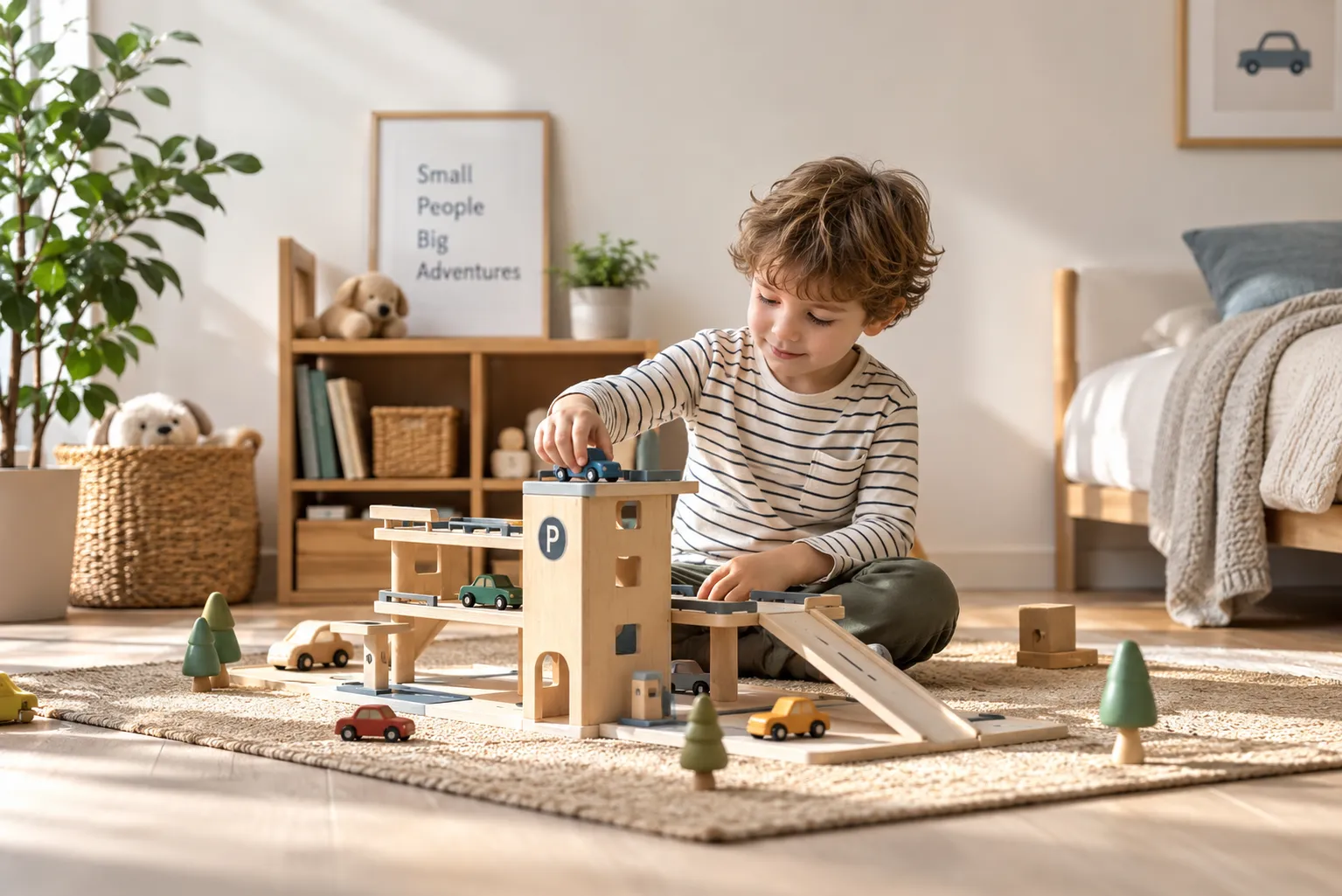
A wooden toy garage can be a great example. Children can park their cars, organise them, create races or invent stories around their little collection. The activity can change from one day to the next, which gives children plenty of room to lead their own play.
Independent play can also happen through simple objects around the home. The Royal Children's Hospital Melbourne notes that everyday items such as cardboard boxes, fabric and household objects can spark imagination, and that children can benefit from having time to play without constant adult intervention.
3. Let Kids Experience Boredom
Hearing "I'm bored" does not always mean you need to find an activity straight away.
Boredom can give children the chance to think about what they want to do next. Instead of immediately offering a screen, give them some time and see where their imagination takes them.
You might say, "Have a look around and see what you can find to play with."
At first, they may need some encouragement. Over time, however, they can become more comfortable creating their own activities.
This is one reason independent play can be valuable. Children have opportunities to make choices, experiment and work through small problems themselves.
4. Make Toy Collections Part of the Play
A collection of favourite toys can provide hours of possibilities when children are given the freedom to organise and use them their own way.
Toy cars are a simple example. Rather than simply keeping them in a box, children can sort them by size or colour, build roads, create parking areas or make up stories involving different cars.
You can also provide simple additions such as wooden blocks, cardboard pieces or small figures to help expand the play.
The key is not to tell them exactly what to build. Let them decide what their play world looks like.
5. Start Small and Step Back
Independent play does not always happen for long periods straight away.
Start with 10 or 15 minutes and gradually allow more time as your child becomes comfortable. You can begin by playing alongside them, then step back once they become involved in their own activity.
Try not to correct every little detail or suggest what they should do next. If they are safe and engaged, allow them to take the lead.
The Australian Government's early childhood guidance recommends giving children opportunities to create their own play and develop independence while appropriately supervised.
Making Screen-Free Play a Natural Part of the Day
Reducing screen use does not have to mean banning screens completely. It can be as simple as creating regular periods during the day when children have other things available to do.
Try having screen-free time after school, before dinner or on weekends. Keep a few favourite toys and activities ready so there is an easy alternative when a child asks for a device.
Australian health guidance recommends balancing screen use with activities that encourage physical, creative and social development. Reading, puzzles, crafts, outdoor play and imaginative activities can all be useful alternatives.
Most importantly, give children permission to play in their own way. They do not need an elaborate activity every time they are free. Sometimes, a few toys, some space and time to explore are all they need.
Independent play is not about keeping children busy every minute. It is about giving them the freedom to discover what they can do on their own.

















Sign in to leave a comment.