

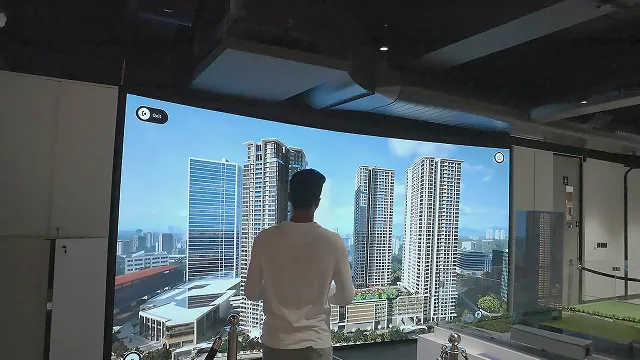
Some sites come with a story that helps sell them. Others come with a story that gets in the way. When Adani Realty acquired a former ACC Cement factory site in Thane for its Codename LIT development, the land itself was the problem — buyers standing on a plot that still looked, in their minds, like an industrial yard, being asked to imagine a modern residential tower in its place. No amount of verbal persuasion closes that imagination gap. Only a genuinely immersive showcase does.
This is where end-to-end proptech solutions move from useful to essential — not for polish, but for overcoming a real, tangible obstacle standing between a buyer and belief in the project.
When "Immersive" Actually Matters
Every developer's marketing deck claims to be "immersive" these days. The word has been stretched thin. But immersive showcases matter most in specific, high-friction situations:
- Sites with a difficult prior identity — industrial, agricultural, or simply unremarkable land
- Complex mixed-use masterplans that resist a quick verbal summary
- Competitive micro-markets where several established brands are already selling nearby
Codename LIT hit all three at once.
Building the Showcase: Physical Meets Digital
V-Estate's response wasn't a single flashy screen — it was a synchronised system spanning physical and digital layers:
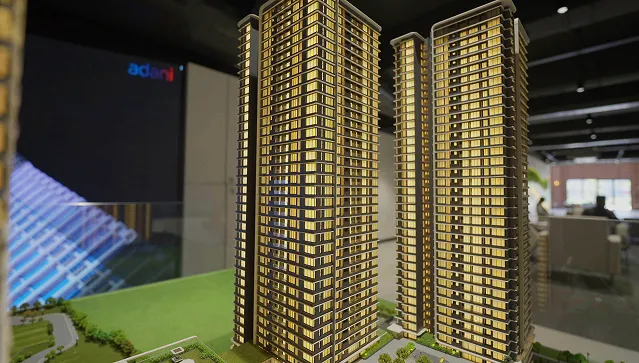
The physical layer started with an IoT-enabled scale model featuring 38 addressable touchpoints, giving buyers something tangible to orient themselves around, a literal object they could walk around and point at.
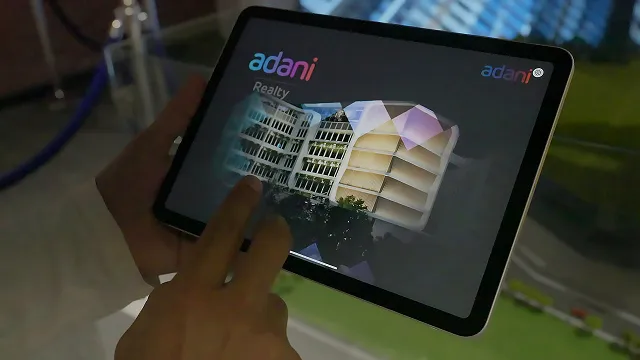
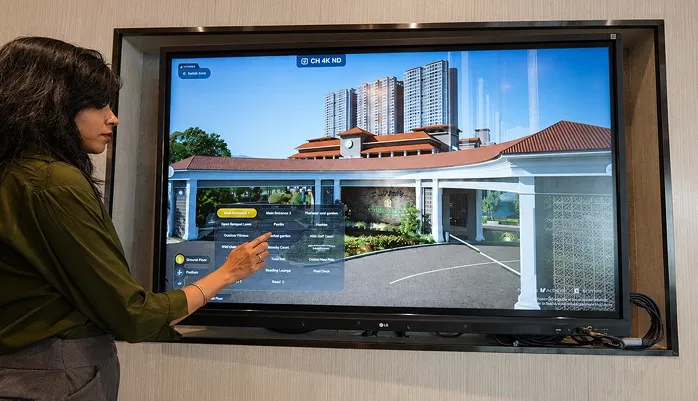
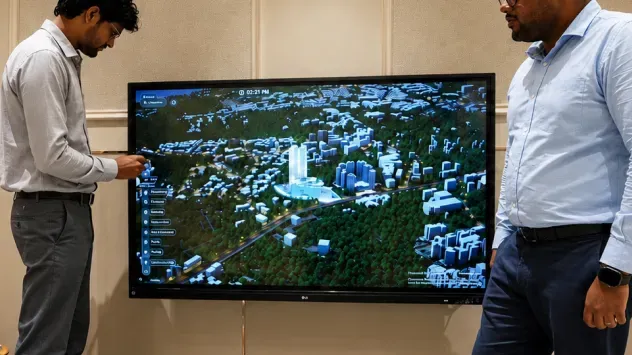
The digital layer ran on Unreal Engine 5.2, custom-built to render the real infrastructure around the site — metro lines, flyovers, and bridges — with animated metro movement that made connectivity feel concrete rather than promised. A parallax interior system solved a specific technical challenge: towers with roughly 60% glass façades needed realistic depth and interior lighting without the performance cost of building excessive geometry.
The synchronisation between these two layers is what made the showcase genuinely immersive rather than just a nice display next to a nice model. Selections made through the iPad-based control interface triggered matching lighting and indicators on the physical scale model in real time — so a buyer pointing at a tower on the model would see the corresponding digital view light up, reinforcing spatial understanding in a way neither layer could achieve alone.
A curved LED visualization wall in the discussion room extended this experience into deeper, more consultative conversations, running in a 40–50 minute mode for buyers who wanted to go beyond a first impression.

What an Immersive Showcase Overcomes
The results at Codename LIT show precisely what this kind of showcase is capable of correcting:
- Average sales engagement time roughly doubled, from 20 minutes to 40–50 minutes
- Buyers began asking advanced, technical questions — the clearest sign that imagination had caught up to the architectural vision
- Several deals closed in a single meeting
- 100% adoption across all 15 sales executives, with zero downtime during the critical launch window
None of this happened because the technology was flashy. It happened because the showcase directly addressed the specific obstacle — a site buyers struggled to picture as anything other than its industrial past — and gave them a way to see past it.
Immersive Doesn't Mean Isolated
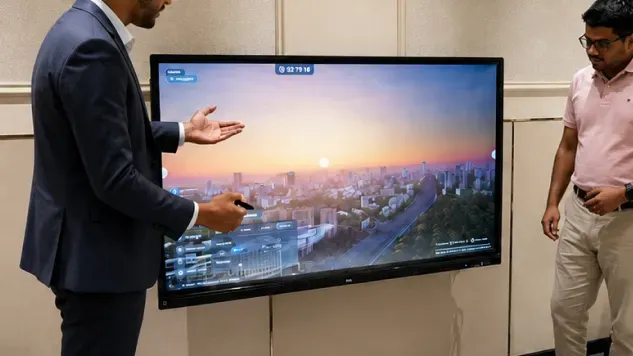
The clearest lesson from Codename LIT is that immersive showcases work best as part of a structured, end-to-end sales flow — registration, walkthrough, physical sample flat visit, and a closing discussion — rather than as a standalone attraction buyers experience once and forget. This mirrors the broader approach behind V-Estate's Experience Center deployments, which are designed to fit immersive technology into the full arc of a sales visit, not just its opening minutes.
It's a distinction worth sitting with: an immersive showcase that dazzles for five minutes and then hands the buyer back to a static brochure has wasted most of its potential. One that's woven into every stage of the visit — as it was here — compounds its impact all the way to the closing table.

Turning a Difficult Site Into an Immersive Opportunity
If your project sits on land with a complicated prior identity, or a masterplan too complex for a quick pitch, an immersive showcase isn't a luxury add-on. It's often the single most direct way to close the gap between what you've designed and what a buyer can currently imagine.
V-Estate has built immersive, end-to-end showcases for Adani Realty and 40+ other developers, turning difficult sites and complex masterplans into confident buyer decisions. Book a demo with V-Estate to see how an immersive property showcase could work for your next launch.























Sign in to leave a comment.